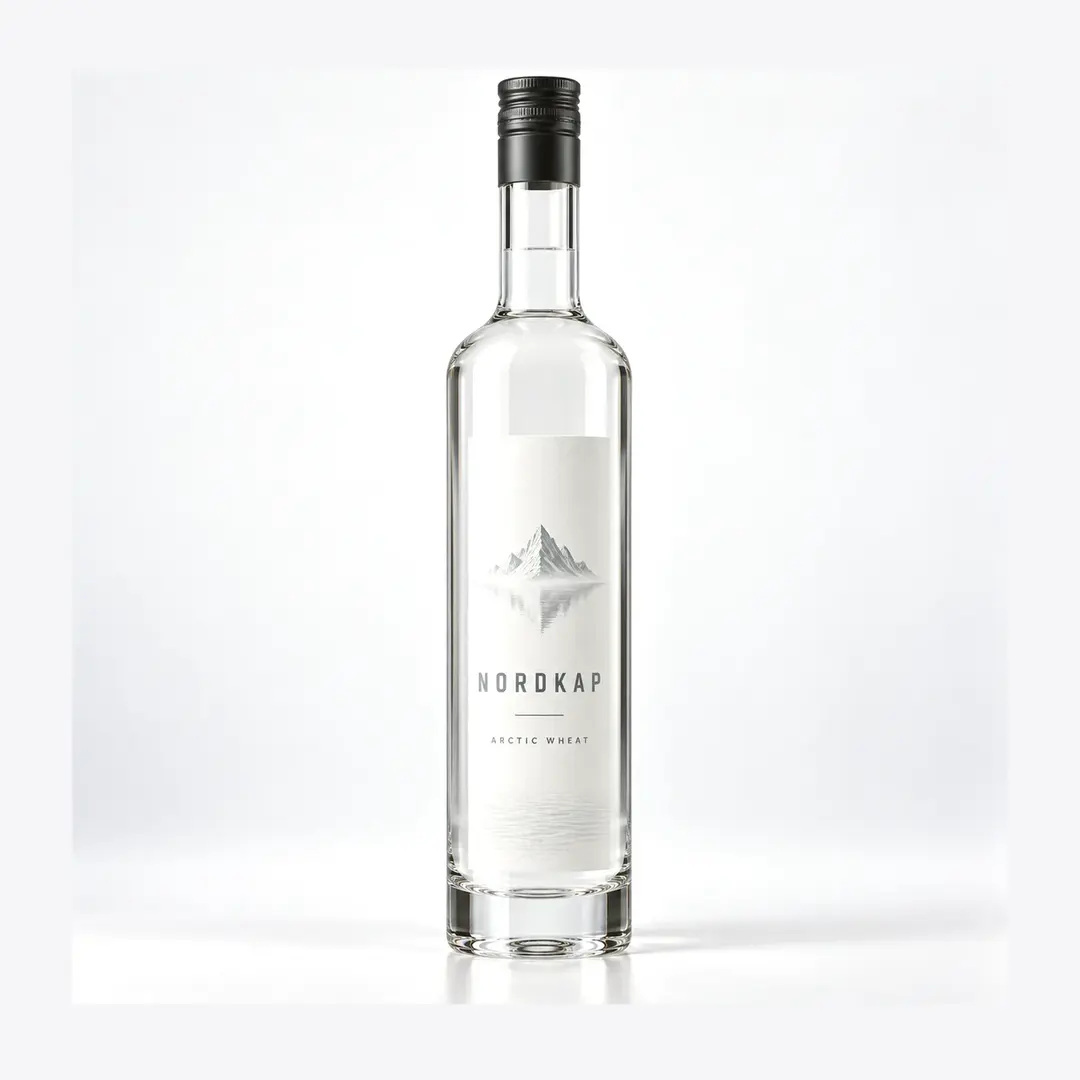
Model BO is the quiet workhorse of the spirits aisle: a tall, slim round bottle in clear flint glass with a gently sloped shoulder, a long straight neck, and — the detail that defines its commercial role — a continuous-thread neck finish built for screw caps. The photograph shows no embossing, no fluting, no gimmicks. What it shows instead is a clean cylindrical geometry that runs fast on a filling line, caps reliably on an ROPP head, and costs less per unit than almost any decorative alternative. For distillers and importers who move volume, that is exactly the point.
Why the Industry Keeps Coming Back to the Round Bottle
Round bottles dominate global spirits volume for structural reasons, not habit. A cylinder resists internal pressure and external impact more evenly than any other shape, so wall thickness — and therefore glass weight and cost — can be optimized without weak corners. The round cross-section also behaves predictably everywhere in the supply chain: it self-centers in filling turrets, spins evenly under labelers, nests efficiently in partitioned cartons, and survives the vibration of container shipping with the lowest scuffing rates of any common geometry.
The BO model adds a tall, slim proportion to that formula. A slender round bottle maximizes shelf-facing height per unit of shelf width, which is why the format is standard for value and mid-tier vodka, white rum, gin, and blended whisky worldwide. Retailers like it because more facings fit per metre; brand owners like it because height reads as generosity on shelf even at modest fill volumes.
The Screw-Thread Finish: Engineering for ROPP Closures
The visible thread at the neck of the BO bottle is the most important engineering feature on the page. A continuous-thread finish accepts roll-on pilfer-proof (ROPP) aluminum caps — the closure system that dominates spirits packaging wherever tamper evidence, oxygen barrier, and line speed matter together. On an ROPP capping head, a plain aluminum shell is pressed onto the neck and the thread is rolled into the cap in place, forming a custom thread plus a break-away tamper band in a single operation.
For the buyer, ROPP compatibility translates into three concrete advantages. Closure cost is among the lowest in the industry. Capping speeds of tens of thousands of bottles per hour are routine, so the bottle will never be the bottleneck on a modern line. And the tamper-evident band satisfies retail and regulatory requirements across most export markets without secondary seals or shrink sleeves.
One discipline is non-negotiable: the neck finish code must match your cap supplier’s specification exactly. The photograph cannot show thread pitch or bore diameter, so confirm the finish designation on the factory drawing for the BO mould before you place any closure order — and send your cap supplier the same drawing, not a verbal description.
A Neutral Canvas That Takes Any Brand Direction
The unembossed, undecorated surface of the BO is a deliberate feature. A clean cylinder accepts every mainstream decoration route without compromise: wrap-around paper or film labels applied at line speed, multi-color screen printing that follows the curvature without registration headaches, full-body spray coatings in any color from frosted white to metallic black, and shrink sleeves that convert a stock bottle into a seasonal limited edition overnight.
This neutrality has a strategic benefit for brand owners with multiple SKUs: one bottle mould can serve an entire range. Run it flint with a paper label for your core vodka, spray it matte black for a premium expression, and sleeve it for a festival edition — same glass, same line settings, three distinct shelf identities. Mould amortization and inventory simplicity in a single decision.
Line Behavior and Filling Economics
Tall slim rounds like the BO are the reference geometry filling-line engineers calibrate against. The bottle’s straight body gives star wheels and guide rails a consistent contact surface, the round base rotates freely in accumulation tables, and the low centre of gravity relative to its height keeps it stable through rinsing, filling, and capping. Changeover is minimal because the format is what most lines are already tooled for. If you are a co-packer or a brand that switches between bottling partners, choosing a mainstream round geometry removes an entire category of technical risk from your production planning.
Quality Control Behind a “Simple” Bottle
Simple geometry does not mean simple manufacturing. Every production batch of our liquor bottles is verified against documented standards: annealing quality is controlled and tested per ASTM C148 so residual stress stays below the thresholds that cause spontaneous breakage; internal pressure resistance is measured to ISO 7458; and thermal shock endurance is validated against ISO 7459 so the container survives temperature swings in washing, filling, and export logistics. Batch test reports are available with every shipment — request them with your sample order and audit us before your first container.
Specifications to Confirm Before Ordering
Because a photograph cannot carry dimensions, the following figures must be confirmed with the factory for the BO mould: nominal and brimful capacity, overall height and body diameter, glass weight, neck finish code and thread specification, punt depth, and available label panel height. Our explainer on how glass bottle MOQs work will help you plan order volumes, and buyers consolidating from China should review our guide on importing glass bottles from China for carton, pallet, and container-loading practicalities.
Get BO Samples and a Line Trial Plan
If your program needs a proven round screw-cap bottle for vodka, gin, white rum, or blended spirits, request BO samples with the mould drawing and neck-finish specification. We can supply matching ROPP closures, decoration quotes, and export packing in one proposal. Contact our team with your target capacity and annual volume for pricing and lead time.
Frequently Asked Questions
What closure types does the BO bottle’s screw-thread neck accept?
The continuous-thread finish shown is designed primarily for ROPP (roll-on pilfer-proof) aluminum screw caps, which are formed on the bottle during capping. Depending on the exact finish code, standard pre-threaded plastic or metal screw caps may also fit. Always confirm the neck finish designation on the mould drawing before ordering closures.
Which spirits are typically packaged in this tall round format?
The tall slim round bottle is the global standard for value and mid-tier vodka, gin, white rum, and blended whisky, and it is also widely used for liqueurs and ready-to-drink spirits bases. Its proportions maximize shelf height per unit of shelf width.
What is the capacity of the BO bottle?
Capacity cannot be determined from a photograph and we do not publish unverified figures. Nominal and brimful capacity, height, diameter, and glass weight are stated on the technical drawing supplied with a sample request — confirm them with the factory before finalizing your packaging specification.
Can this plain round bottle be customized without a new mould?
Yes. The unembossed cylinder accepts screen printing, spray coatings in any color, shrink sleeves, acid-etch frosting, decals, and standard wrap-around labels, so one stock mould can support several distinct SKUs. Custom embossing of your brand name would require mould modification, which the factory can quote separately.
How does the BO bottle perform on high-speed filling lines?
Tall round bottles are the reference geometry most filling lines are calibrated for: they self-center in turrets, rotate cleanly under labelers, and cap at full ROPP line speeds. We recommend a short line trial with sample bottles at your co-packer before the first production run, which is standard practice for any new container.
What MOQ applies to the BO model and are samples available?
MOQ depends on plain versus decorated supply and current furnace scheduling — confirm the figure in your quotation. Samples from existing stock are normally available within days so you can verify cap fit, label adhesion, and line behavior before committing to a production order.


