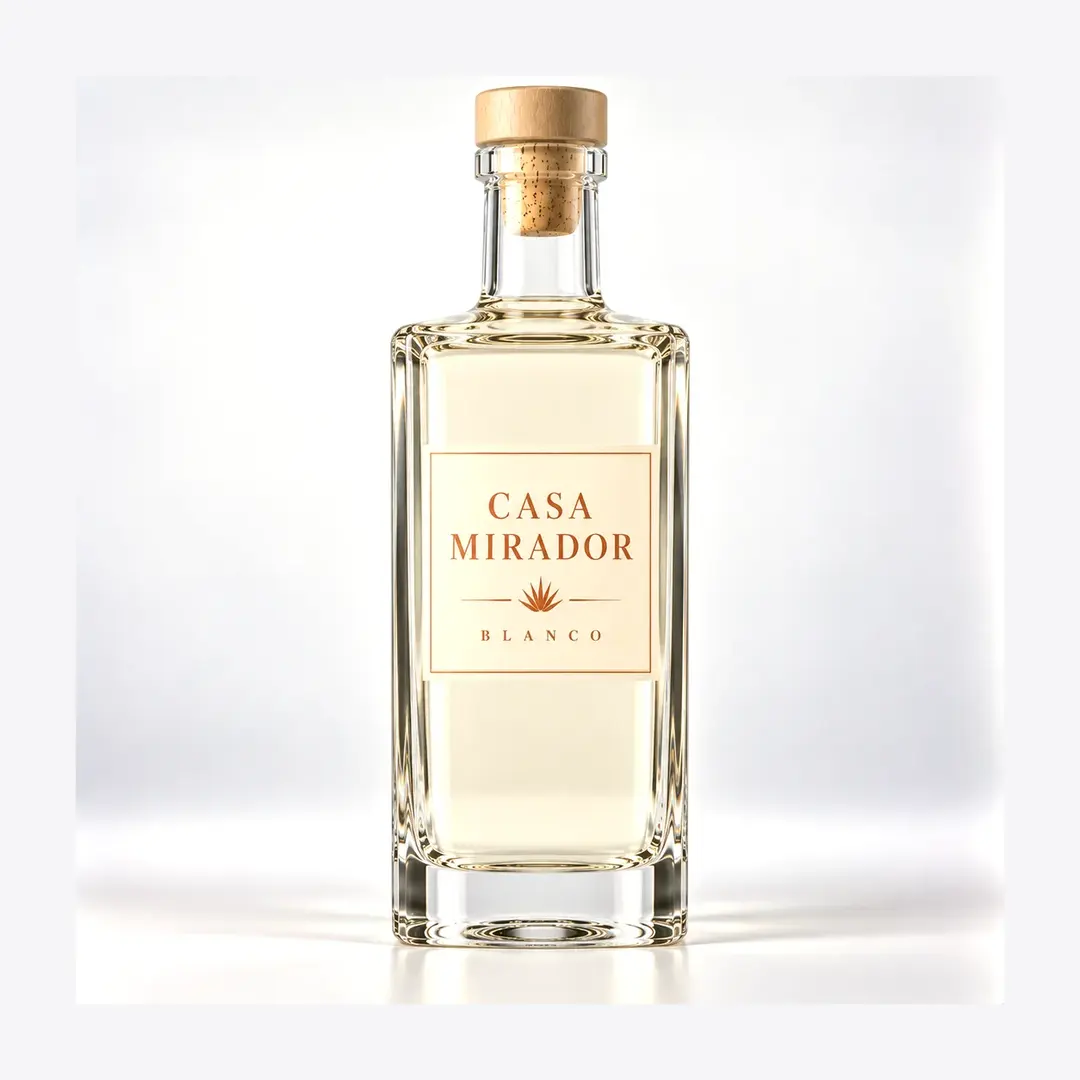
520ml Square Glass Liquor Bottle for Premium Craft Gin
Craft gin is a crowded shelf, and on a crowded shelf geometry is strategy. The 520ml square glass liquor bottle shown here, our model SQUARE, gives gin brands the two things a cylinder cannot: an unmistakable silhouette at three meters, and four flat panels that behave like billboards at thirty centimeters. This page walks through how premium gin programs typically use this format, and what to confirm with the factory before production.
Shelf Presence: Winning the Three-Second Scan
Retail research on spirits shopping keeps finding the same behavior: shoppers scan a shelf row in seconds, and distinctive silhouettes earn the pause that leads to a pickup. Among vodka and gin — categories where the liquid itself is visually identical across brands — the bottle carries nearly all of the differentiation load. A square profile interrupts a row of cylinders. It reads as deliberate, architectural and contemporary, which maps precisely onto how craft gin brands want to be perceived.
There is a practical retail dividend as well. Square bottles sit shoulder-to-shoulder with almost no dead space between units, so a facing of square bottles presents as a solid block of brand color rather than a dotted line of circles. On a back bar, that block effect makes a single facing look like a bigger brand than it is.
The Label Panel Advantage
Ask a packaging designer what they want from a gin bottle and many will answer: flat panels. Curved bottles force labels to wrap, distorting typography and limiting where fine print can sit. The four flat faces of a square bottle remove those constraints:
- Front panel as poster. Large-format typography, botanical illustrations and brand marks print without curvature distortion, at sizes a wrap label cannot carry.
- Side panels for story. Distiller notes, botanical lists and serve suggestions get their own dedicated surfaces instead of being squeezed around a curve.
- Back panel for compliance. Regulatory text sits flat and legible — a quiet mercy for multi-market programs with dense label rules.
- Screen-printing friendly. Flat panels suit direct-to-glass screen printing beautifully, enabling the label-free premium look that high-end gin favors.
520ml: The Craft-Friendly Capacity
The 520ml size is a deliberate craft signal. It steps away from the standard 700ml and 750ml commodity formats, positions the product as something measured and special, and lands at a shelf price that invites trial of an unknown distillery. For gift sets and discovery packs it pairs naturally with miniature siblings. Capacity conventions vary by market — confirm that 520ml fits your destination’s permitted sizes and your distributor’s expectations before locking the SKU, and the factory can advise on what similar programs have shipped.
Engineering a Square Bottle Honestly
Square geometry is harder on glass than round. The corners are stress concentrators: they must carry enough thickness and receive correct annealing to survive filling-line handling, case packing and the occasional bar-top knock. Base stability, shoulder transitions and panel flatness all need mold-level discipline. This is exactly why we do not publish fixed millimeter dimensions, gram weights or tolerance figures on the page — they are confirmed per production run on the technical drawing, which the factory issues with your quotation. Share that drawing with your bottler early; square bottles may need guide and star-wheel attention on some filling lines, and that conversation is cheaper before the glass arrives.
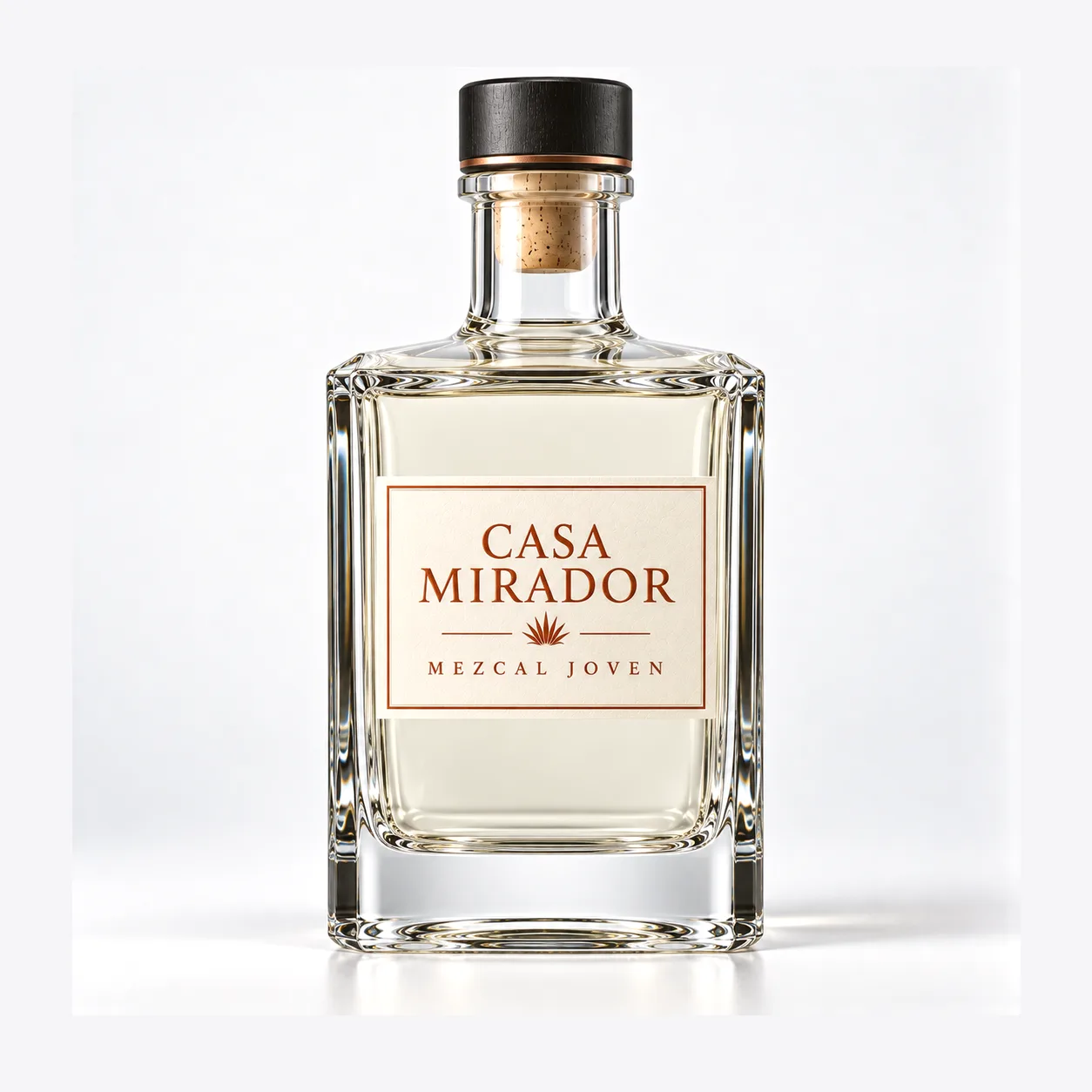
Decoration and Closure Options
Premium gin decoration on this model typically combines one hero technique with restraint elsewhere: full-body spray coating in a signature matte color with a small screen-printed mark; clear flint with dense botanical screen printing; or frosting on selected panels for contrast. All of these — frosting, screen printing, spray coating and conventional labeling — are supported in-house. Closure choice completes the positioning: natural cork and bar-top closures read craft, while standard caps serve value extensions. Closure compatibility is confirmed against the neck finish on the approved drawing — please confirm the finish with the factory before ordering closures.
Quality Standards Behind the Shape
Every run of this bottle is produced under the factory’s documented container-glass QC regime: annealing verified with reference to ASTM C148, internal pressure resistance per ISO 7458, and thermal shock endurance per ISO 7459. On a square bottle these controls are not a formality — corner stress makes annealing quality the difference between a bottle that survives the supply chain and one that does not. Batch records and third-party pre-shipment inspection can be arranged on request.
Beyond Gin: Other Programs That Use This Shape
Although gin is the natural home of the square format, the same geometry serves neighboring categories well. Premium vodka brands use square glass to escape the frozen-cylinder cliché; flavored spirits and botanical liqueurs exploit the flat panels for ingredient-forward artwork; and gift-led whisky or rum minis programs choose square formats for the same block-effect shelf presence at smaller scale. If your range spans several of these, one square glass platform with different decoration per SKU keeps mold cost, cartons and pallets shared across the family — the kind of quiet operational saving that shows up in year-two margins.
Packing and Pallet Efficiency
Square bottles pack with less void space than rounds, which shows up directly in carton counts per pallet and pallets per container. For export programs where sea freight is a meaningful share of landed cost, that density is worth quantifying in the quotation stage. The factory prepares container-loading plans as part of the order process and can align carton specifications with any gift-box or display packaging your program adds downstream.
Ordering, MOQ and Samples
MOQ depends on mold use and decoration route; the full mechanics are in our glass bottle MOQ guide. Samples from the existing mold can be arranged so your team and your bottler can evaluate handling, label fit and shelf presence with the real glass. Buyers structuring a supplier comparison will find our glass bottle supplier checklist useful, and first-time importers can review the workflow in our guide to importing glass bottles from China.
Ready to put a square silhouette behind your gin? Send your target markets, annual volume and decoration direction through the contact and RFQ page, and the factory will reply with the technical drawing, confirmed specifications and a quotation.
Frequently Asked Questions
Why do craft gin brands choose square bottles?
Square bottles interrupt a shelf row of cylinders and read as contemporary and deliberate, which matches craft gin positioning. The four flat panels also give designers large, undistorted surfaces for typography and botanical artwork that curved bottles cannot offer.
Is 520ml an accepted size in my market?
Capacity conventions vary by country. The EU and UK standardize around 700ml for spirits, while some markets accept a wider range. Confirm permitted sizes for your destination with your distributor or regulatory advisor, and the factory can advise on what similar programs have shipped.
Will a square bottle run on a standard filling line?
Generally yes, but square bottles may need guide or star-wheel attention on some lines, and labelers must orient the bottle to register panels. Share the factory’s technical drawing with your bottler early so any change-part needs are identified before delivery.
Can the bottle be fully coated in a custom color?
Yes. Spray coating in full-body colors and matte finishes is supported, along with frosting, screen printing and labeling. Provide color references or Pantone targets in your RFQ and confirm coating specifications and lead time with the factory.
What is the MOQ for the 520ml square bottle?
MOQ depends on use of the existing mold and on decoration complexity. Samples from the existing mold can usually be arranged first. Share your annual volume in the RFQ and the factory will confirm MOQ and price breaks.
How is bottle strength managed at the corners?
Corners are the stress points of any square design, so wall distribution and annealing quality are controlled carefully. Production references ASTM C148 for annealing, ISO 7458 for internal pressure and ISO 7459 for thermal shock. Batch records and third-party inspection can be arranged on request.


