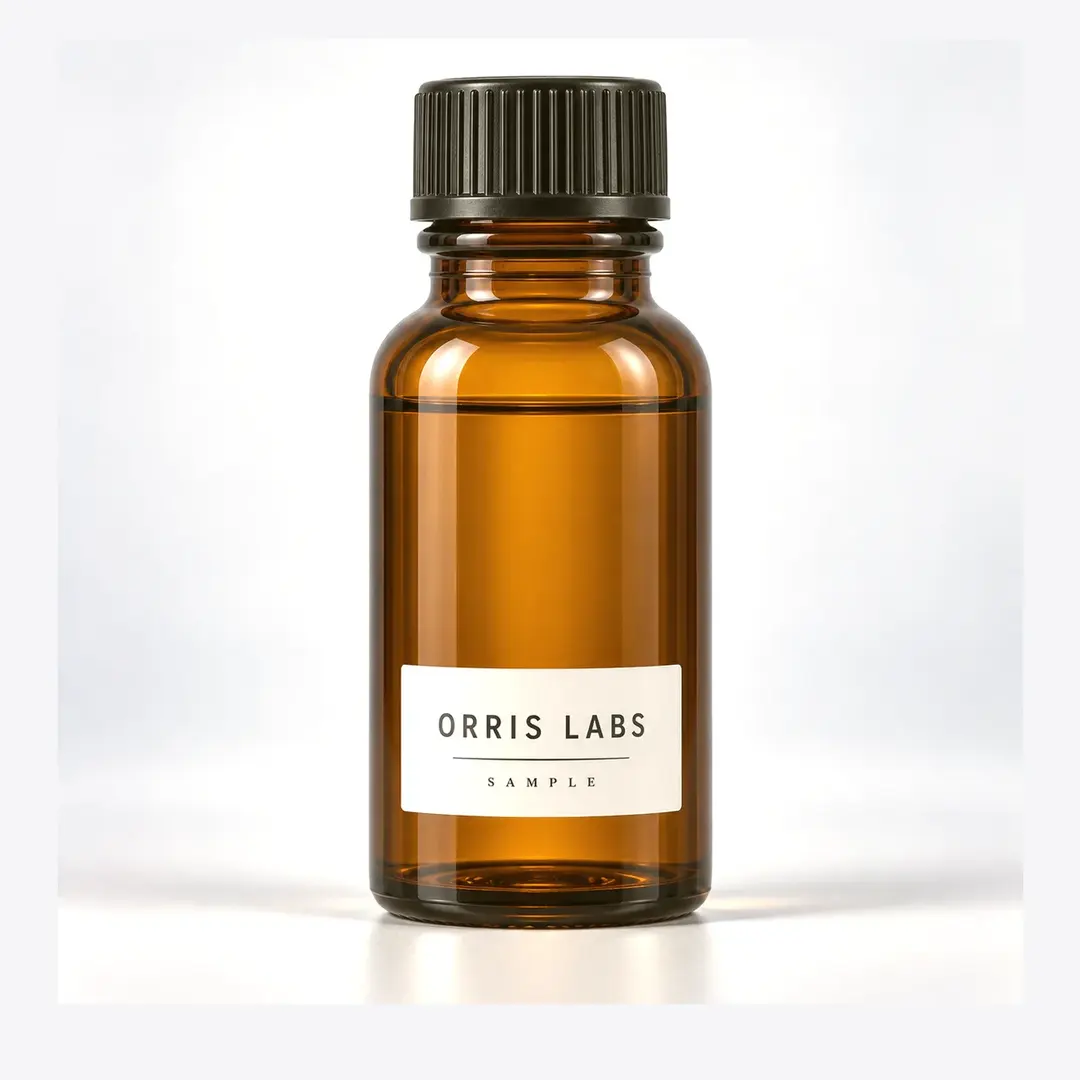
Model 385 is the workhorse of our wholesale stock program: a small cylindrical amber glass vial with a continuous-thread screw neck, held in regular production for buyers who need a reliable container without the lead time or tooling cost of a custom mold. The format is easy to summarise—deep amber glass, straight walls, a defined shoulder, and a clean multi-turn thread finish that accepts a wide family of standard closures. For spirits brands building sample programs, bitters and tincture producers, essential-oil blenders, and laboratories that buy by the carton, a proven stock vial like Model 385 is usually the fastest and most economical answer.
Why a Stock Model Beats a Custom Mold for Small-Format Programs
The economics of small containers are counterintuitive: the smaller the bottle, the harder it is to justify custom tooling. A bespoke mold for a miniature format carries the same engineering cost as one for a full-size spirits bottle, while the unit selling price of the filled product is far lower. Stock models solve this by spreading tooling cost across thousands of buyers and years of repeat production. Model 385 ships from an existing, maintained mold set, which means no tooling invoice, no three-month mold-development timeline, and no design risk—what you sample is what every reorder will match. For a distillery sending 50 ml tasting miniatures to distributors, a bitters startup testing three recipes at a farmers’ market, or a skincare brand piloting a serum, that certainty is worth more than a unique silhouette. Custom shapes have their place—we build them every week—but the right first question is whether the program actually needs one.
Amber Glass as Functional Protection, Not Just Color
The amber tone of Model 385 is functional engineering, not decoration. Amber glass filters the ultraviolet and short-wavelength visible light that degrades light-sensitive contents: botanical tinctures lose potency, essential oils oxidize and drift off-note, hop-derived compounds in bitters go skunky, and many active cosmetic ingredients discolor or separate under light exposure. For spirits samples, amber glass preserves the liquid’s profile between the distillery and the buyer’s tasting glass, which matters when the sample is the sales pitch. The color is integral to the glass melt—produced with iron, sulfur, and carbon compounds in the batch—so it cannot scratch, peel, or wash off like a surface coating, and it performs identically on the thousandth reorder as on the first carton. If your formula or spirit is genuinely light-stable, we also produce flint and green equivalents, but for anything botanical, amber remains the industry default for good reason.
The Continuous-Thread Neck: One Vial, Many Closures
The defining feature of Model 385 is its continuous-thread screw finish—the smooth multi-turn thread visible at the neck—which opens a wide closure ecosystem without any change to the glass. The same vial can be paired with a plain screw cap and liner for bulk tinctures, a dropper assembly for essential oils and bitters dosing, a treatment pump for serums, or a tamper-evident closure where regulations or retail channels require one. That flexibility lets a buyer run several product lines on a single glass SKU: one pallet of vials becomes bitters with droppers this month and sample miniatures with screw caps the next. Exact neck-finish dimensions and closure compatibility are mold-specific and should be confirmed with the factory at quotation; we supply finish drawings and will cross-check your chosen closure supplier’s specification against them before production.
Who Buys Model 385 and How Programs Scale
Three buyer profiles account for most Model 385 volume. First, spirits and liqueur brands running sampling programs—miniatures for distributor tastings, competition entries, and gift-with-purchase promotions—who value the stock availability and fast turnaround. Second, bitters, tincture, and syrup producers, for whom the dropper-compatible neck and UV protection are functional requirements rather than preferences. Third, essential-oil and aromatherapy blenders building multi-SKU lines where a uniform vial family keeps the shelf presentation coherent. Programs typically start with a few cartons to validate the closure pairing and fill-line behavior, then scale to pallet quantities; because the model is continuously stocked, reorder lead times stay short and predictable, and there is no risk of a discontinued mold stranding an established product line.
Quality Control and Compliance for a Small-Format Vial
Small vials demand tight process control precisely because their tolerances are small. Every production lot of Model 385 passes dimensional verification against the approved drawing, visual inspection for stones, blisters, seeds, and thread-finish defects, and structural testing aligned with international glass-container methods: thermal-shock endurance per ISO 7459, internal pressure resistance per ASTM C147 where the closure application requires it, and vertical load strength per ISO 8113 for stacking and capping loads. Thread finish gauge checks confirm closure fit on every lot, and annealing is verified to keep residual stress within safe limits for hot-fill and pasteurization-adjacent applications. A lot-level QC report accompanies each shipment, and retained samples from every run are archived so any field issue can be traced to a specific production window.
Ordering Model 385: Quantities, Packing, and Lead Time
Stock models keep ordering simple. Minimum order quantity reflects carton and pallet economics rather than mold scheduling—our glass bottle MOQ explainer walks through how those variables interact—and buyers consolidating closures or complementary containers into the same shipment get the best landed cost. Vials are packed in divider cartons that protect the thread finish in transit, and export orders are palletized and shrink-wrapped for ocean freight; our guide to importing glass bottles from China helps you model landed cost and lead time realistically. Capacity, brimful volume, weight, and exact dimensions are confirmed on the technical drawing at quotation. When you are ready to specify, contact our team and mention Model 385—we will return the drawing, closure compatibility notes, sample pricing, and current stock position.
Frequently Asked Questions
What is Model 385 typically used for?
Model 385 is a stock amber glass vial used for spirits sampling miniatures, bitters and tinctures, essential-oil blends, and small-format serums. Its amber glass protects light-sensitive contents, and its continuous-thread neck accepts screw caps, droppers, and treatment pumps, so one vial SKU can serve several product lines.
What closures fit the continuous-thread neck?
The continuous-thread finish accepts standard screw caps with liners, dropper assemblies, treatment pumps, and tamper-evident closures from most major closure suppliers. Exact neck-finish dimensions are mold-specific; we supply the finish drawing at quotation and will cross-check your chosen closure against it before production.
Why is amber glass recommended for tinctures and essential oils?
Amber glass filters ultraviolet and short-wavelength visible light that degrades light-sensitive contents—botanical tinctures lose potency, essential oils oxidize, and many actives discolor under light. The color is integral to the glass melt, so the protection cannot scratch or wash off and performs identically on every reorder.
What is the minimum order quantity for a stock model?
Stock models carry lower MOQs than custom-mold bottles because no mold scheduling is involved—the minimum reflects carton and pallet economics. Buyers consolidating closures or complementary containers into one shipment typically achieve the best landed cost. Contact us with your target quantity for a precise quotation.
Can I get samples before placing a production order?
Yes. We recommend physical samples for a fill, cap, and pack-out trial before committing—especially to validate your chosen closure pairing and filling-line behavior. Samples of stock models ship quickly because the mold is in continuous production.
What capacity and dimensions does Model 385 have?
Capacity, brimful volume, weight, and exact dimensions are confirmed on the technical drawing at quotation. As a small-format vial it suits sample and dosing applications; share your target fill volume and our team will confirm fit and recommend the right closure system.


