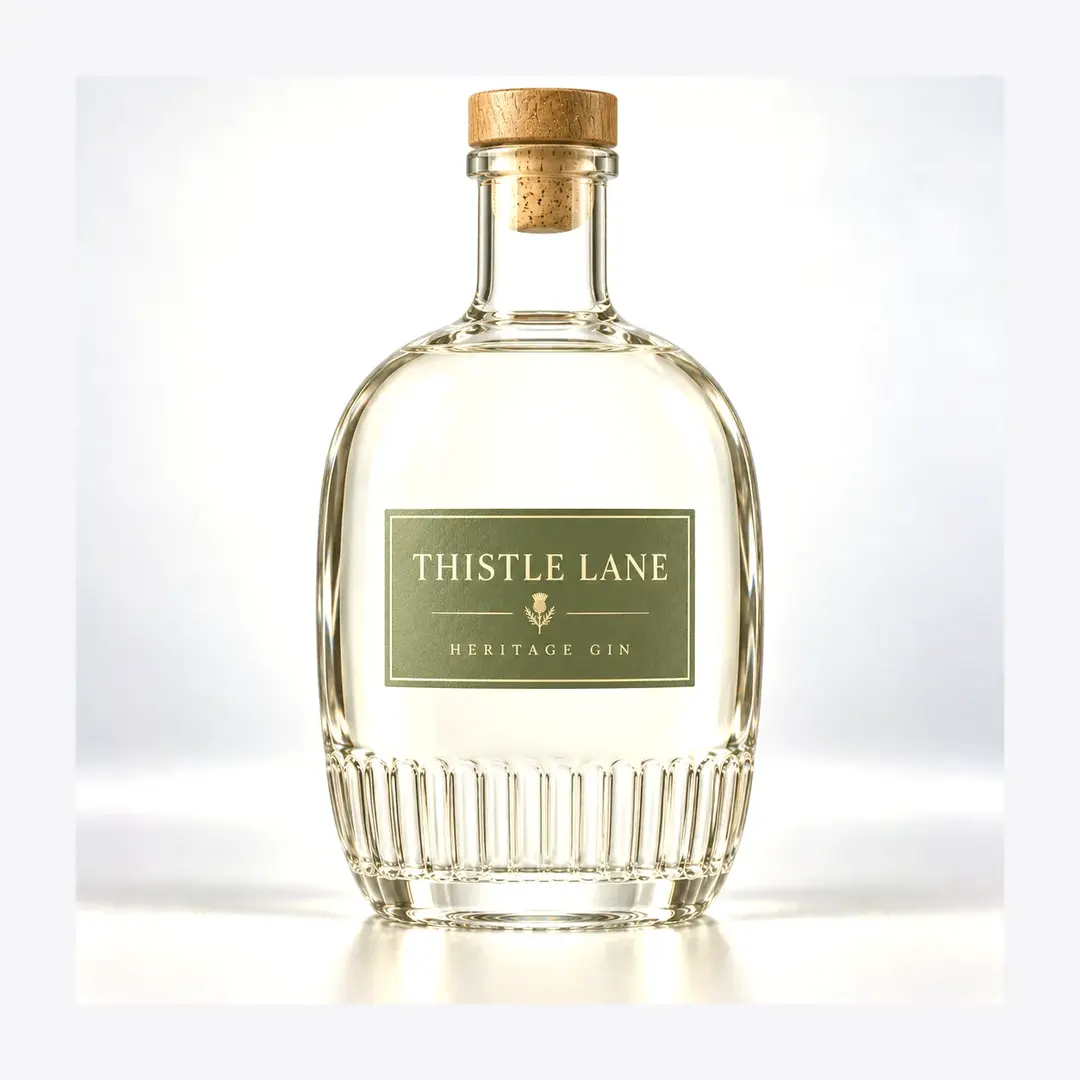
The bottle shown here, our model JDK, is a flattened-oval spirits flask in clear flint glass with one detail that does most of the branding work before any label is applied: a band of scalloped, petal-like fluting pressed into the heel. Above that fluted band the body runs smooth and slightly pillow-shaped through sloped shoulders into a short neck finished with a rolled ring lip — the classic seat for a bar-top cork. The base is heavy for the format, and the whole silhouette reads “heritage spirits” at arm’s length. This page is a buying brief for brand owners, distilleries and importers evaluating this flask for whisky, rum, or aged-spirit programs. Capacity, exact dimensions, weight and neck-finish code are not printed on the photograph; confirm all of them with the factory before tooling decisions.
The Heel as a Mold Signature
Most economy flasks are anonymous below the shoulder line. The JDK mold spends its differentiation budget at the heel instead. The scalloped fluting does three jobs at once. Optically, each petal acts as a small prism: under back-bar lighting the fluted band throws a ring of highlights around the bottle’s lower third, which is exactly where a consumer’s eye lands when the bottle sits on a shelf below eye level. Functionally, the fluting adds grip where the bottle is actually held during pouring — a subtle but real benefit for bartenders working fast with wet hands. And from a brand-equity view, a heel pattern is a mold signature: it cannot be soaked off, scuffed away, or imitated by a competitor using stock bottles. If your label is ever removed, the bottle is still recognizably yours.
That permanence matters for heritage programs. Whisky and rum buyers in the value-premium band tend to keep bottles, reuse them, or at least handle them repeatedly across years. A design cue pressed into the glass itself survives that whole lifecycle, while paper labels and capsules degrade.
Bar-Top Closure Economics
The rolled ring lip visible at the neck is formed for a bar-top (T-cork) closure rather than a threaded cap. That choice has real cost and positioning implications. A bar-top closure costs more per unit than a ROPP screw cap and usually involves two components — the cork or synthetic shank plus a decorative head in wood, plastic, or zamak. In return you get the opening ritual that premium spirits buyers expect: the soft pop, the resealable stopper, the sense that the liquid inside deserves ceremony. For heritage whisky and aged rum positioned above the fight-tier, that ritual typically justifies the closure premium. If your program needs sharper unit economics, confirm with the factory whether this mold can be supplied with an alternative finish; do not assume it from the photograph.
Where This Flask Wins
The flattened-oval section is the traditional geometry of pocket flasks and heritage spirits bottles, and it earns its keep in three commercial situations. First, duty-free and travel retail, where slim bottles pack efficiently into carry-on bags and gift boxes. Second, gifting programs, because the flask section presents a broad front face for medallion labels and embossed seals while staying comfortable to wrap and box. Third, back-bar lineups, where a row of flattened bottles shows more front label per linear meter of shelf than round bottles of the same capacity. Common capacity classes for this silhouette run from 500ml through 750ml in export markets, but the JDK page does not state its fill volume — confirm the available cavity volume with the factory, and ask whether sister molds exist in adjacent capacities.
Decoration Routes on a Fluted Body
The smooth upper body is the natural canvas. Screen printing works well above the fluting line, and the flattened face gives registration-friendly flat contact for single- or two-color prints. Paper or film labels sit cleanly on the broad front panel; a small neck label can carry age statements or batch numbers. Spray frosting is possible but should be sampled first — matte coatings mute the prismatic effect of the heel fluting, which is this mold’s main optical asset, so many programs keep the glass clear and let the liquid color do the talking. Embossed medallions on the front panel are worth discussing with the factory if your volume justifies mold modification.
Filling, Packing and Logistics Notes
Flattened flasks behave well on most spirits lines, but two practical points belong in your planning. First, orientation: the oval section means the bottle has a clear front and back, so label application stations need the bottle registered consistently — most modern lines handle this with standard side-belt guides, and your co-packer will confirm change parts against the bottle’s measured width and depth. Second, packing geometry: flasks nest efficiently in rectangular case grids with slimmer dividers than round bottles need, and the slim profile reduces case depth, which can trim cartonboard cost per unit across a container. On the freight side, the heavy heel that gives this mold its premium feel also concentrates weight low in the case, which keeps stacked pallets stable in transit. Include the confirmed glass weight in your landed-cost model, and ask the factory for the standard case configuration — bottles per case, cases per pallet, and pallet dimensions for your freight forwarder’s quote.
Quality Control and Factory Confirmation
Every bottle in this series is annealed to relieve forming stress — our reference standard is ASTM C148 for annealing point determination — and production lots are checked against internal pressure resistance per ISO 7458 and thermal shock resistance per ISO 7459 where the filling process demands it. These are process capabilities, not page-specific certificates: ask the factory for the inspection records that apply to your production lot. Before you commit, the checklist is short but strict: confirmed capacity and brimful volume, body dimensions against your label dies, neck-finish drawing against your chosen bar-top closure, glass weight tolerance, and decoration feasibility samples on the actual fluted surface.
Ordering and RFQ
To move this bottle from photograph to purchase order, send your target quantity, destination port, intended closure, and decoration direction through our contact page. If you are still mapping order quantities to price breaks, our guide on glass bottle MOQ explains how factories tier pricing. Buyers comparing multiple suppliers can adapt the scorecard in our supplier checklist to structure the evaluation. Samples of this flask can be arranged for closure fit and filling-line trials before mass production.
Frequently Asked Questions
What capacity is the JDK fluted-heel flask?
The product photograph does not state a fill volume, and we do not quote capacities we cannot verify. Flasks of this silhouette commonly run in the 500ml to 750ml class for export spirits programs. Confirm the exact cavity volume and brimful capacity with the factory before you design labels or file label approvals.
Which closure fits the rolled ring lip on this bottle?
The visible finish is formed for a bar-top (T-cork) style closure — natural cork, synthetic shank, or a decorative-headed stopper. The exact neck-finish drawing must come from the factory; send your chosen closure reference with your inquiry so fit can be confirmed on physical samples.
Can the petal fluting at the heel be customized to our brand pattern?
Heel fluting is pressed by the mold itself, so changing the pattern means mold modification or a new mold. For sufficient volumes the factory can discuss custom heel embossing; for stock-mold volumes, decoration on the smooth upper body is the faster route.
Does frosting or spray coating hide the fluted heel?
Matte sprays will mute the prismatic highlights the fluting creates under bar lighting. If the heel’s light play is part of your shelf strategy, keep the glass clear or use light screen printing above the fluting. Always request a decorated sample on the real bottle before committing.
Is this flask suitable for high-speed filling lines?
Flattened flasks run on most spirits lines with appropriate change parts, but line compatibility depends on body dimensions and stability, which vary by machine. Confirm the bottle’s dimensions with the factory and run a line trial with samples before mass production.
What quality checks apply to production lots of this bottle?
Bottles are annealed for stress relief (reference ASTM C148), and lots can be verified for internal pressure resistance (ISO 7458) and thermal shock (ISO 7459) where your filling process requires it. Ask the factory for the inspection records tied to your specific production lot.


