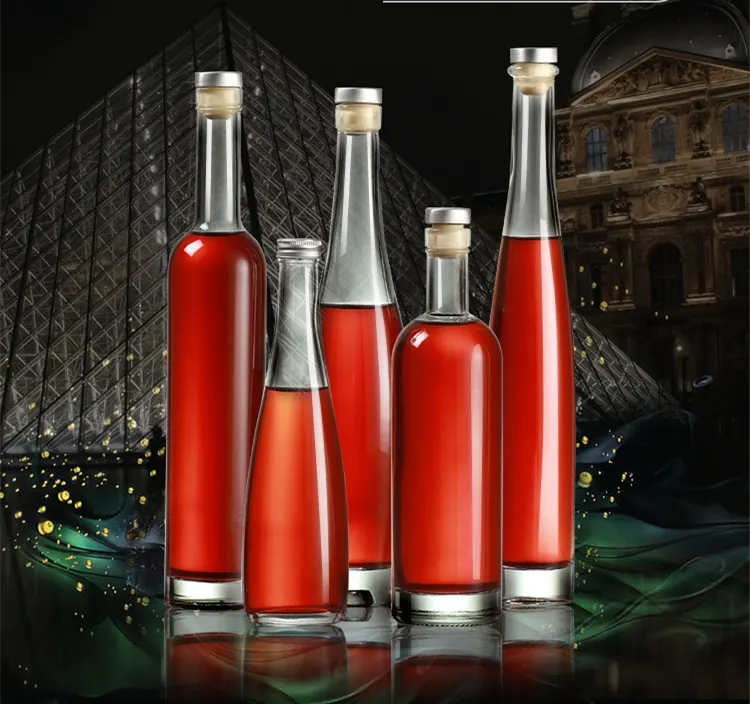
Filed under whiskey bottles wholesale; the moulds we quote for this are pictured at the foot of the page.
The whiskey bottle is far more than a container. For a distillery, an independent bottler, or a private-label developer, it is the first handshake with the customer: the weight in the hand, the silhouette on the back bar, the flash of flint glass under shelf lighting, and the pop of a wooden T-cork all communicate price positioning before a single drop is poured. Choosing the right whiskey bottle is therefore a structural branding decision, not an afterthought. This guide walks through every specification layer a buyer needs to master — bottle shapes, glass materials and colors, the full capacity system from 50ml miniatures to 1.75L handles, closure engineering, and custom decoration processes — so you can brief a glass factory with confidence and avoid the costly mistakes that derail spirits launches.
Whether you are sourcing a stock mold for a fast market entry or budgeting a proprietary mold for a flagship single malt, the same logic applies: define the liquid, the channel, and the brand story first, then let those answers drive the glass specification. Buyers who reverse that order often end up with beautiful bottles that cannot run on their filling line, or cheap bottles that suffocate a premium liquid. The sections below build the knowledge framework; for commercial terms, MOQs, and factory vetting, see our dedicated pages on whiskey bottles wholesale programs and how to evaluate whiskey bottle manufacturers.
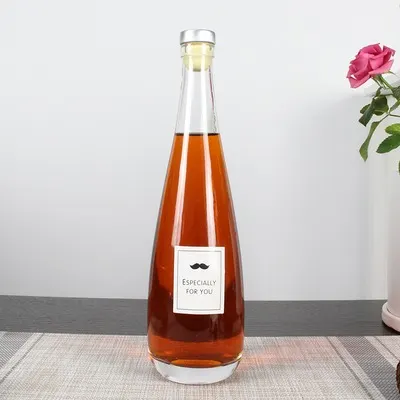
Whiskey Bottle Shapes: Choosing the Silhouette
Shape is the most visible decision and the one consumers remember. Four families dominate the whiskey category, each with distinct engineering and branding implications.
Round (Oslo and Boston-style) Bottles
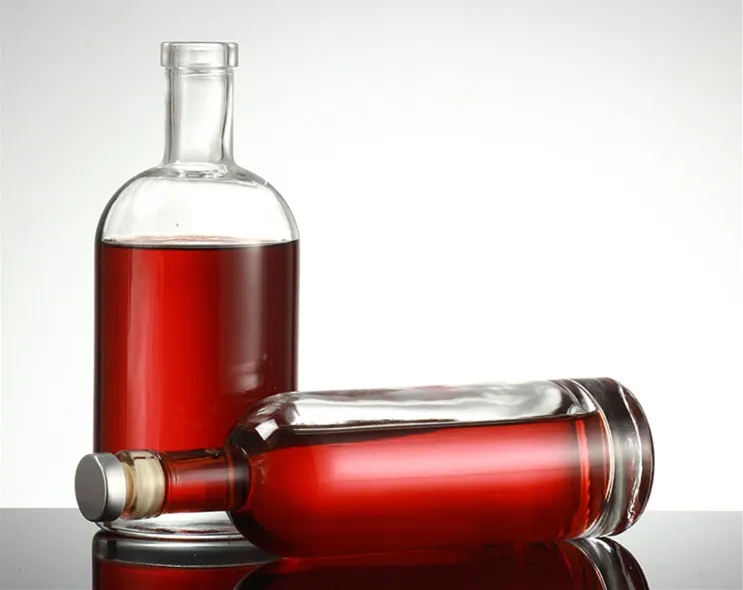
The cylindrical round bottle is the workhorse of the industry. It runs at the highest speeds on automated filling and labeling lines, offers the largest uninterrupted label panel, and stacks efficiently in cases. Most Scotch and Irish whiskey volume ships in round formats. For buyers, the round bottle is usually the lowest-cost option per unit because stock molds exist at every capacity and every glass factory can produce it reliably. If your brand story relies on label art rather than bottle sculpture, round is the rational choice.
Square and Rectangular Bottles
The square whiskey bottle — think of the classic Tennessee whiskey profile — communicates structure and tradition. Flat panels give four clean surfaces for embossing or screen printing, and the angular footprint differentiates instantly on a crowded shelf. The trade-offs are real: square molds cost more, glass distribution at the corners requires tighter quality control to avoid weak points, and automatic labeling needs oriented equipment. Square bottles also ship fewer units per pallet layer than rounds. Budget a 10–20% unit premium over equivalent round stock molds.
Flask (Flat) Bottles
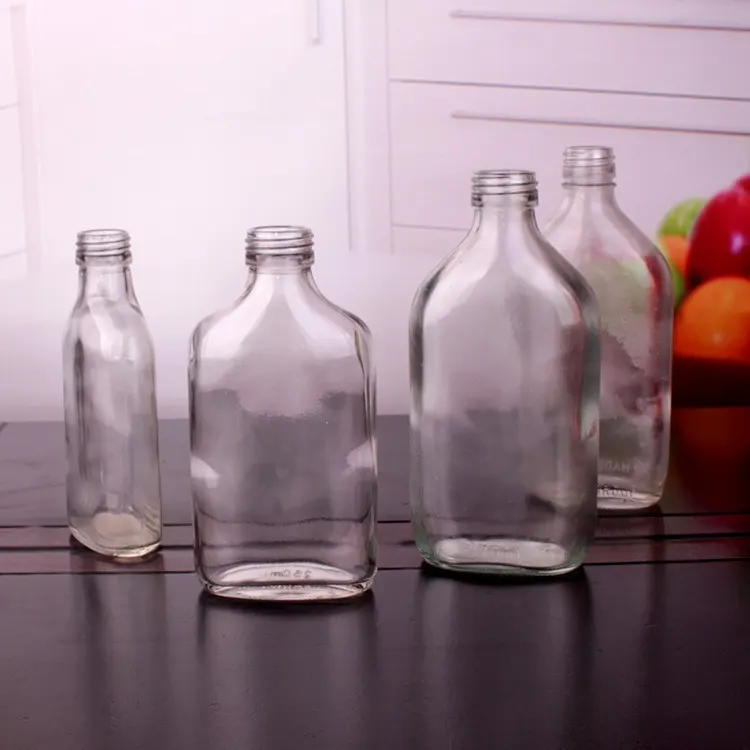
The flat flask format, with its elliptical cross-section, is designed for pocketability and is strongly associated with American whiskey, rye, and duty-free or travel retail. Flasks run from 100ml to 750ml, with the 200ml and 375ml half-bottle sizes especially popular. The slim profile reduces case cube, which lowers freight cost per liter. Our flat whiskey bottle manufacturing program covers the standard flask mold library with capacities from 100ml upward.
Decanter-Style and Premium Sculpted Bottles
At the top of the market sit decanter-style bottles: heavy-base, wide-shoulder formats that mimic crystal barware, plus fully sculpted proprietary shapes with embossed crests, punt medallions, and asymmetric profiles. These bottles routinely weigh 900g to 1,400g at 700ml — two to three times a standard bottle — and the glass weight itself is a marketing asset. The payoff is shelf presence that no label can replicate.
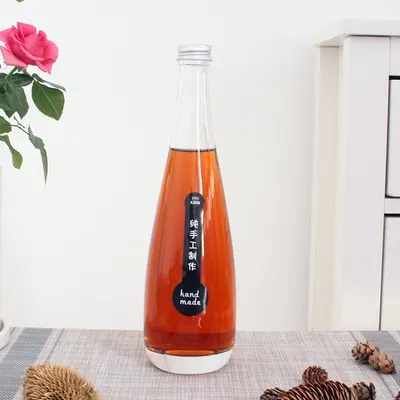
Glass Material and Color: What Your Whiskey Actually Sits In
Whiskey is almost universally bottled in soda-lime glass, but within that family the purity grade and color make an enormous difference to perceived quality.
Extra flint (super flint / high-white) glass is the premium standard: low iron content yields exceptional clarity and brilliance, so the amber liquid glows. Standard flint (crystal white) has slightly higher iron content, giving a faint green cast visible in thick sections like the base — acceptable for value brands, and roughly 5–10% cheaper. Amber glass offers the strongest UV protection and signals craft or heritage positioning; it is common for American craft whiskey and for markets with strong sunlight exposure in retail. Smoked, grey, and black glass — achieved with furnace coloring or spray coating — creates dramatic shelf impact for limited editions. Green antique glass, traditional in wine, appears occasionally in Irish whiskey for heritage cues.
Two engineering notes matter for buyers. First, colored glass from the furnace (not sprayed) is food-contact safe throughout the wall and will not scratch off; sprayed color coatings must be specified with abrasion resistance testing if bottles will run through high-friction packaging lines. Second, UV protection: amber blocks roughly 90% of UV below 450nm, while flint blocks very little. Lightstruck flavor is a genuine risk for whiskey displayed under retail lighting for months, so flint bottles should ideally ship in full cartons or UV-filtering secondary packaging. Our overview of spirits glass packaging options compares these material grades across categories.
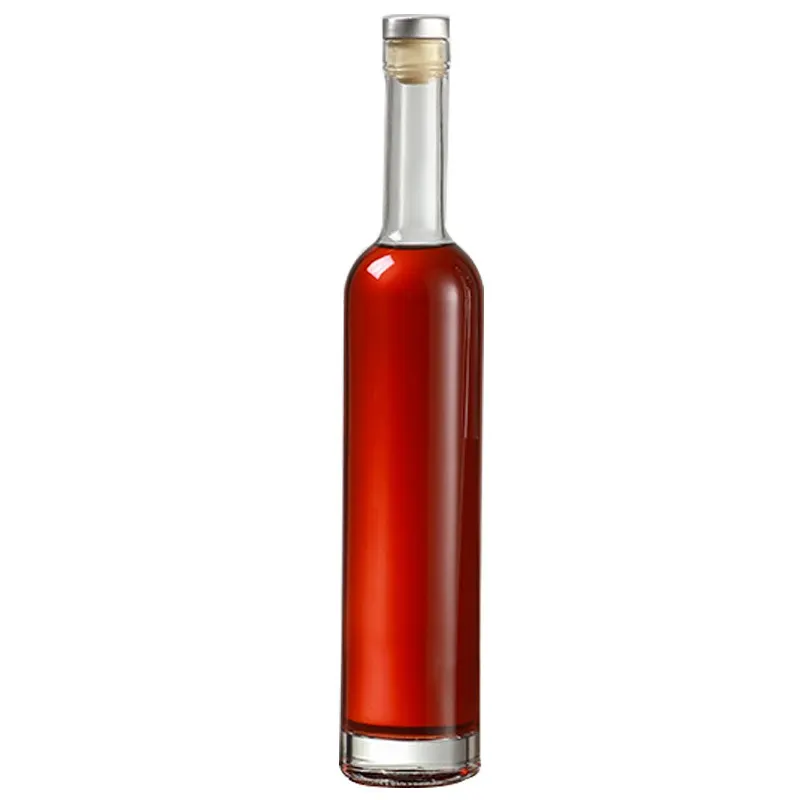
The Capacity System: From 50ml Miniatures to 1.75L Handles
Whiskey capacity is regulated by market. The European Union mandates 700ml as the standard bottle; the United States uses 750ml; travel retail leans on 1 liter; and the US off-trade moves huge volume in 1.75L handles. A serious buyer specifies capacity by destination market, not by habit.
| Capacity | Common Name | Primary Use | Typical Closure |
|---|---|---|---|
| 50ml | Miniature / nip | Sampling, airlines, gift sets, hotel minibars | Aluminum screw cap (ROPP) |
| 100–200ml | Flask / pocket | Travel retail, trial sizes, craft distillers | Screw cap or small T-cork |
| 375ml | Half bottle | Premium sampling, e-commerce bundles | T-cork or ROPP |
| 700ml | EU standard | Europe, Asia-Pacific retail | T-cork or bartop cork |
| 750ml | US standard | United States, Canada, global duty free | T-cork or ROPP |
| 1L | Travel retail liter | Duty free, back-bar well bottles | ROPP or pourer-fitment cap |
| 1.75L | Handle / magnum | US off-trade, hospitality speed rails | ROPP with handle neck finish |
Miniatures deserve special attention because they punch far above their volume in marketing value. A 50ml sample program can seed a brand across an entire airline or hotel group. At the other extreme, the 1.75L handle requires a neck finish matched to larger 33mm or 38mm ROPP caps and, ideally, an integral glass handle or finger grip molded into the shoulder. Not every factory runs handles well; confirm the press-and-blow or blow-and-blow process capability before committing. Mid-range stock capacity molds such as the 750ml liquor bottle range offer the fastest route to market with MOQs from one container load.
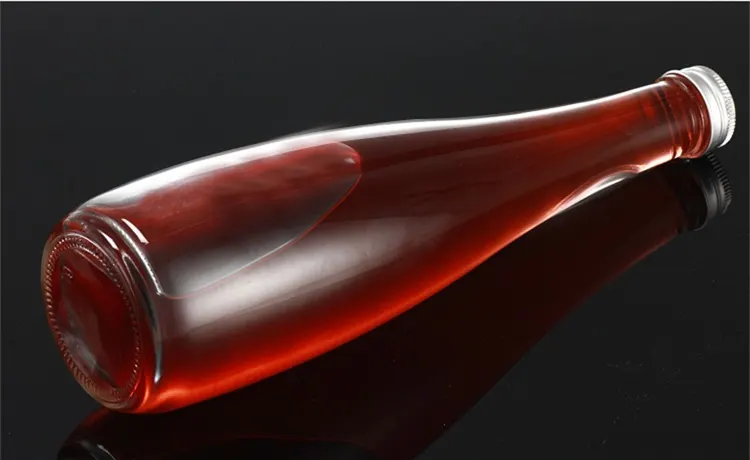
Closure Systems: The Seal That Completes the Bottle
The closure is the second touchpoint after the bottle silhouette, and in whiskey it carries unusual symbolic weight. Three systems dominate.
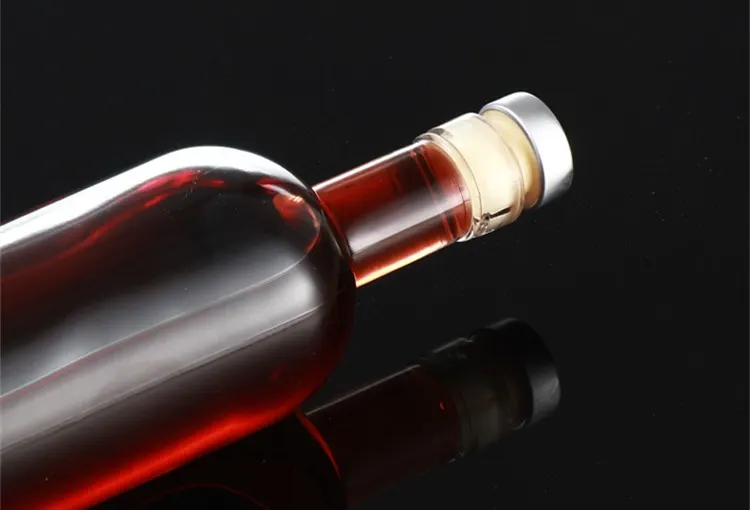
T-top corks (bar-top stoppers) combine a natural or agglomerated cork shank with a wood, metal, or plastic cap. They are the signature of premium whiskey: the ritual of pulling the cork is part of the product experience. Specify cork shank diameter to the bottle’s bore tolerance (typically 18.5mm or 21.5mm shanks for standard spirits finishes) and demand moisture-content certification (5–8%) from the cork supplier to avoid seepage or crumbling. ROPP aluminum screw caps (roll-on pilfer-proof) are the high-speed, tamper-evident standard for value and mid-tier whiskey, miniatures, and back-bar liters; they apply at line speeds above 200 bottles per minute and eliminate cork taint risk entirely. Glass stoppers with synthetic sealing rings serve the ultra-premium and decanter segment, where the closure itself is a keepsake object.
A practical sourcing note: always source bottle and closure as a matched system. A 0.3mm bore deviation that a cork supplier tolerates may still leak under air freight pressure changes. Reputable bottle factories maintain closure compatibility charts — our glass bottle closure guide explains neck finish standards (GPI, BVS, MCA) and how to request finish drawings before ordering. For the full commercial picture on closure-inclusive quotes, the whiskey bottle price breakdown shows how closure choice moves total landed cost.
Custom Branding and Decoration Processes
Once shape, glass, capacity, and closure are fixed, decoration turns a stock bottle into a branded asset. Five industrial processes cover virtually every whiskey branding need.
Embossing and debossing are executed in the mold itself: your crest, distillery name, or founding date becomes part of the glass.
Screen printing (silk screen) applies ceramic inks directly onto glass and fires them at 560–620°C, making the design permanent and dishwasher-proof. Decals (waterslide transfers, then fired) handle photographic detail, gradients, and up to eight colors including precious-metal inks — the standard for ornate premium labels-in-glass. Spray coating and frosting transforms the whole bottle: matte black, gradient smoke, metallic finishes, or full frosting. Coatings need crosshatch adhesion testing and, for export, verification against destination-market food-contact regulations. Hot stamping (foil) adds genuine gold, silver, or copper metallic accents, usually over a printed or coated base, for the final luxury cue.
Most premium projects combine two or three processes — for example, an embossed crest plus a fired decal plus gold hot-stamped accents. Our glass bottle decoration services page details process capabilities, artwork requirements, and sampling timelines, and the custom whiskey bottles program walks through the full development path from sketch to production. Also worth reviewing before your first RFQ: the glass bottle size guide for capacity tolerance standards across markets.
How to Specify a Whiskey Bottle: The Buyer’s Checklist
A complete whiskey bottle RFQ answers eight questions. Bringing this list to a factory on day one typically cuts sampling cycles from three rounds to one.
| Specification | What to Decide | Common Trap |
|---|---|---|
| Shape family | Round / square / flask / decanter-style | Choosing sculpture before confirming filling-line compatibility |
| Glass grade | Extra flint, standard flint, amber, colored | Ignoring UV exposure in the retail channel |
| Capacity | 700ml vs 750ml vs market-specific sizes | Ordering EU 700ml molds for a US launch |
| Weight | Standard (450–600g) vs heavy-base (800g+) | Freight cost shock on heavy glass |
| Neck finish | Cork bore vs ROPP thread spec | Bottle and closure sourced separately without matching drawings |
| Decoration | Emboss / print / decal / spray / foil | Artwork submitted after mold freeze |
| Quantity | Stock mold MOQ (10k–30k) vs custom mold (50k+) | Custom mold economics at small volumes |
| Compliance | FDA / EU food-contact, destination labeling rules | Spray coatings without migration test reports |
With the specification locked, the remaining decisions are commercial: stock mold versus proprietary mold, single factory versus dual sourcing, and FOB versus delivered pricing. Those topics — MOQs, tooling amortization, quality inspection protocols, and freight optimization for heavy glass — are covered in depth in our wholesale and manufacturer guides linked throughout this page. For a broader view of supplier evaluation, the liquor bottle manufacturers overview adds category-wide benchmarks that apply directly to whiskey programs.
Frequently Asked Questions
What is the standard whiskey bottle size?
There is no single global standard. The European Union and most of Asia-Pacific use 700ml, the United States and Canada use 750ml, travel retail favors 1 liter, and the US off-trade sells heavily in 1.75L handles. Always specify capacity by destination market, and confirm local regulations before freezing molds.
What is the minimum order for a custom whiskey bottle mold?
Minimum quantities are quoted per project, because they depend on the mould and the line it runs on.
Should whiskey bottles be flint or amber glass?
Most premium whiskey uses extra flint glass because clarity showcases the liquid’s color. Amber glass is the right choice when bottles will sit under strong retail lighting for extended periods, since it blocks roughly 90% of damaging UV. If you choose flint, protect the liquid with full cartons or UV-filtering secondary packaging.
What closure is best for a premium whiskey bottle?
A T-top cork with a wooden or metal cap is the category signature for premium whiskey, combining ritual, resealability, and shelf presence. ROPP aluminum screw caps are the better engineering choice for value tiers, high-speed lines, and travel retail. Glass stoppers serve the decanter and ultra-premium gift segment.
How long does custom whiskey bottle production take?
Lead times are quoted per project, once the mould, decoration and line schedule are confirmed.
Can I get samples before placing a bulk order?
Yes. Always approve a physical sample — checking glass color, weight, decoration registration, and closure fit — before releasing mass production.
Ready to spec your whiskey bottle? Send the brief — container, closure, decoration, quantity and destination, whatever you already know — and quotes are answered in one to two business days. Start with the checklist above, or submit your specification through our alcohol bottle quotation channel for current stock availability and pricing.