Part of our bourbon bottles range; the stock moulds are pictured at the end of this guide.
Designing a custom whiskey bottle comes down to five choices: shape, capacity, glass color, decoration and closure. Capacity should be settled first, because it follows the market. 750 ml is the U.S. standard, 700 ml is the norm in most of Europe and Asia, and a capacity fixed in a mould cannot be changed afterwards. A unique shape needs a bespoke mould, but many brands begin with a catalog bottle and add their own embossing and print.
Choose the capacity by market
Bottle size is a regulatory and commercial decision before it is a design one.
| Size | Where it sells | Comment |
|---|---|---|
| 375 ml | On-premise, gift sets and samplers | The half bottle of the U.S. standard |
| 700 ml | EU, UK, Asia and most other export markets | The metric spirits standard outside North America |
| 750 ml | U.S. retail | The TTB benchmark size for spirits |
| 1,000 ml | Value lines, gifting and limited editions | A growing "big bottle" format with strong shelf presence |
Miniatures of 50–100 ml are also made for airlines, hospitality and sample sets.
In the United States, the Alcohol and Tobacco Tax and Trade Bureau (TTB) decides which container sizes spirits may be sold in. Alongside 750 ml, the approved list includes 375 ml, 1,000 ml, 1.75 L and a few others. The label must also meet the requirements for a TTB COLA (Certificate of Label Approval). We check the intended capacity against the authorized sizes before a mould is committed, which is the stage where a mistake costs least to correct.
Shape, color and decoration
Shape and the mould
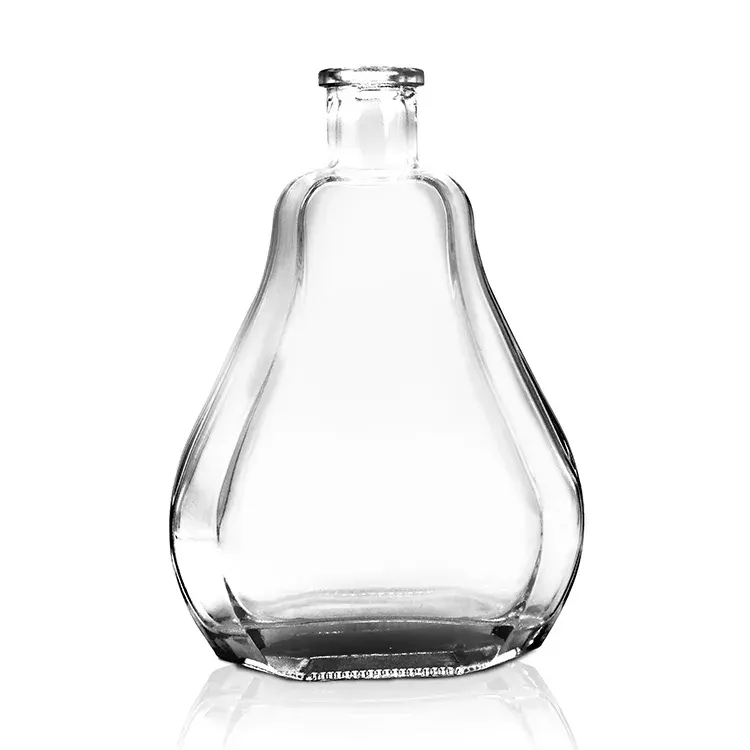
A bespoke mould permanently fixes the shape, the capacity, the neck finish and anything embossed. Whiskey bottles mostly fall into a few silhouettes:
- the classic round spirits bottle, with a soft shoulder and a long neck;
- square and flask shapes, which look modern and suit gifting;
- decanter styles with a wider body, used for limited and top-tier releases.
Glass color
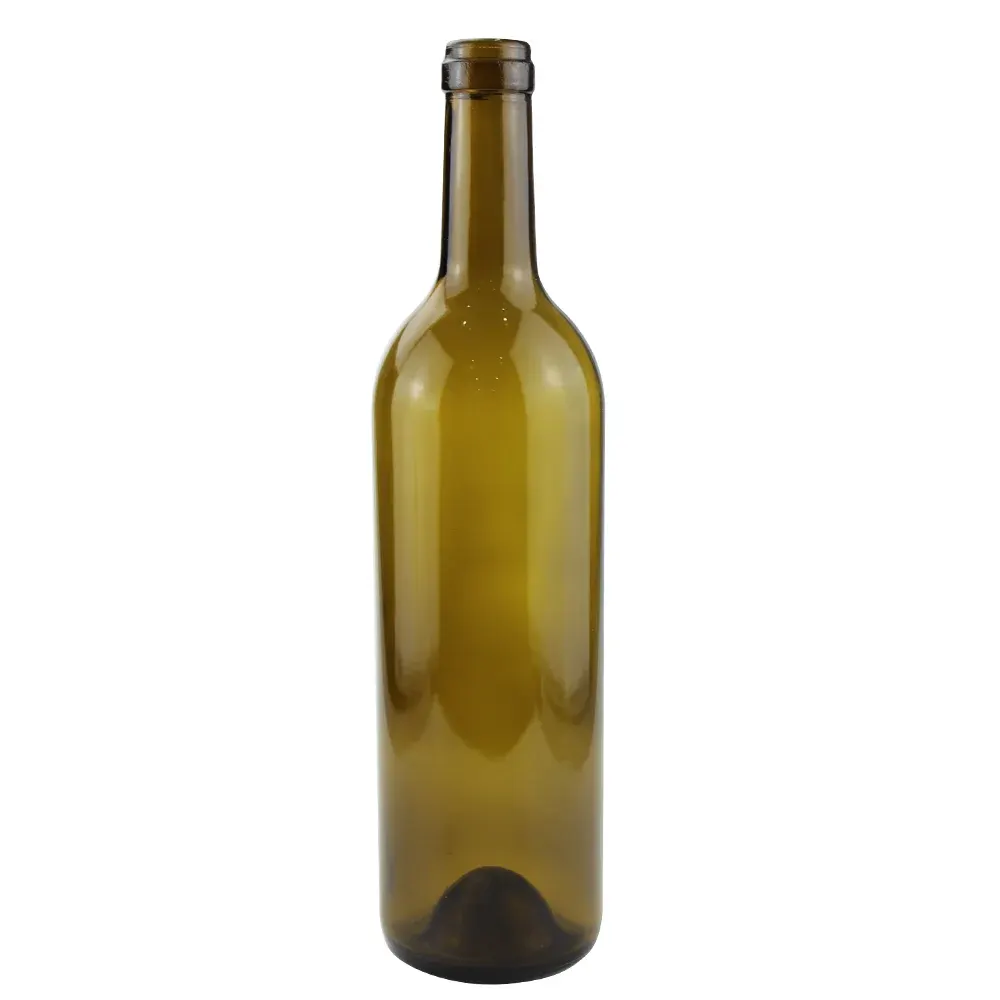
Amber is the customary whiskey color, since it filters UV light and so protects the spirit's color and flavor through a long shelf life. Black glass is gaining ground for its almost opaque look. Clear glass suits a brand that wants the liquid itself on show.
Decoration
The three main methods do different jobs, and one bottle can carry all of them.
| Method | How it is applied | Best used for |
|---|---|---|
| Embossing | Relief formed in the glass by the mould | A logo, monogram or crest that must never wear off |
| Screen printing | Ceramic enamel or organic inks | Color, label artwork, crests and copy |
| Laser engraving | Fine, sharp marking after forming | Serial numbers, batch codes and fine-line artwork |
Embossing is the upgrade brands ask for most. It is pressed into the glass while the bottle is formed, so it needs no separate finishing step and does not rub away. A typical combination is an embossed crest, a printed band of color and a laser-etched batch number.
Bring your own design or adapt a catalog bottle
Under an OEM (Original Equipment Manufacturer) arrangement, the brand supplies the drawings and specification and the plant makes the bottle exactly to them. Established distilleries use this route to protect a signature silhouette.
Under ODM (Original Design Manufacturer), the brand picks an existing design from a catalog and changes the color, decoration and finish. It suits start-ups, private label ranges and limited editions, where speed and a lower initial outlay count for more than a one-off shape.
Most projects end up as a mix: a catalog base with embossing and decoration made specifically for the brand. Private label works without a custom mould in the same way. You choose a stock shape in amber or black, have the brand mark embossed, add screen-printed labelling, and move to a fully custom mould later if volume grows. The liquor glass bottle collection shows the stock shapes, and the custom glass bottle page explains the mould route.
What to put in the request for quotation
A whiskey bottle is approved as a complete package. Body geometry, glass weight, neck finish, closure, decoration, carton and pallet protection all have to work together on the filling line and through export handling. Offers can only be compared fairly if each of these areas is written down first.
| Area | What to record |
|---|---|
| Spirit and fill | Whiskey style, target fill, headspace and market format |
| Geometry | Shoulder, base, label panel, center of gravity and how the bottle presents on shelf |
| Closure | Cork, T-top, screw cap or another component, with evidence that it fits the neck |
| Decoration | Frosting, coating, print, embossing or hot stamping, and the abrasion standard |
| Release | Golden sample, QC limits, carton, pallet and controls for repeat orders |
Closure types are compared in the closure selection hub.
For a first inquiry, send the application, target capacity, quantity range, destination market and timeline, together with any drawing, approved sample or reference image, and note which points you need confirmed. Ask for stock, modified-stock and custom options to be quoted separately, so that tooling, sampling, components, packing and freight each appear as their own line. You can send the project brief here, or look through all bottle collections beforehand.
We work as a sales and export-support team, not a glass plant. Catalog references and photographs describe a direction. Technical fit, available options and commercial terms are confirmed project by project with the partner factory concerned.
Frequently asked questions
What is the minimum order for custom whiskey bottles?
It rises with the degree of customization and is quoted per project. Check it against your sales forecast before any design work begins.
What does a custom mould cost?
Cost is quoted per project too. It depends on the mould, the decoration, the order quantity and the freight terms.
How long does sampling take?
Timing is confirmed after the mould, the decoration and the production schedule are known.
Does a catalog page confirm the final specification?
No. A catalog entry establishes the product family, the reference and any capacity, color or closure named in its title. Dimensions, neck finish, component compatibility, artwork and packing still need a drawing, a component review, a sample or written confirmation.
Can a reference image stand in for a drawing?
No. An image conveys visual direction only. Details that affect the project are judged from a controlled drawing or an approved sample.