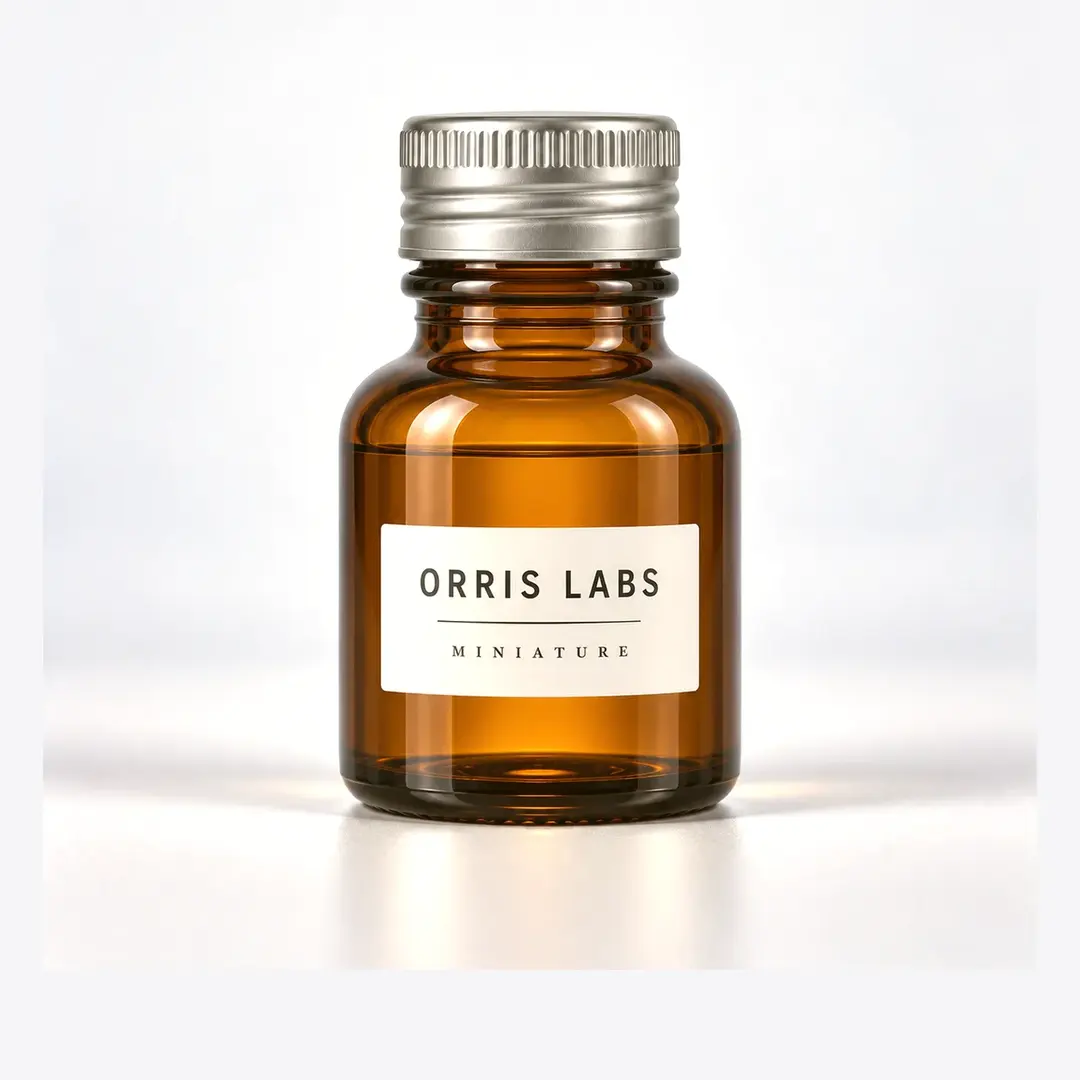
Not every spirits bottle is built to command a back bar. Some are built to travel, to sample, and to multiply — and Model 379 belongs to that working category. Model 379 is a small amber glass bottle with a clean cylindrical body, a gently rounded shoulder, and a multi-turn screw thread finish at the neck, a straightforward functional format. The amber color is rich and uniform, and the thread definition is crisp — two details that matter a great deal when this bottle is ordered not by the thousand but by the hundreds of thousands.
What the Sample Photo Confirms
From the photo we can state the following with confidence. The glass is amber — the deep, warm brown used across the beverage and apothecary trades — with consistent color through the wall. The body is a straight-sided cylinder with a soft shoulder transition. The neck finish is an external screw thread with clearly formed turns, suited to screw-cap closure systems. What the photo cannot establish, and what must be confirmed with the factory from the technical drawing: exact capacity, glass weight, thread specification and closure compatibility, and case-pack quantity. For a small-format bottle these numbers drive everything from closure purchase to carton and pallet design, so confirm them in writing before committing volume.
The Commercial Logic of Small Amber Bottles
Small-format amber bottles earn their place in a spirits portfolio through programs, not shelf presence. The three classic applications are sampling, miniatures, and light-sensitive liquids. Sampling programs — distillery discovery sets, trade tasting kits, subscription boxes, direct-to-consumer trial flights — need a container that is cheap enough to give away in volume yet respectable enough to represent the brand. Amber glass answers both: it reads as apothecary-grade and serious, and it costs less per unit than flint miniatures with decoration because the color itself provides the shelf cue. Miniature and travel-retail programs need the same economics at retail margin. And for genuinely light-sensitive contents — botanical spirits, herbal liqueurs, bitters, certain infused products — amber glass is not an aesthetic choice at all but a functional filter, blocking the wavelengths that degrade color and flavor compounds during storage and display.
The screw thread finish completes the working brief. Screw caps apply fast and seal repeatably on high-speed lines, they tolerate the handling abuse that sampling logistics involve, and they keep closure cost proportional to the bottle’s role. Nobody should spend cork money on a sample.
Built for Wholesale Scale
Model 379 sits in our wholesale catalog precisely because small bottles only make sense at volume. Unit economics depend on dense packing — small cylinders carton and palletize very efficiently — and on fast, repeatable production runs from a proven mold. As a catalog model, the tooling cost is amortized, the line settings are established, and repeat orders become scheduling exercises rather than projects. Buyers typically consolidate this bottle with matching screw caps and printed cartons in one shipment; our team plans the pallet configuration as part of every quotation. Minimum order quantities follow the framework in our glass bottle MOQ guide, and buyers planning a first import program can review the logistics fundamentals in our import guide. For a specification sheet, current pricing, and stock-sample availability, the contact page is the fastest route.
Filling-Line Behavior at Small Scale
Small bottles behave differently on filling equipment, and buyers should plan for it. Lightweight containers tip more easily through conveyors and star wheels, so line change parts — guides, timing screws, grippers — must be matched to the bottle’s exact body diameter and height, which is another reason the drawing figures matter more than the photograph. Screw-cap application at speed rewards the crisp thread definition visible on this sample: clean, complete thread turns let caps torque consistently, while soft or damaged threads show up immediately as seal-fault rejects. If your co-packer will run this bottle, send them a physical sample set before the first production date; a two-hundred-bottle trial run answers questions that a month of emails cannot.
Planning a Sampling Program Around This Bottle
Buyers building a first sampling or miniature program should sequence decisions in this order: confirm capacity against your pour size and any regulatory definitions of a sample unit in your target market; select the closure and fit-test it; then design the outer packaging, because the bottle’s packed dimensions — not its naked dimensions — determine carton and shipper size. Distilleries often underestimate how quickly sampling volumes grow once a distributor or subscription partner adopts the format, so we recommend pricing the bottle at two volume tiers from the start. Reorders against an on-file specification move quickly, but the first order sets the reference sample every later run is judged against, so approve it carefully.
Decoration and Branding on a Small Canvas
A bottle this size disciplines your branding, which is usually healthy. The practical options are a small wrap or front label — paper labels apply cleanly to the straight cylindrical wall — screen printing for bold one-color marks, or no decoration at all with the branding carried by cap color and the outer carton or sampler box. Many sampling programs deliberately keep the bottle anonymous and let the discovery-kit packaging do the storytelling; the amber glass already signals “serious liquid inside.” If you plan direct printing, approve it on physical samples of this mold, because amber glass changes how ink colors read compared with flint.
Quality Control for Amber Production
Amber glass introduces its own QC dimension: color consistency. Batch color is monitored against the master amber standard so that bottles from a January run and a June run sit identically in the same carton. Annealing is controlled and verified per ASTM C148, internal pressure resistance per ISO 7458, and thermal shock resistance per ISO 7459. Thread finishes receive dedicated dimensional gauging — a malformed thread turn means cap application faults at line speed, so thread profile is checked at first-article and at intervals through each run. Cosmetic grading covers seeds, blisters, and surface quality against signed limit samples agreed before production.
Frequently Asked Questions
What is wholesale Model 379 typically used for?
Small amber bottles of this type serve spirits sampling programs, distillery discovery sets, trade tasting kits, miniature and travel-retail lines, and light-sensitive products such as botanical spirits, herbal liqueurs, and bitters, where amber glass protects color and flavor compounds during storage.
What capacity is this bottle?
Capacity is not visible on the sample photo and we never estimate volumes from images. The exact nominal and brimful capacity, glass weight, and dimensions of this mold must be confirmed with the factory from the technical drawing before you design cartons or order closures.
Why choose amber glass instead of clear flint for samples?
Amber glass filters the light wavelengths that degrade sensitive liquids, and it carries an apothecary-grade seriousness that flatters a sample program. Economically, the color provides shelf identity without decoration cost, which matters when bottles are given away or sold at miniature margins.
What closure fits the screw thread neck?
The photo shows an external screw thread finish suited to screw-cap systems. The exact thread specification must be confirmed with the factory, and we strongly recommend fit-testing your chosen cap against physical samples before purchasing closures in volume.
What is the MOQ for this wholesale catalog model?
As a catalog mold with amortized tooling, entry quantities follow the accessible end of our standard framework — see the glass bottle MOQ guide. Small bottles pack densely, so even modest container volumes represent large unit counts. Current pricing and lead time come via the contact page.
How is amber color kept consistent between production runs?
Batch color is monitored against a master amber standard so bottles from different campaigns match inside the same carton. Annealing is verified per ASTM C148, internal pressure per ISO 7458, thermal shock per ISO 7459, and thread profile is gauged at first-article and at intervals through every run.


