
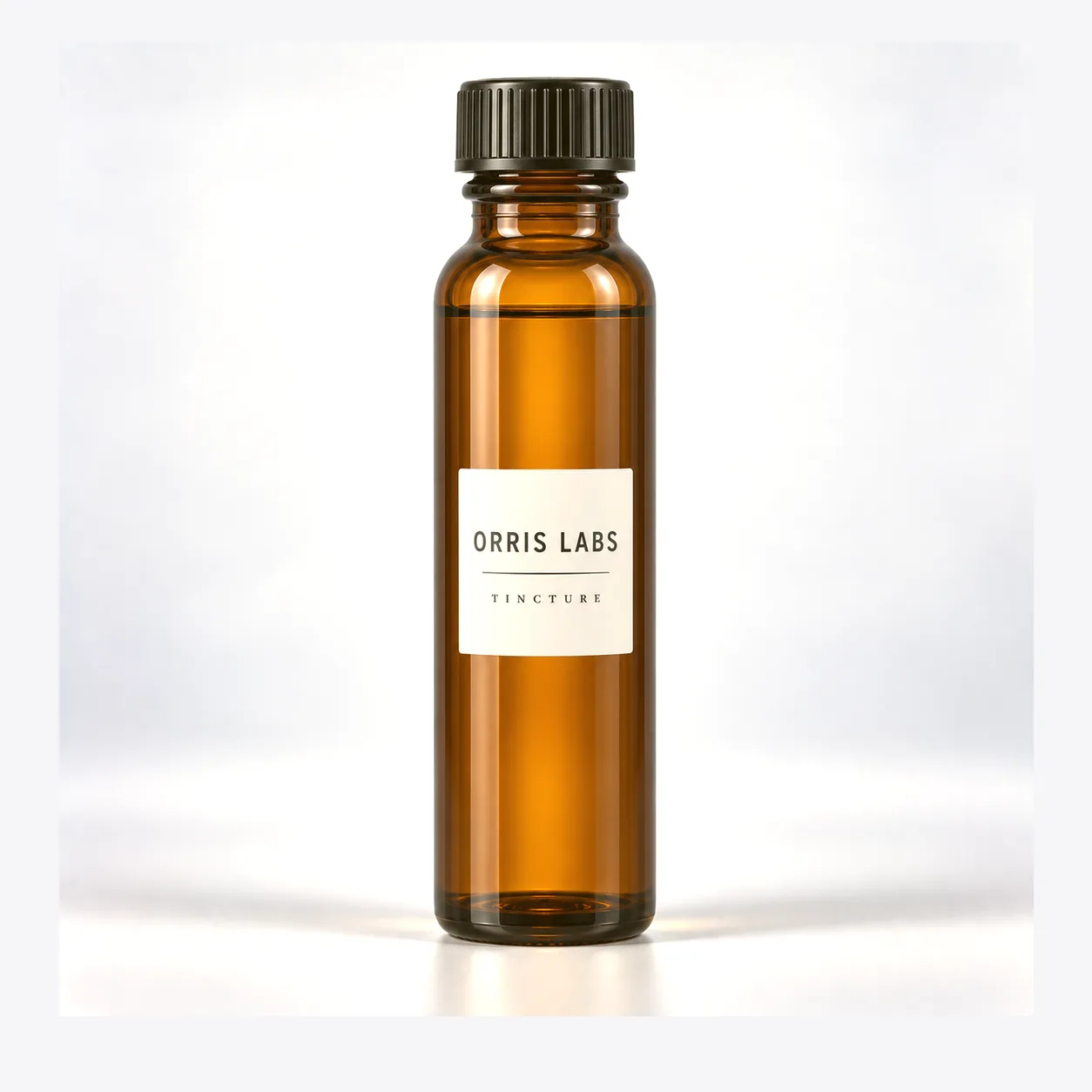
These 5ml miniature glass bottles exist for one commercial purpose: getting your product into a stranger’s hands at a cost your marketing budget can survive. Available in green, amber, cobalt blue, and clear flint glass from the same compact mold family, each vial shares the classic essential oil silhouette shown in the photo: a straight cylindrical body, a short shoulder, and a screw neck finish that accepts dropper caps, orifice reducers, rollerball fitments, and simple screw caps. If you run a discovery set program, a subscription box, an influencer seeding campaign, or an essential oil line organized by scent family, this is the workhorse container that makes the unit economics of sampling actually work.
The Unit Economics of a 5ml Sample
Every sampling program lives or dies on cost per recruited customer. A 5ml glass vial hits a practical floor: it is the smallest format that still feels like a real product rather than a sachet, holds enough essential oil or serum for roughly ten days of typical use, and survives postal networks when packed correctly. Glass matters here more than at larger sizes, because a sample that leaks, smells of plastic, or lets a citrus oil taste flat after a month destroys the exact first impression you paid to create. Because the mold is a high-volume standard, per-unit cost at wholesale quantities stays low enough that brands routinely give these vials away inside discovery sets that later convert to full-size sales at healthy multiples of the sample cost.
Discovery Sets and Subscription Boxes
The 5ml format is the default currency of the discovery set: four to eight vials boxed together, letting a customer explore a range before committing to a 30ml or 50ml bottle. Perfume houses use it for scent libraries, skincare brands for regimen trials, and aromatherapy companies for seasonal collections. Subscription box operators favor 5ml glass for the same reasons plus one more: the vials photograph beautifully in unboxing content, and their uniform footprint simplifies the die-line of the insert tray that holds them. When you plan a set, mixing glass colors within the same mold family keeps the presentation cohesive while differentiating each formula, and all closures stay interchangeable across the set, which simplifies your filling operation considerably.
Color Coding by Scent Family
The four-glass palette in this family is not decoration; it is an information system. Essential oil brands have long used amber for standard singles and blends, cobalt blue for florals or premium lines, green for herbaceous and therapeutic notes, and clear flint for colorless carrier oils where purity is the selling point. Customers learn the code after one purchase and navigate your range faster, which measurably reduces decision friction at retail. The same logic works for skincare: green for the calming line, amber for the antioxidant line, blue for hydration. One practical caution: color coding only works if you hold it consistent across your catalog for years, so choose the mapping before your first print run and document it in your brand guidelines.
Closures That Fit a Miniature
At 5ml, dispensing control matters more than anywhere else, because a single accidental pour can waste a tenth of the contents. The screw neck on this family accepts the full miniature closure toolkit: orifice reducers with tamper-evident caps for pure essential oils, glass pipette droppers with scaled-down bulbs for serums, stainless rollerball fitments for perfume oils and pulse-point blends, and plain phenolic caps for vials that will be decanted by the end user. Neck finish dimensions are confirmed on the technical drawing at quotation, and we can supply bottle-plus-closure as a matched, leak-tested set so your filling line receives a single validated component pair rather than two parts that have never met.
Filling, Packing, and Shipping Miniatures at Scale
Small vials change the logistics math. A pallet of 5ml bottles holds an enormous unit count, so freight cost per unit drops to a fraction of larger formats, but handling sensitivity rises: vials must be packed in compartmented cartons or shrink-wrapped trays to prevent glass-on-glass contact in transit. We pack miniatures in divided export cartons as standard, and the photos on our packing line show the shrink-wrap step that keeps trays rigid through ocean freight. If you are new to this, our walkthrough on importing glass bottles from China covers cartons, pallets, and insurance in detail, and the primer on glass bottle MOQ tiers explains why miniature formats carry different minimums than large bottles.
Quality Control and Standards
Miniature vials are small but held to the same regime as our largest containers. Neck finish tolerances are gauged so closures seal and tamper bands break correctly; annealing is verified by polarimetric inspection per ISO 7459; hydrolytic resistance of the glass surface is tested with reference to ISO 7458 to confirm the container stays neutral toward aggressive essential oil chemistries; and thermal shock endurance is checked against ASTM C149. For cosmetic applications sold in the European Union, the packaging supports your EU Regulation 1223/2009 documentation package. Batch test reports are available with every shipment.
How to Order
Tell us your color split across green, amber, blue, and clear, the closure style per SKU, and your target quantities, and we will return a quotation with drawings, typically within two working days. Sample vials for compatibility and filling trials can be arranged before you commit to production quantities. Start the conversation through our contact page.
Frequently Asked Questions
Can I order a mix of green, amber, blue, and clear in one shipment?
Yes. Mixed-color orders from the same mold family are standard practice for discovery sets and color-coded lines. Tell us your quantity split per color and we will quote it as one consolidated order.
What closures fit these 5ml vials?
The screw neck accepts orifice reducers with tamper-evident caps, miniature glass pipette droppers, stainless rollerball fitments, and plain screw caps. We can supply the bottle and closure as a matched, leak-tested set.
Are 5ml glass vials suitable for pure essential oils?
Yes. Glass is chemically inert toward essential oil chemistries including citrus and spice oils that degrade plastic. Hydrolytic resistance is verified with reference to ISO 7458, and amber or cobalt colors add light screening for photosensitive oils.
How are miniatures packed to survive international freight?
Vials are packed in compartmented export cartons or shrink-wrapped trays that prevent glass-on-glass contact. The shrink-wrap step keeps trays rigid through ocean transit, and we can advise on pallet configuration and insurance.
What is the minimum order for sample-program vials?
Miniature formats carry different MOQs than large bottles, and stock colors start at lower quantities than custom decoration. Share your target quantity and we will confirm the applicable tier at quotation.
Can we get vials printed with our logo for a discovery set?
Yes. Silk-screen printing works well at this size, though artwork must be simplified for the small panel. Many brands print a single-color logo on the vial and carry the detailed design on the set box instead.


