A soda-lime glass bottle becomes durable through four things working together: where the mould puts the glass, how well the bottle is annealed, whether its surface is coated against scuffing, and the packaging around it in transit. For e-commerce, the proof is ISTA 3A run on the complete pack, which typically keeps parcel breakage under 1–2%, against 5–15% for untested packaging. Write those requirements into the RFQ as test methods and figures, and breakage becomes a specification you can hold a supplier to.
What to specify in the bottle itself
Glass breaks in tension, and the break starts at the surface. Flawless glass has a theoretical strength measured in gigapascals, but tiny surface defects concentrate stress, and each rub against a conveyor rail or another bottle makes them deeper. Bottle design therefore has two jobs: put glass where the knocks land, and keep the surface intact.
- Wall thickness. A standard 750ml wine bottle has walls of 2.5–3.5mm. Heavy export versions go to 4mm+ at the heel and shoulder, the two zones that take most impacts.
- Heel radius. Cracks classically start at the curve joining base and sidewall. A generous radius here adds more strength per gram than extra thickness anywhere else.
- Forming method. Press-and-blow and NNPB (narrow-neck press-and-blow) spread glass more evenly than traditional blow-and-blow. That removes the thin patches where cracks begin, and it is why modern light bottles hold up.
- Annealing. Well-relaxed glass has little residual stress, so a handling shock spreads through the wall safely.
- Coatings. A hot-end tin oxide primer followed by a cold-end lubricity spray lets bottles slide past each other without scratching. Ask for "coated for line scuffing resistance" on export orders. An uncoated bottle can lose half its practical strength before it reaches the filler.
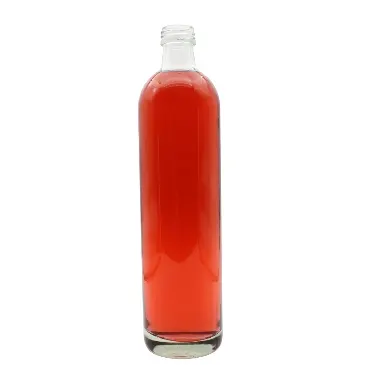
Colour is not on the list. Flint, amber and green soda-lime glass have the same mechanical properties; amber helps the contents by blocking UV, not the bottle.
Choosing bottle weight by sales channel
Lighter bottles save glass, freight and carbon, but weight and strength pull in opposite directions. Thinning every wall fails. Engineered lightweighting, using NNPB forming, a reworked heel radius and better annealing, routinely takes a 750ml wine bottle from 500g to 380–420g with impact performance intact. Below roughly 350g, line handling and the way the bottle feels to the consumer both start to suffer. The forming detail is on our page about lightweight bottle design.
| Channel | Handling | Weight approach |
|---|---|---|
| Supermarket retail | Gentle; shelf feel counts for little | Aggressive lightweighting is acceptable |
| Export by sea | Container vibration, pallet stacking | Moderate weight, coated surfaces and strong pallet packing |
| E-commerce direct to consumer | The bottle may be dropped singly a dozen times | Heavier wall sections, confirmed by ISTA 3A |
For sea freight, pallet packing matters as much as the glass: divider cells that stop glass touching glass, layer pads, edge protectors and shrink hoods, all on ISPM 15 heat-treated pallets. Our packing specification for container shipments sets this out. Also confirm the supplier's breakage allowance and ask for packing photos from earlier export loads.
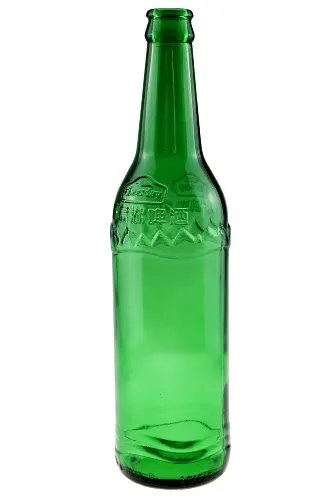
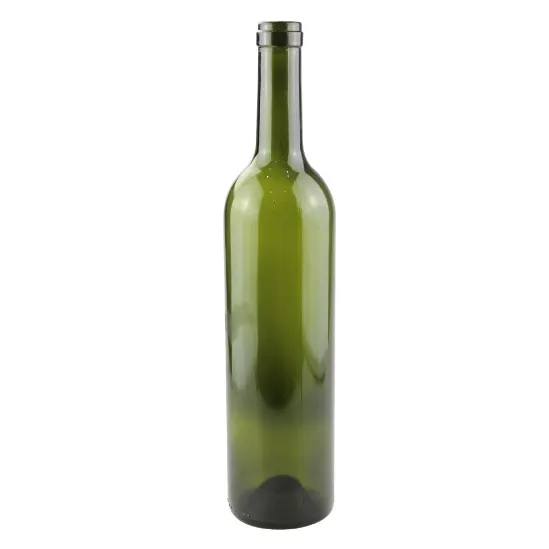
For parcel delivery, a 550g 750ml wine bottle with a heavy base survives far better than a light one, and the weight reads as quality when it arrives. Stock shapes in other weight classes are listed under wholesale glass bottles, and our guide to choosing a bottle manufacturer explains which strength test reports to ask a plant for.
Tempering and ion exchange compared
Two industrial treatments go beyond annealing. Neither suits an ordinary food or beverage bottle, and it helps to compare them in megapascals. Standard annealed container glass has near-neutral surface stress and a practical bending strength of about 40–70 MPa.
| Thermal toughening (tempering) | Chemical strengthening (ion exchange) | |
|---|---|---|
| Process | Glass is reheated to around 620–650°C and quenched with air jets | Bottle sits for several hours in molten potassium salt, typically around 400–450°C; larger potassium ions replace sodium ions at the surface |
| Surface compression | Roughly 70–170 MPa on flat or gently curved ware | Commonly 300–700 MPa, with a depth of layer around 20–100 micrometers depending on bath temperature and immersion time |
| Effect | 3–5 times stronger in impact; breaks into small granules instead of shards | Substantially higher impact strength, plus resistance to the scratch-started failures behind most real breakage; clarity unchanged |
| Shape limits | Unreliable on thin walls, narrow necks and complex shapes, because the quench cannot compress them evenly; no grinding or drilling afterwards | Works on thin walls and complex forms |
| Where it is used | Tableware and architectural glass, rarely bottles | Smartphone cover glass; 10–100ml high-value items such as luxury perfume flacons and cosmetic vials |
Cost explains the split. Tempering adds a moderate amount but only fits thick, simple forms. Ion exchange adds bath hours and handling, which is only justified where the pack is a small part of the product's value and a break in a customer's bag would damage the brand. For 500–1500ml food and beverage containers, the money is better spent on wall design, NNPB forming, annealing quality and coatings, with what remains going into packaging.
Strength tests to ask for
A durability claim should name its test method. Request the reports with pre-production samples.
- Internal pressure (ISO 7458 or ASTM C147): pressure is raised until the bottle fails. This matters for carbonated drinks; 330ml beer bottles are commonly rated to at least 12–16 bar.
- Vertical load: stacking strength for palletised warehousing.
- Pendulum impact (ISO 7459): a controlled-energy strike on the sidewall, the nearest lab equivalent to contact on a line.
- Thermal shock: cycling between hot and cold baths. Food jars are typically qualified at a 40–42°C differential.
- ISTA transit tests on the packed product. ISTA 1A, for single packaged products under 68kg, uses drops from 760mm plus vibration. ISTA 3A is the harsher parcel simulation, with random vibration and repeated drops.
Insist that transit tests cover the whole system: bottle, closure, void fill and shipper. We can witness and document them during pre-shipment checks through our glass packaging inspection service.
Designing the shipper to pass ISTA 3A
The 3A sequence runs in a fixed order. The packed bottle is conditioned to atmosphere, dropped in several orientations including the critical corners and edges (heights depend on package weight), shaken with random vibration that mimics the truck and conveyor mix of a parcel network, then dropped again. Pass or fail is agreed beforehand on three points: leakage, closure displacement and glass fracture.
Failures nearly always have one of three causes. The bottle rattles in a void that is too large. The shipper wall crushes under top load, so the glass carries compression it was never designed for. Or the closure backs off during vibration.
The pack-out that prevents them looks like this:
- Moulded pulp or corrugated cell inserts hold the bottle still at shoulder and heel and keep the base clear of the outer carton. A cushioning gap of 20–30mm under the base absorbs the flat drops that otherwise fracture the heel.
- A double-wall B/C-flute shipper with an adequate edge crush rating takes the stacking load, so the glass does not.
- Air-column bags suit single standard-shape bottles shipped direct to consumers. They fit figurative bottles badly.
Develop the packaging with the bottle, not after it; that is the difference between a 1% breakage rate and a 10% one. Give the packaging vendor the bottle drawings at mould stage, test pre-production samples, then fix the pack-out specification in the purchase contract so the result becomes a binding standard.
Frequently asked questions
Do lightweight bottles break more easily?
Badly designed ones do. With NNPB forming, an optimised heel radius and sound annealing, a bottle can shed 20–30% of its weight and stay as strong. The danger is simple wall-thinning, so ask how the bottle is formed before you ask what it weighs.
Will tempered or chemically strengthened glass solve parcel breakage?
Rarely for a full-size bottle. Tempering is impractical on thin or complex container shapes, and ion exchange is reserved for small, high-value packs. Heavier heel and shoulder sections, coated surfaces and an ISTA 3A validated shipper are the workable route for wine, spirits and food.