A soda-lime glass bottle is annealed by reheating it to roughly 560 to 600 C, cooling it slowly through the stress-relieving range between roughly 560 and 515 C, crossing the strain point down to about 490 C, and only then cooling faster to the lehr exit. How long each band has to last is set by the heaviest section of the bottle, not by its average wall, so a 180 g cosmetic flacon and a 700 g wide-mouth jar need different curves even when the temperatures on the panel match. For a buyer the practical rule is to ask a supplier for the curve as run, with cooling rate and dwell, and never accept a single temperature as proof of annealing.
Why a formed bottle needs a second heat treatment
A container comes off the forming machine much hotter than the temperature at which glass can be chilled quickly without harm. During the final moments in the mould the outside skin is against cold metal and sets, while the inside of the wall is still soft and still shrinking. Glass is brittle and cannot creep or give at that stage, so the difference between skin and interior is not released. It stays in the wall as permanent internal stress.
The annealing lehr, the long tunnel oven that follows forming, is there to take that stress out. It warms the bottle back up until the wall is nearly even in temperature, keeps it there while the stress relaxes, lowers it gently through the range in which glass can still relieve stress, and speeds up the cooling once the bottle has become rigid.
The commercial problem is that stress is silent when it is created. Under ordinary light a highly stressed bottle cannot be told from a good one. It measures correctly, stacks correctly and palletises without trouble. The damage arrives later, in one of three forms:
- Delayed fracture. A bottle splits by itself in a carton, on a pallet or in a warehouse, days or weeks after production. The crack usually starts at a handling scratch or contact mark that a low-stress bottle would have shrugged off.
- Breakage at peak mechanical load. On most filling lines that means capping, seaming or the first pass through the case packer. A marginal bottle gives way under a force it was designed to carry.
- Breakage under heat. A hot wash, a hot fill or a pasteurisation tunnel puts a temperature difference across the wall. A bottle already loaded with residual stress has little tolerance left for it and cracks.
The heat-related failure is the one most often blamed on the wrong department. It looks like a washer fault or a filler fault, yet thermal shock resistance is largely residual stress seen from the other side, and it cannot be added at the washer. When bottles crack on their first hot rinse, the lehr is the place to look. The same reasoning covers any later decoration that is fired, since each firing stacks another heat cycle onto the stress history the bottle already has.
The annealing curve has three segments, and only one sets the stress
An annealing curve is a plot of temperature against time. Most disputes over lehr settings happen because people treat it as one setting. It is three, each with its own job.
Reheat and equalising
The bottle arrives uneven: the body is hotter, the neck and base colder. Controlled cooling cannot start until those differences have been levelled. Cut this segment short and the thin neck completes its cooling ahead of the heavy base, so two ends of one bottle receive two different anneals. Make it too hot or too long and the plant spends energy for nothing, and in the worst case a lightweight bottle sitting on a hot belt sags at the base or picks up a flat contact mark.
The annealing range
This is the working part of the lehr. With the wall even, the bottle must descend slowly through a narrow band bounded at the top by the annealing point, where stress relaxes within minutes, and at the bottom by the strain point, under which relaxation is so slow that whatever stress remains is effectively frozen. The cooling rate here has more influence on the finished bottle's residual stress than anything else in the process. A curve can look respectable in every other zone and still turn out stressed glass if this stretch is too brief, which is why a specification discussion should concentrate on duration and cooling rate in this band.
Controlled cool and run to the exit
Once the glass is under the strain point it is stiff enough that a moderate gradient no longer turns into permanent stress, so the curve can be steepened step by step. What limits the pace now is the bottle's geometry. A heavy base hangs on to heat long after a thin shoulder has cooled, and it is the temperature difference through the wall, not the absolute reading, that has to stay within what the wall can bear. The closing stretch is normally a quick cool to an exit temperature cool enough for handling yet warm enough for the cold-end coating applied next. That exit figure is a genuine setting, because the coating chemistry only works inside a defined window.
Where the time goes
A lehr has a fixed length, so at any belt speed the minutes available are fixed too. The annealing range is both slow and compulsory, which makes it the hungriest segment and the usual bottleneck. A hotter reheat, a denser load and every other adjustment all draw on that same budget of minutes.
Load density is part of the picture. Bottles travelling single file down the middle of the belt lose heat differently from bottles packed shoulder to shoulder. In a dense load the centre bottles and the edge bottles follow different curves, although the control panel reports one temperature for all of them.
Temperature and dwell bands for soda-lime container glass
The table lists the bands in the sequence a bottle passes through them. The temperatures are industry working ranges for soda-lime container glass. Their purpose is to let you read a supplier's curve and ask informed questions about it; they are not settings to copy onto a lehr panel. The numbers that count for your bottle are those checked against its specification sheet and shown to work on the line that will actually run it.
| Band (approximate) | Purpose | Effect of weight, wall and shape | Result if cut short | How to verify it |
|---|---|---|---|---|
| Reheat and equalising, entry at roughly 560 to 600 C | Evens out the forming gradient so neck, body and base begin the slow cool from one temperature | Thick shoulders and heavy bases hold more heat and take longer to level; on tall, narrow bottles the neck cools ahead of the base | Neck and base cool at unequal rates, giving two anneals in one bottle; thin necks crack first | Surface temperature of the bottle at lehr entry and where the reheat zone ends, in addition to the zone setpoint |
| Annealing range, roughly 560 down to 515 C | Lets forming stress relax; fixes the residual stress of the finished container | Required dwell grows with wall thickness and with the mass of the thickest section, so heavier or thicker bottles need a slower or longer pass | High residual stress, unseen on the line, that later appears as delayed fracture, capper cracks or hot-wash breakage | Polariscope stress reading on a fully cooled sample, judged against the agreed acceptance basis |
| Strain-point crossing, roughly 515 down to 490 C | Finishes relaxation before the glass stiffens; any stress left under this band stays for good | Governed by the thickest section, not the average, so a reinforced heel or heavy base dictates the time | Stress that had a chance to relax is carried into the finished bottle, and the lehr gets credit for an anneal it never finished | Curve trace compared with the agreed cooling rate for the band, taken in a lehr survey and not inferred from the panel |
| Controlled slow cool, roughly 490 down to 380 C | Lowers the wall temperature while the glass tolerates only a small core-to-surface difference | Thick-walled formats and heavy bases set the pace; light, thin-walled bottles can drop faster without a lasting gradient | The gradient turns into permanent stress: the shoulder passes a stress check and the base fails it | Through-wall temperature difference on a sample bottle, with the exit curve at the point in question |
| Free cool to exit, roughly 380 down to 100 C | Gets the bottle cool enough to handle, inspect and pack with no remaining thermal risk | The next station fixes the exit temperature, whatever the format, though heavy bottles need a longer run to get there | Bottles emerge too hot for handling or for coating, and the downstream station takes the blame | Bottle temperature at the exit and how steady that reading is from one side of the belt to the other |
| Cold-end coating window, below roughly 120 C | Receives the lubricating film that protects the surface during handling, filling and palletising | The film covers the entire bottle, so thick and thin areas need to have reached nearly equal temperature | Patchy film, weak label adhesion and line scuffing, usually misdiagnosed as coating faults when exit temperature is the cause | Bottle temperature at the coating station plus a coverage check at shoulder, body and base |
Taken together, the bands show why one number cannot describe an annealing window. Reheat determines whether the bottle goes into the working band evenly. The annealing range and the strain-point crossing determine how much stress is left. The slow cool determines whether the base ends up carrying more stress than the body, and the exit band determines whether the following station can work. Pushing up the temperature in one band without checking how much time that steals from the band after it is the classic way to make the panel look more aggressive and the bottles worse.
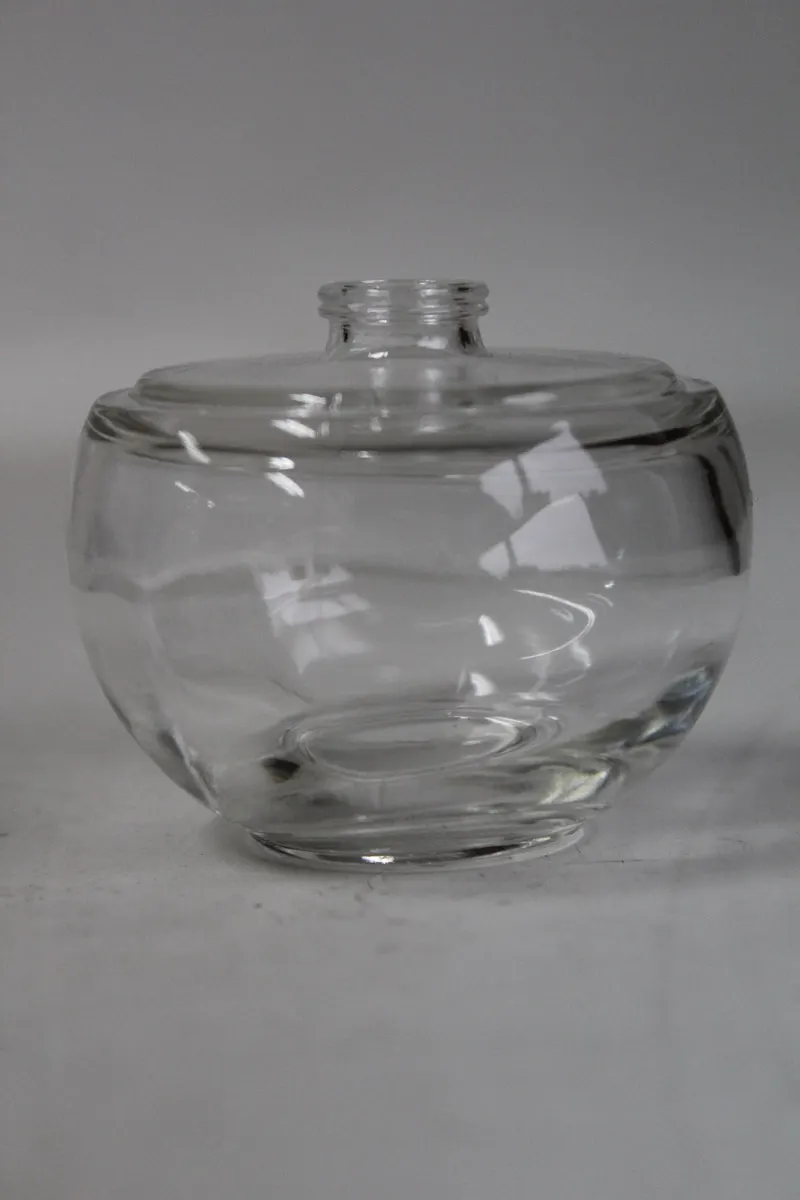
Lehr types and what each does to the curve
Two plants can quote identical temperatures and deliver different bottles, because the lehr behind the numbers differs. Brand matters much less than three design choices, plus one offline alternative.
| Design feature | Variants | What it means for the anneal |
|---|---|---|
| Length | Long mesh-belt tunnel or short lehr | A long tunnel offers more minutes per bottle and can sustain a gentle annealing range for a heavy jar. A short lehr reaches the temperatures but not the cooling rates, so it suits lighter bottles or thin, even walls. |
| Heating | Radiant or direct-fired, or electric | Radiant heat from above and below is efficient but treats the top and bottom of the bottle unequally. Electric heating allows finer zone control and a cleaner atmosphere, useful for transparent glass whose surface must stay unmarked. |
| Cooling | Natural convection through roof openings, forced air with extraction, or both with a controlled zone near the exit | Forced air makes the lehr shorter but leaves less tolerance on airflow. A draft that favours one side of the belt anneals the two sides of a load differently. |
When a plant quotes a curve, ask how long the lehr is. On a short machine the same figures imply a belt speed that alters every other part of the sequence.
Ask also what the quoted temperatures refer to. The control loop regulates a zone temperature. The glass experiences a surface temperature that trails the zone and shifts with position on the belt. This gap between setpoint and glass is the most frequent reason two plants' curves cannot be compared directly.
The cooling pattern explains a puzzle buyers sometimes meet: a lehr that anneals one bottle well fails on a heavier one although nobody touched a setting. Belt width and load density interact with the airflow, and the centre of a tightly packed load is a different environment from its edge.
Offline annealing ovens
Samples, small batches and decorated bottles that need re-treatment go through an offline oven instead of the continuous line. An oven can repeat a curve on a tray of bottles and is valuable for trials or for a decoration firing that needs separate control. It cannot imitate the load, belt movement or throughput of a production lehr. Treat an oven-proven curve as the starting point for a lehr trial, never as proof of how production will behave.
Signs of under-annealing and over-annealing
Under-annealing
This is the expensive failure, and its signature is timing, since appearance tells you nothing. An under-annealed batch loses bottles in a recognisable pattern:
- spontaneous breaks scattered through the pallet instead of clustered at its edges;
- cracks that originate at a scratch or contact mark;
- more breakage at the capper or case packer than the line usually records;
- a jump in cracked bottles as soon as a hot wash or hot fill is introduced.
Because the glass looks sound, the losses get put down to handling, the capper or the haulier, and nobody examines the lehr. Watch for this after any change of bottle weight, wall thickness or supplier made without re-checking the curve. Breakage creeps up gradually, which makes the first symptom easy to overlook.
Over-annealing
Over-annealing is mostly about cost and throughput. Fully relaxed glass cannot be improved further, so extra time in the lehr is capacity that could have gone to more bottles or a lower temperature.
There are some real quality risks at the hot end, though they are narrower. A bottle kept too hot for too long may lean, deform at the base or take a flat mark from the belt, and light, thin-walled formats suffer first. The hot-end coating is also affected: it goes on within a set temperature window close to the lehr entry, and an overlong or overheated reheat can carry the bottle beyond the point where that coating performs.
The better question to put to a supplier is whether the curve has margin on both sides. A lehr running at the limit of a short annealing range is a single load change away from under-annealing.
Annealing comes before decoration, and firing complicates it
Every cold-applied decoration follows annealing, and that order cannot be swapped. Sprayed colour, screen print, hot stamping and sleeves all go onto a bottle that is already annealed and cooled. They operate far below the strain point and leave the stress state untouched. The anneal is therefore settled before the bottle enters the decorating area, and a stress problem found after decoration cannot be corrected there.
Fired decoration is the exception. Ceramic and similar high-temperature inks, or any fired-on decoration, add a thermal cycle of their own. The firing must stay at a temperature that neither distorts the bottle nor puts stress back in. If the firing temperature comes close to the annealing range, there are two options: cool the bottle on a controlled curve afterwards, or count the firing as part of the annealing history. Raise this while the bottle is being specified. Finding it out at the first decorated run is the costly way.
Two rules follow:
- Decoration is never a substitute for annealing. No coating will hold a stressed bottle together.
- Where firing is involved, the bottle maker and the decorator agree one combined curve, and if their requirements clash the cooler process governs the temperatures.
How sprayed, matte and frosted finishes are applied is a coating topic in its own right. For annealing purposes, only their position in the sequence matters.
Common mistakes when reading or setting an annealing window
Few of the annealing problems that reach a buyer come from a faulty lehr. Most come from using a window in a way it was never intended for, and each mistake has an inexpensive remedy.
- Borrowing a temperature from a different plant or bottle. A curve is the joint product of one lehr, one load pattern and one format. On a shorter machine or a heavier bottle those numbers describe another process entirely.
- Taking the zone setpoint for the glass temperature. Setpoints describe the machine. A curve drawn from them alone says nothing certain about the bottle.
- Accepting a batch because nothing broke. Stressed glass behaves normally until it is loaded. A visual pass does not count as an annealing check.
- Setting dwell from wall thickness alone. Total weight, belt load density and the mass of the thickest section all change the time needed. If the heel is thicker than the body, the heel is in charge.
- Collapsing three segments into one figure. Trim the annealing range, extend the free cool, and the panel can read the same while the result deteriorates, since only one of those two segments relieves stress.
- Reading stress from haze, colour or surface look. Surface residue, scuffs and coating defects point to handling and finishing. Tracing them back to the lehr wastes the investigation.
- Slowing the belt to fix everything. That stretches all bands together and cuts throughput. It can also drop the bottle below the exit temperature the cold-end coating station requires, and it does nothing about the load pattern.
- Assuming one curve for the whole belt. Conditions differ at the centre of a dense load, at the belt edge and in the gap left by a stoppage. A measurement from one bottle in one position does not speak for the load.
Projects where a reference band is not enough
For an ordinary bottle within the range a plant has already proven, the reference bands above are sufficient. Six situations take a project beyond that, and in each of them you should request a documented curve instead of a temperature:
- Thermal duty after filling. Hot filling, pasteurisation, retorting or high-temperature washing impose a load a cold-filled bottle never meets, and the anneal largely decides whether the bottle survives it.
- New format or tooling. A fresh mould, a reshaped heel or shoulder, a move from round to oval or rectangular, or a mould transferred to another machine each alter how the bottle rests on the belt and sheds heat.
- Weight or wall beyond the plant's experience. Dwell that works for a light thin-walled bottle will not serve a heavy wide-mouth jar.
- A decoration route with firing.
- A repeating breakage pattern. One incident is noise. Storage breaks, capper cracks or case-packer losses recurring from batch to batch are a signal.
- A sourced bottle. When the company you deal with does not operate the lehr, a verbal assurance may be all you have been offered.
Records to request from the supplier
Without presuming any particular certification, it is reasonable to ask for a description of the curve as it was run:
- entry and exit temperatures;
- cooling rate through the annealing range;
- dwell in each band;
- where in the load the sampled bottle sat;
- the sampling basis used to check the outcome;
- for any stress check, the method and the acceptance basis together.
If the bottle has moved from another plant or machine, ask how the curve was confirmed on the new line, as opposed to being transferred on paper. A supplier able to explain both curve and check has a process. One who can only name a temperature has a setpoint. Conditions that a destination market imposes on the pack belong in the specification and are a separate matter.
What to send us so the window can be checked for your bottle
As a sourcing desk we do not run a lehr. We match a bottle to a plant whose lehr has the length and control to anneal it, and we check the curve the plant proposes against your requirements. Three pieces of information make that possible:
- Format. Body shape (round, oval or rectangular), neck and finish type, and the decoration route, since a fired decoration brings a heat cycle that a cold-applied one does not.
- Physical specification. Nominal weight, nominal wall thickness and, if known, the thickness of the heaviest section such as heel or base. That section sets the dwell in the annealing range.
- Process after filling. Hot fill, pasteurisation, high-temperature wash or plain cold fill. This is what turns an annealing result into an acceptance requirement.
The reply to a brief like this should be a reference window, not a promise. Expect approximate entry and exit temperatures, the cooling rate and dwell normally needed in the annealing range for the format, a note on which section will probably control the result, and how the window moves if weight or wall changes. If the production lehr is already known, the reply should name which of the three segments has the thinnest margin, because that is where trouble will start when belt speed or load pattern shifts.
Any figure supplied at this stage is an industry planning range. It becomes the production curve only after it has been confirmed against the bottle specification sheet and demonstrated on the line. A brief containing nothing but a weight tends to return a generic range that fits no real bottle; one that gives shape, weight, wall and thermal duty returns something that can be tested against the lehr and discussed with the decorator.
Related questions that sit outside annealing
Several neighbouring topics affect the same bottle and are easier to resolve separately:
- Measuring stress. Polariscope readings, batch sampling and how to interpret a result are covered in our guide to the annealing test for glass bottles. Start there if you already hold a suspect batch; if you are still specifying, use it to confirm the result afterwards.
- Dimensions. Permitted variation and measurement methods are explained under wall thickness tolerance for glass bottles. An out-of-tolerance wall alters the annealing dwell as a knock-on effect.
- Freight damage. Whether a packed pallet survives its journey is a distribution matter involving drop and stacking logic; see transit testing for glass bottles and keep it apart from any annealing argument.
- The whole line. To see the lehr in context between forming and inspection, including how bottles are conveyed into and out of it, read how glass bottles are made, from raw materials to finished product.
Frequently asked questions about annealing and lehrs
What happens if a glass bottle is not annealed?
It keeps the stress that forming put into the wall. The bottle looks and measures normal, then fails later: by splitting in storage, by cracking at the capper or case packer, or by breaking the first time it meets a hot wash or hot fill. Annealing is compulsory for every container for that reason.
Which part of the annealing curve matters most?
The annealing range, the slow descent from the annealing point to the strain point. Its cooling rate is the largest single influence on residual stress. Reheat prepares the bottle for it by evening out neck, body and base, and the controlled cool afterwards is limited mainly by the temperature difference the thickest wall section can stand.
How do bottle weight and wall thickness shift the window?
They lengthen the time needed in the stress-relieving bands and they decide which section governs. A heavy jar with a reinforced heel needs a slower or longer pass through the same temperatures than a light bottle with even walls. Weight also affects behaviour on the belt, because a heavy base can still be warm when the shoulder is cool. The measurement that controls is the through-wall temperature difference, not the bottle's average temperature.
Is a decoration firing the same as annealing?
No. Annealing removes forming stress and applies to all containers. Firing bonds a particular ink or decoration and is used only on that route. Cold-applied finishes do not alter stress at all. A firing step does add to the bottle's thermal history, and when it nears the annealing range the bottle needs controlled cooling afterwards or the firing has to be planned as part of the annealing sequence.
Can I judge annealing quality by inspecting the bottles?
Not by eye. The evidence is a stress reading on fully cooled samples compared with an agreed acceptance basis, backed by the curve as run and not the curve as planned. On a filling line the practical warning is a pattern: breaks spread through a pallet, cracks starting at contact marks, above-normal losses at the capper or case packer, and cracking when hot washing or hot filling begins.
Does a thicker bottle always need a longer lehr?
It needs more time in the bands that relax stress, which usually means a slower pass or a longer machine, but thickness is one input among several. The controlling section is the one with the most mass, often a base or heel on a bottle whose body is thin. A dense load also retains heat and changes the curve each bottle sees. In practice a heavier bottle narrows the combinations of belt speed and loading that will hold the required curve.