A bottle deduster cleans the inside of a new glass bottle with air, so the container stays dry from pallet to filler. There is no universal air volume figure: the setting follows from the bottle shape, the kind of debris, the extraction fitted and the line speed, and it has to be specified together with pressure, nozzle geometry, air quality and an agreed acceptance check. Narrow-neck bottles and wide-mouth jars need different nozzle arrangements, and the lightest dust will not move without ionised air.
Start from the debris, not the bottle size
The first input to a deduster specification is the debris profile: how much of the load is heavy glass particle, how much is light fibre, and which of the two your product and your market will actually show up. A clear liquid exposes a translucent glass fragment that a dark cosmetic oil would conceal. If you do not yet know what arrives in your bottles, begin with an incoming inspection of the delivered glass and record the state of the consignment before any machine is discussed.
New bottles pick up loose material from four places.
- The glass plant. Bottles knock against one another at each transfer after forming, and each contact can chip off a fine particle. This powder is hard, angular and heavier than room dust, so it sinks and gathers in the base and beneath the shoulder. Much of what a deduster handles is glass powder, not airborne dust.
- The packaging. Corrugated dividers, paperboard partitions, moulded pulp separators and shipper board shed fibre and paper dust. After a long trip in a carton the inner wall can carry a measurable layer. This material is light and dry, which suits air removal; water would only turn it into paste.
- The journey. Days of vibration by road, rail or sea spread the fine fraction through the container. Warehouse air, an open pallet in a dusty aisle and the shaking of a depalletiser add more. On a line that unpacks straight to a fast filler, this is the material the station meets.
- Cold-end coating. The friction-reducing, scratch-resisting coating applied to the outside leaves a fine overspray. Most stays outside, but bottles stored neck-up in an open crate can gather a little in the finish and thread, directly beneath where the cap liner will sit.
None of this is product residue and none of it is microbiological. That is why a dry station can be the right answer where a wet wash would be excessive or, for some products, a fresh problem.
For regulated contact applications, the documented condition of the empty pack forms part of the compliance case. The destination market sets those rules, and buyers usually refer to FDA 21 CFR, EU 10/2011, EU 1935/2004 and LFGB. Even so, the machine is specified against your own debris and your own acceptance check, never against a general claim of cleanliness.
The five settings to specify
A deduster rarely underperforms because a feature is absent. It underperforms because one of five quantities was chosen out of habit instead of from the bottle and the check.
Air volume
Volume is how much air passes through the bottle in a given time, and it is what carries particles out. It is a separate quantity from pressure. A small nozzle run at high pressure gives a tight jet that reaches the base while moving a modest total; a bigger nozzle at lower pressure shifts more air with less penetration. Jars and narrow-neck bottles sit at opposite ends of that trade-off, so one station seldom serves both well.
Air pressure
Pressure is what breaks material loose from the wall and the base corner. Too little leaves it in place. Too much can damage the bottle, throw the freed material beyond the extraction point, or build a static charge that pulls it back. Filters, condensate traps and line losses all sit between compressor and nozzle, so commission the station on a reading taken at the nozzle, not on the panel setpoint.
Nozzle geometry and placement
Geometry decides whether the air arrives where the debris lies. A lance can enter a wide-mouth jar and point at the base; it cannot pass a narrow neck and turn. An outer ring of nozzles clears the exterior and shoulder. For any layout, ask which inner surface holds the debris and whether the nozzle has a straight line to it.
Air quality
Compressed air carrying oil mist or condensed water puts new contamination into a bottle that had none, and unfiltered air dusts a surface the station has only just cleared. Every specification therefore needs a filtration requirement and a way to verify it, checked where the air is used and not back at the compressor.
Extraction
Blowing only transfers material from the bottle to the air around it. A hood sized for the station, placed so the flow leads released debris away from the bottle instead of across the hall, is what turns a blow-off into a deduster. Without it, glass powder lands on the machine, the conveyor and the next open bottle, and the complaint shifts from dirt in the bottle to dirt in the room.
Two more inputs are often forgotten: whether ionisation is needed, and how far the bottle travels from the station to the filler. A long uncovered conveyor through a dusty hall hands the filler whatever the hall supplies.
Nozzle setup for jars and for narrow-neck bottles
A wide-mouth jar is the simpler container. A lance fits through the opening and can be pointed at the base corner where particles collect, the jar is usually short so there is little inner surface to sweep, and air exchanges quickly with a hood above the mouth. One internal lance and an external nozzle ring normally cover it. Watch two places: the thread groove, where overspray and dust hide from view, and the base corner, where the flow peels off the wall and leaves a shadow.
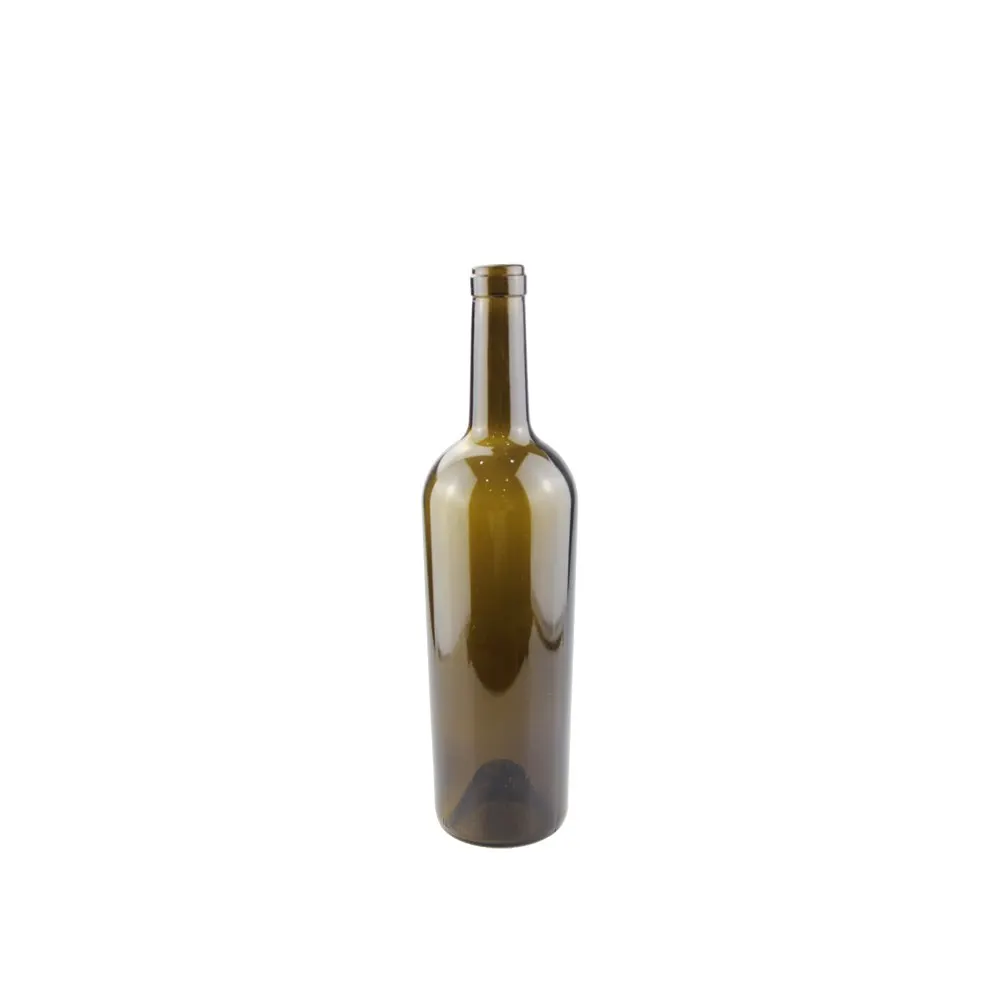
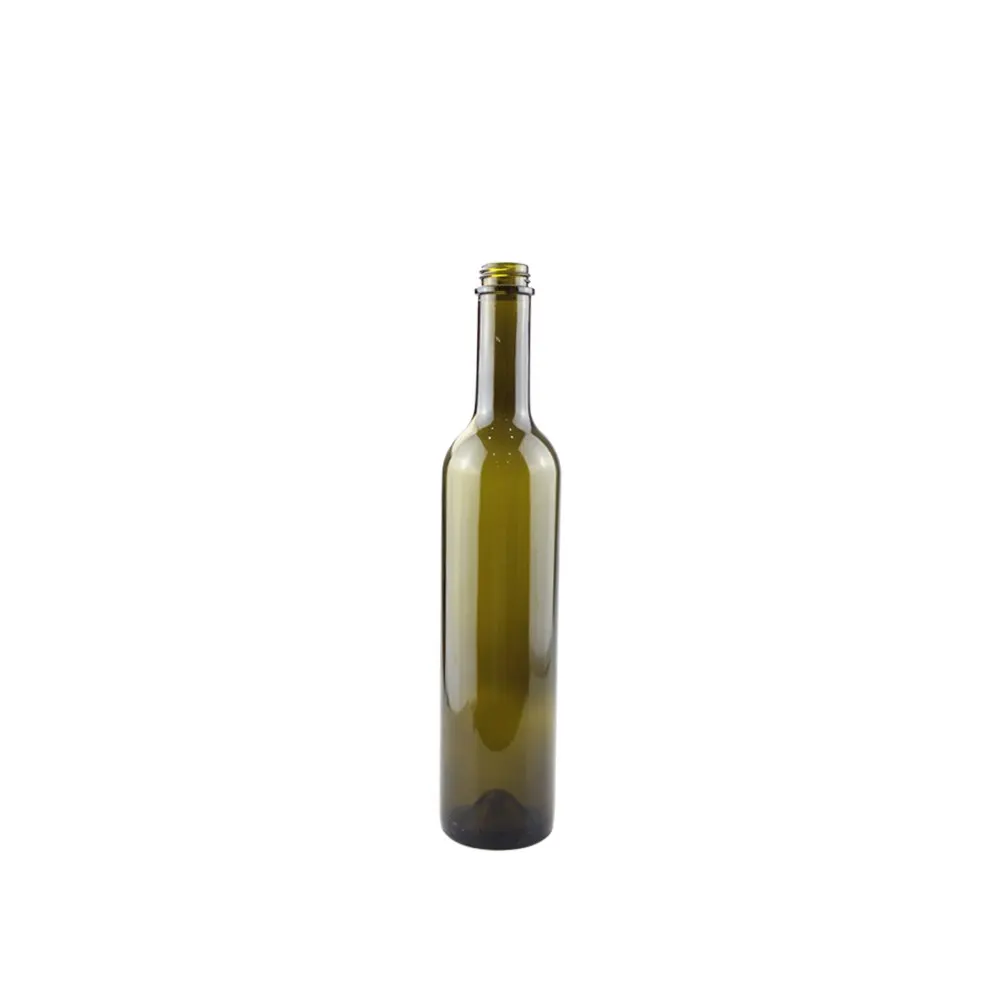
A narrow neck restricts how much air gets in and out and rules out aiming at the base. The answer is a different method, not a larger compressor. Air is sent down the neck so it follows the wall to the base, the bottle is often presented so gravity helps debris toward the opening, and extraction at the mouth draws air through the container in place of a base-aimed jet. An internal shoulder ledge or a deeply punted base creates a shadow zone that neither jet nor extraction reaches well; on those shapes a dry station alone is most likely to leave part of the load behind.
Decoration is a third variable. Sprayed coating, a frosted band or print alters local airflow and surface energy, and fast air across a matte finish can raise dust from the finish itself. Set the station up on the decorated bottle, and keep a reference sample of the finished decoration at the line.
Configurations compared
The comparison is arranged by air configuration, since that is what debris and geometry select, and not by machine model. It gives no fixed values on purpose: the right setting depends on your bottle, debris, speed and extraction, and should be proven on your own containers and checked against the equipment quotation.
| Configuration | Target debris | Surfaces to reach | Air and extraction | Verification | Wrong choice when |
|---|---|---|---|---|---|
| External nozzle ring; moderate volume, low pressure | Loose dust and coating overspray on the outside, shoulder and thread | Entire exterior, jets tilted downward and away from the mouth | Dry filtered air; hood catches material before it lands on the conveyor | Visual check of shoulder and thread in controlled light against a retained bottle | The complaint concerns material in the base after filling; the inside is never touched |
| Internal lance in a wide-mouth jar; higher volume, moderate pressure | Glass particle, dust and fibre settled in the base corner and lower wall | Base corner and lower wall, with a lance long enough to go in and be aimed | Clean filtered air at the nozzle, hood over the mouth, supply checked for oil and condensate | Wipe or rinse-out on a set number of jars per shift against a retention sample | The container has a narrow neck the lance cannot pass |
| Ionised lance with extraction at the mouth; lower pressure, longer dwell | Fine fraction pinned to wall and shoulder by static, light board fibre included | Upper body and shoulder, with ions arriving ahead of the moving air | Extraction sized so air enters at the mouth and exits carrying debris | Sampled rinse-out particle count, plus a visual check for heavier pieces | The material is heavy or bonded; in very dry air the ionisation need may outgrow a simple retrofit |
| Through-flow; air in at the mouth and extraction at the base, or reversed | Particles spread along the full inner wall of a narrow-neck bottle | The whole internal column, beyond what one aimed jet covers | Supply and extraction balanced; pressure difference measured across the bottle | Rinse-out on a fixed sampling plan, as visual checks are weakest on this shape | The container is a short wide-mouth jar that a single lance handles more simply |
| Deduster combined with inverter; air applied during the turn | Material gravity must first bring to the mouth | Base and shoulder, exposed to the air stream by the turn | Contained extraction beneath the inverted station | Base check on returned bottles and a rinse-out for the fine fraction | The bottle is too tall or too light to invert at speed, or the decoration cannot take the handling |
| Wet route; rinse followed by drying | Bonded material, oily residue, dried film | Whole inner surface, reached by wetting | Rinse water matched to the product, then drying to a defined exit condition | Sampling plan agreed with the customer; rinse water quality logged as batch evidence | The product is moisture sensitive or the line cannot dry dependably |
| Deduster directly ahead of the filler; short enclosed transfer | All the above, plus anything gathered on the way to the filler | The bottle as it reaches the fill head | Extraction at the station and no long open conveyor after it | Check made at the filler infeed, not the station exit | The layout imposes a long open run afterwards; redesign the transfer first |
When ionised air is required
Glass particles and board fibres smaller than a fraction of a millimetre become statically charged during handling. The charge pins them to the inner wall, typically at the shoulder and upper body, and a plain jet simply flows past.
Ionised air neutralises particle and surface together. Once the charge is gone, normal air movement and gravity take the particle to the mouth and into the extraction path. Where light debris dominates, ionisation often separates a station that clears a visible share of the load from one that clears almost none of the fines. It is also the item most often omitted, because nothing on the machine shows the difference.
Placement matters in two ways. The ions must be delivered where the particle sits, usually inside or just above the mouth and not metres upstream. They must also arrive before the jet sweeps the particle on, so the position of the ionising bar relative to jet and hood is a design decision, not an add-on. Very dry supply air worsens static and raises the requirement, which is a reason to describe your plant, not just your bottle, when asking for a configuration.
Choosing the acceptance check before ordering
Without an agreed check, cleanliness becomes an opinion that varies by shift. Pick the method first, because it constrains both nozzle layout and extraction.
- Visual pass. Base and shoulder examined in controlled light. It finds heavier pieces such as glass particles and misses fine dust on the wall.
- Wipe or rinse-out. A defined bottle is wiped with a clean wipe, or rinsed with a measured amount of clean liquid, and compared with a reference. This catches the light fraction.
- Particle count. Taken on air drawn from the station or on a rinse-out solution. It is the most sensitive method and the hardest to repeat consistently.
Three conditions make any of them meaningful. Sample where the bottle is used, since it can be dirtied again between station and filler. Sample a set number of bottles per shift at a set interval, not the single worst-looking one. And hold a retention sample of the accepted standard at the line, so operators compare against a physical object instead of the recollection of whoever set the station up.
Checking for stones, cracks, checks or dimensional faults is a separate job done by empty bottle inspection machines; a deduster deals with debris, not defects.
Dry route, wet route, and the order on a combined line
Air and water are not rivals. They remove different soils and leave the bottle in different states, and the contents and the market usually make the choice.
The dry route lifts loose material without adding water that must later be dried off. It fits moisture-sensitive products, dry or semi-dry fills, lines that cannot dry fast or reliably enough, containers fed straight from a depalletiser, and plants that do not want another utility, more floor area and a waste water stream. Its limit is that it only acts on what air can free: bonded film, oily residue or a previous product stay put.
Wetting reaches every inner surface and is the only way to remove a film or chemically adherent soil. The cost is water that must be gone before filling, so a drying stage with a defined exit condition sits between washer and filler, and the rinse water quality has to suit the product. Where the contents are judged on taste or clarity, or the market demands a documented clean condition at use, a wet route with a controlled final rinse is generally the safer specification. Wash zones, media and rinse chemistry are covered under glass bottle washing equipment, and air knives and heated tunnels under drying equipment for rinsed bottles.
Many lines run both, in this order: wet clean, dry, then de-dust right before the filler, so debris loosened by handling after the wash is taken out at the last opportunity. A dry station ahead of the wash is wasted, since the wash brings its own water and debris. So is one placed far from the filler. The gap between the last cleaning step and the filler, and the room in between, is among the most dependable explanations for a station that tests well yet still generates complaints.
A related station removes debris by attitude instead of airflow: the bottle is turned over so loose material falls to the mouth. Its decisions concern gripping, dwell and returned attitude and are described under bottle inverting equipment. Most lines pair the two, with the turn releasing the material and the air carrying it off. How the deduster is sequenced and buffered against filler, capper and labeller is a layout question for the filling line as a whole.
Retrofitting a deduster to an existing line
Most dedusters go into lines that were laid out without one, and the machine is seldom what limits the project.
- Air supply. The station needs a volume of clean, dry air at nozzle pressure. A compressor may have capacity on paper while the pipework drops pressure before the point of use. Measure at the nozzle connection with the station running, and where the supply is shared, add the deduster to peak demand, not average demand.
- Air quality. Fit filtration and condensate removal at the point of use if they are missing. Wet or oily air ends up in every bottle, and the fault then looks like a product problem.
- Extraction and ducting. You need an extraction path, a filter or collection point sized for the volume, and a route outdoors the plant accepts. Glass powder is abrasive and board fibre is bulky, so a filter suited to one may not suit the other.
- Footprint and interface. The unit must slot between two existing machines, accept the bottle pitch and guarding at each end, and stay accessible for cleaning, nozzle changes and filter service. A transfer on each side that presents the bottle correctly, and a tray or shroud that contains what is released, decide how smoothly it goes in.
A station that fits but cannot be maintained, or that drops debris on the floor, usually means the footprint was fixed before extraction and airflow were worked out.
Fault-finding order when bottles still carry dust
Raising the pressure is the usual reflex and seldom the cure. Work through the causes in sequence so you finish with a documented reason, not a station turned up until something else gives way.
- Air quality at the nozzle. Oil or condensate arrives as fresh contamination on a bottle just cleaned and cannot be seen from outside. It is the most commonly overlooked cause.
- Extraction. If it is absent, blocked or too small, freed material drops back into the same bottle or the one following. Strong blowing with weak extraction often makes results worse.
- Ionisation. A dead bar, or one not reaching the surface, leaves fines in place while every other reading looks normal.
- Nozzle condition and aim. Partial blockage, a lance that has stopped reaching the base corner, or a ring knocked off line produces a shadow that repeats from bottle to bottle.
- Bottle change. A taller neck, wider shoulder or internal ledge puts surfaces out of range with no setting altered.
- Line speed. Faster running shortens dwell and gives extraction less time, so the last loosened material leaves inside the bottle.
- Transfer. A long open conveyor through a dusty or humid hall, a guard acting as a dust trap, or a depalletiser installed upstream later. Look here first if the fault appears after the station.
- Expectation. The complaint may involve something air cannot remove, such as bonded film or a fragment too large for the neck. That calls for a wet route or a handling change, not more air.
What to put in a deduster brief
We source glass bottles and jars, so our part is the container side of this specification: the drawing, the finish, the decoration and how the glass is packed and shipped, all of which shape the debris your line receives. For the machine supplier, a useful brief states:
- bottle type and dimensions;
- the cleanliness requirement to be met and how it will be checked;
- what the debris is and where in the bottle it is found;
- whether the product is moisture sensitive;
- the station's position in the line and the required speed in bottles per hour;
- the space between station and filler, and the quality of the air supply available.
The last two items influence the outcome as much as the nozzle configuration does.
Frequently asked questions about bottle dedusters
What does a bottle deduster do?
It blows and extracts loose material from new glass without wetting it: mainly glass particle from bottle-to-bottle contact, fibre from dividers and shippers, and traces of coating overspray in the finish. A product that cannot tolerate moisture can then be filled into a container that was never washed and dried.
Is plain blown air enough, or is ionisation needed?
That depends on which fraction causes the trouble. Heavier glass particle responds to air movement and pressure. Fine board fibre and sub-millimetre glass dust are frequently held by static, and they stay where they are until the charge is neutralised. If the fines matter to your product, plan for ionisation.
Can a deduster replace washing?
Not when the soil adheres to the glass. Air cannot dissolve a film, an oily residue or dried product. A deduster suits loose debris and contents unaffected by a trace of inert material; it does not suit a product or market that requires a documented clean condition.
How much air volume is needed?
No single number applies. A jar with an internal lance passes a large volume through a short container, while a narrow-neck bottle is capped by what the neck allows and generally depends on through-flow with extraction. Fix volume alongside pressure, nozzle geometry, extraction and the acceptance check, then confirm it on your own bottle.
Will one station handle both narrow-neck bottles and wide-mouth jars?
Both shapes can be de-dusted, but with different configurations, and validation on one shape proves nothing about the other.
Can a deduster be added to a line already running?
In most cases, yes. The outcome rests on clean dry air at pressure at the point of use, on extraction and a duct route, and on fitting between existing machines with correct transfers. Access for cleaning, nozzle replacement and filter changes determines whether it is still effective after the first month.