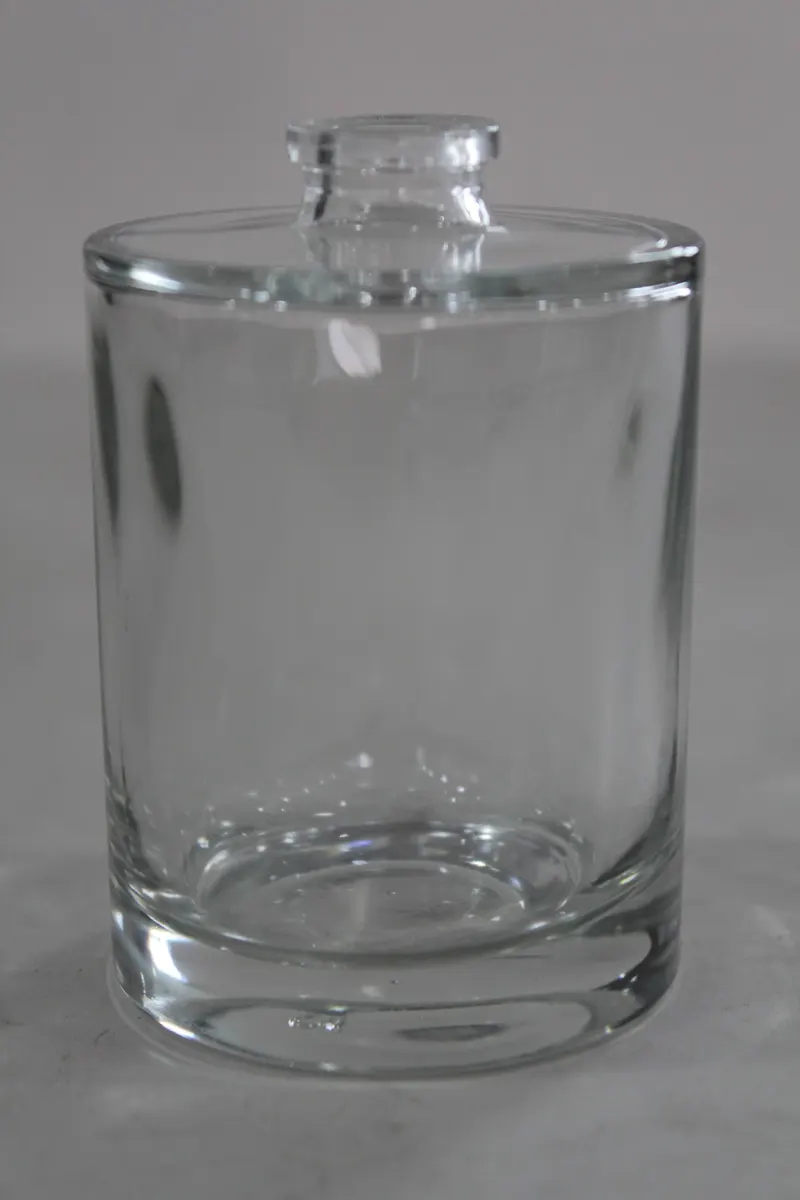
This page is for the buyer who wants a glass container to read as metal, whether that means a full gold mirror, a brushed silver, a rose gold band or a coloured chrome, and who needs to know three things before the artwork is signed: whether the surface can be produced on a glass substrate at container scale, how it will behave once the pack is on a shelf and in a consumer’s hand, and how the appearance will be measured and accepted from one batch to the next. The decision on this page is the metallising route and its acceptance criteria, not the shape of the container and not the whole decoration program. Three boundaries matter. Coloured, non-metallic finishes produced by spraying belong to glass bottle spray coating, which owns lacquer-based colour and the adhesion logic that goes with it. A program where the matte surface is the entire proposition rather than one layer placed on top of a mirror belongs to matte black perfume bottles. Where several techniques are combined on one container, meaning metallising plus printing plus foil plus frosting in a single artwork, the combination logic belongs to cosmetic jar decoration. What this page does cover is the electroplating and metallising family itself: what the words actually mean, which routes exist, how adhesion and wear are specified and tested, how the layer interacts with print and foil, how colour is accepted between lots, what the process does and does not do to the strength of the glass, and how a coated container has to be handled on a filling line. The category itself, meaning capacity ladders, shape families and the general language of fragrance packaging, sits with the perfume bottles page. No minimum order quantity, unit price, tooling cost, yield or lead time is quoted anywhere here, because none of those can be stated before a route, a coated area and a batch quantity are fixed.
What Electroplating Actually Means When the Substrate Is Glass
The word electroplating is used loosely in packaging conversations, and the looseness costs buyers money, because two suppliers can quote the same brief and deliver surfaces with completely different structures, different durability and different regulatory exposure while both calling the result an electroplated glass bottle.
In its strict technical sense, electroplating is a galvanic process. The part to be coated is made the cathode in an electrolyte bath and a direct current reduces dissolved metal ions onto its surface, building a metal layer that is typically tens of micrometres thick and can be built up in layers of copper, nickel and chrome. That process has one non-negotiable prerequisite: the surface must conduct electricity. Glass does not. It is a dielectric, and no amount of preparation changes that. A glass container therefore cannot be dropped into a plating bath and plated, which means any supplier describing a straightforward water electroplating line for bare glass is describing something that does not exist at container scale.
To make galvanic plating possible on a glass body you would first have to create a conductive seed layer, for example by chemically depositing silver or an electroless metal film onto the glass, and then plate onto that seed. The seed layer, not the plate, is the weak link: it sits on a chemically inert, perfectly smooth surface with almost nothing for a film to key into, and a plating bath cycle on a large three-dimensional container is slow, awkward and expensive relative to the value it adds. This route exists in specialist and decorative work. It is not the route a commercial fragrance or cosmetics program uses, and a buyer who specifies water electroplating on glass is usually specifying a word rather than a process.
What the industry actually does when it speaks of electroplated glass bottles, gold plated glass bottle finish or metallized glass bottles is vacuum metallising, which is a physical vapour deposition process rather than an electrolytic one. The container is loaded into a chamber that is pumped down, aluminium is heated until it evaporates, and the vapour condenses onto the cold surface as a reflective film on the order of a tenth of a micrometre thick. That film is far too thin to be self-supporting, so it is sandwiched: a base coat is sprayed and cured first to give the metal something to bond to, the metal is deposited onto the base coat, and a top coat is sprayed over the metal to seal it against moisture, handling and the solvents in whatever is printed on top. Tints are produced by colouring the base coat, the top coat, or both, and darker or warmer metallics can be produced by depositing other metals or metal compounds rather than pure aluminium.
The practical consequence for a buyer is that almost everything that can go wrong with an electroplated glass bottle goes wrong in the two lacquer layers, not in the metal. The metal is uniform and predictable. The base coat decides whether the surface survives a fingernail, and the top coat decides whether it survives alcohol and abrasion. That is why the rest of this page is mostly about coats, adhesion and acceptance rather than about the plating bath that does not exist.
Buyer Constraints: Contents, Channel and the Regulatory Boundary
Before a route is chosen, three constraints should be written down, because they narrow the options faster than any aesthetic preference.
The first is what is inside the container. An ethanol-based fragrance is a solvent challenge on the outside of the pack as well as the inside, since it is impossible to keep a consumer’s hands entirely free of the product, and a metallised surface that survives a dry rub but fails an alcohol rub will look worn within weeks of use. An oil-based serum, a silicone-heavy cosmetic, a spirit at high strength and a food oil all behave differently against a lacquer. Water-based contents are the least aggressive on the exterior and the most aggressive on a metallised layer’s edges, because moisture finds any break in the film.
The second is the channel. A pack sold in a department store is handled repeatedly by testers and staff, so abrasion matters more than it does in a closed online shipment. A pack sold through duty free travels further and gets packed and repacked. A pack sold in a subscription box may be handled by machinery with rubber and metal contact points. A pack sold as a gift set is likely to be handled twice at retail before it reaches the consumer. The same metallised surface can be entirely adequate in one of those channels and a complaint generator in another.
The third is the regulatory boundary, and it is worth stating plainly because it is the point where decoration stops being an aesthetic question. For food-contact articles, the framework in the European Union is Regulation 1935/2004, with Regulation 10/2011 governing plastic materials intended to contact food, and equivalent national schemes such as LFGB in Germany; in the United States the relevant provisions sit in the FDA’s food-contact framework in 21 CFR. For cosmetics, Regulation 1223/2009 places the safety of the finished cosmetic product, including its packaging, on a responsible person in the market, supported by a safety assessment, and the fragrance formula itself is governed by IFRA standards. None of those regimes treat an exterior decoration as a food-contact or product-contact surface, and that is the whole point of the boundary: a decorative metallised layer is intended to stay on the outside and away from the product.
This is why the interior and the sealing surfaces are the places where a metallised bottle becomes a compliance question rather than a cosmetic one. If the layer reaches into the neck thread, onto the crimp ledge or into the container’s interior, it can be abraded by the closure and shed particles where they can be picked up by the product or by the consumer. A well-specified metallising job therefore masks the neck finish and the interior by default, and the buyer should ask for that masking to be confirmed in writing rather than assumed. Nothing on this page claims that any particular coating has been certified for any particular market; the composition declarations and any migration work belong to the supplier of the material that touches the product, and they should be requested from that supplier rather than from an assembler.
The Decision Chain From Appearance Target to Signed-Off Golden Sample
A metallising project moves through a predictable sequence, and most of the expensive mistakes are made by skipping a step rather than by choosing the wrong route.
It begins with an appearance target expressed as something physical. A tear sheet or a rendered image is not an appearance target, because metallic surfaces change dramatically with lighting and angle, and a rendering cannot be measured. The useful form is a nominated reference object, or at minimum a defined tint against a metal reference system, together with a decision on coverage: whether the metal wraps the whole body or a face, a band, a shoulder or a base.
The second step is route selection, which the next section tabulates. The third is the coat architecture: which base coat, whether a tint is carried in the base coat, the top coat or both, and whether the finish should be gloss, satin or matte, because the finish of the top coat changes the reading of the metal underneath more than most buyers expect.
The fourth step is masking. The neck finish, the interior and any surface that will be used for a seal have to be defined as no-coat zones on the drawing, not left to the decorator’s judgement. The fifth is the decorated sample, and this is the point at which a buyer should insist on seeing the sample on the actual container geometry, since a flat panel trial will not reveal how the film behaves around a shoulder radius or a sharp mould seam.
The sixth step is the golden sample: a single approved unit retained by both parties, signed and dated, against which every subsequent batch will be compared. The seventh is the acceptance protocol: which tests, at what frequency, on which areas of the container, with what acceptance band, and under whose laboratory. The eighth is the sampling plan for cosmetic defects, which is best written in the language of the AQL and ISO 2859-1 families so that both sides are using the same vocabulary for a critical, major and minor defect rather than arguing about what counts as a scratch.
The ninth step is the transport and handling specification, because a coated container that is perfect at the factory gate can be scuffed in a shipper cavity. The tenth, and the one most often forgotten, is a written record of the coat weights or film thicknesses and the cure conditions used for the golden sample, so that a reorder eighteen months later can be reproduced instead of re-approximated. None of these steps requires a large order to be worthwhile. They require only that they are agreed before the first production run rather than after the first complaint.
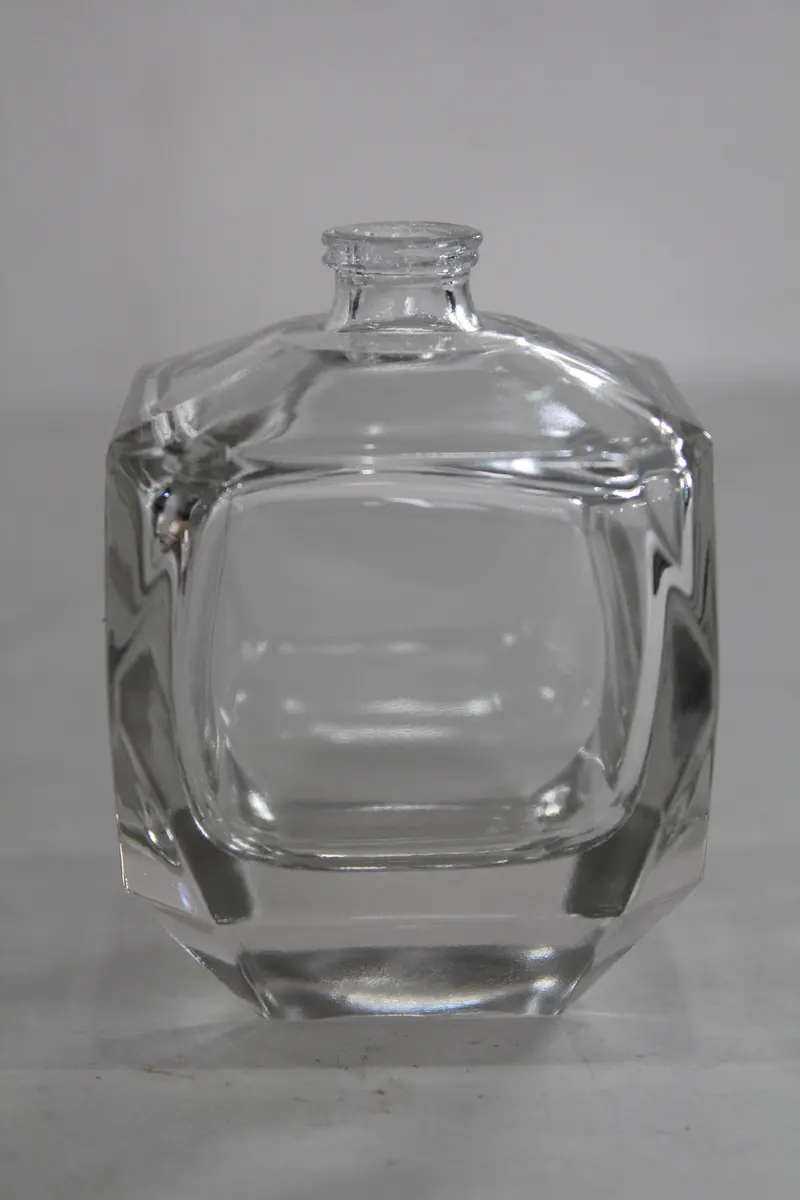
Metallising Routes Compared: Vacuum, Galvanic, Sprayed Metallic and Foil
The table below compares the routes that are actually offered for metal-look glass containers, including the two routes that buyers most often confuse. Read it as a shortlist generator rather than a specification: every row ends with the questions that have to be answered by the decorator before a route can be committed, and the honest answer to several of those questions is that the answer depends on the geometry and the batch.
| Route | Appearance and reflectance | Adhesion and abrasion | Effect on glass strength | Regulatory boundary | Brand positioning it suits | Confirm with the factory |
|---|---|---|---|---|---|---|
| Vacuum metallising, full wrap, untinted aluminium | The closest thing to a true mirror, with high specular reflectance and a cool silver-white tone; because it is a thin film on a lacquer base rather than a solid metal shell, it reads as bright rather than deep | The best of any route for adhesion when the base coat is right, because the film is thin and fully supported; abrasion reveals the coat beneath rather than flaking, so wear appears as a dulling patch, and edges at a mask line are the only place where lifting starts | Effectively none. Deposition happens in a vacuum chamber at low temperature and does not approach the range at which glass is annealed, so the container is not re-annealed and does not gain strength either | Decoration is exterior only; the metal and both coats must be kept off the interior and off the neck and sealing surfaces, and the pack should be assessed for particle shedding if the product is ingested | Prestige fragrance, high-end spirits, gift and limited editions where a mirror finish is the visual proposition | Whether the aluminium is tinted by coat or by metal, the film thickness or coat weight actually applied, the mask zones on the drawing, and whether the whole body or a face is coated |
| Vacuum metallising with a tinted base or top coat for gold, rose gold or colour | Gold and rose gold are usually produced by tinting the lacquer, not by depositing gold, so the tone is a colour over a silver metal; this gives excellent control of hue but a slightly warmer, softer reflectance than a sputtered metal layer | Identical adhesion physics to the untinted route, but tinted top coats are often formulated differently and can be softer; rose gold tints are notoriously the most sensitive to over-coating and to heat during cure | Again effectively none from the deposition step; the cure ovens for the coats run far below any glass annealing temperature, so the thermal cycle does not re-anneal the container | Same exterior-only boundary; colourants in the coats should be declared by the coat supplier, and the buyer should not assume that a coloured appearance implies a metal in contact with anything | Festive and gifting ranges, Middle East and Asian markets where gold reads as premium, brand colour matching where a signature hue must be repeated exactly | How the gold is achieved, since yellow coat over silver and a sputtered gold tone behave differently in wear, the colour target and tolerance, and whether the tint is in the base or the top coat |
| Interior silvering of a hollow glass body | A true mirror seen from inside the glass, with the reflective surface protected behind the wall and no external film to scratch; the effect is optically deeper than an exterior film because the glass itself acts as the front layer | Extremely durable against external wear by construction, but the interior film is invisible to inspection and cannot be repaired; the coated interior is by definition a product-contact surface if the container is used for a product | None from the chemistry, but the process requires a clean interior and often a pre-treatment, and any abrasive interior preparation would be a separate strength decision | The most sensitive route on the boundary question, because the coating sits where the product sits; this is a decorative route and should not be used for a container that will hold a food, a cosmetic or a beverage without a full product-contact assessment | Decorative objects, display pieces and non-product uses rather than primary packaging for a filled product | Whether the container will ever be filled, what the interior film is made of, and how the buyer intends to demonstrate that no contact with product occurs |
| Galvanic electroplating over a conductive seed layer | A genuinely thick metal layer with the dense, deep reflectance of plated metal rather than a thin film, and the ability to build a brushed or textured metal surface that no vacuum film can reproduce | Potentially the most abrasion-resistant surface of any route, because the layer is thick; the weakness moves to the interface between glass and the conductive seed layer, which is where adhesion failure occurs and where it is hardest to detect before the finished part is in the field | None inherent to the plating, but the route needs a conductive pre-treatment, and whichever pre-treatment is used defines a new surface on the glass that has to be assessed on its own terms | Requires a full material declaration for the seed layer as well as the plate, and in many markets the plating chemistry carries its own restrictions; treat the paperwork as a first-order question rather than an afterthought | Ultra-premium and collector packaging where thick metal is the entire proposition and the unit budget can absorb a specialist process | Who owns the seed layer, what it is made of, how adhesion is proven, and whether the decorator has ever run the route on a container of this geometry rather than on flat parts |
| Sprayed metallic lacquer | A metallic or pearlescent appearance rather than a mirror, with aluminium or mica flake pigments oriented in the film; the tone is even and controllable but the surface does not reflect a clear image | Usually the most forgiving of the metal-look routes on complex geometry, because there is no vacuum step and no mask edge to fail; abrasion dulls the flake rather than removing a mirror, which reads as ageing rather than damage | None from the film itself; it is a thin organic layer with no mechanical role, and it neither adds nor removes strength | A lacquer in contact with product would fall under food-contact or cosmetic-contact rules, so it belongs on the exterior and away from the seal like every other route on this table | Mass and mid-market fragrance, promotional and seasonal ranges, and any program where a metal look is wanted at volume without a mirror proposition | Pigment loading, whether a clear top coat is applied over the metallic coat, and how the finish behaves against the specific fragrance in the pack |
| Hot stamp foil, full or partial | A bright metal transfer in defined shapes, logos, bands or rims, with a sharpness that printed metallics cannot match; it is a graphic element rather than a surface treatment, so it accents a body rather than covering it | Foil adhesion depends entirely on what it is stamped onto: on bare glass it needs a foil formulated for glass, and on a metallised or lacquered body it is stamped onto the top coat, so the bonding is coat-to-foil rather than foil-to-glass | None; it is a contact transfer at moderate temperature and pressure with no thermal load on the body | Exterior graphic decoration with no product-contact implication provided it stays off the seal area and off the interior | Logo-led and quietly luxurious designs where a single foil mark does more work than a fully coated body | Which substrate the foil will land on, whether the top coat has been qualified to receive that foil, and how the stamped area performs in the same rub tests as the rest of the pack |
The pattern in the table is that full-wrap vacuum metallising and sprayed metallic lacquer are the two workhorse routes, interior silvering and galvanic plating are specialist routes with narrow appropriate uses, and foil is complementary rather than competing, since it can be applied over another route. The most common mistake in route selection is to specify a mirror when a satin metallic would have produced the intended look at a fraction of the risk, and the second most common is to combine a mirror body with a heavy print program without checking that the print and the top coat are compatible.
Adhesion and Wear: How to Specify and Test the Coating
Adhesion is not one property, and a single pass or fail is not a specification. Four different stresses are worth separating, because a surface can pass one and fail another, and only the combination predicts what a consumer will see.
Dry adhesion is the first. The conventional method is the cross-cut tape test, described in the ISO 2409 family internationally and as a cross-hatch tape adhesion test in the ASTM D3359 family, in which a lattice of cuts is made through the film to the substrate, a defined pressure-sensitive tape is applied and pulled, and the proportion of coating removed is classified against a reference chart. On glass the test has a caveat worth knowing: because the substrate is hard and the film is thin, the cuts have to be made cleanly and the classification judged honestly, and the result should be recorded with the specific tape used, since a different tape changes the result. A cross-cut that passes on a flat panel can still fail at a sharp radius, which is why the test should be run on the finished container and on the areas where the geometry is tightest.
Solvent resistance is the second and is often the more revealing. A double-rub test uses a cloth saturated with a nominated solvent, usually isopropanol or an ethanol-and-water blend that approximates the product, rubbed back and forth over a defined area a fixed number of times, and the film is examined for breakthrough or softening. The ASTM D4752 family describes this style of solvent rub and is commonly written into purchase specifications as a MEK rub; the choice of solvent should be argued from the product rather than from habit, since a fragrance is an alcohol challenge and a body lotion is not. This test is the one that separates a metallised surface that will still look new after a year of use from one that will look patchy after a month.
Abrasion is the third. A rotary abrasion tester of the Taber type, described in the ASTM D4060 family, or a linear rub instrument, mimics the friction of handling and of the pack rubbing against a shelf or another unit. The result is reported as a change in appearance or haze after a set number of cycles, and the useful specification names the wheel type, the load and the cycle count rather than merely saying abrasion tested. For coated glass the failure mode to watch is not the film rubbing through but the film polishing to a dull patch, which is more visible on a gloss mirror than on a satin finish.
Environmental and handling resistance is the fourth. Humidity or water immersion, a thermal cycle if the pack will travel through extremes, and a wet rub that simulates damp hands are all worth agreeing if the product is used in a bathroom or the pack ships by sea. A transport test of the packed configuration, ideally modelled on the procedures in the ISTA family, catches the case where the coating is fine but the shipper allows the bottles to grind against each other.
Two structural points cut across all four tests. The first is surface cleanliness: glass is chemically stable, which means nothing keys into it mechanically, and the whole bond depends on the base coat wetting a clean surface. Fingerprints, mould release residue, water spotting or dust from an unsealed carton will produce a film that passes a bench test and fails in the field, which is why the interval between cleaning and coating is itself a process parameter. The second is edge density. A full wrap has almost no edges, a masked band has two, and a complex multi-mask design has many, and every edge is a place where a lifting front can start. When everything else is equal, the design with fewer coated edges is the more durable design.
Decoration Sequence: Metallising Against Screen Print, Hot Stamping and Frost
Once a bottle carries two or more decoration techniques, the order of operations stops being a production detail and becomes a design constraint, because each process leaves a surface that the next process has to accept.
The standard sequence for a metallised container with printing is base coat, metallising, top coat, then print or foil on top of the top coat. This order is chosen because the top coat seals the metal and gives the ink and the foil a defined, uniform surface to bond to, and because printing on top of a mirror produces the highest contrast a glass pack can achieve. The alternative, printing directly on glass and then metallising over the print, is used only where the printed image is meant to sit behind a semi-transparent metallic veil, and it imposes three extra constraints: the print must be fully cured and free of solvent before it enters the vacuum chamber, or it will outgas and spoil the deposition; the print has to survive the chamber; and the metallic film will mute the print rather than leave it crisp.
Three risks recur. The first is solvent attack, where a screen ink or its thinner partially dissolves the top coat and the result is a bloom or a dull patch that appears only after curing. The second is outgassing, where a print that seems dry carries residual solvent into the vacuum chamber and produces a hazy or non-reflective metal. The third is differential adhesion, where the foil or the ink bonds well on the coated area and poorly on a masked clear area of the same container, so a graphic that crosses the boundary looks different on each side and becomes a complaint even though neither area is technically defective. The fix in all three cases is to qualify the actual combination on the actual container rather than to qualify each technique separately and assume the sum works.
Frosting deserves a separate warning. An etched or frosted band on a metallised bottle can be produced by sandblasting through a resist, by acid etching or by a frosted lacquer, and the first two remove material from the glass surface. That is a distinct decision from decoration, since any process that alters the glass surface can affect its mechanical performance, and it should be raised explicitly with the decorator rather than discovered afterwards. A frosted lacquer, by contrast, is an additive film and stays within the decoration logic of this page. Where a design mixes frost, metal, print and foil in one artwork, the combination belongs to the multi-technique decoration logic rather than to this page, and the buyer should expect to qualify a larger number of interfaces.
Colour Consistency and Acceptance: Gold, Silver, Rose Gold and Tints
Metallic finishes are gonioapparent, which means their colour depends on the angle at which they are viewed and the direction from which they are lit. That single property invalidates the most common acceptance method in packaging, which is to hold two bottles side by side under office lighting and declare a match or a mismatch.
A workable acceptance scheme has four components. The first is a measurement geometry. A multi-angle instrument, in the tradition of the ASTM E2194 family for multi-angle colour measurement of metallic coatings, reads the surface at several angles and reports the flop, which is the difference between the face tone and the tone at a grazing angle. A single-angle reading on a metallic surface is close to meaningless, because two bottles can agree at one angle and diverge sharply at another.
The second is a defined illuminant and observer, agreed before the first sample rather than after the first dispute, together with the angles. The third is a tolerance expressed as a colour difference value rather than as words. A numerical tolerance is what allows a supplier to know what to aim for and what allows a buyer to reject a batch without arguing about adjectives. Fourth is a light source for visual confirmation, typically a daylight-equivalent source such as D65 alongside a warm retail source, because a tone that matches under daylight can drift under the warmer lighting of a shop display.
The golden sample remains the anchor. It should be retained by both parties, protected from light and handling, and re-checked before each production run, because the sample itself ages. Retained samples should be taken after the top coat rather than after metallising, since the top coat shifts the appearance more than any other step, and a sample pulled from the wrong point in the process is worse than no sample at all because it looks authoritative while being wrong.
Some tones are intrinsically harder. Rose gold is the least forgiving, because a copper-toned tint moves visibly with small changes in coat thickness or cure, and because the direction of its drift is toward pink in one batch and toward amber in another. Pale champagne and light gold are the second hardest, since there is very little chroma to hide variation. Deep saturated colours and dark gunmetal are the most tolerant, because the eye has less purchase on small differences. Silver is peculiar: it is easy to match in tone and hard to match in brightness, so the gloss of the top coat has to be specified alongside the metal. Finally, a buyer should decide explicitly whether the specification applies to a single lot or to an agreed band across lots, and whether a partial re-coat would be accepted or whether every batch must come from a single coating pass, because mixing units from two passes in one shipment is the most common way a visually uniform order fails IQC.
Does Metallising Weaken the Glass? What the Process Does and Does Not Do
This question is worth answering precisely, because both a dismissive answer and an alarmist one are wrong.
The deposition step itself does not weaken glass. Vacuum metallising takes place in a chamber at low pressure and low temperature, with the container cooled rather than heated, and the metal condenses from vapour onto a cold surface. The kinetic energy arriving at the surface is nowhere near enough to disturb the glass structure. The cure ovens used for base coats, tints and top coats run at temperatures that are far below the range at which glass is annealed, so the thermal cycle a decorated bottle experiences does not re-anneal it, does not relieve its forming stresses and does not change its strength either. A metallised bottle is not stronger than a plain one, and it is not weaker because of the coating.
What can change is the surface condition of the glass, and that is where strength is actually decided. Any preparation that removes material, such as grinding, sandblasting or acid etching, alters the exterior surface and can introduce the microscopic flaws from which cracks propagate, and the effect scales with depth and coverage rather than with intent. Any mechanical handling, from feed screws and guide rails to the fixtures that hold a container during masking, produces contact damage that is invisible at the time and becomes the origin of a break later. Any decorator who keys a base coat by abrasion is changing the surface and should say so, because a roughened surface is a different article from a smooth one even when the coating looks the same.
Two further points matter for the finished pack. First, a coating has no load-bearing role. It cannot add hoop strength, cannot protect a thin wall from shipping compression and cannot rescue a container whose wall distribution is poor. Second, the neck is the part where the process can create a functional problem rather than a cosmetic one. A vacuum film on a thread, a crimp ledge or a sealing face changes a dimension that the closure has to match, can be abraded by the closure in service and can shed particles toward the product. That is why the mask zones on the drawing are a strength, safety and sealing question at the same time, and why a specifier should walk the neck finish against the decorator’s mask rather than trusting a general assurance that the neck is masked.
Filling, Capping and Line Handling on a Metallised Container
A decorated container is not the same object to a filling line as a plain one, and the differences are all at the interfaces.
Capping torque is the first. A coating changes the coefficient of friction between the closure and the glass, and a torque setting that produced a correct seal on a plain bottle can over-tighten or under-tighten on a coated one, with the direction depending on whether both the thread and the closure are coated or only one. Application and removal torque bands should be re-qualified on coated containers rather than inherited from the plain program, and the sealing surface should be a no-coat zone so that the seal itself is glass against liner rather than film against liner. On a crimped pack, the crimping head contacts the glass neck, so the ferrule seat has to be clean glass for the crimp to hold; a film under a ferrule is a leak waiting for a temperature change.
Line abrasion is the second. Guide rails, star wheels, feed screws and transfer plates all touch the container, and a full-wrap finish will show that contact. Gloss metallic surfaces show scuffs as bright marks and satin surfaces show them as polished patches; both are more visible than the same wear on a plain flint container. If the line has a history of marking glass, the coating will find it, so the cleanest route is to qualify a short run before the first full production batch and inspect the contact areas on the bottles that actually travelled the line.
Packing is the third. Coated surfaces that touch each other in transit will rub, and the wear appears as a dull ring or a polished band that is extremely difficult to defend in a customer complaint because it looks like a defect rather than damage. A shipper cavity that holds each unit, a divider, or an individual bag where units must touch gives the coating a chance to arrive as intended. If the pack is a gift set with an outer box, the box should be tested as the consumer receives it rather than as a bare bottle.
Finally, rework and rejection have to be thought about before the run. A metallised container cannot be cleaned like a plain one, and a coated surface cannot be polished or spot-repaired without leaving a visible patch. Any program with a high cosmetic defect rate therefore turns into scrap rather than rework, which is a reason to agree the defect classification carefully and to inspect coated containers under the lighting in which the consumer will see them rather than under a factory’s sodium lamps.
Where Metallising Stops and the Adjacent Decoration Decisions Begin
This page covers one family of surface technique: the routes that make a glass container look metallic, the coats that carry and protect that appearance, the tests that define whether it survives handling and product exposure, the sequence in which it combines with print and foil, the colour acceptance scheme that keeps batches consistent, the limited effect the process has on glass strength, and the line-handling consequences of a coated surface.
It deliberately does not cover sprayed colour that is not metallic, which is a different set of pigments, a different set of failure modes and its own adhesion logic, and belongs to glass bottle spray coating. It does not cover the case where a matte finish is the whole visual proposition rather than a layer applied over a mirror, which belongs to matte black perfume bottles. It does not cover programs that combine metallising with several other techniques across a complex artwork, where the number of interfaces multiplies and the qualification logic changes, which belongs to cosmetic jar decoration. And it does not cover the container itself: capacities, shape families, shoulder profiles, neck standards and the general grammar of fragrance packaging are the territory of the perfume bottles page. A buyer arriving with a shape decision should settle that first, because the geometry of a container determines how a metallised film will behave at its radii and how many mask edges the design will carry.
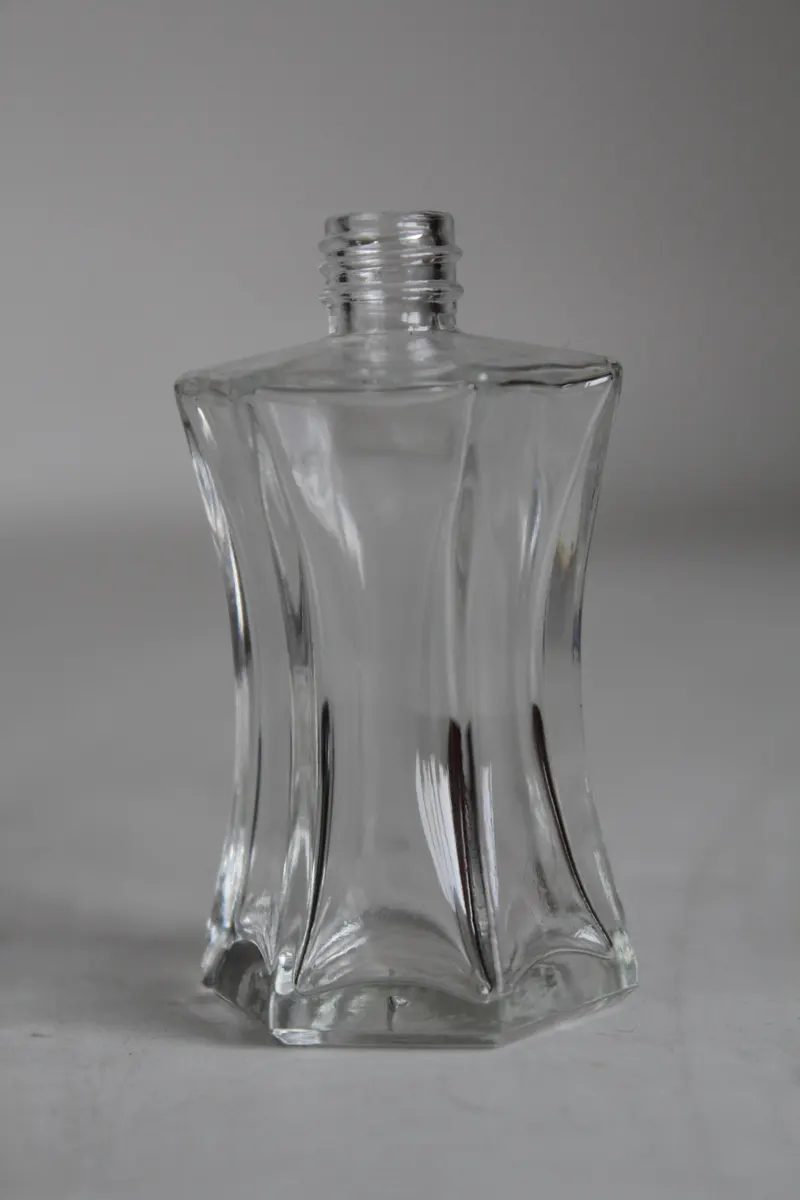
Frequently Asked Questions About Electroplated and Metallised Glass Bottles
Can glass bottles actually be electroplated in a water plating bath?
Not directly. Electroplating is a galvanic process that requires the part to conduct electricity, and glass is a dielectric, so a glass container cannot be plated by being made the cathode in a plating bath. A galvanic route on glass needs a conductive seed layer deposited first, and then the plating goes onto that layer. At container scale this is a specialist decorative process rather than a commercial packaging route. What the trade calls an electroplated glass bottle is almost always a vacuum metallised container in which a base coat, a thin metal film and a protective top coat are applied in sequence.
Is vacuum metallising the same as electroplating?
No, although the two are routinely sold under the same words. Vacuum metallising is a physical vapour deposition process: aluminium is evaporated in a low-pressure chamber and condenses as a thin reflective film on a prepared surface. Electroplating is an electrolytic process that builds a much thicker metal layer from solution using an electric current. The commercial difference is that vacuum metallising is fast, suits complex glass geometry and is the standard route for containers, while true electroplating is slow, needs a conductive pre-treatment and rarely appears on a filled glass pack.
How do I know the metallised layer will not rub off in use?
By defining tests rather than by trusting an adjective. The usual set is a cross-cut tape adhesion test in the ISO 2409 or ASTM D3359 tradition, a solvent rub in the ASTM D4752 tradition using a solvent chosen to reflect the actual product, an abrasion test such as the ASTM D4060 family, and where relevant a humidity or immersion check. Run them on finished containers rather than on flat coupons, on the tightest radius the design uses, and after the full coat stack rather than on the metal alone. Record the tape type, the solvent, the wheel and the cycle count, so that a reorder is measured against the same conditions.
Does the electroplated layer make the bottle weaker or stronger?
Neither, in any meaningful way. Vacuum deposition happens cold and the coat cure temperatures are far below the range at which glass is annealed, so a metallised container is not re-annealed. The film is a fraction of a micrometre thick and carries no load, so it cannot add strength. What can affect performance is surface preparation: processes that remove glass such as sandblasting or acid etching, and mechanical contact from fixtures and line handling, both of which can introduce flaws. If a decorator keys the surface by abrasion, that should be declared, since it changes the article being sold.
Which is harder to match between batches, gold, silver or rose gold?
Rose gold is the hardest, because a copper-toned tint moves visibly with small changes in coat thickness and cure temperature, and its drift can be pink in one lot and amber in another. Pale champagne and light gold come next, since there is little chroma to mask variation. Dark gunmetal and deep saturated colours are the most tolerant. Silver is a special case: the tone is easy but the brightness is not, so the gloss level of the top coat has to be specified together with the metal, and a retained golden sample taken after the top coat is the only reliable reference.
Can I print over a metallised glass bottle?
Yes, and it is the normal sequence: base coat, metallising, top coat, then screen print or hot stamp on top of the top coat. That order gives the ink and the foil a defined surface and produces the highest contrast. Three risks have to be qualified: solvent in the ink attacking the top coat, residual solvent in a print outgassing if the print is placed under the metal instead, and differential adhesion where a graphic crosses from a coated area onto a masked clear area and looks different on each side. Qualify the whole combination on the actual container rather than testing each technique alone.
Can a metallised bottle be used for food or cosmetics?
The decoration stays on the exterior by design, so it is not a food-contact or product-contact surface, and the regulatory framework for the product itself still applies to the container and closure system as a whole. In the European Union that means Regulation 1935/2004 as the framework for food-contact materials and Regulation 10/2011 for plastic food-contact materials, or LFGB style requirements in Germany; for cosmetics it means Regulation 1223/2009 and the responsibility it places on the responsible person, with IFRA standards governing the fragrance formula. The practical rule is that the coating must be kept off the interior, off the neck thread and off the sealing surfaces, and that composition declarations must come from the supplier of each material that touches the product.
What should I send to get an electroplating and metallising proposal?
Send three things first: the appearance target, the batch quantity and whether the container will hold something that is ingested or applied to skin. The appearance target should be a physical reference or a defined tint against a metal system, together with a coverage decision and a gloss level. Add the contents, the market, the channel, whether print or foil is part of the artwork, and the container drawing with the neck and the seal areas marked so that mask zones can be proposed against them. With those inputs, a route, a coat architecture, a colour acceptance scheme and a test protocol can be put forward in one pass, and the mask zones can be drawn onto the container so nothing is left to the decorator’s judgement.
A metal-look glass bottle is rarely lost to the coating itself. It is lost to an unstated tint, an unmasked neck, a golden sample pulled from the wrong point in the process, or a rub test that was argued about after the shipment landed rather than agreed before the run started. Settling those four things costs a meeting. Settling them afterwards costs a batch.