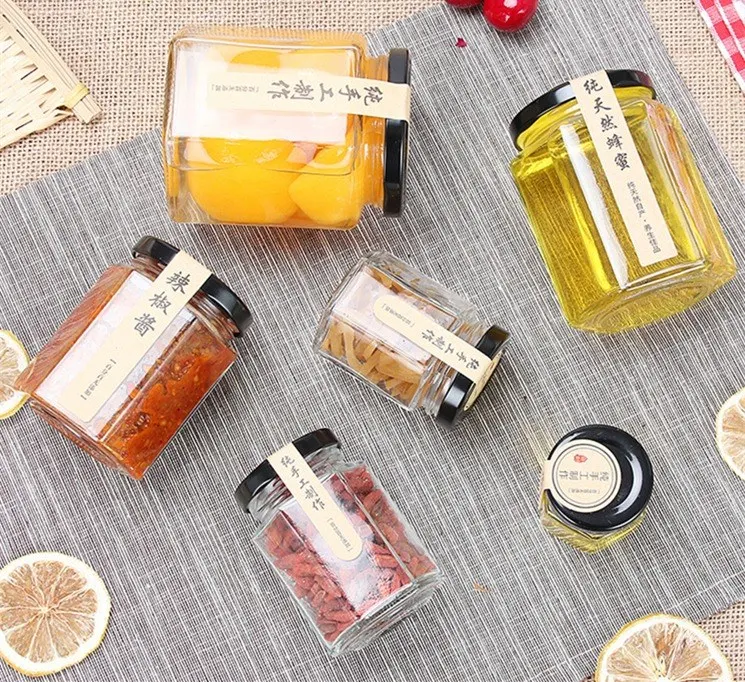
A closer look at one step of our custom glass bottle development service; the full route, from drawing to approved sample, is set out there.
Quick answer
Should you use a stock bottle or a custom mould?
There are three routes, not two: buy a stock bottle as it is, revise a stock bottle with your own colour, decoration, closure or pack, or commission a private mould. Stock suits a test market or first launch, revised stock a growing brand, and a private mould a mature product with predictable annual volume and a design meant to last. Shape, capacity, weight and neck finish change only with a new mould.
| Route | What you can change | Stage it suits |
|---|---|---|
| Stock bottle | Label, closure, decoration | Test market, first launch, seasonal lines |
| Revised stock | Colour, print, coating, frost, sleeve, closure, pack | Growth stage, brand refresh |
| Private mould | Shape, capacity, weight, neck finish | Mature brands with predictable annual usage |
This page is for the buyer, brand owner or product development lead who is deciding how much of the bottle to design, how much to buy off the shelf, and how much money and calendar to commit before the product has proved itself in the market. It is a purchasing overview rather than an execution guide: it compares the three routes a glass packaging programme can take – direct stock purchase, revision of an existing stock bottle, and a fully private mould – against the things that actually decide between them, which are brand stage, annual usage, the differentiation the product needs, and how freely you want to change the design after launch.
The boundary is deliberate, because two neighbouring questions are easy to confuse with this one. If your question is what a tooling charge is made of, how a mould is owned and recovered, and when tooling pays for itself, that is a tooling economics question and belongs on the glass bottle mold cost page. If your question is how long any of these routes takes from approval to staged goods, that is a scheduling question and belongs on the glass bottle lead time page. This page answers only which route suits your situation and what each route commits you to, and it ends by sending you to the page that executes whichever route you choose. No minimum quantity, tooling figure or unit price is stated here, because in glass packaging all three depend on the shape, the finish and the ordering pattern and are confirmed on inquiry.
Stock Bottles vs Custom Bottles Is Really a Question of Three Routes
The familiar framing – standard glass bottles or custom – hides the route most buyers should actually take. Between a plain stock bottle and a fully private mould sits a middle option that changes a great deal about the product without touching the mould at all. Treating the decision as a binary pushes buyers either into a bottle that looks like everyone else’s or into a tooling commitment they did not need yet.
The first route is direct stock purchase. You buy a bottle that already exists: an existing mould, in a running capacity and finish, in a colour the plant can supply. Nothing about the glass is yours; what differentiates the product comes from the label, the closure, the decoration and the brand. Its character is speed and low commitment. Its limitation is that the shape, the capacity and the neck finish are fixed by what already exists.
The second route is revised stock, which is the route most often overlooked. You keep an existing mould and change what sits around it: the glass colour within the range that can be produced, the decoration such as printing, coating, frosting or sleeving, the closure or pump where the neck finish already accepts it, and the pack specification. Nothing here requires a new mould, so the shape and the capacity remain shared, but the product as it reaches the customer does not look like a generic bottle. This is usually the correct route for a brand that has proven demand but has not yet proven enough volume to justify tooling.
The third route is a fully private mould. You commission a new shape, a new capacity, a new weight band or a new neck finish, and the bottle becomes yours alone. It offers the highest differentiation and the clearest defensibility, and at sustained volume it is normally the strongest per-unit position. It also commits you earliest and most heavily: to a tooling cost, to a development sequence of drawing, sampling and approval, and to a design that becomes expensive to change once it exists in steel.
The route question is therefore not about ambition. It is about where the product is in its life and what it needs next. When you choose stock or custom packaging, the useful test is not which option is better in general but which one the product can support now, because a decision taken on the assumption that custom is always better, or that stock is always cheaper, ignores the middle route and the stage-based logic that decides between all three.
What Your Brand Stage Decides Before Your Budget Does
The stage of the product, not the size of the marketing plan, is the first filter. Each stage has a different tolerance for commitment and a different need for differentiation, and the three routes map onto them fairly cleanly.
At the test market or first launch stage, the dominant requirement is speed and reversibility. The product may need a change of capacity, a change of positioning or a change of closure after the first selling season, and any of those changes is cheap on stock and expensive on a private mould. Direct stock purchase keeps the commitment low, allows the launch to happen on a short calendar and leaves every option open. The trade-off is real and should be accepted consciously: the bottle will not be unique, and the plan should rely on the label, the closure and the decoration to carry the brand.
At the growth stage, the product has sold and the question shifts to standing out without over-committing. This is where revised stock usually earns its place. A colour, a decoration treatment or a matched closure set can do most of the differentiating work at a fraction of the commitment of a new mould, and it can be changed again in the next cycle if the market moves. The limitation is that the silhouette and the capacity remain shared, so the differentiation is in finish rather than in form.
At the mature stage, when the annual usage is predictable and the design is not expected to change, a private mould becomes defensible on unit economics as well as on branding. The calculation is no longer about a launch but about a multi-year supply position: a shape that competitors cannot buy off the shelf, a capacity tuned to the product rather than to what exists, and a tool that is a long-lived asset. This is also the stage where the design should be locked with care, because iteration after tooling is the most expensive kind.
There is also a stage that sits outside the sequence: the flanker or seasonal variant. Where a brand runs limited editions, travel sizes or gift formats alongside a hero product, those lines may never justify their own tooling, however mature the parent brand is. Holding them on stock or revised stock keeps the tooling investment concentrated on the SKUs that carry the volume.
The Purchasing Variables That Separate the Three Routes
Once the stage is clear, the following variables decide where within it a buyer should land. They are worth writing down before requesting quotations, because they are the inputs that will change the recommendation.
- Annual usage and ordering pattern – the total annual volume, how it is split across orders, and whether demand is steady or seasonal. A route that looks efficient at volume can be inefficient when the same volume arrives in small, frequent batches.
- The differentiation the product actually needs – whether the brand must own the silhouette, or whether it owns the label, the colour and the closure finish instead.
- Time available before launch – a date that is already fixed constrains the route far more than a budget does, because tooling and sampling sit ahead of any production slot.
- Price sensitivity of the product – a premium product can carry a more expensive route; a value product usually cannot, and the unit cost pattern of the routes differs.
- Flexibility wanted after launch – whether capacity, shape or decorative treatment is likely to change within the next two or three years, and how expensive it would be to respond.
- Filling line and closure ecosystem – what the existing filling equipment and the chosen closure already accept, since a new neck finish may affect both.
- Regulatory and labelling references – any declaration, submission or artwork that names the pack, because changing the container later may force a re-run of that work.
- Claims the brand wants to make on packaging – recycled content, lightweighting or recyclability messaging, which may be easier to document on a private mould and harder to control on a shared one.
- Willingness to hold inventory and absorb a minimum run – choosing a route implicitly means accepting its run structure and the leftover stock that comes with it.
- Ownership and reorder arrangements for tooling – whether tooling is paid for outright, amortised through unit price, or retained by the supplier, and what happens at reorder. The options are compared on the tooling page.

The Route Decision Matrix
The matrix below compares the three routes on the dimensions that decide between them. Read the ramp-up column together with the one-time investment column, because the route with the lowest headline cost per bottle is frequently the route with the longest and most committed start. Read the flexibility column before the unit cost column if the product or the market is still moving.
| Route | Ramp-up time before a first shipment can be planned | One-time investment | Differentiation ceiling | Switching and iteration flexibility | Stage it suits | Where to go deeper |
|---|---|---|---|---|---|---|
| Direct stock purchase (existing mould, existing capacity, running colour) | Shortest of the three; the constraint is allocation, decoration capacity and booking rather than bottle development | Lowest; normally limited to decoration artwork, print plates or screens, and pack tooling such as a divider or carton die | Lowest; the silhouette and capacity are shared with any other buyer of the same bottle | Highest; the bottle can be changed, or swapped for another stock size, between one order and the next with no tooling consequence | Test market, first launch, seasonal or flanker lines, and any SKU whose volume is not yet proven | Stock supply and open-market comparison are handled on the wholesale and bulk pages |
| Revised stock (existing mould, changed colour, decoration, closure or pack) | Moderate; shorter than a private mould because no tooling is made, but the colour campaign and the decoration queue both have to be joined | Moderate; decoration setup, artwork and plates, plus any component tooling where a closure or pump is developed to suit | Medium; the form is shared but the finished appearance can be made distinct through colour, print, coating, frost or sleeve | High on decoration and closure, which can be reworked between cycles; low on form, which remains fixed by the existing mould | Growth stage, brand refresh, and any product that needs to look proprietary without a tooling commitment | Tooling is not required, so the closest execution pages are the wholesale and bulk routes |
| Full private mould (new shape, capacity, weight band or neck finish) | Longest; tooling manufacture and at least one sampling and approval round sit ahead of any production window | Highest; tooling, plus development and sampling work, plus the re-qualification of closure, decoration and filling on the buyer’s side | Highest; the shape and the flow of the glass are yours and cannot be bought off the shelf by a competitor | Lowest; changing shape, capacity or finish after tooling means new tooling and a new approval cycle, which is why the design should be locked deliberately | Mature brands with predictable annual usage, premium positioning, and a design expected to hold for years | Cost composition, recovery and payback are set out on the mold cost page |
What a Revised Stock Bottle Can and Cannot Change
The middle route only works if the buyer knows where its boundary sits. The dividing line is simple to state: if the change can be achieved without altering the mould, it belongs to revised stock; if it touches the mould, it is a private tooling project whatever it is called.
On the revised side of the line sit glass colour, subject to what the plant can produce and to the colour campaign it is running; decoration, including screen or digital print, coating, frosting and sleeving; the closure, pump, dropper or cap, where the existing neck finish accepts the closure family you want; the internal fitment, where the neck bore allows it; and the pack specification, including carton, divider, pallet pattern and marking. A brand can, on that basis, present a product that looks entirely its own while the bottle itself remains a stock item.
On the private side of the line sit the shape and the profile of the glass, the capacity, the weight band and the geometry of the neck finish. These are determined by the mould, so a change to any of them means new tooling, a new sampling round and a new approval. It is worth checking a proposed change against this list before commissioning anything, because a request to make a stock bottle “slightly taller” or “a little narrower at the shoulder” is a tooling project, not a revision.
One further boundary deserves attention. A neck finish can sometimes be changed on an existing mould if the mould was built with that variant, and cannot be changed if it was not. Because the finish is what determines whether your closure seals, the finish should be confirmed before the route is chosen rather than after, and any closure or pump already qualified on another product should be checked for fit rather than assumed to transfer.
The Mixed Strategy: Launch on Stock, Open a Mould Later
The three routes are not mutually exclusive over the life of a product, and the most common mistake is choosing the route the brand aspires to rather than the route the current volume supports. A staged approach usually produces a better outcome than a single early commitment.
The usual shape of the mixed strategy is to launch on stock or revised stock, run the product through at least one full selling cycle, and use that cycle to learn the true reorder rhythm, the true sell-through per SKU and the true sensitivity of the market to pack format. Once those are known, the private mould is designed against real data rather than against a forecast, and the tooling decision is made when annual volume can be stated with confidence. The launch is protected, and the tooling is spent where it earns the most.
A second version runs the routes in parallel by SKU. The hero product carries the private mould and the brand equity, while flankers, travel formats, gift sets and seasonal editions stay on stock or revised stock. This concentrates tooling investment on the volume that justifies it and keeps the long tail flexible, which is also the structure that makes reacting to an unexpected bestseller possible.
A third and quieter version is to keep a compatible stock fallback inside the specification from the beginning. Where the private design is still in development and a launch date cannot move, a stock bottle that shares the same finish and a workable capacity can cover the first weeks of demand. That requires the closure and label to be approved for the fallback as well, which is far easier to arrange before the tooling is cut than after. The point of the fallback is not to replace the design but to protect the date.
Three Costs Buyers Forget When Comparing Routes
The comparison that decides between stock and custom is usually made on the bottle price and the tooling charge. Three further cost lines are consistently left out, and they shift the answer more often than the two figures that are included.
The first is decoration setup and its re-setup. Artwork, plates, screens or engraving are one-time costs that belong to the decoration route rather than to the bottle, and the same cost appears again whenever the design changes or the decoration is re-run after a gap. On a short seasonal programme this is a larger share of the total than buyers expect, and it makes frequent small design changes quietly expensive. It is the reason a decoration decision has a longer financial tail than a colour decision.
The second is the inventory that a route forces onto the balance sheet. Every route has a run structure, and the minimum quantity that is economic on a given line becomes unsold stock when demand is overestimated. On a private mould the exposure is worse than on stock, because a design-specific bottle has no alternative buyer and no value if the product is discontinued or repositioned, whereas a stock item can be used for another SKU or sold on. The cost is not only the cash tied up but the risk that the design becomes obsolete before the stock is consumed.
The third is the cost of switching and re-qualifying. Moving from stock to a private mould means a new approval cycle, and usually a fresh qualification of the closure, the decoration and the filling line. Iterating on a colour, a decoration or a closure is comparatively cheap; iterating on a shape, a capacity or a finish is not, and each change re-opens work that had already been closed. Buyers who treat a private mould as a starting point rather than an outcome tend to pay for that switching cost two or three times, and the tooling page sets out how ownership and recovery arrangements affect how much of it is recoverable.
How the Adjacent Pages Divide This Decision
Once a route is chosen, three neighbouring subjects take over, and each is handled elsewhere so that the work is not duplicated.
Tooling economics – the composition of a tooling charge, the ownership models, the mould life and the payback test – sit with the mold cost page. Scheduling and the calendar each route consumes, including tooling and sampling time, sit with the lead time page, and the internal structure of the production window is broken down on the production timeline page. Purchasing mechanics – container loading, mixed loads, trade terms and the landed cost per unit – sit with the bulk pages, and buying finished stock on the open market, with the comparison discipline that requires, sits with the wholesale page. Where the question is how a seasonal or peak-driven volume should be phased, that belongs with the seasonal planning page rather than here.
Where to Follow Each Route
- If your route involves a private mould and the open question is what the charge covers and how it comes back to you, follow how a tooling charge is built, owned and recovered.
- If the open question is how long the chosen route takes from approval to staged goods, and how that fits a launch or a sailing, follow glass bottle lead time.
- If the route is decided and the open question is how the volume is packed, loaded and priced through to the destination, follow glass containers in bulk.
- If the route is stock and the volumes are modest or mixed, and you need to compare offers on a like-for-like basis, follow sourcing stock bottles on the open market.

What to Put in the First Enquiry
A route recommendation is only as good as the inputs behind it, and most of the inputs come from the buyer. The following is the minimum needed to make the answer specific rather than generic.
- Product stage – test market, first launch, growth phase, mature brand or flanker line, and whether the design is expected to stay fixed for several seasons.
- Target differentiation – whether the brand needs to own the silhouette, or whether colour, decoration and closure are enough to distinguish the product on the shelf.
- Expected annual usage, split across orders if it is seasonal, together with the reorder pattern you expect and the size of the first order alone.
- Target launch or on-sale date, and any date that genuinely cannot move.
- Contents, filling method and closure preference, since these constrain the neck finish and therefore which routes are open.
- Decoration intention – label only, direct print, coating, frost or sleeve – and whether it is expected to change between cycles.
- Any existing artwork, filling line constraint, retailer requirement or regulatory reference that names the pack.
- Whether a stock fallback would be acceptable for a first shipment, and whether the closure and label could be approved for it.
With those items we can say which of the three routes fits, what each one commits you to in terms of development sequence and run structure, where the boundary of a revised stock bottle would fall for your design, and which costs would apply once the specification and the volume are known. Where the product is not yet proven, we will usually recommend the route that keeps the most options open rather than the one with the lowest bottle price, because the cost of changing direction later is normally larger than the difference between the routes at the start.
Frequently Asked Questions About Choosing Stock or Custom Bottles
Is a stock bottle always cheaper than a custom bottle?
Not always, once the full picture is counted. A stock bottle avoids tooling, but it may require decoration setup and it may not be available in the colour or capacity you need at the moment you need it. A private mould carries a one-time tooling cost that is spread across the volume, so at sustained annual usage it can reach a competitive unit cost while also delivering a shape no competitor can buy. The comparison should be made on the whole route – tooling, decoration setup, run structure, inventory exposure and flexibility – rather than on the bottle price alone.
At what volume does a private mould start to make sense?
There is no single threshold, because it depends on the tooling charge for the specific shape, the difference in unit cost between the stock and private routes, and whether the brand needs the shape defensively. The practical test is whether the annual volume is predictable enough that the tooling can be written off across a known number of runs, and whether the design is expected to hold for several seasons. Where volume is still uncertain, launching on stock or revised stock and tooling later against real sell-through data is usually the safer sequencing.
What can be changed on a stock bottle without a new mould?
Glass colour within the producible range, decoration such as print, coating, frosting or sleeving, the closure or pump where the existing neck finish accepts it, internal fitments where the neck bore allows, and the pack specification including carton, divider and pallet pattern. Shape, capacity, weight band and neck finish geometry cannot be changed without a new mould, because they are determined by the tooling. A change that touches the mould is a private tooling project, whatever it is described as.
Can we launch on a stock bottle and switch to a custom bottle later?
Yes, and this is often the strongest sequencing. The stock launch proves the product, establishes the reorder rhythm and reveals which capacity and format the market actually prefers, which makes the private design better informed. Two practical points make the switch cheaper: keep the neck finish compatible where possible so the closure and filling line do not have to be re-qualified, and settle the artwork, decoration and label decisions that will carry over before tooling is cut. Where the switch is planned, it is worth confirming the tooling ownership and recovery arrangements at the outset.
What is the biggest risk in choosing a custom bottle too early?
Committing to a shape, a capacity and a finish before the volume is known. A private mould hardens those decisions: changing any of them later means new tooling and a new approval cycle, and unsold design-specific stock has no alternative buyer. Where the launch calendar is also tight, the tooling and sampling sequence sits ahead of production and can put the date at risk. Neither risk is a reason to avoid a private mould when the volume and the timeline support it, but both are reasons not to choose it on ambition alone.
How does differentiation differ between revised stock and a private mould?
Revised stock differentiates in finish rather than in form. The silhouette and capacity remain shared, but the colour, the decoration, the closure and the pack can be made distinctly yours, which is enough for many categories where the label and the colour carry the brand. A private mould differentiates in form as well: the profile, the proportions, the weight in hand and the neck finish are yours alone and cannot be bought off the shelf. The first is faster and reversible; the second is defensible and committed.
What information do you need to recommend a route?
Three things carry most of the weight: the product stage and whether the design is expected to hold, the differentiation the brand actually needs, and the expected annual usage with its ordering pattern. Contents, filling method, closure preference, decoration intention, target launch date and any fitness-for-purpose requirement refine the answer, as does any retailer or regulatory requirement that names the pack. With those, the recommendation can be specific about which route fits, where the revision boundary falls and which costs would apply.
Send Your Product Stage, Differentiation Target and Annual Usage for a Route Recommendation
If you tell us three things – the stage the product is at and how long the design must hold, the differentiation you actually need on shelf, and the expected annual usage with the ordering pattern you expect – we will set out which of the three routes fits and why. You will receive a comparison of the routes for your case covering the development sequence each one requires, the run structure and inventory exposure each one implies, the differentiation each one delivers, the points at which the design would become expensive to change, and a plain statement of which costs would apply once the specification and the volume are known.
Please include anything that already constrains the choice, such as a fixed launch date, a closure or pump that has been qualified, a decoration that has already been approved, a retailer packaging requirement or a volume that must be met for a listing. Those constraints often decide the route before preference does. If the tooling decision is still open, it is worth reading the tooling cost composition and payback logic first, because whether a mould has to be made changes which of these routes exist for you at all.