Empty glass bottles do not spoil in a warehouse, but the cartons, labels and clean inner surfaces around them do. A storage instruction therefore needs five things: a stable, dry space, a stack limit taken from the carton specification, first-in-first-out rotation with the age shown on every pallet, sealed packaging until issue, and a written list of conditions that send a pallet for re-inspection before filling. No single temperature, height or storage life fits every bottle, carton and building, so each of those values has to be confirmed against the packing specification and measurements from your own store.
What is actually at risk in storage
Soda-lime glass is chemically stable. It will not rot, soften or break down on a rack the way some packaging materials can. Nearly all of the storage risk sits elsewhere: in the corrugated board that holds the stack up, in the markings that carry lot traceability, and in the cleanliness of the surface that will later touch the product.
Which of those matters most depends on who is holding the stock.
| Who holds the bottles | Main constraint | What it means in practice |
|---|---|---|
| Brand with stock waiting for filling | Contamination | The bottles are going into food, drink, cosmetic or pharmaceutical contact use. Board dust, forklift exhaust, building odours and water condensed inside a carton can all end up in the product. |
| Importer or distributor | Environmental swing | Pallets travel between a humid port shed and a dry, heated inland store, sometimes more than once, and may sit through both a cold and a warm season before resale. Every change loads and relaxes the cartons. |
| Co-packer or bottling plant | Line readiness | Bottles have to reach the depalletiser dry, squarely stacked and clean enough not to contaminate product or trip a rinse stage. Part pallets and stock forgotten at the back of a rack are the usual handling risks. |
| Buyer selling into a regulated market | The compliance case | Contact-material rules come from the destination: FDA 21 CFR in the United States, EU 10/2011 and EU 1935/2004 in the European Union, and national schemes such as LFGB in Germany. Storage has to keep the packaging in the state the compliance file describes. |
Five decisions to settle before the first pallet arrives
Most storage failures trace back to decisions made in the wrong order rather than to one bad reading. A stack height picked before anyone has seen the carton rating, or a rotation rule introduced once the first delivery is already old, are typical examples. Working through the questions below in sequence avoids that.
- Carton rating. The packing specification the bottles were actually packed to sets the upper limit for stacking and handling. Without it, a stack plan at the receiving site is guesswork.
- Annual climate of the building. One reading taken today says little. You need the spread the space goes through over twelve months, and whether the storage position is next to a dock door, heater, roof-light or uninsulated wall.
- Real stack height. Check the tallest stack built during the busiest week, pick face included, against the carton. The plan drawn on day one is rarely the worst case.
- Time on the rack. The longest any one pallet will wait decides whether you need enforced rotation, periodic checks, or both. Storage life varies with conditions and packaging, so write it as a target you review.
- Re-check ownership. Name who inspects, at what point and to which criteria. This is the question most often skipped, and it determines whether a fault is found in the warehouse or on the filling line.
Temperature: stability matters more than a set point
Heat and cold harm stored packaging mainly by changing. A building that warms through the day and cools overnight, or runs cold in winter and hot in summer, puts board, glue lines and case seals through repeated expansion and contraction. Those materials cope with a steady condition much better, which is why a store that holds an even temperature usually outperforms one that is cooler on average but swings.
Position inside the building counts as much as the building itself. The poor spots are in front of a heater, beneath a roof-light that focuses sunlight, beside dark metal racking that radiates stored heat during the afternoon, along a long uninsulated wall, and just inside a dock door that stays open whatever the weather.
Temperature is also the cause of condensation. As humid air cools it releases water, and the first surfaces to cool are the outer face of the load and the inside of the carton. A pallet can look dry from the aisle and still reveal soft corners, damp board or fogged labels once it is taken apart.
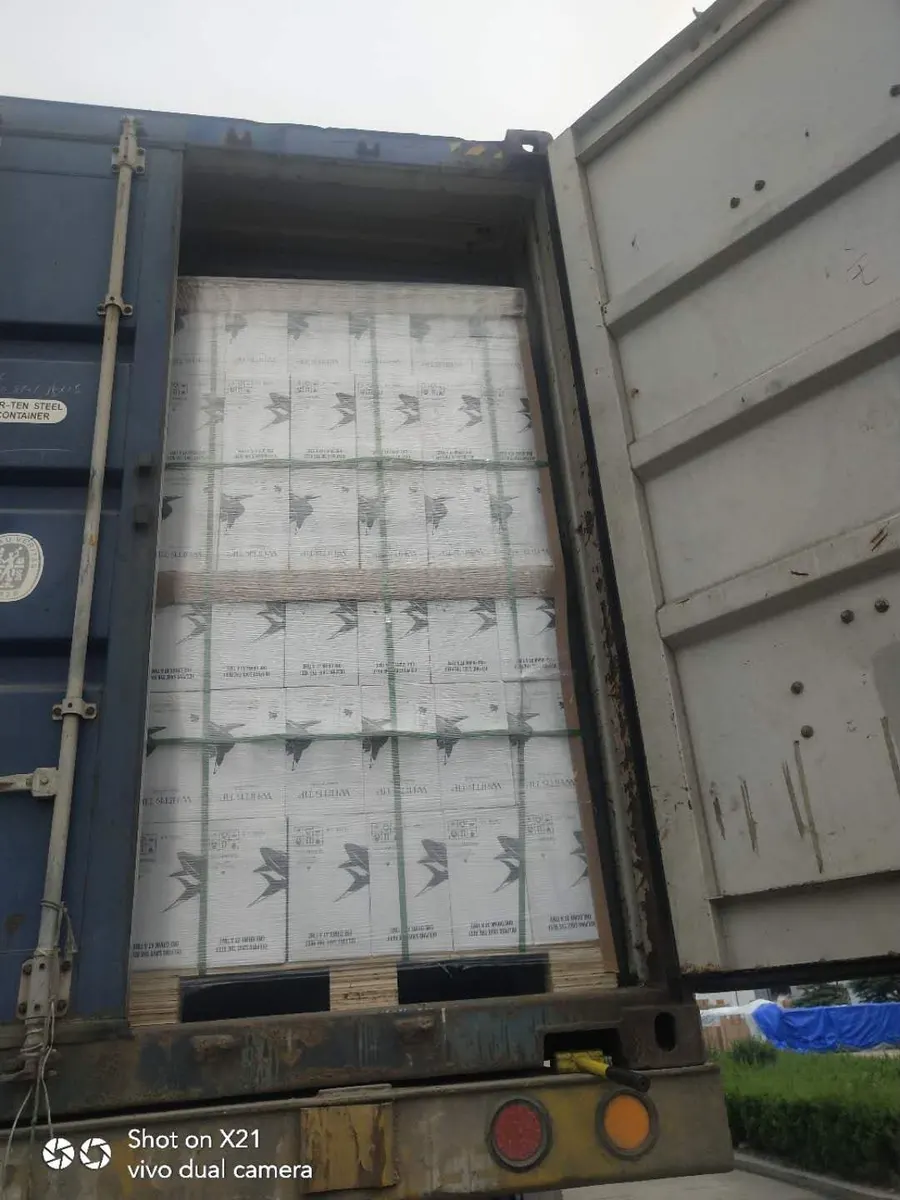
Humidity: the board and the labels react first
Corrugated board draws moisture out of the air, and its compression strength drops as the moisture content climbs. A stack that stood correctly in a dry store can therefore deform after a damp spell without anyone adding a single layer.
Paper labels and their adhesives suffer too. After months in a damp space, a label applied under controlled conditions may lift, wrinkle or slip. That is more than a cosmetic fault, because receiving and filling both rely on being able to read the lot markings.
Water and damp concentrate in predictable places: bare concrete floors, dock doors, roof leaks and sprinkler lines. Keep pallets on dunnage and clear of all four, leave room for air to move between stacks, and close doors in humid weather.
Then log what the space really does. Even a rough record of temperature and humidity replaces opinion about whether the store is suitable with data, and it is the evidence you will want when the filling line rejects a pallet.
Stack height and bottom-layer load
Stack height is the easiest storage variable to see and the one most often decided by rack clearance instead of carton strength. The lowest carton carries everything above it, and that load builds fast. A column that is comfortable two pallets high can exceed what the carton was designed for at four, and sooner if the board has absorbed moisture.
Two points get overlooked. Overflow stacks count: a load that respects the limit in the racking may be built well past it when an aisle is pressed into service during a busy week, and that is when the crushing happens. Compression damage is also slow and silent. Cartons over-stacked for a month can pass a glance from outside, while inside the upper bottles have already been touching in ways that mark the glass or damage the finish.
If the limit is unknown, ask the supplier for the carton specification and layer pattern and treat them as the ceiling until your own measurements say otherwise. Board grade, edge crush and box compression values are explained in our guide to carton specifications for glass bottle packaging. How the container itself behaves under top load is a property of the bottle, not a warehouse choice, and is covered under vertical load testing.
Signs that a stack needs attention are a visible lean, deformed cartons in the lowest tier, crushed corners, or any temporary stack that went above the agreed height.
Keeping bottles sealed, clean and odour-free
The working rule is that unused bottles remain as packed: cartons shut, shrink wrap whole, pallets covered where the building requires it. Opening a case out of curiosity lets in dust and damp and can break the pallet's identification.
When a pallet has to be split to feed the line, re-close it properly, mark it as a part pallet and write the opening date on it. An undated part pallet becomes a dispute later. Operations that split pallets routinely should re-wrap the remainder and hold it apart from untouched stock so the two groups stay distinguishable.
Bottles that are not individually wrapped rely entirely on the outer carton and the film. Keep these pallets away from cardboard cutting, milling and the unpacking of loose materials, and out of lanes with constant forklift traffic, since exhaust and tyre dust settle on anything exposed. Layout does most of this work: a store next to a workshop collects dust, and one next to a food-grade operation collects aerosols from cleaning chemicals.
Odour travels through the packaging. Glass does not take up smells as some polymers do, but board stored beside paint, solvents, cleaning chemicals or heavily scented goods can carry the smell all the way to the filler.
Many filling lines assume bottles arrive clean enough for ordinary line preparation, and storage should protect that assumption. Whether a rinse or wash stage is needed, and what it must achieve, is decided by the product and the market at the filling line, not in the warehouse.
What long storage does to the glass surface
Time alone does not damage glass, yet exposure adds up. Three effects are common over months:
- Deposition. Airborne dust and fine board fibres settle wherever packaging has been breached, and the inside of a bottle collects them readily.
- Water marks and residue. Condensation can dry into mineral rings, and damp board resting against glass can transfer residue to it.
- Carried odour. As described above, the carton picks it up and delivers it.
A fourth effect is less predictable. Prolonged moisture contact, especially alongside residues left by handling or cleaning, can leave deposits or a cloudy, hazy look on the interior of a container. How far this goes depends on the glass type, anything the glass met earlier, the storage conditions and the duration, so a rule of thumb will not forecast it. If a batch has been held unusually long, or in conditions nobody can vouch for, inspect the inner surface instead of assuming it is sound.
Rotation and storage life
First in, first out is standard because its absence goes unnoticed. With no physical rule, staff pull whichever pallet is nearest, which tends to be the latest delivery. The oldest stock drifts to the rear of the rack, gathering dust and receiving no attention.
Enforce rotation through the layout, for example a one-way flow with separate entry and exit, or racking that brings the oldest pallet to the front. Show the age on each pallet through its lot marking or a dated rotation label, so nobody needs a database to apply the rule.
The value of a storage-life target is that it acts as a trigger. A pallet reaching the target age is checked before issue, instead of being released simply because it was to hand. For stock held a long time, repeat the review at intervals: a quick look at carton condition plus a sample opened for inspection costs little compared with a stoppage at the depalletiser.
Pests, leaks and segregation
Glass offers pests nothing to eat, but the packaging does. Rodents and insects chew board, shrink wrap and nesting material, and droppings or gnawed board inside a case contaminate everything around the bottles.
The controls are ordinary and inexpensive. Keep the store clean and clear waste quickly. Do not hold food and packaging long-term in one space. Stand pallets off the floor and away from walls, walk the perimeter on a set routine, and schedule professional pest management instead of waiting for signs of activity.
Deal with standing water and leaks as soon as they appear. Hold incoming and returned goods apart from released stock, so a doubtful pallet cannot be picked by mistake.
Conditions that require re-inspection before filling
Re-inspection is a response to a defined condition, not a step every pallet goes through. Writing the conditions down beforehand removes the judgement call at the depalletiser.
| Storage factor | Trigger for re-inspection | What to have on record |
|---|---|---|
| Temperature | A sustained period outside the range you validated: a seasonal heat event, a heating failure in a cold store, repeated freeze-thaw, or direct sun on the pallet face | The seasonal range of the space and how close pallets stand to doors, heat sources and sunlight |
| Humidity and water | Visible condensation, damp or stained board, a musty smell, mould, documented water ingress, or high humidity while temperatures were falling | Humidity history, whether pallets sat on dunnage or floor, door discipline in wet weather |
| Stacking | A leaning stack, deformed bottom cartons or other over-stacking damage | Carton rating, pallet pattern and layer count, and the true peak height |
| Age and identity | The reviewed storage life has passed, or the age is unknown because the label is missing or unreadable | The storage-life target and how age is marked on the pallet |
| Packaging integrity | Any carton opened, re-taped or re-sealed after packing, so the contents can no longer be assumed unchanged | Part-pallet labels with opening dates |
| Surroundings | Storage beside a dust, chemical or odour source, or evidence of pest activity | What else shares the space |
Add one trigger that depends on the product instead of the warehouse: where the fill is sensitive to odour or particulates, or the market's contact-material rules make a documented condition at point of use the prudent course, check regardless of how the pallet looks.
The check itself is a sampling exercise and should follow an agreed plan so that successive inspections can be compared. Acceptance numbers and sampling levels come from your own specification or inspection procedure, with ISO 2859-1 and AQL tables as the public framework. The goal is evidence that the pallet at issue still matches the condition assumed when the packaging was released.
What to send us for a storage requirement
We can draft a storage requirement and a set of re-inspection triggers for a specific project if you tell us three things: how the goods are packed, how long they will wait before filling, and what the space is like. For the space, say whether it is racked or floor-stacked, heated or unheated, coastal or dry, how tall you stack, and what other activity shares it.
Settle the pallet base and the rotation method in the same conversation, since rotation is much easier to build into a rack layout than to retrofit. Related questions sit on other pages: pallets per container and the effect of packing format on what you receive are in the CBM and container loading guide, and the storage differences between cased, palletised and loose-loaded deliveries are in our overview of buying glass containers in bulk, which is also the starting point if the receiving format is still open.
Frequently asked questions
What temperature range suits empty glass bottles?
No one figure covers every combination of bottle, carton and building. Aim for stability, keep pallets clear of hot spots and open doors, and base the decision on the range your store records across a full year.
Why does humidity matter if glass is unaffected by water?
The carton and the label are affected. Damp board loses stacking strength and damp labels become unreadable, which breaks traceability. Dunnage under the pallet and distance from doors and leaks are the cheapest controls.
How high can pallets of empty bottles be stacked?
There is no universal height. The limit follows from the carton specification, pallet pattern and layer count, and it applies equally to pick faces and peak-season overflow.
How long can empty bottles stay in storage?
Glass has no expiry date to quote. Dust, moisture cycling, label ageing and handling accumulate instead, so agree a reviewed target for your conditions and packaging and check any pallet that reaches it.
Can bottles be kept outdoors or in an unheated building?
The bottle tolerates cold; the packaging does not tolerate uncontrolled conditions. Rain, condensation cycles, direct sun and heavier pest pressure all work on the carton, labels and cleanliness. If such a space is unavoidable, keep pallets raised and covered, class the storage as a trigger condition, and plan an inspection before the goods go to the line.