A trade fair shortens supplier selection only when it is used for discovery and the qualification is left to a written process afterwards. Arrive with three to six fixed specifications, put the same questions and the same four document requests to every relevant stand, and write to each supplier within two working days. A trip run that way yields a shortlist of four to eight suppliers whose samples you already hold; a trip run any other way yields business cards.
Choosing a show type that fits your category
Event names say little about who exhibits. Going to the wrong kind of show wastes more trips than any other mistake, so pick by what the format is designed to bring together. The types below are generic. Named events, dates, venues and exhibitor lists change every year, and the organiser's official directory is the place to confirm them before anything is booked.
| Show type | Who exhibits | Use it to | Where it falls short | Follow-up priority |
|---|---|---|---|---|
| General packaging trade fair | International suppliers of glass, plastic and metal containers, closures, secondary packaging, labelling, decoration and packing machinery | Survey a wide supply base on a single trip and put closure and decoration options next to each other | Wide but shallow: a glass stand can be one among hundreds that have nothing to do with you | High for shortlisting, provided you questioned the stand and asked for documents |
| Drinks and beverage trade show | Bottlers and drinks brands, makers of filling, capping and labelling equipment, closure suppliers, plus some glass and other container suppliers | Find out what your filling and closing setup requires of a bottle, and talk to the machine builders | Few container suppliers; a large share of the floor is selling finished drinks | High on technical questions, moderate for finding suppliers |
| Food and beverage exhibition | Producers, co-packers, ingredient and processing suppliers; packaging is a side category | Meet contract packers and learn which container formats they like to run | Glass makers sit at the edge of the event, and certain halls have none | Moderate, mostly for filling and packing |
| Private label and contract packing event | Retail buyers, private label manufacturers, contract packers, frequently with design services | Judge whether private label is a sensible route and who would fill and pack | Not many supplier stands, business runs on relationships, and admission can be limited to qualified buyers | High for retail own-brand, low for everything else |
| Hospitality and catering supply show | Foodservice operators, tableware, bar equipment, small-format containers and dispense items | Find small-format or table-service glassware and watch how end users handle it | Aimed at the service trade; industrial bottle programmes seldom appear | Low for volume supply, moderate for end-use insight |
| Regional distributor or importer trade day | Local importers, distributors and agents acting for several factories, with a handful of direct suppliers | Reach suppliers holding stock or delivering quickly inside your region | You deal with a distributor, and the plant itself may not be reachable | High when speed of delivery counts for more than buying at the plant gate |
Attendance figures are a poor guide. Read the exhibitor list from the previous edition and count the stands that are relevant to you; that count is what decides whether to go.
Matching the show to the size of the buyer
What matters is how much of the trip is exploration and how much is qualification. A first-time buyer with a single product and a procurement team consolidating several lines are not looking for the same thing.
- Small and early-stage brands need a number of conversations they can manage and a straight answer on whether a small run is feasible. Category-focused events and regional distributor or importer days tend to deliver that. At a very large international fair, modest volumes get a polite reception and little technical attention. Two or three focused days with a fixed question list beat a single exhausting day among several thousand stands. When travel is tight, a regional event followed by a documented written enquiry to each shortlisted supplier stands in reasonably well for a long-haul trip.
- Mid-size buyers with a defined programme get real value from a general packaging fair, since seeing that spread of decoration, closure and packing options together is hard to reproduce by email. Plan the days around the fixed comparison set and reserve time for closure and decoration stands, not only container makers.
- Large buyers running multi-line programmes have the strongest case, particularly with several categories, markets and internal stakeholders in play. Sending more than one person, dividing the hall by category and booking meetings ahead all pay off. Equipment and beverage shows are worth adding, because at scale the binding constraints usually come from the filling and packing line and not from the container.
What to settle before you travel
On the floor you have minutes and noise; at a desk you have time. Every decision taken beforehand is one that the first talkative exhibitor cannot take for you.
- A fixed comparison set. Pick three to six candidate specifications and discuss nothing else in depth: one or two capacities, a neck finish, a colour or glass quality, a decoration option, a closure. Someone asking for "bottles, roughly this size" is read as a browser and is given the stock presentation.
- A written sample requirement. List the objects you intend to leave with: a production sample from the nearest existing mould, a decorated one where decoration matters, a closure that mates with the finish, and a packed case if the state of goods arriving at your line concerns you. Every supplier is then asked for identical items, and you stop pocketing whatever happens to be on the counter.
- A scale bracket. Have your rough annual volume, ordering pattern and destination market ready. Commercial terms can stay private, but most stands open by working out whether your volume is worth their mould and setup time.
- A document list. Four items, identical at every stand: a specification sheet giving dimensions and weights, a packing specification with layer and pallet data, a statement of which moulds would be used and who owns them, and the contact who would look after your account. Asking for the same set everywhere converts impressions into a table that can be sorted.
- Roles for the team. With two or three people attending, name one to lead the technical discussion, one to record and one to keep the diary. A single person who talks, listens, photographs and takes notes at once loses about half of what was said. Settle the note template and the scoring scale before entering the hall.
If you send us your category and where you are in the buying process, we can return a preparation checklist and evaluation points along these lines for the show you plan to attend.
Working out who is behind the stand
One hall normally contains four kinds of exhibitor, and each can answer a different sort of question.
- Glass container manufacturers form the bottle. They can talk about moulds, forming tolerances, annealing, packing format and decoration done in-house or by a partner, and they are the ones able to discuss a new mould or a specification change with authority.
- Trading houses and export agents act for one plant or several, and often for several product categories. They are an efficient way to combine mixed containers in one shipment, though their technical answers come second-hand.
- Component and closure suppliers offer caps, dispensers, droppers, corks, liners, labels and decoration services. Go to them to establish whether a closure exists that seals your product reliably on the finish you have chosen.
- Equipment makers build filling, capping, labelling, washing, inspection and palletising machines. They are worth a visit even with no line to buy, since they know from experience which bottle dimensions and which variation cause stoppages.
Appearances give hints, not proof. Footage of a forming line, a run of mould numbers and staff who reply to dimensional questions with figures point towards a manufacturer. Jars, cosmetic bottles and tableware displayed together with no mould detail point towards a trader. Either can be a sound partner. Record which it is, because the questions worth asking and the documents you can expect both change.
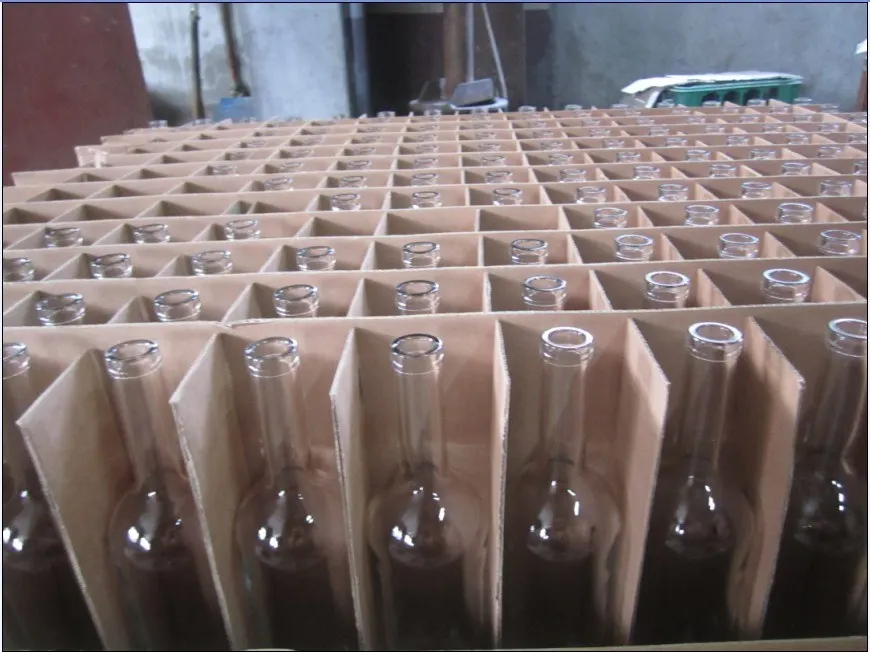
The dependable check is to ask outright. Which plant would make this item? Where is it? Who owns the mould? Which finishing steps take place under the same roof? A manufacturer replies to all four on the spot. A trader replies to part and defers the rest, and what gets deferred is your list of points to confirm afterwards. Where dealing directly with the factory is a requirement, state it at the stand and save yourself several rounds of email.
Questions and requests that keep stands comparable
Comparability comes from repetition: identical questions, identical order, every relevant stand. Ten disciplined minutes with each supplier builds a dataset. Half an hour of loose conversation at three stands leaves you with three anecdotes.
Start with the item
Lay your sample or specification on the counter and ask whether a matching mould exists, or how near the closest one comes. The reply is quick, and it tells you at once whether to stay.
When the supplier hands you a bottle, examine it instead of the display around it. Try the closure on the finish, sight down the body for seams and surface marks, and weigh the wall thickness and heft against what you expected. Ask if it was pulled from current production or belongs to a display set; display pieces are sometimes finished by hand.
Ask what determines feasibility
Cover what scale of run would make the mould worthwhile, what opening a new mould entails, which decoration processes are offered and where they are done, which packing formats are available, and how timing behaves across an ordinary year as opposed to a slack month. Many answers hinge on your volume or specification. Write down the dependency and do not push for a figure the supplier could not stand behind; a range given calmly is worth more than a single number produced under show pressure.
Collect the documents and separate claim from evidence
Request the specification sheet, the packing specification, the mould ownership position and the account contact in digital form, so that they are filed that day and no brochures need carrying home. A supplier unable to produce a sheet with dimensions and weights has given you a finding, and it belongs in your notes.
Broad statements about capability and quality systems are normal on a stand, and the floor is the wrong place to dispute them. Simply mark which statements arrived with a document, a number or a reference and which were only asserted. The follow-up email is the point at which a statement turns into a commitment.
End each conversation by agreeing what will be sent, who sends it and roughly when. "We will be in touch" leads nowhere. A named document addressed to a named person gives you a row in the comparison table.
Cards and samples in the first 48 hours
Whether the trip becomes a shortlist or a folder of vague memories is decided straight after the show. Within days your contact will be at a different event or back in a distant time zone.
- Cards, that evening or the following morning. Log the company, person, booth reference, item discussed, main answers, documents promised and next step agreed. A card you cannot place came from a conversation outside the comparison set and can be dropped.
- Samples, labelled at once. Each needs the supplier name, date received, item reference and the name of whoever handed it over. Glass projects tend to gather several near-identical bottles, chosen exactly because they resembled each other, and a month on an unmarked one is useless. Photograph each sample and attach the picture to the supplier record to keep the object tied to the notes.
- Two piles. Reference samples illustrate what is on the market and feed internal discussion about shape, weight and finish. Candidate samples are those you might really specify. Keep them apart, or the team will spend a meeting arguing over a bottle no one plans to buy.
- A follow-up email inside two working days. Keep it short and send one per supplier: name the person and the conversation, restate the item, ask for the promised documents and confirm the next step. Writing first means being answered while the conversation is still remembered. Waiting means being one card among hundreds.
- Commercial points, in writing. Whatever was said on the floor about order quantities, cost, tooling and delivery opens a discussion and binds nobody. Use the same email to ask how the supplier would work within a second-source arrangement for glass bottles.
Fitting fair contacts into your written enquiries
A show and an online enquiry supply different information and belong in sequence. Treating them as rivals causes two errors: counting a pleasant chat at a stand as a finished supplier assessment, and writing off the show because a search would have turned up the same names.
The show offers things email cannot. Samples are in your hands the same day, several suppliers respond to one question during a single afternoon, and you watch how each deals with a technical point unprepared. That is useful evidence when the real question is whether a supplier can hold a dimensional specification over time, as distinct from shipping a catalogue item.
Email offers depth and verifiability. Drawings, documents, packing data and pricing can be studied at a desk, and a claim can be tested against evidence over several exchanges.
So let the show compress discovery and let the written process do the qualifying. Leave with four to eight suppliers you questioned properly and whose samples you carry, then issue one enquiry to all, built on a single specification and a single document request. Buyers of bulk containers, as opposed to one finished item, should read the channel comparison together with our overview of wholesale empty glass bottles, which explains how volume, packing format and supplier type affect each other before any one supplier is picked.
No show contact arrives pre-qualified. Exhibiting costs money and the great majority of exhibitors are legitimate, yet a handsome stand demonstrates marketing ability and nothing about production. Every check you would normally make remains outstanding. Once the field is down to a few serious candidates, the next move is to visit the plant, and buyers are most often caught out when a convincing show persuades them to skip it. What to examine there is covered in our guide to visiting a glass bottle supplier, and the path from enquiry to released order, through specification agreement, sampling and inspection, is set out under the glass bottle order process.
One caution on scope: a fair is a way to find the supplier, not to choose the container. Capacity, shape and closure are decided against product and market inputs, and that decision should be made first, because a show floor will readily sell you a bottle you have not yet specified.
Frequently asked questions
Does a packaging fair beat searching online for a supplier?
Neither replaces the other. The fair is quicker for handling samples and for hearing several suppliers on one question; the online enquiry is better for documents and pricing you can check at leisure. Shortlist at the fair, then send every shortlisted supplier an identical written enquiry so the replies line up.
How many suppliers is a sensible target for one show?
Fewer than buyers tend to assume: four to eight, each questioned properly and in the same order. Twenty short chats leave a pile of cards that cannot be ranked. Fix the ceiling beforehand so you are still comparing, and not merely collecting, late in the day.
Is the size of a stand a sign that the exhibitor is a factory?
Only a weak one. A big booth shows what was spent on marketing. Ask which plant would produce the item, where it is, who owns the mould and which finishing steps share the building, and judge by how many of those are answered immediately.
Why is the follow-up deadline two days?
Memory fades fast, and the salesperson will soon be travelling again. Inside two working days you still know which stand said what, and your message lands before the post-show backlog has been cleared.
Can a supplier met at a show be treated as approved?
No. Specification control, packing, the decoration route and whether the plant you spoke to is the one that would run your order all remain to be verified, normally ending in a site visit for the few serious candidates.