Clear glass suits a mineral water brand because the shopper can see the product: good flint glass transmits up to 92% of light, so the water's clarity is visible on the shelf instead of being claimed on a label. The decisions that follow are practical ones, namely which glass type, which of the stock capacities from 250ml to 10L, how the bottle is decorated, and which closure it has to accept on your filling line.
What clear glass shows the buyer
People choose mineral water because they believe it is natural and clean. A tinted bottle or a plain plastic one hides how the water looks. A clear glass bottle lets the shopper check for themselves that there are no particles and no colour, and that matters more as consumers pay closer attention to food safety and to whether a product is what it says it is.
Glass also avoids the questions plastic tends to raise, such as chemical residues or added colour. For spring water, deep-sea mineral water and other lines sold on the character of their source, the transparent bottle puts that source on display, and it separates the product from the plastic packs that fill most of the water aisle.
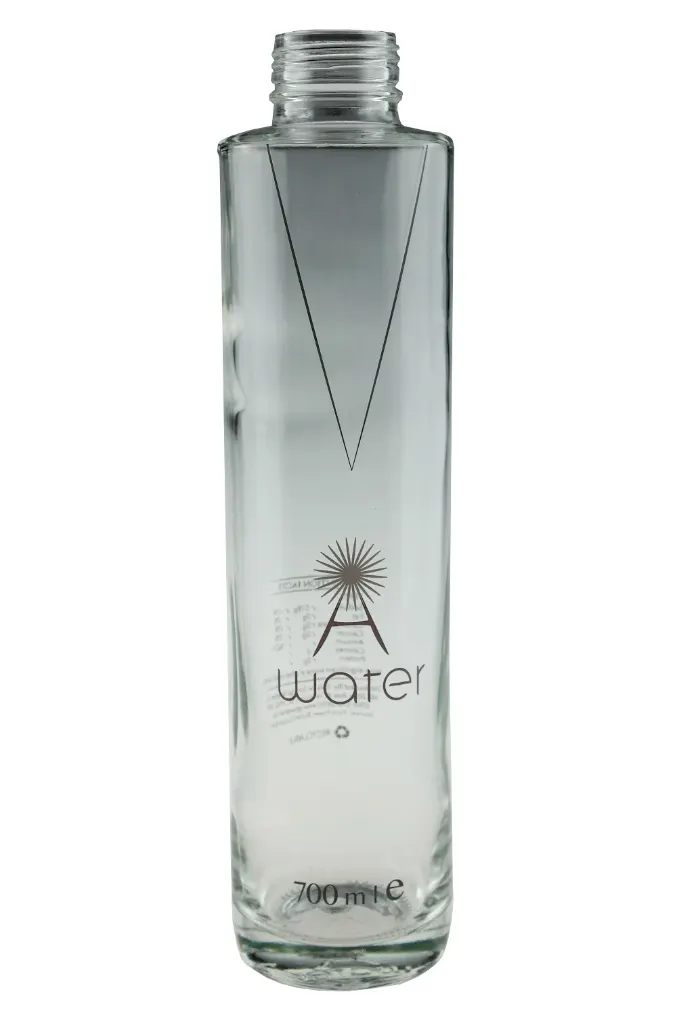
Glass type and what it has to survive
Water bottles are specified in either borosilicate glass or soda-lime glass, and the choice is usually made by volume and by how the bottle will be used. Whichever is chosen, the bottle has to meet two tests.
- On the filling line. Automated filling, capping and labeling put impact and pressure loads on every bottle. A bottle with adequate impact resistance and pressure tolerance runs through without cracking, which keeps scrap and rework down.
- In transit and storage. Trucks, ships and warehouses expose the pack to scuffing and to swings in temperature. The bottles described here are specified for a range from -20°C to 120°C, and unlike thin plastic they do not crush or deform under a stacked load.
Fewer damaged bottles on arrival is where glass repays part of its cost. Losses in transport are a line in the total cost of ownership that thin-walled plastic packs tend to inflate.
Capacities and where each one sells
| Capacity | Typical use | Design points |
|---|---|---|
| 250ml | Travel, airlines, gift sets | Compact mini bottle that keeps the look of the larger sizes |
| 500ml and 1L | Retail shelves | Slim profile that uses shelf and storage space efficiently |
| 5L and 10L | Family and office use | Reinforced base and a handle shaped for lifting and pouring |
Each shape should be drawn to run on a standard filling line. Confirm this against your own line at the drawing stage, because a bottle that needs new change parts or new equipment costs far more than the mould.
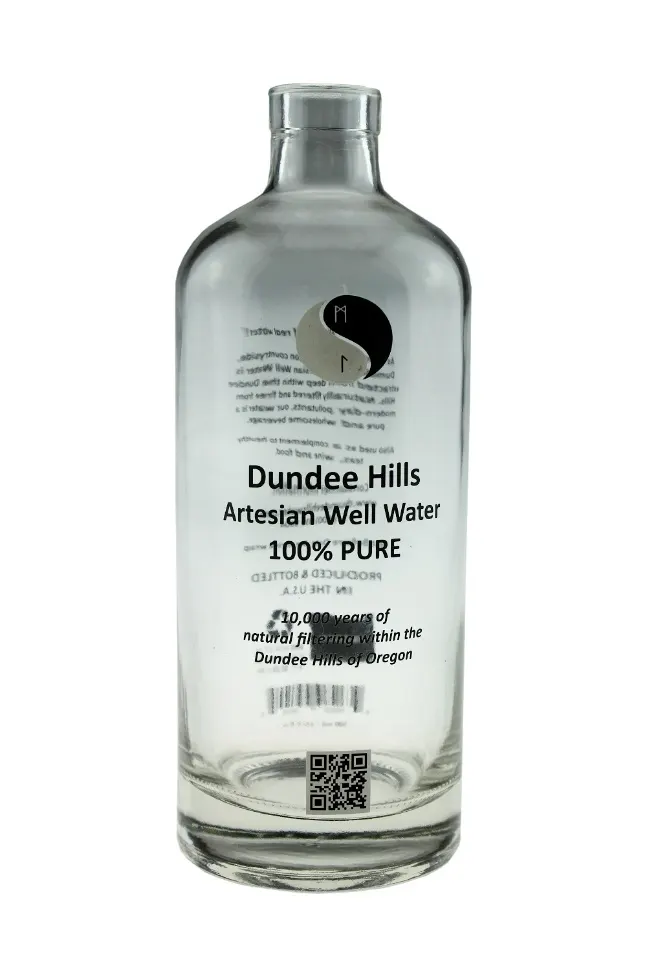
Decoration and closure fit
Two decoration methods cover most water bottles, and they can be combined.
- Silk-screen printing carries the logo, the story of the water source or the mineral content. A properly fired print resists fading and scratching, which is important when a bottle is washed and reused.
- Embossing or debossing puts a raised or recessed element into the glass itself, for example a logo or a water-droplet pattern. It adds a tactile detail and cannot wear off.
The neck is designed around the closure, not the other way round. If you already run a twist-off, flip-top or sports cap, the bottle should be drawn to accept it. Where the product calls for something else, such as a leak-proof cap for outdoor use or a tamper-evident seal, the cap and the neck finish are developed together. We check that match on the drawing before a mould is cut; the wider range of shapes and finishes is on our custom glass bottle page.
Recycling, reuse and refill schemes
Glass is 100% recyclable and can be reused many times. Regulators in many markets are pressing for less plastic waste, and shoppers are asking for the same thing, so a glass bottle helps a brand meet packaging rules and gives it an environmental position that plastic-packed rivals lack. That appeal is strongest with younger buyers, millennials and Gen Z in particular.
Reuse also opens business models that a single-use pack cannot support. Refill stations and bottle-return schemes both depend on a container that survives repeated washing, and both keep customers coming back to the same brand.
Supply, packing and shipping
Water sales peak in summer and around holidays, so the plant we match to a project needs the capacity to keep deliveries steady through those months, for a small run of a high-end line as much as for mass-market volume. Quantities and unit cost are quoted per project and depend on the mould, the decoration, the order size and the freight terms.
For export to Europe, Asia or North America, the bottles travel in cartons built to absorb knocks while using container space well, which lowers both storage and freight cost per bottle. Our part is to coordinate the route and the carrier, arrange inspection before the goods ship, and follow up on any problem after delivery. As a range develops, the same drawings are the starting point for design updates.