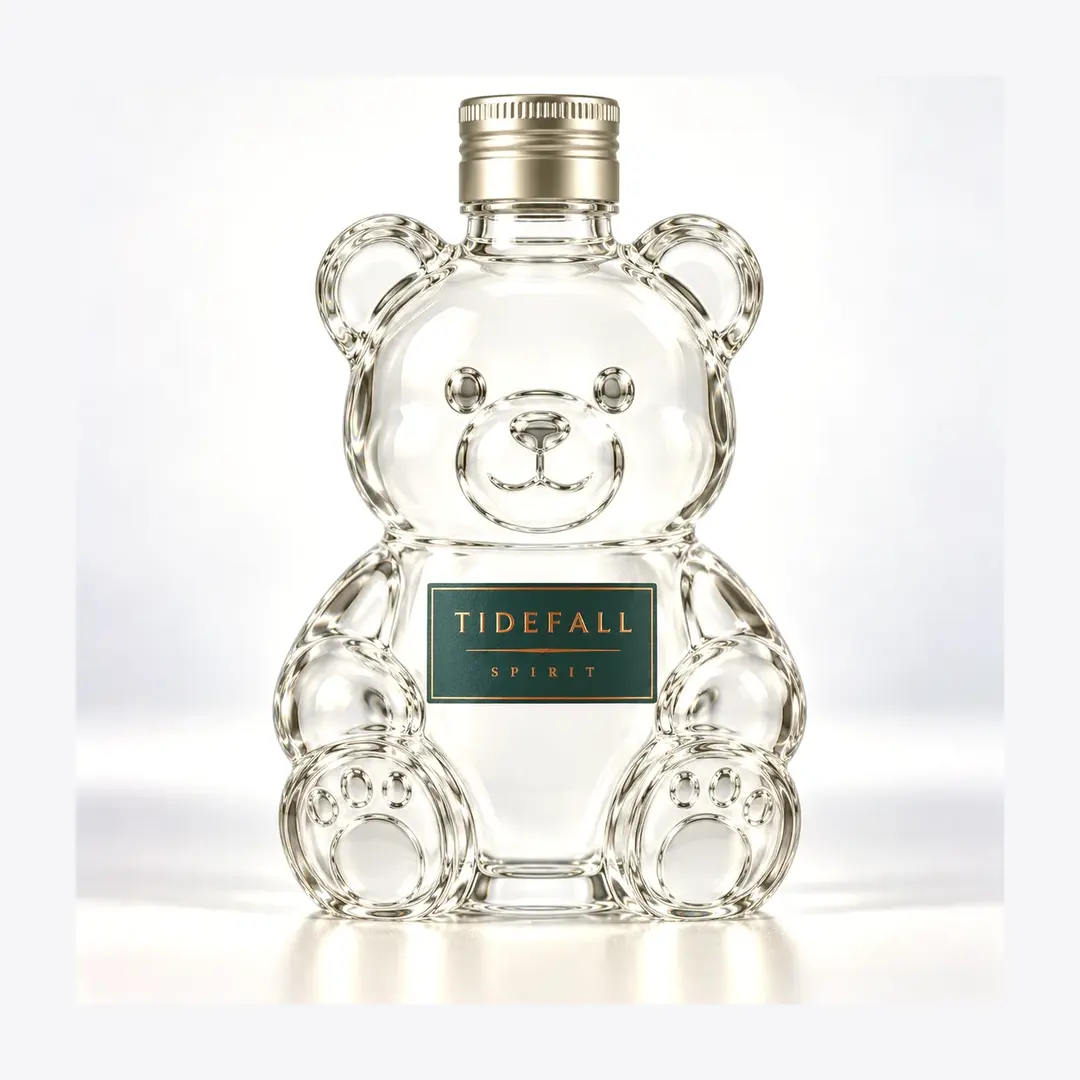
700ml and 750ml Teddy Bear Glass Bottle for Gift and Seasonal Spirits
Most bottles hold spirits. This one holds attention. The teddy bear glass bottle shown here — available for 700ml and 750ml fills — belongs to the novelty-shaped end of the packaging world, where the container is the gift and the liquid is almost secondary. Liqueurs, honey spirits, cream-based drinks and seasonal releases use figural bottles like this to turn a beverage purchase into a present, a collectible and a conversation piece. This page is written for brand owners planning gift-led and limited-edition programs — and it is honest about the extra engineering that figural glass demands.
Why Novelty Shapes Sell
Gift purchase decisions work differently from restocking decisions. A shopper buying a gift is buying the recipient’s reaction at the moment of unwrapping — and a teddy bear bottle manufactures that reaction before the seal is broken. The commercial effects are well documented across the figural-bottle category: stronger seasonal sell-through, higher gift-channel margins, social media sharing that standard bottles rarely earn, and a collector afterlife in which empty bottles stay on shelves and keep advertising the brand for years.
The teddy bear reads across cultures as warmth, childhood memory and celebration — which is why it anchors holiday liqueur editions, baby-celebration gifts, Valentine’s and Christmas programs, and honey-spirit lines where the bear-and-honey association does the marketing for free.
Programs That Use This Bottle
- Holiday limited editions. Christmas and Lunar New Year releases where the bottle anchors a gift set with glasses or confectionery.
- Honey spirits and mead-style liqueurs. The bear is the category’s natural mascot; the package becomes the brand.
- Cream and dessert liqueurs. After-dinner gifting occasions where charm outranks tradition.
- Celebration and commemorative fills. Births, anniversaries and corporate gifting programs that need the container to carry the sentiment.
- Collector series. Annual or character-variant releases that give repeat buyers a reason to collect the set.
The Honest Engineering of Figural Glass
A teddy bear bottle is not a standard bottle with a fun label — it is a different manufacturing proposition, and buyers should plan for the differences. Figural molds carry complex parting lines and detail surfaces that must fill cleanly; ears, snouts and paws create thin sections that demand careful glass distribution; and the irregular silhouette affects everything downstream. Filling lines may run slower or need handling adjustments. Cartons must be engineered around a shape that does not nest. Pack-out is more manual. None of this is a reason to avoid figural glass — the gift economics justify it — but it is a reason to involve your bottler early and to treat samples as mandatory, not optional.
As with every model in our catalog, we do not publish fixed millimeter dimensions or gram weights on this page: those are confirmed per production run on the technical drawing issued with your quotation. For a figural bottle, that drawing matters even more — share it with your bottler, your carton supplier and your gift-box designer before any of them commits.
Decoration on a Figural Surface
The shape does most of the talking, so decoration on a teddy bottle is usually a light touch done precisely: a small screen-printed brand mark or message, spray coating for seasonal color stories — festive reds, honey ambers, pastel nursery tones — and careful labeling where regulations require it, since a curved figural surface limits conventional label real estate. Frosting can soften the whole figure for a premium matte finish. Standard caps and cork closures can be matched to the neck finish on the approved drawing — please confirm the finish specification with the factory before sourcing closures. Many gift programs add a ribbon, swing tag or printed gift carton rather than loading the glass itself with information.
Quality Standards Behind the Charm
Figural bottles are produced under the same documented container-glass QC regime as our standard formats: annealing verified with reference to ASTM C148, internal pressure resistance per ISO 7458, and thermal shock endurance per ISO 7459. On a novelty shape, visual inspection carries extra weight — the crispness of the facial features and the surface finish are the product your customer is buying. Batch records can be reviewed during technical approval, and third-party pre-shipment inspection can be arranged, which gift-channel buyers increasingly request.
Planning a Seasonal Calendar
Novelty programs live on fixed dates, and figural glass adds lead-time at every step: mold complexity, slower pack-out, engineered cartons, gift-set assembly. A Christmas edition briefed in autumn is a compromise; briefed two seasons ahead, it is a triumph. Put your retail date in the first message and the factory will plan the critical path backward from it, including sample rounds early enough for your gift-set partners to work from real glass.
The Collector Afterlife
Standard bottles are recycled; figural bottles are kept. That single behavioral difference gives novelty programs an unusual marketing asset: every unit sold becomes a permanent brand display in someone’s home. Smart brand managers design for the afterlife deliberately — a date or edition mark on the glass, a character variant each year, a shape that invites a set. The collector dynamic also changes how buyers should think about repeats: annual editions on the same mold spread its cost across seasons, and each re-run arrives to an audience already primed by the bottles sitting on their friends’ shelves.
Ordering, MOQ and Next Steps
MOQ for figural bottles reflects the mold and pack-out realities described above — the mechanics are explained in our glass bottle MOQ guide. Samples from the existing mold can be arranged so your team can evaluate the figure’s detail, closure fit and gift-box pairing. Buyers new to the workflow can review our guide to importing glass bottles from China.
Send your occasion, target date, capacity choice (700ml or 750ml), volumes and decoration ideas through the contact and RFQ page, and the factory will reply with the technical drawing, confirmed specifications and a quotation for your seasonal program.
Frequently Asked Questions
Which products suit a teddy bear shaped bottle?
Honey spirits and mead-style liqueurs are the natural fit, along with cream and dessert liqueurs, holiday limited editions and commemorative gift fills. The shape sells the occasion, so it works best where the purchase is a gift rather than a restock.
Is the bottle available in both 700ml and 750ml?
The model is offered for 700ml and 750ml fill programs. Capacity suitability for your destination market should be confirmed — 700ml aligns with EU and UK conventions while 750ml is the US standard of fill. Confirm your target markets with the factory at RFQ stage.
Will a figural bottle run on a standard filling line?
Figural shapes may run slower or need handling adjustments, and pack-out is more manual than for standard bottles. Share the factory’s technical drawing with your bottler early and treat physical samples as mandatory before committing to production dates.
Can the teddy bottle be colored or printed?
Yes. Spray coating for seasonal colors, screen printing for small brand marks, frosting and careful labeling are supported. The curved figural surface limits conventional label space, so many programs carry information on swing tags or gift cartons instead.
What is the MOQ for a novelty shaped bottle?
MOQ reflects mold complexity and the more manual pack-out of figural glass, so it differs from standard formats. Share your occasion, volumes and target date in the RFQ and the factory will confirm the exact MOQ.
How is a fragile-looking shape packed for export?
Cartons are engineered around the figural silhouette with protective dividers, then palletized and shrink-wrapped for container loading. Gift-set programs should share box designs with the factory early so glass and packaging are engineered together.


