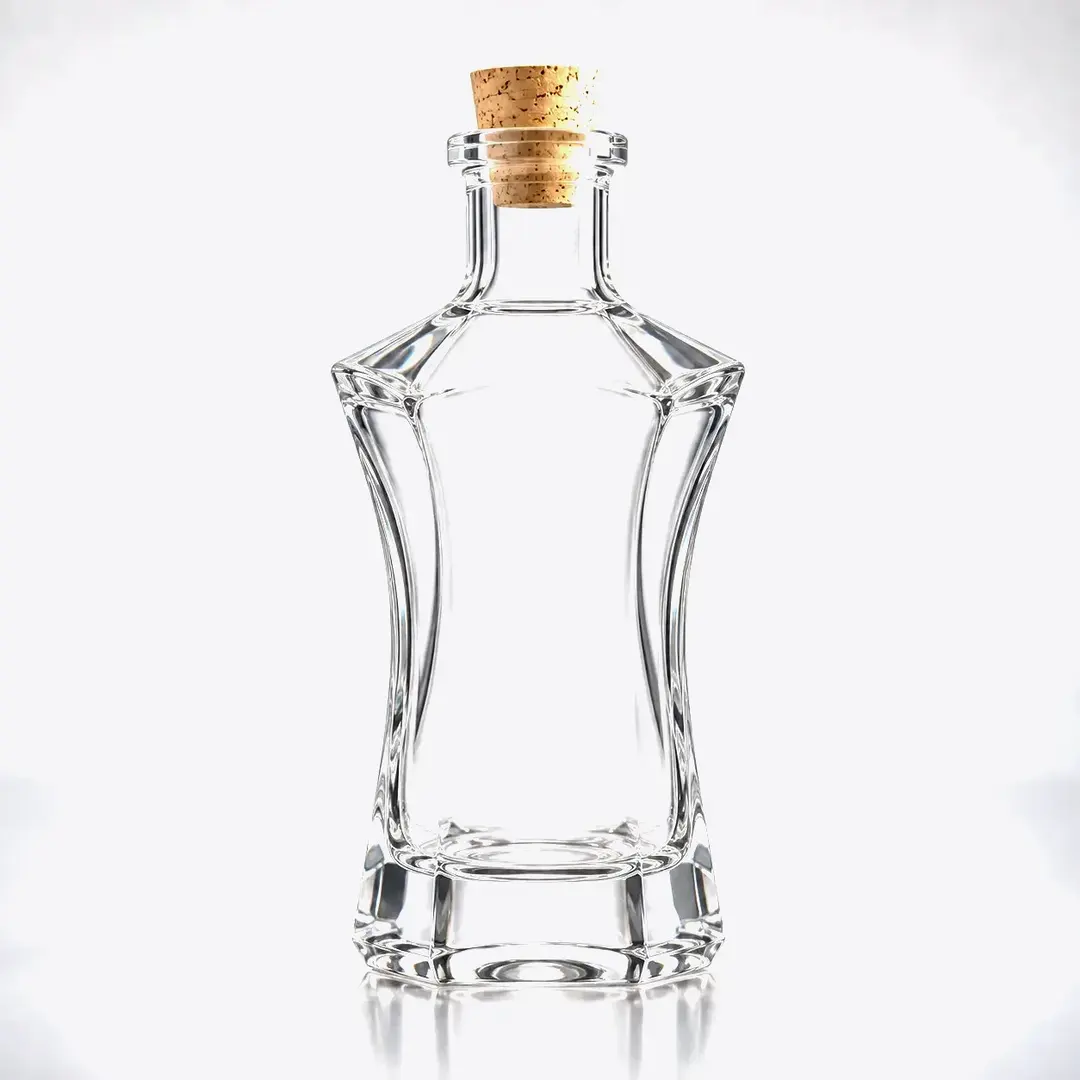
The FIX2-356 is one of our fully bespoke custom glass bottle development programs — a project reference for brand owners who are not shopping for a stock shape but for an exclusive container designed around their own product. A candid note on the visual above: the published concept image for this model is a stylized industrial-design render rather than a photograph of finished glass, which is exactly how many bespoke projects begin — as a rendered concept that still needs engineering. This page therefore explains the custom development program behind FIX2-356 rather than describing fixed bottle geometry. Every physical parameter — capacity, glass weight, finish, wall distribution — is defined on the technical drawing we issue at quotation, and nothing on this page should be read as a committed specification.
If you are a spirits, beverage, food or personal-care brand evaluating an exclusive glass container, the sections below walk through how a program like FIX2-356 moves from concept to production, what it costs in time and tooling, and how quality is controlled once the mold exists.
From Concept Render to Engineered Bottle
A bespoke bottle program starts with whatever the brand already has: a sketch, a 3D render like the concept visual on this page, a competitor bottle, or simply a list of requirements — target capacity, closure type, shelf positioning, price band. Our engineers translate that input into a manufacturable design: wall thicknesses that survive the forming process, a base geometry that stands stable on the filling line, a neck finish matched to a real closure standard, and glass weight aligned to your cost target. The output is a technical drawing with full tolerances. That drawing — not any concept image — is the document both parties sign off before mold work begins, and it is where every dimension of the FIX2-356 program is confirmed with the factory.
Design for manufacturability matters more than most brands expect. Sharp undercuts, extreme height-to-width ratios and paper-thin walls all look fine in a render and fail on the forming machine. Catching those issues at drawing stage costs nothing; catching them at mold stage costs weeks and tooling budget.
Mold Development and Sampling
Once the drawing is approved, mold sets are cut for a sampling run. A first-off sampling campaign produces physical bottles — typically plain glass, unprinted — so you can verify capacity with your actual product, test the closure on your capping equipment, run the bottle through your filling line, and check label fit against real panels. Revisions after first samples are normal in bespoke work; minor drawing adjustments and mold refinements are part of the program and are scheduled into the timeline we quote.
Only after sample approval does mass production scheduling begin. Tooling cost, mold cavitation (which sets production speed and unit price) and mold ownership terms are quoted case by case — exclusive molds are registered to your program and are not used for other customers’ orders.
Who Runs Programs Like FIX2-356
Exclusive-mold programs make sense when volume justifies tooling and when the container itself is a brand asset. Typical customers for this development route include premium spirits brands building a signature bottle as the centerpiece of a launch, beverage companies differentiating in a category where every competitor uses the same stock shapes, food and sauce brands needing a proprietary jar or bottle that retail buyers recognize instantly, and personal-care or home-fragrance brands where the container is photographed as much as the product. If your volumes are not yet at exclusive-mold level, we also offer shared custom models where decoration alone differentiates your product — ask us to compare both routes against your forecast.
Decoration and Finishing on a Bespoke Bottle
Because the FIX2-356 program is bespoke, every finishing route stays open: clear flint, extra-flint, amber or colored glass from the furnace; spray coating in solid, matte, metallic or gradient effects; screen printing and applied ceramic labeling; hot-stamp foil and decals; and embossing or debossing cut directly into your exclusive mold for permanent branding. Decoration options influence mold design — an embossed logo needs draft angles planned at drawing stage — so bring your decoration intent into the first engineering discussion rather than bolting it on later. Decoration proofs are produced on physical samples before mass production.
Quality Control: ASTM C147, ISO 7459 and ISO 7458
A bespoke bottle is tested like any engineered container. Internal pressure resistance is verified per ASTM C147 and ISO 7458 at levels set from your product’s carbonation or filling conditions; thermal shock endurance per ISO 7459 covers hot-fill, pasteurization and aggressive washing; annealing quality is checked by polariscope; and dimensional verification — finish gauges, verticality, capacity, wall distribution — is performed per sampling plan against the approved drawing. Cosmetic grading follows a documented AQL agreed in your quality file. Because the drawing is bespoke, the QC plan references your drawing’s tolerance table directly, and test reports are available to your QA team on request.
Budget, MOQ and Timeline Expectations
Bespoke programs carry three cost blocks: design and engineering, mold tooling, and per-unit production. Minimum order quantities for exclusive molds run higher than for shared models because the furnace and line are scheduled for your shape alone — our explainer on glass bottle MOQ details how that floor is set. Timelines run from drawing approval through tooling, sampling and mass production; we quote a project schedule with your quotation so launch planning is realistic. Buyers importing for the first time should also read our guide to importing glass bottles from China for Incoterms, documentation and packing standards. Start the conversation with your target capacity, closure type and annual volume via our contact page.
Export Packing for Exclusive Molds
Finished bespoke bottles ship in export cartons with dividers, palletized and shrink-wrapped on the packing line shown below; carton format, pallet height and container loading plans are confirmed per order. For exclusive molds we also archive your mold set, drawing and QC plan together, so repeat orders run against the same registered specification with no re-engineering.
FIX2-356 represents the full bespoke route: your concept, our engineering, an exclusive mold, pressure- and thermal-tested production, and archived specifications for every reorder. Send your concept or requirement list and we will return an engineering review and a quotation.
Frequently Asked Questions
Why doesn’t the FIX2-356 page show a finished glass bottle?
The published visual for this model is a stylized concept render, which is how many bespoke projects begin — as a rendered design that still needs engineering. Rather than describe geometry that is not fixed, this page explains the custom development program itself. Every physical parameter of a FIX2-356 project is defined on the technical drawing issued at quotation.
What do I need to provide to start a custom bottle project like this?
Anything from a sketch, 3D render or competitor sample to a simple requirement list: target capacity, closure type, product category, shelf positioning and annual volume. Our engineers translate your input into a manufacturable design and issue a technical drawing with full tolerances for your approval before any mold work begins.
How much does an exclusive mold cost, and who owns it?
Tooling cost depends on design complexity and mold cavitation, and is quoted case by case together with the project schedule. Exclusive molds are registered to your program and are never used for other customers’ orders; ownership terms are stated in the quotation.
What is the MOQ for a bespoke bottle from an exclusive mold?
MOQs for exclusive molds run higher than for shared models because the furnace and production line are scheduled for your shape alone. The exact floor depends on your bottle’s weight, cavitation and decoration, and is quoted once the drawing is fixed. Our MOQ guide explains how furnace scheduling sets these numbers.
Can I get physical samples before committing to mass production?
Yes — sampling is a mandatory stage. A first-off sampling run from your new mold produces physical bottles so you can verify fill capacity, closure fit on your capping equipment, filling-line behavior and label panels. Mass production is only scheduled after you approve samples.
How is a bespoke bottle quality-tested?
Internal pressure resistance per ASTM C147 and ISO 7458 at levels matched to your product, thermal shock per ISO 7459 for hot-fill or pasteurization scenarios, annealing checks by polariscope, and dimensional verification — finish gauges, verticality, capacity, wall distribution — against your approved drawing’s tolerance table, with cosmetic grading to a documented AQL. Reports are available to your QA team.