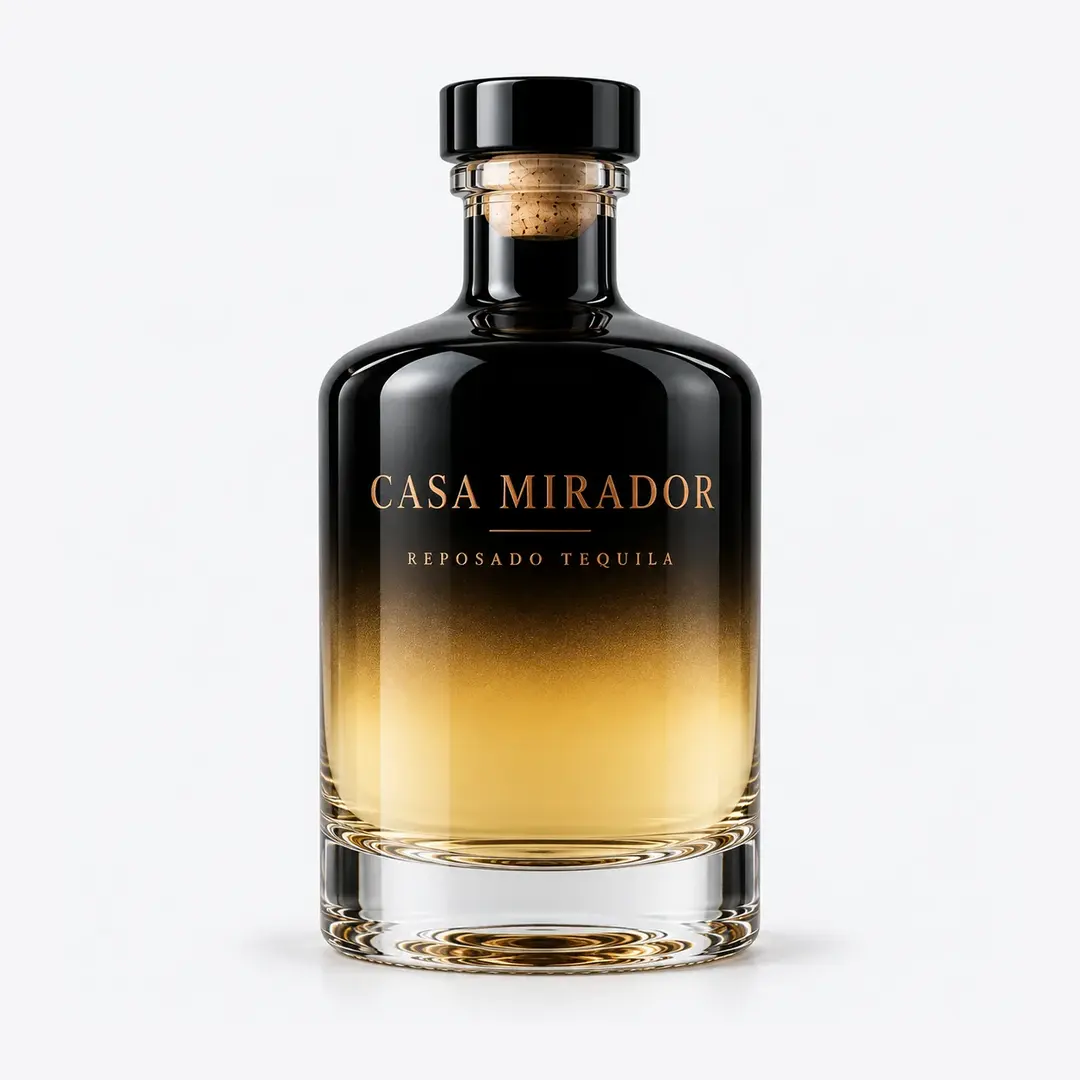
The FIX2-638 is a bar-top style glass spirits bottle whose most striking feature is visible at a glance: a gradient decoration that fades from deep opaque black at the neck and shoulder into fully transparent glass at the lower body. This dark-to-clear fade, combined with a glossy black bar-top closure and a thick heavy base, positions the bottle squarely in the premium and super-premium spirits segment — tequila, mezcal, dark rum, whisky and limited-edition vodka programs are the most plausible fits. It is built for brand owners, craft distilleries and private-label buyers who want shelf drama without committing to a bespoke mold on day one.
Below is what can be observed from the product photo, how the gradient finish is produced, and the technical points you should confirm with the factory before ordering.
What the Photo Tells Us About the Design
Directly observable features of the FIX2-638 include:
- Silhouette: a tall, softly rounded body with a short neck and a bar-top (T-shaped) closure, the classic premium tequila and craft-spirit profile.
- Gradient coating: the upper third of the bottle — neck, shoulder and upper body — carries an opaque black coating that dissolves downward into bare clear glass. The transition zone is smooth, indicating a sprayed gradient rather than a dip or a two-piece sleeve.
- Closure: a glossy black cylindrical bar-top, most plausibly a synthetic cork shank with a coated or lacquered top. Exact closure construction and shank material are confirmed at quotation.
- Base: a visibly thick, heavy base with a deep punt, which gives the bottle its bottom-weighted stance and premium in-hand weight.
- Glass: clear flint beneath the coating, so the liquid level and color remain visible through the transparent lower two-thirds of the body.
Glass weight, wall distribution, brimful capacity and exact coating film thickness cannot be judged from a photograph; all of these are stated on the technical drawing issued with your quotation.
The Case for Gradient Black in Spirits Branding
Dark bottles have always signaled age, intensity and exclusivity in the spirits aisle, but a fully opaque bottle hides the liquid — and for amber spirits like reposado tequila or aged rum, the liquid color is part of the sales pitch. A gradient solves that tension. The black shoulder carries the brand’s dark, moody identity at eye level, while the clear lower body lets the spirit’s color glow through at hand level and under back-bar lighting. Under shelf spotlights, a gradient bottle also reads differently from every viewing angle, which helps new brands stand out in crowded gondolas.
The same gradient technique can be executed in other fade directions and colors — smoke grey to clear, deep blue to clear, amber to clear — so a single mold can anchor an entire range where each SKU is differentiated by coating color alone. That keeps mold investment low while giving your portfolio a coherent family look.
How the Gradient Coating Is Applied
The fade effect is produced by automated spray coating: bottles rotate on spindles while spray guns apply progressively less coating material toward the lower body, followed by oven curing to harden the film. Key controls buyers should ask about are film adhesion (cross-cut testing), color consistency across the run, and resistance to scratching during packing and transport. Organic spray coatings are standard for this type of finish; for brands that need extra durability or a specific tactile feel, matte, soft-touch or gloss-varnish topcoats can be evaluated. Coating chemistry, cure schedule and adhesion test criteria are confirmed with the factory and documented in the quality agreement for your order.
Because the coating is applied to a stock custom-model glass shape, there is no mold change involved — gradient color, coverage height and transition softness can all be tuned between production runs with modest setup cost.
Closures and Filling-Line Compatibility
The bar-top closure shown suits hand-applied or semi-automatic corking typical of craft distilleries, but the same bottle can be evaluated with screw-cap or ROPP finishes if your co-packer runs automatic lines. Tell us your filler and corker model during inquiry so we can confirm neck-finish compatibility. Liner or shank materials are selected for high-alcohol duty — confirm the specification against your ABV and shelf-life targets at quotation. If you plan a tamper-evident capsule or shrink sleeve over the closure, the neck diameter is provided on the drawing so your capsule supplier can size correctly.
Decoration Beyond the Gradient
The dark shoulder accepts screen printing in metallic gold, silver or white with excellent contrast, and the clear lower body can carry a second print pass, a paper label or a clear no-label-look film. Common combinations on this bottle include a foil-stamped crest on the black shoulder with minimal typography below the fade line. Embossing in the glass itself is possible if you later convert this shape into an exclusive mold; tooling scope and ownership are quoted case by case.
Quality Control: ASTM C147, ISO 7459 and ISO 7458
Base glass for the FIX2-638 is inspected to internationally recognized glass-container methods before and after coating. Internal pressure resistance is verified per ASTM C147 where your application requires it, thermal shock endurance is tested per ISO 7459 — important because coated bottles still pass through washing and filling temperature swings — and resistance to internal pressure per ISO 7458 plus annealing checks by polariscope are part of the standard QC file. Coated bottles additionally pass adhesion and abrasion checks agreed in your quality agreement, and cosmetic grading follows a documented AQL. Reports are available to your QA team on request.
Ordering, MOQ and Export Packing
The FIX2-638 runs to order as a custom model, so minimum quantities apply and depend on whether you take the gradient coating, additional printing or plain glass. Our explainer on glass bottle MOQ shows how furnace scheduling and decoration passes set order floors. Buyers new to overseas procurement can follow our guide to importing glass bottles from China for Incoterms, documents and packing standards. Bottles ship in divider cartons on shrink-wrapped pallets from the packing line pictured below, with loading plans confirmed per order. To price your project, send target capacity, closure choice and gradient color through our contact page.
For brands that want a dark, premium shelf identity without hiding the liquid, the FIX2-638 gradient bottle offers a production-proven route: one mold, endless fade colors, documented QC and export-ready packing. Share your target volume and design direction and we will return a drawing and quotation.
Frequently Asked Questions
How is the black-to-clear gradient effect on the FIX2-638 produced?
It is an automated spray-coating process: bottles rotate on spindles while spray guns apply progressively less coating toward the lower body, then the film is oven-cured. The fade height, color and softness of the transition can be tuned between runs without any mold change, and adhesion is verified by cross-cut testing.
Can the gradient be made in a color other than black?
Yes. Smoke grey, deep blue, amber and other colors can be faded into the clear glass using the same process. Many brands run a family of SKUs from this single mold, differentiating each product only by gradient color. Color matching to your Pantone references is proofed on physical samples before mass production.
What closure does the black bar-top on the photo use?
The photo shows a glossy black bar-top (T-shaped) closure, most plausibly a synthetic cork shank with a coated top. Shank material, liner and dimensions are confirmed at quotation, and the same bottle can be evaluated with screw-cap or ROPP finishes if your filling line requires them.
Will the coating scratch off during shipping or on the filling line?
The cured organic coating is tested for adhesion and abrasion resistance against criteria agreed in your quality agreement, and bottles are packed in divider cartons specifically to prevent glass-to-glass and coating-to-carton contact. If you need extra durability, matte or gloss protective topcoats can be evaluated with the factory.
What is the MOQ for the FIX2-638 with gradient coating?
MOQ depends on decoration scope: gradient-only runs, gradient plus printing, and plain glass each have different floors set by furnace scheduling and spray-line setup. Send your annual volume estimate and decoration concept and we will quote exact MOQ and price tiers.
Which quality standards apply to this bottle?
Base glass is tested for internal pressure resistance per ASTM C147 where applicable, thermal shock per ISO 7459, internal pressure per ISO 7458, and annealing by polariscope. Coated bottles additionally pass adhesion and abrasion checks, and cosmetic grading follows a documented AQL. Test reports are available on request.


