
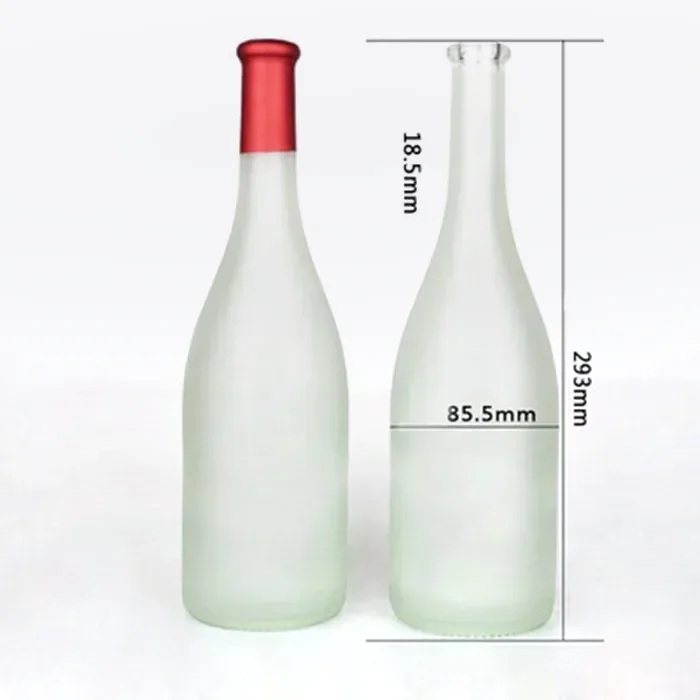
Ask ten buyers what “frosted glass” means and you will get ten different answers—some picture a soft, even satin, others a coarse ice-like texture, and a few an opaque painted look. All three exist, they are made by completely different processes, and they behave differently on the filling line, in the consumer’s hand, and under decoration. Frosted Square Glass Bottle 09, a round-square body with a gently domed shoulder and an embossed relief field, is the model we use to walk customers through those choices. This page is less about one bottle and more about the frosting decision itself: acid-etching versus sandblasting versus spray coating, and how each one carries printing, stamping, and layering. Bottle 09 simply happens to be an excellent canvas for whichever route you choose.
Three Ways to Make Glass Matte—and What Each Really Is
Acid-etching is the reference standard for premium frosting. The annealed bottle passes through a controlled hydrofluoric-acid-based bath or cream application that microscopically dissolves the glass surface, producing a fine, uniform satin that is literally part of the glass. It cannot peel, chip, or wash off, it resists scratching and repeated handling, and it has the silky, cool-to-the-touch feel consumers associate with luxury fragrance and premium spirits. The trade-offs are cost and process control: etching demands strict chemical handling, wastewater treatment, and batch monitoring, which is why it prices above other methods. For a bottle like 09—where the embossed relief catches light differently on etched satin—the result is a depth of texture no coating can imitate.
Sandblasting creates matte by mechanical abrasion: high-pressure abrasive media physically roughens the surface. It excels at selective work—frosting only a band, a window, or the area around a logo—because masks are easy to apply and remove. The texture is coarser and more granular than etching, which some brands love for a rustic, artisanal look and others reject as too aggressive. Sandblasted areas are slightly more prone to showing fingerprints and handling marks over time, and the process is slower for full-body coverage. On Bottle 09, sandblasting is the natural choice for partial effects: a clear body with a frosted relief field, or a frosted body with a polished clear window showing the liquid.
Spray coating applies an organic matte lacquer over the glass and cures it in an oven. It is the fastest and most economical route to a frosted appearance, it can be tinted—smoke grey, blush, forest green, or frosted amber—and it offers the widest color freedom. The honest limitations: a coating sits on top of the glass, so it can be scratched by sharp contact, it must pass adhesion and abrasion testing for filling-line survival, and it does not have the tactile “cold satin” feel of etched glass. For mid-price spirits, seasonal editions, and cosmetic crossovers where a tinted frost is the design goal, spray coating is often the correct commercial answer.
Why Bottle 09 Suits the Frosting Conversation
The round-square body—circular in cross-section at the shoulder, easing into flattened side panels—with its embossed relief pattern gives every frosting method something to work with. Etched, the relief reads as light and shadow across a continuous satin field. Sandblasted selectively, the relief can stay clear while the surrounding field goes matte, or the reverse. Spray-coated, the whole bottle becomes a tinted matte object where the embossing provides the only highlight. The compact neck with its flared lip accepts standard closures—confirm the exact finish with the factory—and the squat, stable profile runs well on conventional filling lines. This crossover between a spirits-looking form and a cosmetic-friendly matte surface is why the model attracts gin and liqueur brands as readily as bath-oil and room-fragrance houses.
Layering Decoration on a Matte Surface
Frosting is rarely the final step; it is the foundation. On etched glass, single-color screen printing reads crisply and permanent ceramic inks can be fired for dishwasher-grade durability. Metallic hot stamping—gold, copper, or holographic foil—pops dramatically against a matte field and is the classic premium-spirits combination. Decals allow multi-color artwork where screen printing cannot, and a second frosting pass over a printed area can create a subtle tone-on-tone effect. With spray-coated bottles, decoration order matters: print first and coat second for a sealed, uniform look, or coat first and print on top for a tactile contrast—each has adhesion implications we validate in sampling. Whatever stack you choose, we recommend approving a physical pre-production sample under your own retail lighting, because matte surfaces photograph and merchandise differently than gloss.
Quality Control for Frosted Production
Frosted lots add surface-quality checks to the standard glass-container regime. Every production run of Bottle 09 passes dimensional verification against the approved drawing and visual inspection for stones, blisters, and frosting uniformity under controlled lighting. Structural performance follows internationally recognized methods: internal pressure resistance per ASTM C147, thermal-shock endurance per ISO 7459, and vertical load strength per ISO 8113. For the frosting itself, we verify etch-depth consistency or coating adhesion and abrasion resistance depending on the process chosen, so the finish survives filling, packing, and retail handling. A lot-level QC report accompanies each shipment.
Ordering: From Finish Decision to Quotation
The fastest path to a correct quotation is telling us three things: which frosting route you prefer (or which look you are trying to match), your target capacity and annual volume, and your decoration concept. Capacity, dimensions, and weight are mold-specific and confirmed on the technical drawing at quotation—we do not quote estimated figures. Frosting method and decoration passes both affect minimum order quantity; our glass bottle MOQ explainer shows how those variables interact. For landed-cost planning including cartons, pallets, and freight, see our guide to importing glass bottles from China. When you are ready to compare samples side by side—etched, blasted, and coated—contact our team and mention Frosted Square Glass Bottle 09.
Frequently Asked Questions
What is the difference between acid-etched, sandblasted, and spray-coated frosting?
Acid-etching microscopically dissolves the glass surface for a permanent, silky satin that cannot peel and feels cool to the touch—premium but costlier. Sandblasting mechanically roughens the glass, ideal for selective areas and a coarser artisanal texture. Spray coating applies a cured matte lacquer: fastest, most economical, and tintable in any color, but it sits on the surface and must pass adhesion testing.
Which frosting method should I choose for a premium spirits brand?
Most premium spirits and fragrance brands choose acid-etching because the finish is permanent, scratch-resistant, and has the tactile luxury feel consumers expect. If your design needs selective frosted-and-clear areas, sandblasting or a masked etch works well. For tinted matte colors at a mid-price point, spray coating is usually the right commercial choice.
Can I combine frosting with printing, foil stamping, or decals?
Yes. Frosting is normally the foundation layer. Screen printing and fired ceramic inks work on etched glass, metallic hot stamping pops strongly against a matte field, and decals carry multi-color artwork. With spray coating, decoration order—print-then-coat or coat-then-print—changes the look and adhesion, which we validate during sampling.
Is the frosted finish durable enough for filling lines and export shipping?
Etched frosting is part of the glass and effectively permanent. Spray coatings and sandblasted finishes are verified with adhesion and abrasion-resistance checks so they survive filling, packing, and retail handling. We recommend approving a physical pre-production sample and, for coated bottles, running a line trial before the first full production run.
What are the capacity and dimensions of Frosted Square Glass Bottle 09?
Capacity, brimful volume, weight, and exact dimensions are mold-specific and are confirmed on the technical drawing at quotation—we do not publish estimated figures. The neck accepts standard closures; please confirm the exact finish and closure compatibility with the factory before ordering.
What quality standards apply to frosted bottle production?
Each lot passes dimensional verification and visual inspection for stones, blisters, and frosting uniformity, plus structural testing: internal pressure resistance per ASTM C147, thermal-shock endurance per ISO 7459, and vertical load strength per ISO 8113. Frosting-specific checks cover etch-depth consistency or coating adhesion depending on the process, and a lot-level QC report accompanies every shipment.


