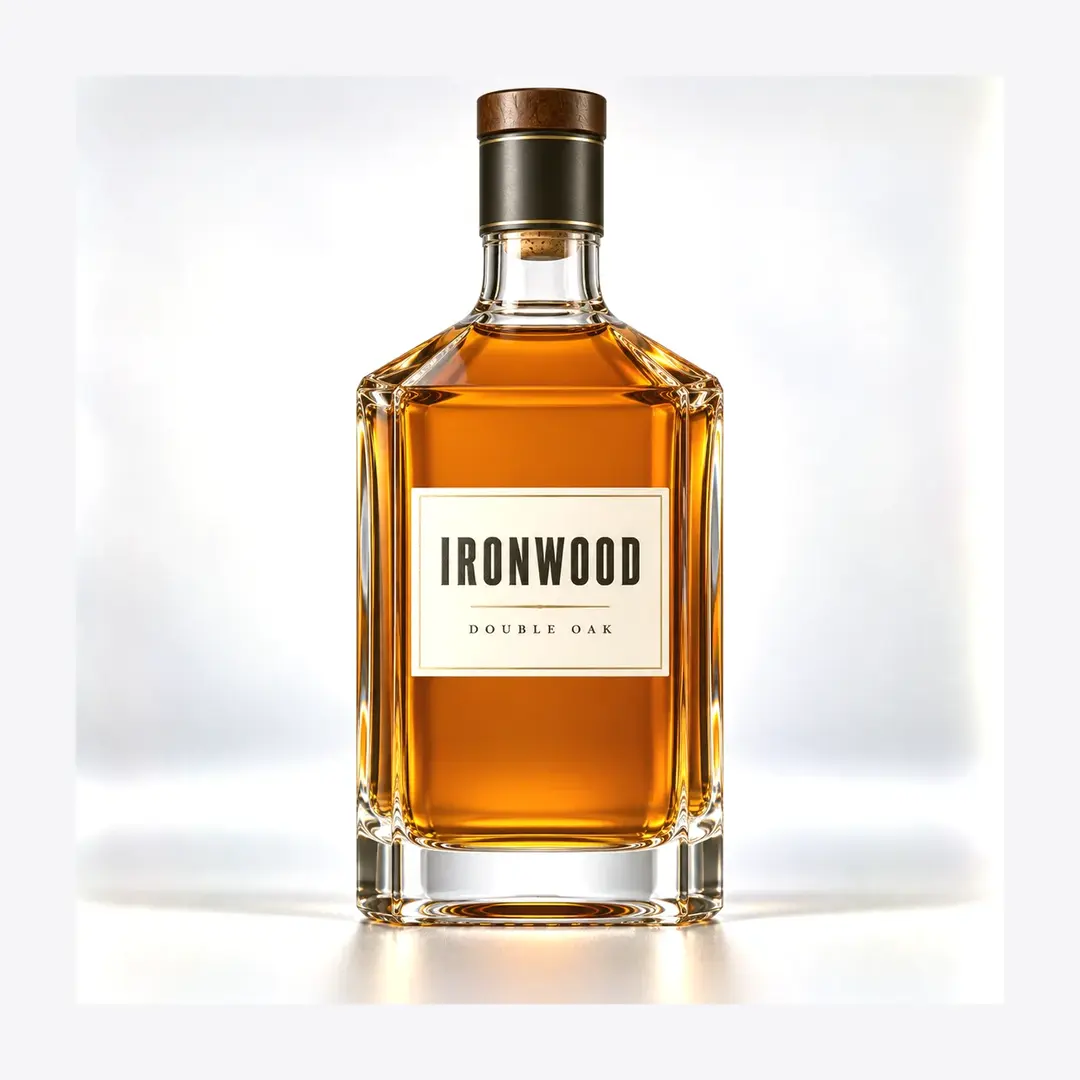
The TDL liquor bottle is a slim rectangular flask in clear flint glass, built around one idea: give a spirits brand the widest possible label face in the least possible shelf width. The product photo shows a flat-fronted, flat-backed body with cleanly beveled shoulder edges that catch light along the chamfer line, a short cylindrical neck finished for a bar-top style closure, and a visibly thick base that adds the in-hand weight buyers associate with premium whisky and tequila. Because the catalog reference for this model carries no dimension sheet, all height, capacity, weight and neck-finish figures should be confirmed with the factory before ordering; what this page describes is the design intent you can see in the glass itself.
Reading the Design from the Photo
Three details define the TDL model. First, the body is a true rectangular prism rather than a rounded oval flask, so the front panel is a single uninterrupted plane from shoulder to heel. That plane is your billboard: a paper label, a screen print, or an embossed plate area sits flat without the distortion you fight on curved bottles. Second, the shoulders are not soft curves but angled chamfers. Those bevels do two jobs at once — they slim the silhouette toward the neck, and they create highlight lines that make an unlabeled bottle still look deliberate on a back bar. Third, the base is deep and heavy. A thick punt-less base like this lowers the center of gravity, resists tipping on narrow retail shelves, and gives the consumer the tactile “premium thud” when the bottle is set down.
The neck is short and straight, terminating in a rolled lip finish typical of bar-top cork closures. The exact bore diameter and whether a T-cork, wooden-top stopper, or synthetic bar-top fits best must be confirmed with the factory, but the visible finish geometry is the classic spirits bar-top style rather than a continuous thread screw neck.
Why Brands Choose a Slim Rectangular Flask
Retail economics favor rectangles. A slim rectangular bottle packs more front-facing millimeters per centimeter of shelf than a round bottle of the same volume, and it tessellates in the shipper: less air between bottles means more units per carton, more cartons per pallet, and lower freight cost per bottle on long export routes. For a craft whisky or a premium tequila sold through liquor chains, that density shows up directly in landed cost.
There is also a branding argument. The rectangular flask reads as modern-whisky and modern-tequila — think of the shelf language of small-batch bourbon, single-estate reposado, or cask-strength releases. The flat faces accept long vertical brand typography, tamper-evident strip labels over the closure, and back-label storytelling without seams. If your bottle will sit in a gift tube or a two-part rigid box, a rectangular body slides in without wasted corner space, and the chamfered shoulders keep the silhouette from looking like a plain block.
Labeling, Printing and Decoration Options
The TDL’s flat front and back panels support the full decoration stack. Pressure-sensitive paper or film labels apply cleanly on high-speed labelers because there is no compound curve to manage. Direct screen printing in one to three colors works well for minimalist brands that want the glass itself to carry the design. For premium runs, the flat panel can take an embossed brand plate in the mold — your logo raised directly in the glass — or post-forming decoration such as frosting, gradient spray, metallic electroplating, or hot-stamped foil bands along the bevel line. If you are considering color coating, request a decorated sample first: spray adhesion on sharp external corners behaves differently than on round bottles, and the factory can advise coating thickness at the chamfers.
Closure and Filling-Line Notes
With a bar-top finish, the TDL suits spirits filled at modest line speeds where the closure is part of the ritual — wooden-top corks for whisky and rum, synthetic bar-tops for vodka and gin, custom-branded stopper heads for gift editions. On the filling line, the rectangular footprint runs well on rotary fillers with the right pocket tooling; confirm change-part availability with your co-packer early. The thick base tolerates standard rinsing and filling stresses, and the flat heel gives checkweighers and vision systems a stable reference. If you plan nitrogen dosing or high-temperature fill processes, share your line parameters with the factory so they can verify suitability for this mold.
Quality Control You Can Audit
Every production lot of this model passes through annealing in a continuous lehr to relieve forming stress, with stress levels verifiable against ASTM C148 polarimetric testing. Partner-line QC additionally checks internal pressure resistance per ISO 7458 and thermal-shock resistance per ISO 7459 on sampled bottles from each shift, so the container you receive is documented against the same international test methods your own QA team uses. On top of standards testing, cosmetic AQL inspection covers stones, blisters, cord, and seam quality — the defects that matter on a clear flint bottle where everything shows.
MOQ, Sampling and How to Start
Stock-mold runs of the TDL typically start at standard factory minimums for flint liquor bottles, with decoration and custom embossing adding their own setup minimums. Our guide to glass bottle MOQ explained walks through how minimums are built from furnace, mold, and decoration line economics. The practical path: request a physical sample of this model first, fill it with your liquid, photograph it next to your current packaging, and run it past your bottling line before committing. When you are ready to move from sample to container-load, our notes on importing glass bottles from China cover cartons, pallets, and freight planning, and the supplier checklist helps you structure the audit conversation. Send your target volume, closure choice, and decoration idea through the contact page and we will return a quotation with mold availability for the TDL.
Frequently Asked Questions
What spirits categories does the TDL rectangular flask suit best?
The slim rectangular body with beveled shoulders reads as premium whisky, bourbon, and tequila packaging, and it also works for aged rum and premium vodka. The flat front panel suits brands that rely on large label graphics or direct screen printing.
What closure fits the TDL bottle?
The photo shows a rolled-lip bar-top style neck finish, which pairs with T-corks, wooden-top stoppers, or synthetic bar-top closures. Exact bore diameter and stopper compatibility must be confirmed with the factory before you order closures.
What is the capacity and weight of this model?
The catalog reference for TDL does not include a dimension sheet. Capacity, height, weight, and neck-finish specifications should all be confirmed with the factory; we can provide a technical drawing and a physical sample on request.
Can the flat panels be embossed with my logo?
Yes. The flat front panel is well suited to a molded embossed plate area, and the bottle also accepts screen printing, frosting, spray coating, electroplating, and foil stamping. Embossing requires mold modification, which carries its own minimum order quantity.
What quality tests are applied to production lots?
Bottles are annealed in a continuous lehr, with stress verified against ASTM C148, internal pressure resistance tested per ISO 7458, and thermal-shock resistance per ISO 7459, plus cosmetic AQL inspection for stones, blisters, cord, and seam defects.
What is the minimum order quantity for the TDL bottle?
Stock-mold flint runs follow the factory’s standard liquor-bottle MOQ, while custom embossing or color coating raises the minimum. Share your target volume and decoration plan via the contact page and we will confirm mold availability and an exact MOQ for your project.


