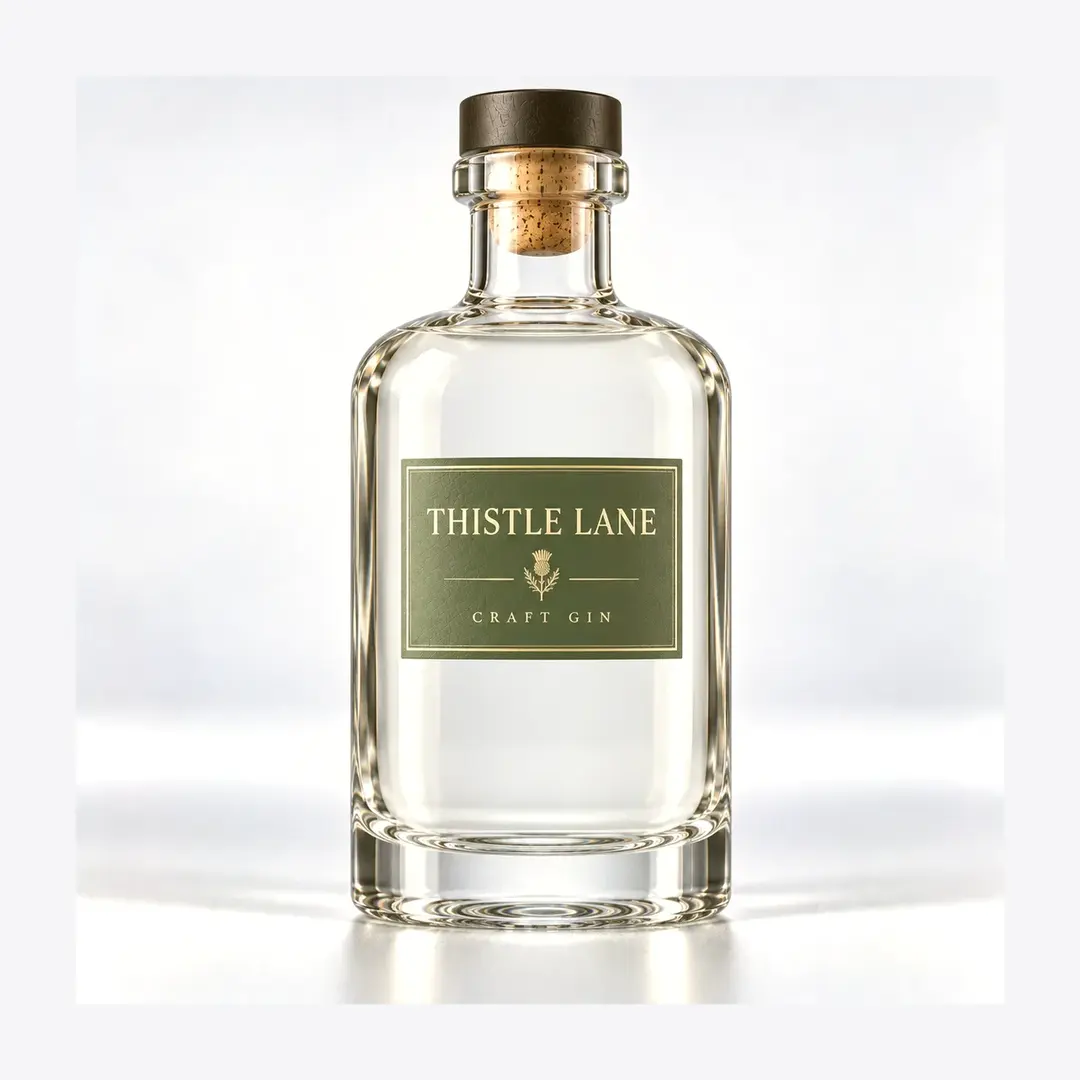
Model TEC-B2497-1, photographed here in clear flint glass, belongs to a silhouette family that craft gin and botanical spirits have made their own: the rounded rectangle. The body is a soft-cornered oblong — neither a hard square nor a circle — rising through gently rolled shoulders into a short neck crowned by an unusually thick, wide bar-top rim. Underneath, the base carries real weight, visible as a deep slab of glass at the heel. It is the bottle equivalent of a well-made hardback book: quiet, rectangular, and obviously built to be picked up. This brief is written for distilleries, brand developers and importers assessing this mold for premium small-batch programs. The photograph carries no capacity, dimension, weight, or finish code; confirm every one of them with the factory before tooling or label work.
Soft Corners, Hard Shelf Logic
The rounded rectangle occupies a deliberate middle ground in shelf psychology. Hard-square bottles read as assertive and architectural; round bottles read as traditional and friendly. The soft oblong borrows from both: enough flat face to present a serious front label, enough curvature to feel warm and hand-finished. That is precisely the register successful craft gins and botanical vodkas aim for — modern, but not industrial; artisanal, but not rustic. The form also pours well. Rounded shoulders let the thumb rest naturally at the grip point, and the oblong section gives the hand a clear orientation, so the bottle never rotates unexpectedly mid-pour. For back-bar staff serving hundreds of measures a night, that predictability is a genuine ergonomic feature, not a styling footnote.
The Thick Rim as a Tactile Quality Cue
Look at the neck finish in the photograph: the lip is not a thin rolled edge but a wide, heavy ring of glass. Consumers cannot name that detail, but they register it the moment they pick the bottle up. A substantial rim signals that the closure — typically a bar-top cork on this finish family — seats into something engineered rather than merely adequate. It also frames the opening ritual: the cork pulls with a clean release and reseats with a reassuring fit. When your price point asks the buyer to believe in small-batch care, tactile cues like rim weight do persuasive work that no copy line on the label can. Closure specification is a factory-confirm item: send your intended bar-top reference so neck-fit can be verified on samples.
Heavy Base Optics
The deep glass slab at the base does more than add grams. Viewed from the front, it acts as a lens that lifts the liquid line and throws a bright crescent of refracted light through the lower body — the same optical trick premium whisky decanters rely on. Under shelf lighting, that glow reads as richness before a word is read. The weight itself carries meaning too: study after study in packaging psychology links heft with perceived quality and willingness to pay. The trade-off is freight cost and case weight, which your logistics team should price into landed cost; glass weight tolerance for this mold is a factory-confirm specification.
Botanical Branding Canvas
The four gently curved faces of this bottle suit illustration-led branding. Botanical engravings, herbarium-style gin flora, and fine-line distillery scenes all sit naturally on the broad front panel, whether applied as paper labels or direct screen print. The flat-ish front accepts fine registration for multi-color prints; the soft corners mean wraparound labels need a die cut that respects the curve radius — share your label artwork with the factory early so panel dimensions can be confirmed. Frosting is an option, though clear glass with a tinted liquid and heavy typographic label is the more common route on this silhouette. Embossing on the shoulder or heel can be discussed where volumes support mold work.
Small-Batch Economics on a Stock Mold
Craft programs live and die on the math between mold ownership and mold rental. A custom mold buys total differentiation but demands volume commitments that strain a first-year brand; a stock mold like TEC-B2497-1 lets a distillery launch with factory tooling already amortized, paying only for production, decoration, and closures. The compromise — shared shape — is softer than it looks: in most regional markets your bottle competes against what sits beside it on local shelves, not against a distillery three countries away using the same mold. Decoration carries the differentiation load, which is why this bottle’s label panel and print surface quality matter more than its shared silhouette. For second-year growth, a practical path many brands take is to stay on the stock mold while adding proprietary elements — a custom capsule, a signature closure head, or a heel emboss when volumes justify mold work. Ask the factory where those thresholds sit for this series.
Production and Quality Notes
Bottles in this series are formed and then annealed for stress relief — our reference method is ASTM C148 — with production lots verifiable against internal pressure resistance (ISO 7458) and thermal shock (ISO 7459) where the filling line or pasteurization step demands it. These are factory process capabilities; request the lot-level inspection records that correspond to your order. Practical confirmations before mass production: cavity and brimful capacity, body dimensions against label dies and carton dividers, neck-finish drawing, glass weight and tolerance, and a decorated pre-production sample.
Ordering and RFQ
Send your target quantity, destination port, closure choice, and decoration direction through our contact page and we will confirm mold availability and sampling. If you are still sizing your first order, the pricing mechanics in our MOQ guide will help you read factory quotations. Teams planning their first import cycle can also review how to import glass bottles from China for the full sequence from sample approval to container loading.
Frequently Asked Questions
What spirits categories suit the TEC-B2497-1 rounded-rectangle bottle?
The silhouette is most at home with craft gin, botanical vodka, and modern apothecary-styled spirits — anywhere a brand wants flat label real estate with soft, hand-finished character. Whisky and liqueur programs also use this form when they want a calmer shelf presence than hard-square bottles. Final suitability depends on capacity, which you should confirm with the factory.
Is the capacity of this bottle stated anywhere?
No — the product photograph does not show a printed capacity, and we do not invent figures. Ask the factory for the cavity volume, brimful capacity, and full dimension sheet before label design or regulatory filing.
What closure does the thick rim accept?
The visible finish is a bar-top style seat, typically paired with T-corks or synthetic bar-top stoppers. The wide rim is a design feature, but the exact finish drawing and closure tolerance must be confirmed by the factory against your chosen stopper.
Can labels wrap around the rounded corners?
Wraparound dies are possible but must respect the corner radius; most brands on this silhouette use a front panel label plus a smaller back or neck label. Share artwork with the factory early so panel dimensions and curvature can be checked on a physical sample.
How heavy is the base, and does it affect shipping cost?
The photograph shows a visibly heavy base slab, but the exact glass weight is a factory-confirm specification. Heavy-base bottles increase case weight and freight per unit, so include the confirmed weight in your landed-cost model before committing.
What quality standards apply to production of this bottle?
Production is annealed for stress relief (reference ASTM C148), with internal pressure resistance (ISO 7458) and thermal shock (ISO 7459) verification available per lot where required. Request the inspection records for your specific production lot from the factory.


