
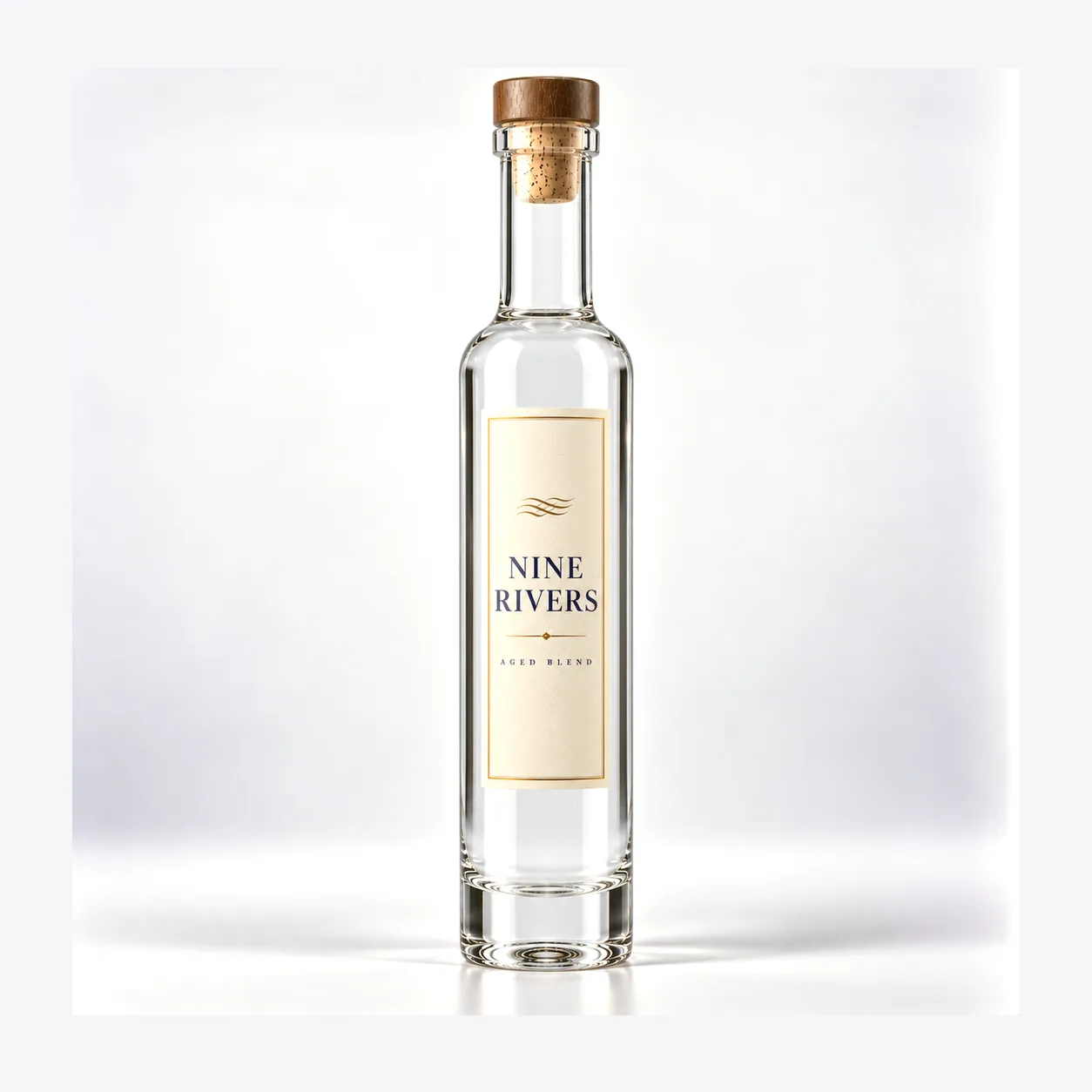
If your spirits brand sells into Europe, the capacity of your bottle is not a marketing decision — it is a regulatory one. The 700ml standard glass liquor bottle shown here, cataloged as model 700ML, exists for exactly that reason: it is the conventional European spirits format, and this page is written for export managers, importers and brand owners who need their packaging to clear EU and UK retail conventions without friction.
Why 700ml Is the Rule in Europe, Not a Choice
European Union rules on spirit drinks set standard nominal volumes for spirits placed on the EU market, and 700ml sits at the center of that system — alongside a short list of permitted sizes such as 100ml, 200ml, 350ml, 500ml, 1 litre and a few others. The United Kingdom retained the same convention after leaving the EU. The practical consequence for a brand owner is simple: a 750ml bottle that is perfectly normal in the United States is not a standard retail size for spirits in Europe, and most European buyers, distributors and supermarket chains will ask for 700ml by default.
Choosing a bottle that is natively designed around the 700ml fill — rather than adapting a 750ml mold and hoping the fill height looks right — protects three things at once: label legality, consumer price perception against neighboring 700ml competitors, and the visual fill level that shoppers subconsciously compare across a shelf row.
One Bottle, Many Markets: Planning the Export SKU
Experienced export teams treat bottle capacity as a market-map exercise before it becomes a purchasing exercise. A typical multi-market spirits program ends up with a structure like this:
| Destination market | Conventional spirits size | Packaging implication |
|---|---|---|
| European Union | 700ml standard | 700ml bottle, EU-language back label space |
| United Kingdom | 700ml standard | Same glass as EU; separate label run if needed |
| United States / Canada | 750ml standard | Separate 750ml SKU, often a sister mold |
| Travel retail (global) | 700ml or 1 litre | Align with operator planograms |
| Asia-Pacific domestic | Varies by country | Confirm national rules before committing |
The efficient pattern is to lock the European 700ml bottle first — Europe usually carries the strictest size discipline — then build the 750ml sibling for North America from the same design family so labels, closures and cartons share as much as possible. If you are mapping this for the first time, our article on importing glass bottles from China covers the broader export workflow.
Fill Height, Tolerances and Honest Specifications
Compliance conversations eventually come down to numbers: nominal capacity, brimful capacity, fill-point tolerance and neck finish. We do not publish fixed figures for this model on the page because they are confirmed per production run and per customer drawing — please request the current technical drawing from the factory and circulate it to your bottler and your regulatory consultant before artwork is finalized. That one step prevents the classic export mistake of printing labels around a fill line the glass cannot hold.
Decoration and Closure Options
European shelves reward both restraint and information density: the front of the bottle carries the brand, the back carries mandatory details. This model supports frosting, screen printing, spray coating and conventional labeling, so a compliance-heavy back label can coexist with a premium printed front. Standard caps, corks and bar-top closures can be matched to the neck finish — confirm the finish specification with the factory before ordering closures.
A practical note for pan-European ranges: keep the glass and the front decoration identical across countries, and localize only the back label and the carton. That structure preserves one production run of glass while still letting each market’s importer meet national labeling expectations — the cheapest form of compliance flexibility there is.
Quality Control References
Every run of this bottle is produced under the factory’s documented container-glass QC regime: annealing verified with reference to ASTM C148, internal pressure resistance per ISO 7458, and thermal shock endurance per ISO 7459. Batch records and third-party pre-shipment inspection can be arranged — useful when your EU importer asks for supplier documentation as part of their own compliance file.
Compliance Pitfalls We See Exporters Hit
After supplying European-bound programs for years, a few avoidable mistakes recur. First, artwork approved before the technical drawing: brands print a beautiful front label and then discover the fill line sits higher than the design assumed, crowding the lower label edge. Second, closure sourcing ahead of neck confirmation: a pallet of corks that do not match the confirmed finish is an expensive paperweight. Third, assuming one label works everywhere: EU multilingual requirements, UK-specific details and distributor-specific barcodes often mean two or three back-label variants on the same glass. None of these are glass problems — all of them are sequence problems, and all of them disappear when the drawing, the closure and the label are approved in that order.
Documentation Your Importer May Request
European importers increasingly keep supplier files that include more than a commercial invoice. Depending on the buyer, you may be asked for product specifications against the confirmed drawing, batch production records, food-contact suitability declarations for the glass and closures, packing lists with carton and pallet data, and third-party inspection reports where commissioned. The factory can support this documentation trail — raise the requirement at RFQ stage rather than after production so the paperwork moves in parallel with the glass. Buyers structuring a formal supplier evaluation will also find our glass bottle supplier checklist a useful framework.
MOQ, Samples and Ordering
MOQ depends on mold use and decoration; the moving parts are explained in our glass bottle MOQ guide. Samples from the existing mold can be arranged so your bottler can verify fill height and line behavior before you commit. When you are ready, send your destination markets, annual volume and decoration direction through the contact and RFQ page, and the factory will reply with the technical drawing, confirmed specifications and a quotation.
Frequently Asked Questions
Is 700ml the legal standard size for spirits in the EU?
Yes. EU rules on spirit drinks define standard nominal volumes, and 700ml is the central retail size for spirits across the European Union; the UK follows the same convention. A 750ml US-style bottle is not a standard EU spirits size, which is why export programs usually commission a dedicated 700ml bottle.
Can I use the same bottle for the US market?
Not ideally. The US standard spirits size is 750ml, so brands selling both regions typically run two capacity siblings from the same design family. Discuss a 700ml plus 750ml family plan with the factory so labels, closures and cartons can be shared where possible.
Will my labels and fill height work with this bottle?
Fill height and brimful capacity are confirmed on the technical drawing for each production run. Request the current drawing from the factory and have your bottler verify fill level and line behavior with samples before you print labels.
Can the bottle carry both decoration and an EU compliance back label?
Yes. Screen printing, spray coating, frosting and conventional labeling are all supported, so a premium printed front can coexist with an information-dense back label. Confirm printable areas and artwork specifications with the factory.
What is the MOQ for a 700ml export bottle?
MOQ depends on whether the existing mold is used and on decoration complexity. Standard-capacity formats from an existing mold generally carry lower MOQs. Share your annual volume and destination markets in the RFQ for an exact figure.
Can the factory provide QC documentation for our EU importer?
Yes. Production is controlled against container-glass standards including ASTM C148 annealing, ISO 7458 internal pressure and ISO 7459 thermal shock. Batch records can be reviewed and third-party pre-shipment inspection arranged, which supports importer compliance files.


