
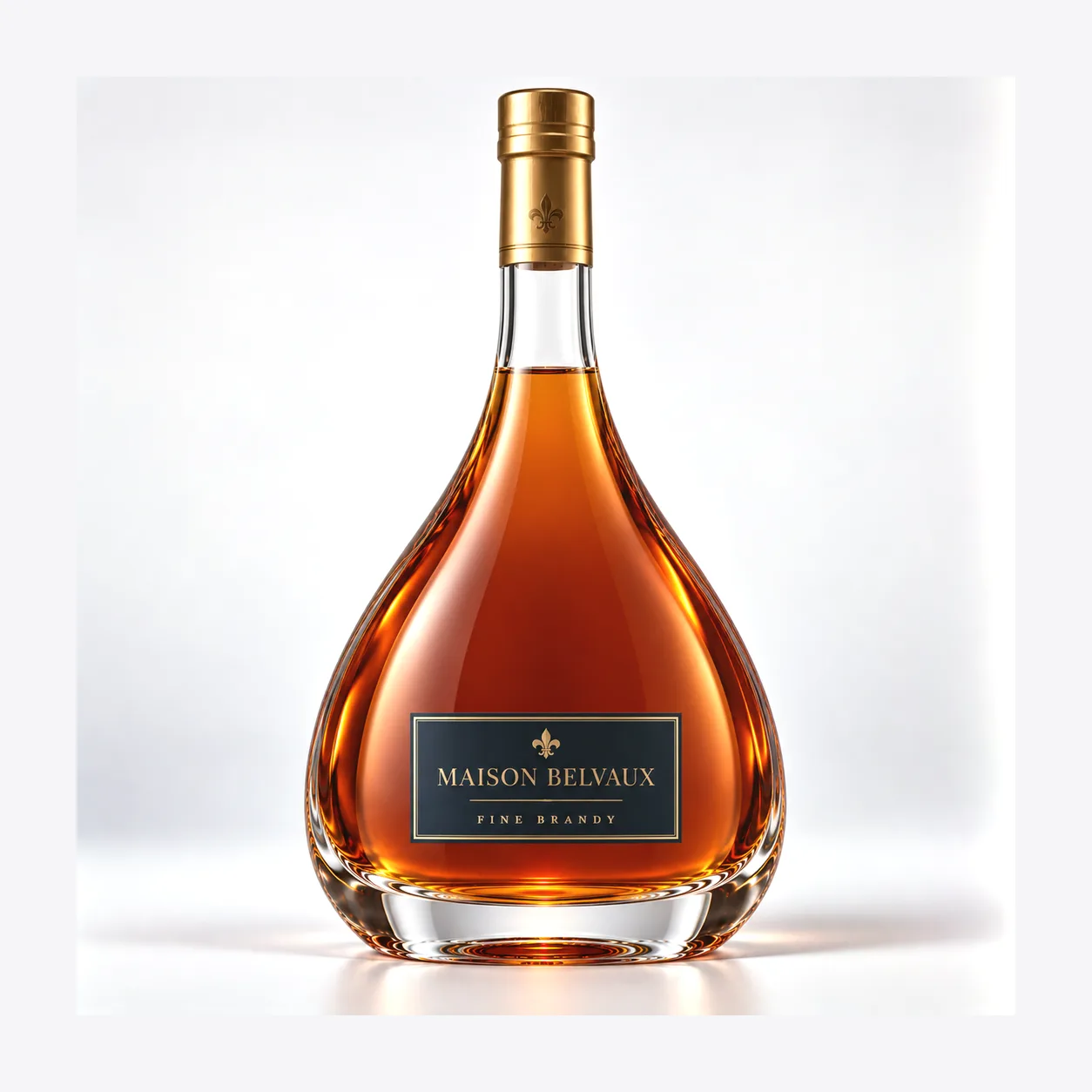
Brandy is bought with the eyes before it is ever tasted. The 700ml glass liquor bottle shown here, our model BOJUEVSOP, belongs to the presentation-led end of the spirits shelf: a bottle intended for aged brown spirits — VSOP-grade brandy, cognac-style blends and premium dark liqueurs — where the package must communicate time in the barrel before a single word on the label is read. This page explains how B2B buyers typically specify this model, and what to confirm with the factory before production.
What a VSOP-Tier Bottle Has to Say
In the brandy category, price tiers map closely onto packaging signals. Entry-level brandy sells in plain glass with paper labels; XO and hors d’age expressions move into heavy, sculptural decanters. The VSOP tier — the commercial heart of most cognac-style programs — sits deliberately in between: elevated enough to justify a mid-shelf price, restrained enough to keep unit costs workable at volume. Buyers speccing bottles for this tier generally ask for three things:
- Flint clarity for the amber show. The liquid’s color is the product’s strongest asset. Clear flint glass with low distortion lets the amber depth read accurately at shelf distance and under retail lighting.
- A silhouette with ceremony. VSOP buyers respond to bottles that pour with a sense of occasion — proportions that feel considered in the hand and look at home on a dinner table, not only on a back bar.
- Decoration headroom. Mid-tier programs often start with a label and a cork, then add screen printing or coating as the brand matures. The glass should support both without a mold change.
700ml: The Brandy World’s Working Capacity
The 700ml fill is the standard spirits size across the European Union and the United Kingdom, and it is the traditional capacity of the cognac and brandy trade. For export programs targeting Europe, Asia-Pacific duty-free and most international brandy markets, 700ml keeps your SKU inside familiar regulatory and retail conventions. If your program also sells into North America, where 750ml dominates, tell us during the RFQ — capacity family planning is easier to solve at the start of a project than after molds and labels are fixed.
Decoration Routes for Brown Spirits
Aged-spirit packaging leans on a specific decorative vocabulary, and this model supports the routes that matter:
- Screen printing for crests, age statements and fine-line heritage graphics directly on glass — the signature look of established brandy houses;
- Spray coating in deep tones or gradient effects when a program wants a contemporary, matte-premium feel;
- Frosting for contrast panels and soft-touch differentiation against glossy competitors;
- Labeling — paper, textured stock or film — where regional regulations require detailed back-label information.
Closures for this tier are typically natural cork, synthetic cork or bar-top (T-cork) designs; standard caps are also available for value extensions. Closure compatibility is always confirmed against the bottle’s neck finish on the approved drawing — please confirm the finish specification with the factory before placing closure orders.
Quality Standards Behind the Presentation
Presentation glass still has to perform as an industrial container. Production of this model is controlled under the factory’s documented QC regime, referencing ASTM C148 for annealing verification, ISO 7458 for internal pressure resistance and ISO 7459 for thermal shock endurance. For brandy specifically, thermal shock performance matters more than buyers expect: many cellars fill at ambient temperature and some markets pasteurize or warm-process adjacent products on shared lines. Batch test records and pre-shipment third-party inspection can be arranged as part of your order review.
The Serving Ritual Behind the Bottle
VSOP brandy is rarely drunk standing at a bar. It is poured after dinner, shared at celebrations, gifted in boxes and displayed on home shelves between occasions. That usage pattern shapes what buyers should demand from the package. The bottle must photograph well for e-commerce, because a growing share of mid-tier brandy is researched or bought online. It must feel stable and confident in the hand during a slow pour. And it must survive being wrapped, re-wrapped and carried to gatherings — which is why secondary packaging, from fitted cartons to gift boxes, should be planned alongside the glass rather than after it.
Buyers building gifting-led programs should also think about label real estate early. Age statements, appellation-style marks and awards badges all compete for the same front-panel space, and the brands that look composed at shelf are the ones that decided their information hierarchy before artwork began.
Markets Where This Tier Travels Well
Cognac-style VSOP positioning performs consistently in West African metropolitan retail, Southeast Asian gifting seasons, Eastern European off-trade, and global travel retail — all regions where amber spirits carry strong gifting culture and where a well-presented 700ml bottle reads as an affordable luxury. Each destination brings its own label-language and closure-preference quirks; flag your target markets in the RFQ so the factory can advise on what similar programs have specified.
Packing and Transit for Presentation Glass
Mid-tier brandy programs often ship mixed containers — glass, closures, gift cartons and sometimes the liquid’s secondary packaging from different suppliers. Coordinated packing pays: divided export cartons, pallet plans agreed before loading, and clear carton marking save real money at destination, especially where importers de-van and re-palletize for regional distribution. Our team prepares container-loading plans as part of the order process and can align carton specifications with your gift-box supplier’s requirements.
From Sample to Shelf: How Ordering Works
Most brandy programs we supply follow the same arc: a sample round to evaluate glass clarity and closure fit, a decorated pre-production sample for marketing sign-off, then volume production. MOQ depends on mold use and decoration complexity — the mechanics are laid out in our glass bottle MOQ guide. If this is your first time sourcing presentation glass from China, our overview of importing glass bottles from China covers lead times, packing and documentation.
To move this model into your VSOP or cognac-style program, send your target markets, annual volume and decoration references through the contact and RFQ page. We will respond with the current technical drawing — dimensions, weight and tolerances are confirmed with the factory at that stage — together with a quotation.
Frequently Asked Questions
Is 700ml compliant for selling brandy in the EU and UK?
Yes. 700ml is the standard spirits bottle size in the European Union and the United Kingdom, and it is the traditional capacity for brandy and cognac-style products. For North America you would typically need a 750ml variant — confirm your target-market sizes with the factory before finalizing the specification.
Does the clear glass really matter for aged brandy?
Yes. The amber color of aged brandy is a primary purchase signal, so flint glass clarity and low distortion directly affect shelf appeal. Evaluate a physical sample against your actual liquid before approving production — samples can be arranged through the factory.
Can we get a cork or bar-top closure with this bottle?
Yes. Natural cork, synthetic cork and bar-top closures are commonly paired with this tier of bottle, and standard caps are available for value lines. Closure fit is confirmed against the neck finish on the approved drawing, so confirm the neck specification with the factory first.
What decoration options suit a VSOP-style program?
Screen printing for heritage crests and age statements, spray coating for premium matte or deep-tone effects, frosting for contrast, and conventional labeling are all supported. Many programs launch with a label and cork, then add printing later. Confirm artwork requirements and lead time with the factory.
What is the MOQ and can we start with samples?
MOQ depends on mold use and decoration complexity; samples from the existing mold can usually be arranged first, with decorated pre-production samples before bulk runs. Share your annual volume in the RFQ and the factory will confirm MOQ, sample cost and timeline.
How are presentation bottles packed for export?
Bottles ship in divided export cartons on palletized, shrink-wrapped loads planned for container efficiency. Presentation bottles receive the same transit protection discipline as standard lines. Exact carton and pallet configurations are confirmed with the factory at order stage.


