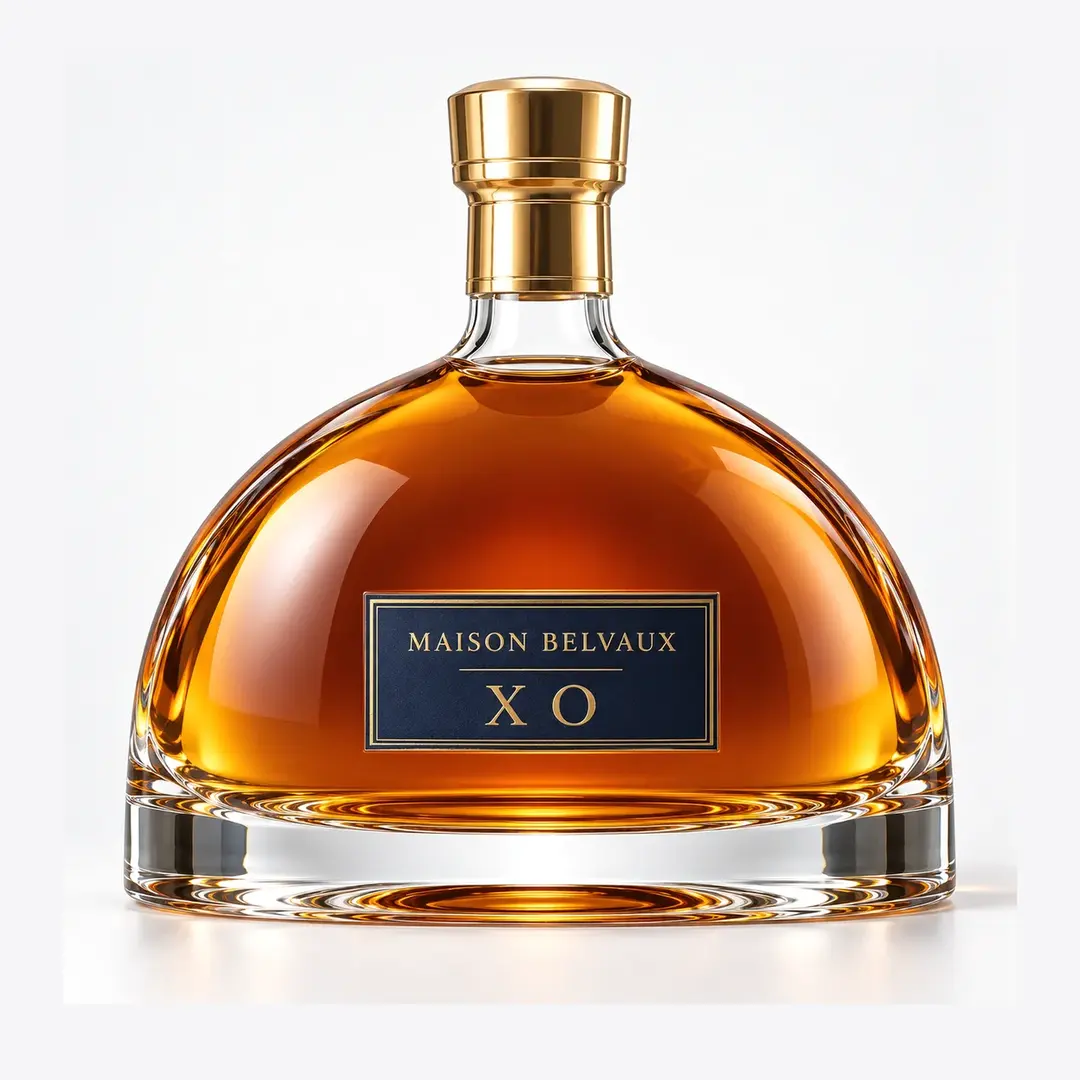
The XO shelf is the most codified real estate in spirits. Consumers who would struggle to describe the difference between two aged brandies can read the shelf language of the XO tier instantly: the broad, low center of gravity, the generous glass, the visual weight that says the liquid inside waited a long time. The MY-XO mold is a presentation bottle built to speak that language fluently — a core-range showcase for brandy programs competing in the XO and premium aged-spirit tier. This page breaks down what that shelf language consists of and how to deploy it for your brand.
Decoding the Cognac-Style Shelf Language
Premium aged brandy packaging follows conventions refined over more than a century, and the most powerful of them is visual weight. A heavy base — thick glass at the bottle’s foundation — does two things at once. Physically, it lowers the center of gravity and gives the bottle a planted, immovable stance on the shelf. Optically, it acts as a lens: light passing through the thick base refracts upward into the liquid, making the amber spirit glow from below. Bar lighting and retail case lighting both exploit this effect, which is why the best XO-tier bottles seem to carry their own illumination.
The second convention is proportion. XO-tier bottles read broad rather than tall — the silhouette communicates volume and generosity rather than efficiency. The third is restraint in ornament: at this tier, the glass itself is the statement, and labels stay small, typographic, and confident. This mold is designed inside those conventions. Exact base weight, capacity, and dimensions are confirmed with the factory through the technical drawing pack — what the design intent guarantees is that the bottle reads XO before a single word is read.
Visual Weight as Price Justification
Here is the commercial logic that makes presentation bottles worth their glass: at the XO tier, the bottle is the primary evidence of value at the moment of purchase. The buyer cannot taste the liquid. They cannot verify the age statement in the aisle. What they can do is heft the bottle — and a bottle with real glass weight and a substantial base physically communicates the tier the price tag claims. Retail buyers understand this instinctively, which is why they allocate premium shelf positions to bottles that look the part.
For core-range programs, this is a calculation about margin per facing. An XO-positioned SKU in a presentation bottle commands a price multiple over the same liquid in a standard bottle — and the incremental glass cost is a fraction of the incremental shelf price. That arithmetic is why established cognac houses invest so heavily in their signature bottles, and it is available to any brandy program through a shared presentation mold: you borrow the tier’s visual codes without paying bespoke tooling for them. It also compounds across the range — a flagship that looks correctly priced pulls the expressions below it upward, while a flagship that underpresents its tier drags the whole range’s price credibility down.
Positioning: A Core-Range Showcase, Not a One-Off
This mold is specified most often as the face of a core range — the bottle that carries the brand’s flagship aged expression year-round, builds recognition through repetition, and anchors the brand’s shelf block. That is a different discipline from seasonal gift editions: a core-range bottle must be decoration-light enough to reproduce consistently across years of reorders, distinctive enough to be recognized at ten paces, and classic enough not to date. Programs that also run gift-coffret editions typically treat those as separate projects with their own packaging architecture; the core-range bottle’s job is permanence, not novelty.
Decoration for the Aged-Spirit Tier
Decoration at this tier follows the restraint principle. The proven routes on presentation molds: single- or two-color screen printing for medallion-style brand marks directly on glass; small, typographically confident paper labels on premium stocks; and selective frosting for contrast panels that make the clear glass and amber liquid read even richer. Spray coating is used sparingly at this tier — deep, translucent tones rather than opaque color. Whatever the route, consistency across reorders is the core-range requirement: confirm decoration registration tolerances and color references with the factory at first production, and archive approved samples as the reorder standard.
Closures carry disproportionate weight at this tier. A quality bar-top cork with a wood or heavyweight top is the conventional XO signal; standard configurations are available, and the exact neck finish and closure compatibility for this mold are confirmed with the factory during sampling. If your program plans a specialty stopper, raise it at RFQ so neck-finish validation happens before closure procurement.
Standards at the Premium Tier
A heavy-base presentation bottle only works if the glass quality matches the visual promise — clarity without seed or haze, consistent wall distribution, a base that sits dead flat. Our liquor bottle production verifies annealing per ASTM C148, internal pressure resistance per ISO 7458, and thermal shock resistance per ISO 7459, with test documentation available with your quotation. File it with our glass bottle supplier checklist; at the XO tier, your retail customers’ quality teams will ask.
Requesting Samples and Pricing
Presentation bottles must be evaluated in hand — weight, balance, and base optics do not photograph honestly. Send your program details (fill type, age positioning, destination markets, annual volume) through our contact page and request physical samples. We will confirm current MOQ for your decoration route — background in our glass bottle MOQ explainer — plus drawings and packing data. New to importing? See our guide on importing glass bottles from China. At the XO tier, the shelf judges the bottle before the buyer judges the brandy — this mold makes sure you win the first verdict.
Frequently Asked Questions
What makes a bottle read as XO-tier on the shelf?
Three conventions: visual weight (a heavy base that gives a planted stance and refracts light up through the liquid), broad rather than tall proportions that communicate generosity, and restrained ornament where the glass itself is the statement. This mold is designed inside those cognac-style conventions. Exact base weight and dimensions are confirmed with the factory through the technical drawing pack.
What capacity is this bottle?
Capacity and full specifications for this mold are confirmed with the factory at inquiry — request the technical drawing pack for exact figures. Before finalizing artwork, also confirm fill-size compliance for your destination markets with the factory and your importer of record, since permitted spirits sizes vary by jurisdiction.
Is this mold better for a core range or limited editions?
It is specified most often as a core-range showcase: the bottle that carries a flagship aged expression year-round. Core-range work demands decoration-light, reproducible styling and a silhouette that will not date. Gift-coffret and seasonal editions are usually run as separate packaging projects with their own architecture.
What decoration suits an aged-brandy presentation bottle?
Restraint is the rule: single- or two-color screen printing for medallion-style marks, small typographic labels on premium stock, and selective frosting for contrast. Establish decoration registration tolerances and color references with the factory at first production and archive approved samples as the reorder standard.
What closure should pair with an XO-tier bottle?
A quality bar-top closure with a wood or heavyweight top is the conventional XO signal. Standard cap and cork configurations are available; the exact neck finish and closure compatibility for this mold are confirmed with the factory during sampling. Raise specialty stopper plans at RFQ so neck-finish validation precedes closure procurement.
What is the MOQ for this presentation mold?
MOQ depends on your decoration route and current line scheduling, so confirm the current figure with the factory at RFQ stage. As a shared catalog mold it runs at standard production minimums rather than bespoke tooling volumes. Our glass bottle MOQ explainer covers how decoration choices affect the minimum.


