Pick the size from the place the drink is sold, not from a bottle you liked on a competitor's shelf. In glass, about 280 ml serves minibars, airlines and catering; 330 ml is the single-serve retail and bar size; 500 ml is the carry-and-reseal size for convenience and takeaway; 750 ml belongs on restaurant tables, in sharing packs and in gift boxes. The closure follows the same logic: a crown for carbonated drinks finished in one sitting, a screw cap wherever the bottle is reclosed, and an aluminium roll-on where the closure is part of how the pack looks.
Three constraints to fix before you name a volume
Most size mistakes come from starting at the millilitre figure and justifying it afterwards. Three facts about the project rule out whole ranges of sizes on their own, and they should be written down first.
What is in the bottle
The liquid sets the pressure and temperature the glass has to carry. A carbonated drink needs pressure-capable glass and a closure that holds that pressure, which means a crown or a pressure-rated screw cap. Still juice and flavoured water are far less demanding and can be filled hot or cold.
Pulp, fruit pieces or high viscosity affect the neck before they affect the volume, because a narrow opening will not pass the product at a workable rate. A light-sensitive drink raises the question of glass colour, and colour has to be settled together with the size since both belong to the same mould decision.
Where and how it is drunk
The channel defines the serving occasion, and the occasion defines the volume. A minibar bottle is drunk by one person, often straight from the bottle and often left unfinished, so a small volume avoids waste. A supermarket bottle taken home is poured several times over several days, which makes resealing more important than capacity.
At a restaurant table or a banquet the bottle is poured into glasses, so the volume goes up and the way the neck pours matters more than what the cap costs. A gift or hamper bottle is bought as an object, and its size is dictated by the box around it.
Which market it ships to
The destination decides the label declarations, whether a deposit or return scheme applies, and whether buyers expect a refillable container. A returnable system changes the bottle itself: it needs a heavier wall, a neck that tolerates repeated capping, and a closure that can come off and go back on many times.
Food contact rules, such as the FDA provisions in 21 CFR or the EU framework regulation 1935/2004, determine the documents you will be asked to supply. Packaging waste rules in the destination market can also count against a heavy bottle, however good it looks on shelf.
Sizes by channel, fill behaviour and closure
Each row below pairs a nominal size with the channel it usually serves. The last column lists what has to be confirmed as measured values for the specific mould and your own line, because fill heights, tolerances, breakage and line fit cannot be read off a general chart.
| Nominal size | Typical channel | Behaviour on the filling line | Usual closure | Refill or return use | Confirm before ordering |
|---|---|---|---|---|---|
| About 280 ml | Hotel minibars and amenities, airlines and catering, concentrated or single-serve retail | Short and light, so it moves quickly through rotary equipment; a narrow neck is normal and works for thin, still liquids | Crown if carbonated, otherwise a small screw cap | Rare. It is normally a single-trip bottle, and the volume is too small for washing and refilling to pay | Whether your filler's height adjustment reaches this bottle, the fill height at your product temperature, and whether the capping head takes the closure diameter |
| About 330 ml | Mainstream single-serve retail, cafes and bars, vending | The size with the most existing tooling in the category; runs on high-speed pressure fillers for carbonated drinks and on gravity fillers for still ones | Crown for carbonated drinks, screw cap for still juice and flavoured water | Possible where a deposit scheme exists, provided the bottle is specified for it from the outset | The carbonation level the glass is rated for, the headspace the closure requires, and the body diameter against your star wheel |
| About 500 ml | On-the-go and convenience retail, food service, takeaway | Taller and heavier, so slower per bottle than the two smaller sizes; a wide mouth speeds up pulpy or thick products per filling head | Screw cap, normally with a tamper-evident band; wide mouth if the product calls for it | Common for water and for hotel or restaurant carafe programmes, where the neck must take repeated capping | The closure torque the neck is designed for, thread durability across repeated opening if refilling is planned, and the breakage record in your case configuration |
| About 750 ml | Table and banquet service, sharing and family packs, gifts and hampers, upmarket water | Slowest per bottle of the four; pour quality and the look of the closure outweigh filling speed | Aluminium roll-on or a higher-grade screw cap, often the main quality cue on shelf | Yes, in returnable water or carafe programmes built around a heavy wall and a durable neck | Weight and wall thickness of the actual mould, closure fitment tolerances, and the secondary packaging a box or hamper needs |
Moving up the table, the sale shifts from a quick transaction to an occasion, each bottle takes longer to fill, the closure accounts for a larger share of the pack relative to the glass, and a return circuit becomes easier to justify. Buyers who settle the channel first and then read across a row usually reach a workable specification in one pass. Those who begin with the size tend to meet the closure problem at the first capping trial.
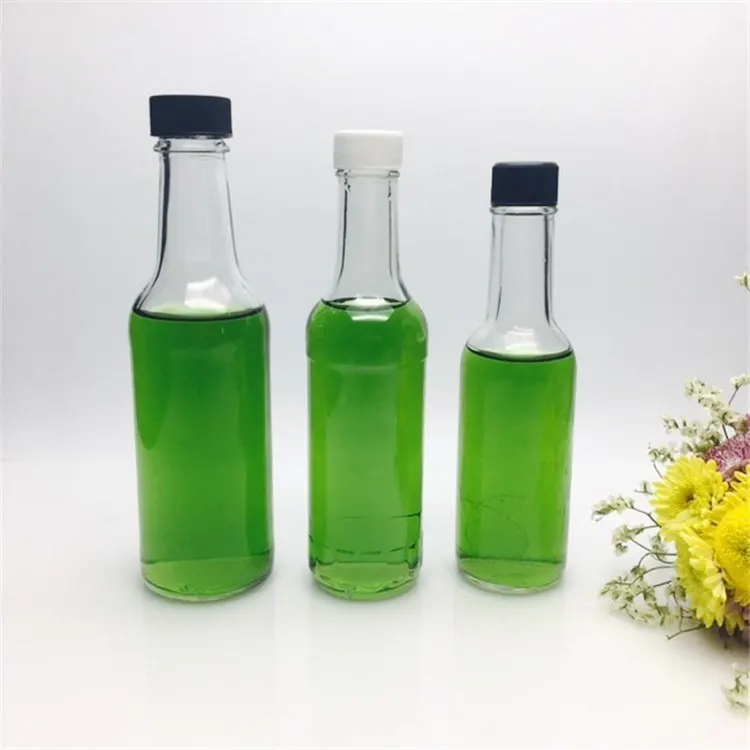
Checking the size against your filler
The channel is the one input the project cannot alter, so it comes first. The fill method comes second, and it is the constraint buyers most often underrate. A size that looked right on a shelf plan can turn out costly to run once it meets the filling equipment.
A narrow neck restricts the nozzle diameter, and a small nozzle restricts flow per filling head unless the liquid is thin and the filler works under pressure. A wide mouth takes a larger nozzle and fills thick or pulpy products faster, but brings a bigger, dearer cap. Hot filling adds a thermal load on the glass, and carbonation adds a pressure load. The product and the equipment you already own define that envelope, and the size has to sit inside it.
Then look at the machine's change parts. Rotary fillers are built around a family of bottle diameters, with star wheels, guide rails and capper heads sized to match. A new bottle height is normally a simple adjustment, while a new diameter normally means change parts, and the same applies further down the line at the capper and labeller.
That is why a range of several volumes on one body diameter usually costs much less to run than the same volumes each on a different diameter. If you have any freedom in the choice, staying within the diameter family your line already handles is worth more than a slightly better proportion on shelf.
Narrow neck or wide mouth
After volume, neck diameter is the biggest decision on a beverage bottle. Two things settle it every time: how the drink is consumed and how the bottle is filled.
| Point of comparison | Narrow neck | Wide mouth |
|---|---|---|
| Drinking and pouring | Controlled pour into a glass and comfortable to drink from directly | Lets a customer drink a smoothie or a juice with pieces without a straw |
| Filling | Small opening limits nozzle size and slows anything viscous | Larger nozzle, so pulpy or thick products fill faster per head |
| Closure | Small crown or screw cap | Larger closure that costs more per unit |
| Hygiene and handling | Less exposed once opened | Easier to clean, but more open to spillage in service and contamination after opening |
| Typical use | Carbonated soft drinks, beer, single-serve water | Smoothies, pulpy juices, thick products |
With carbonated drinks the narrow neck is close to compulsory. The closure has to hold pressure, and the opening must be small enough for a crown or pressure screw cap to seat reliably at line speed. With still drinks the neck is an open choice; decide it on the fill method first and on the drinking experience second.
Food service is a separate case, since the bottle is usually poured rather than drunk from. There, a narrower and longer neck pours more cleanly and leaves less liquid running down the outside.
The neck finish (the threaded or beaded top of the bottle that the cap grips) and the closure work as a matched pair. Two finishes with the same nominal diameter can have different thread geometry, and a cap made for one will not seat on the other. Across a multi-size range, putting as many bottles as possible on a single finish cuts the number of closure items and capper settings and reduces exposure to a lid shortage. That is usually worth accepting a neck that is marginally less ideal for one of the sizes.
Crown, screw cap or aluminium roll-on
Each of the three closure families that dominate beverage glass solves a different problem. Which one you need is a question about the channel, not a matter of technical taste.
- Crown: holds pressure. The standard closure for carbonated drinks. It seals dependably at high speed on a rotary capper and is inexpensive, being a small single piece of metal. It cannot be reclosed, which is fine for a single serving and wrong for a juice someone returns to over several days. The capping head is sized to the finish, so choosing the finish and choosing the equipment are one decision.
- Screw cap: reseals. Suited to still products and to anyone who drinks part of a bottle and puts it back in the fridge. It demands tighter torque control than a crown: too much torque and the customer struggles to open it, too little and it leaks. It also carries the tamper evidence most retail markets expect, usually a band on the cap. In hotels and restaurants it is often the only practical choice, because staff open and close the bottle repeatedly during service.
- Aluminium roll-on: carries the look. Crimped onto the neck instead of threaded on, and available in finishes and colours that signal a higher-value pack. It is the usual closure for spirits and for upmarket beverages where the cap adds to the pack's worth. It requires a roll-on capping head, runs slower than a crown on the same line, and is not built for repeated reopening the way a screw cap is.
When one drink is sold through more than one channel, the practical answer is a single glass format on a single finish with two closure options, not two separate bottles. The mould count stays low, and the adaptation to each channel happens in the cap and the label, both far cheaper to change between runs than the glass.
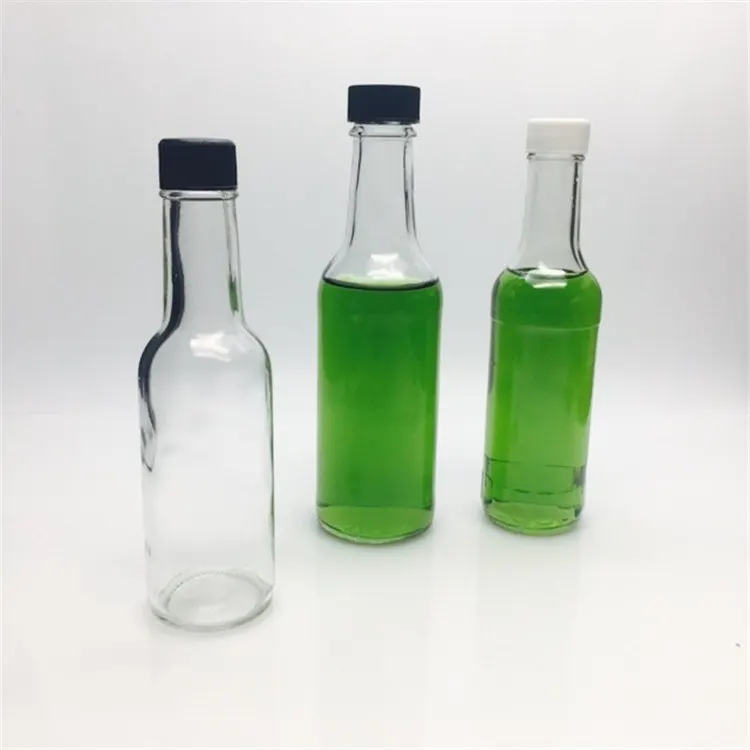
Bottles refilled by hotels, restaurants and water plants
A large share of beverage glass spends its first life entirely in professional hands. Hotels and restaurants serve their own filtered or treated water in it, water plants and small bottlers fill it under their own brand, and caterers refill it for events. The buyer here is an operator, not a shopper, and the usual priorities are reversed: volume is not among the four properties that matter.
- Neck durability. The neck must withstand repeated capping, so thread profile and finish material come before the appearance of the closure.
- A closure built for reuse. It has to be removed and resealed many times. That normally excludes a crown and points to a screw cap with a durable thread.
- Glass that survives washing. Repeated wash and sanitising cycles must not cloud or chip it, which is a matter of wall thickness and thermal shock resistance.
- Fit with the operator's filler. In a hotel this is typically a small semi-automatic machine with a limited height range, so the bottle height often has to fall inside a narrow window.
Water is the largest programme of this kind. If you are building a water range in volume, the loading and quantity planning is covered in our guide to glass water bottles bought in bulk.
Glass or PET at the same volume
At 280 ml and 330 ml, glass generally has the stronger commercial case in upmarket and hospitality channels, while PET wins in high-volume retail driven by cost. From 500 ml upward the balance moves, because the freight burden of glass grows with volume in a way PET's does not. The comparison is qualitative on purpose: the real cost per unit depends on the mould, run length, decoration and freight lane, and can only be settled by a quotation for your own programme.
| Factor | Glass | PET |
|---|---|---|
| How it reads in upmarket and hospitality settings | Strong; weight and a cold touch signal quality | Weaker; tends to signal convenience |
| Barrier to oxygen and light | Effectively impermeable, leaving only the closure liner to consider | Permeable over time, so shelf life must be validated |
| Hot fill and pasteurisation | Suitable when the glass is specified for thermal shock | Limited by temperature, with a narrower process window |
| Freight at 500 ml and above | Weight pushes freight up on large bottles and eats into any unit cost advantage | Lighter, so delivered cost on larger sizes is normally lower |
| Refill and return | Washable and reusable when wall and neck are specified for it | Generally single-trip in beverage use |
| Risk in transit | Breakable; case and pallet pattern need validating against a distribution test standard such as ISTA | Resilient, though it deforms under top load in a badly designed stack |
The decision is therefore made channel by channel, not once for the whole brand. A brand can sell glass in hospitality and PET in volume retail at the same nominal size without the two packs matching. What they should share where possible is the volume, so that one set of label artwork and one case plan serve both. That shared volume is where the real saving lies.
Five steps from channel to size, and where they go wrong
- Write the channel and occasion as one sentence, for example: single-serve carbonated drink sold from a chiller to one person.
- Take the serving volume from that sentence, not from someone else's bottle.
- Let the occasion pick the closure. Carbonated and finished in one sitting allows a crown; still and partly consumed requires a screw cap.
- Test the format against your line: diameter family, filler height range, capping head.
- Check it against the destination market, including any deposit or return scheme and the required label declarations.
Three failures recur. The first is copying a competitor's volume without asking whether their channel is yours. A 500 ml bottle that sells well in a convenience store is often wrong for a banquet, where a larger bottle pours better and a smaller one looks mean.
The second is leaving the closure until the glass is already specified. The closure fixes the finish and the finish is cut into the mould, so changing it late is the most expensive correction available. The third is designing to nominal dimensions instead of tolerances, then finding during pallet building that the case pattern cannot survive the distribution route.
What to send for a size and closure recommendation
Three statements are enough to begin. Describe the beverage and how it behaves: still or carbonated, thin or pulpy, cold or hot filled. Name the channel it has to succeed in, whether a minibar, a convenience-store chiller, a restaurant table or a gift box. Explain how it will be filled, including the filler's height range and the capping head already on your line.
Add the carbonation level and fill temperature for carbonated or hot-filled products, the closure family your line is committed to if that is fixed, the destination market, and annual volume with the order rhythm. With those details we can check the size, neck and closure together and match the project to a suitable plant.
A useful reply contains a size with a finish code, a working fill height for your own product, a closure family with its sealing and tamper-evidence status, and the case configuration the bottle should ship in. A container name and a millilitre figure alone mean the channel question was never answered, and the specification will need rebuilding at the fill trial.
Related questions this page does not settle
How many bottles fit a container, how a pallet is built and how cases are configured are load-planning matters with their own arithmetic, set out in our page on buying glass containers in bulk. The small dairy silhouette used for milk and flavoured milk follows different constraints from a carbonated or juice project, and its sizing and closure conventions are described under small glass milk bottles. If you are still deciding whether the pack should be a bottle at all, start from the glass bottle collections, which route each open question to the right page.
Frequently asked questions
Should a retail drink go into 330 ml or 500 ml?
Decide by occasion. A 330 ml bottle is a chilled single portion that sits comfortably in a hand and a fridge door. A 500 ml bottle is carried around, partly drunk and closed again, so handling and resealing count for more. Carbonated and drunk straight away points to 330 ml with a crown; still and sipped over time points to 500 ml with a screw cap. Choosing the shorter serving is a brand decision, not a technical one.
Will a screw cap work on a carbonated drink?
Yes, as long as the glass and the cap are both rated for your product's internal pressure and for the headspace it needs. The crown remains the conventional closure for carbonation, but a pressure-rated screw cap is an established alternative and the better one when customers are expected to reseal the bottle. Give your carbonation level and fill temperature so bottle and cap can be checked together instead of one after the other.
Which size suits hotels and restaurants?
Count the glasses the bottle has to fill. A 750 ml bottle suits table and banquet service where several glasses are poured, and 500 ml suits smaller covers, buffets and takeaway. If the venue refills on site with filtered or treated water, finish and wall specification matter more than volume.
Is PET cheaper than glass at 500 ml?
That depends on what you count. PET is lighter, so a filled 500 ml PET bottle usually costs less delivered once freight is included, and PET generally reaches a lower unit cost on long runs. Glass offers what PET does not: an effectively impermeable barrier, hot-fill tolerance, a stronger impression in hospitality, and a credible route into washing and refilling. Compare cost per delivered litre in the channel you sell into, not cost per bottle at the plant gate.
Does every size need its own bottle diameter?
No. If the brand can accept one body diameter across two or three volumes, a change of size on the line becomes a height adjustment instead of a set of change parts, and the saving in running cost outweighs a small improvement in how any one size looks on shelf.