A glass bottle cap is chosen by neck finish, not by appearance: each closure type fits one finish family, so picking a cap also fixes the bottle mould, the liner and usually the capping equipment. Decide in this order — product and sales channel, then closure system, then the bottle that matches it. Buyers who start from the bottle and look for a cap afterwards are the ones who end up with stock that does not fit together.
What the neck finish fixes
The finish is the moulded profile at the mouth of the bottle that receives the closure. It follows published standards: GPI thread codes for screw caps, FEA dimensions for crimped pumps, lug profiles for twist-off lids, and bore diameters for corks. None of these cross over. A bottle made with a cork bore will never accept a screwcap.
Within one family the code still has to match exactly. In a GPI code the first number is the diameter and the second is the thread style, so 28-400 and 28-410 share a 28 mm diameter but differ in thread profile and depth. Put a 28-400 cap on a 28-410 neck and it cross-threads or leaks.
Closure options by product category
| Category | Closure | Finish or size | What to know |
|---|---|---|---|
| Still wine | Natural or technical cork | Cork bore, 18.5/21.5 mm | The bore must hold a tight tolerance. Technical (1+1) corks feel like natural cork but behave more uniformly because the body is agglomerated. |
| Still wine | BVS aluminium screwcap (Stelvin) | 30×60 mm | Rolled onto the neck; the liner sets how much oxygen reaches the wine. Common for new-world and drink-now wines. |
| Sparkling wine | Crown cork, then mushroom cork with wire hood (agrafe) | Pressure-rated finish | Two stages: the crown holds through secondary fermentation, the cork and hood go on for sale. |
| Spirits | BarTop (T-cork) | Bore 18.5/21.5/28 mm | Wood, plastic or metal head on a cork or synthetic shank. Shank fit and pull force are specified and tested. |
| Spirits | ROPP aluminium cap | 18/28 mm | Roll-on pilfer-proof cap with a tamper band; usual on value spirits and miniatures. |
| Spirits | GPI screw cap | 28-400, 33.5-400 | Accepts standard caps, pourers and dispensing fitments for bar use. |
| Food | Twist-off lug cap | TO 43-82 | Metal lid with plastisol liner that seals under vacuum after hot filling; the button pops on first opening. |
| Food | Two-piece canning lid | 70G/86G | The flat disc makes the vacuum seal; the screw band only holds it in place during processing. |
| Food | CT (continuous-thread) cap | GPI thread | Metal or plastic general-purpose cap for dry goods and anything that needs no vacuum. |
| Fragrance | Crimp pump | FEA 13/15/18/20 | The collar is crimped on permanently, which looks clean and shows tampering. |
| Cosmetics | Screw pump or sprayer | 18/415, 20/410, 24/410, 28/410 | Fine-mist and trigger heads that unscrew, so the bottle can be refilled. |
| Cosmetics, pharma | Dropper assembly | Matched to the bottle thread | Bulb, pipette, wiper and cap work as one dosing unit; graduated pipettes measure active ingredients. |
Child-resistant and tamper-evident versions sit across these categories. Many markets require them for certain actives and tinctures, so treat them as a compliance question for the sales channel and not as a styling choice.
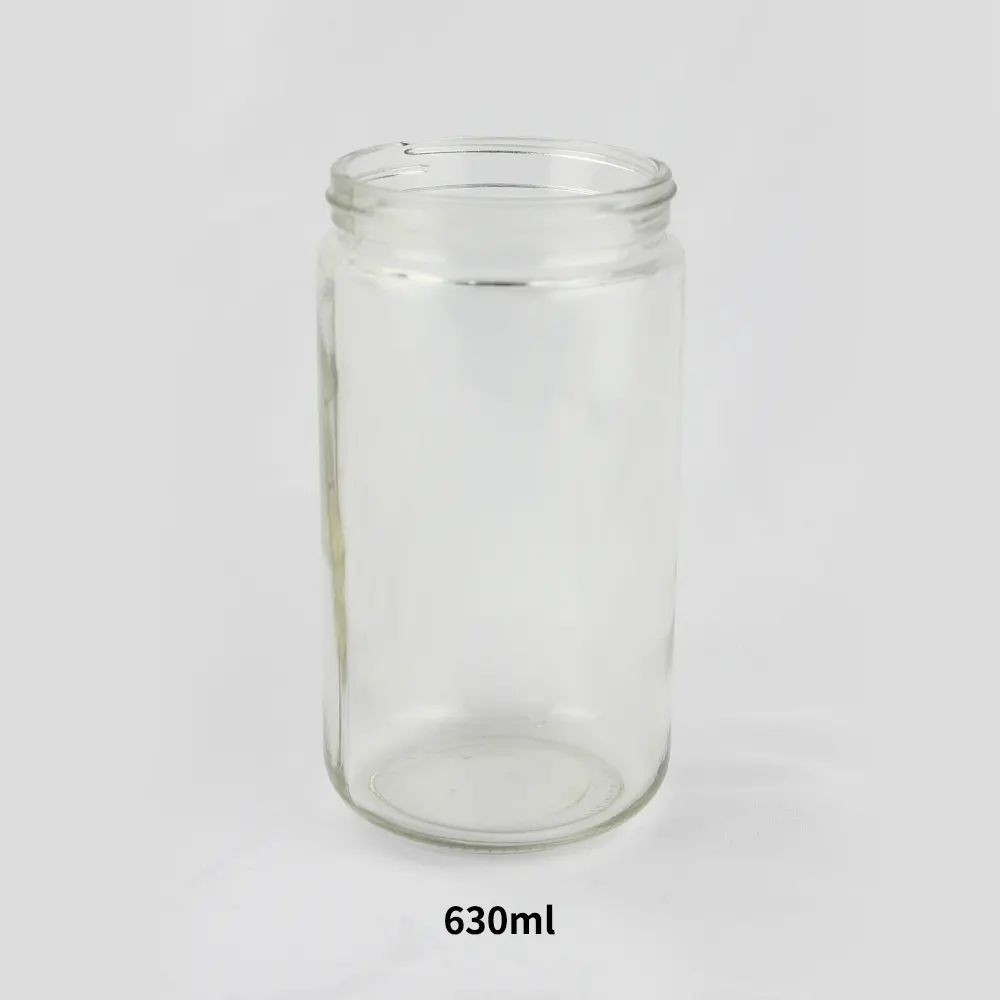
Our glass bottle and jar ranges are grouped by these same categories. For wine, the wine bottle collection shows cork and screwcap finishes side by side, and the honey jar range shows how lug lids pair with food jars.
Liners and seals
The shell of a cap provides the mechanical grip. The liner inside it does the sealing, and it is the liner that determines shelf life.
- Plastisol softens and flows into the finish as the cap is applied, producing a hermetic vacuum seal. It is the normal choice for hot-filled food.
- Saranex and tin-saran are the liners used in wine screwcaps. Each has a defined oxygen transmission rate, which governs how the wine ages.
- PE foam and pulp suit dry goods and non-vacuum packs only. Do not use them on liquids that need a hermetic seal.
- Silicone gaskets seal wooden-lid and swing-top jars; the lid itself is there for appearance.
Five questions that narrow the choice
- Product needs. Carbonation calls for a pressure-rated system, hot filling for a vacuum lug cap, light-sensitive actives for a sealed dropper. Plain storage is served by a CT screw cap.
- Channel conventions. Fine fragrance buyers expect a crimped pump, farm-shop preserves a two-piece canning lid, value spirits a ROPP cap.
- Filling line. The capping heads and chucks you already own tie you to one finish family. State the equipment before any closure is proposed.
- Regulation. Check whether tamper evidence or child resistance is compulsory for your category in each market.
- Feel in the hand. Heavy zamac, warm wood or plain aluminium. This comes last because the four answers above limit what is possible.
Checking cap and bottle as one assembly
A closure works only in combination with its liner, the bottle finish and the product. For that reason we specify and quote the cap together with the glass and have the pair verified before mass production is released. Three checks are involved:
- finish gauges applied to first-article bottles;
- a torque window for screw closures, or a pull-force window for stoppers;
- a leak test with bottles stored inverted at 40 °C for 24 hours.
A cap that matches the drawing but sits half a millimeter off on the real finish can lead to a recall. For food and cosmetic projects we also advise a soak test with the bottle filled with your actual formula before the main run.
When you send a closure enquiry, include the product type, filling process, sales channel and any capping equipment or bottle stock you already hold.
Frequently asked questions
How do I find the cap that fits a bottle I already have?
Identify the finish. It will be a GPI thread code such as 28-400 or 20-410, an FEA crimp size (FEA 15/18/20), a twist-off size (TO 58/63/70) or a cork bore (18.5/21.5 mm). Give us that code and we match closures to it. On a new project we specify bottle and closure together.
Which closure seals hot-filled food best?
A twist-off lug cap lined with plastisol, applied on a hot-fill or steam-capping line. As the contents cool they draw a vacuum that pulls the safety button down. Jam, sauce, honey and pickle jars all rely on it.
Are tamper-evident versions available for most cap types?
Yes. ROPP caps break away from a band, twist-off lids show a vacuum button, and droppers and sprayers come with tamper-band variants. A shrink band adds visible evidence to nearly any closure.
Are closures ordered in separate quantities from the glass?
They are. Caps are a separate component with their own quantity requirements, and custom colours or printing push those up. The figures are set per project by the closure type, decoration and order size, so we quote glass and closures together and show both.
Can the closure be tested with my product before production?
Yes. The gauge, torque or pull-force and inverted leak checks described above are part of every project we coordinate, and a filled soak test against your own formula can be added for food and cosmetics.