Child resistant packaging is proven by a panel test on people, not by a measurement on a part. A group of young children must fail to open the assembled pack within a set observation period, and a group of adults weighted towards older people must manage to open it and close it again properly within theirs. The two documents that define the test are the United States regulation cited as 16 CFR 1700.20 and the international standard cited as ISO 8317, and the evidence is a laboratory report tied to one exact combination of bottle, closure, liner and capping setup. Change any of those and the report may no longer cover what you ship.
What follows assumes the closure is already chosen and concentrates on the test: what it demands, how many packs it uses up, what the report must contain and when it expires. It is not legal advice for any market. Whether closure and neck work together mechanically is a separate job covered under fit testing of cap and neck, the application and removal torque window is covered under torque testing for bottle caps, and choosing a closure family in the first place is covered in the overview of glass bottle closures.
Whether your product needs child resistant packaging
Two things decide it together: what is in the pack, in what amount, and where the pack is sold. Neither settles the matter alone. A product that needs no special packaging in one country can be required to have it in the next, and inside a single market a particular pack size or presentation may be exempt.
Most national rules share a logic. Special packaging is demanded when a small swallowed amount could seriously injure or sicken a young child. That takes in solid and liquid medicines, many household chemicals, some automotive and workshop products, liquids containing nicotine, and further categories that differ from one jurisdiction to another. Thresholds are normally written around the active substance, its concentration and the size of the pack. Two strengths of one product can therefore carry different duties, and a reformulation, a new strength or a new pack size can pull a product into scope when nothing else has changed.
Liquids containing alcohol are where companies outside pharmaceuticals most often get it wrong, because the trigger is usually concentration and pack size, not a named product category. Products that already warn against swallowing, and products kept where children go, such as bathrooms, kitchens and garages, are looked at harder than something stored in a workshop.
If you are unsure, a supplier's summary is not the place to settle it, and that includes ours. Get the current wording of the rule and the standard from the authority or the standards body, and ask a regulatory specialist to confirm the position for your product, strength, pack size and destination.
Retailer and marketplace requirements
A second trigger is commercial, and in practice it often decides the purchase. Retailers, distributors and marketplaces may make child resistant packaging a listing condition, or ask for test evidence before taking a product line, with no authority behind the demand. It tends to arrive as a request for documents, and the document that answers it is the same panel test report. Brands selling through several channels should find out early which of them want evidence and in what form. The test programme is built from that answer.
How 16 CFR 1700.20 and ISO 8317 compare
In the United States the instrument is 16 CFR 1700.20, issued under the poison prevention packaging framework. Elsewhere the usual reference is ISO 8317. That one is a standard, so it binds only where a jurisdiction or a customer adopts it. Both deal with reclosable packs, and both set a performance test on human panels.
The underlying idea is identical. Young children must find the pack hard to open during the observation period, while adults, older adults included, must be able to open and reclose it in the time allowed. What is being measured is how people behave under a controlled procedure, which no instrument can stand in for. A laboratory offering a mechanical alternative is offering something no market will take as proof of compliance.
Where the documents part ways, three differences have commercial weight:
- Panel make-up and size. Each sets its own age bands, its own number of subjects, and its own rules on whether children are tested alone, in pairs or in groups. The numbers do not match. In both, the children come from a young age band and the adult panel leans deliberately towards older people, since a closure older users cannot open is a recognised way to fail.
- Acceptance arithmetic. Each fixes how many openings inside the observation period are tolerated before the pack fails, and the figures are different.
- Reclosing. Each has its own time allowance for adults to close the pack correctly and its own way of counting a pack that was opened and then left improperly closed.
We do not reproduce the panel sizes, age bands, time limits or acceptance figures here. They are specific and they get revised, so read them in the current text. What a buyer needs to carry is the outline: a child panel, an adult panel, an opening action, a reclosing action, and a verdict reached against numbers printed in the document, never negotiated between supplier and customer.
| Item | What it requires | Basis for acceptance | Record produced | Repeat or review when |
|---|---|---|---|---|
| 16 CFR 1700.20, reclosable pack | A young child panel observed for a fixed period, then a separate adult panel weighted to older people who open and reclose the pack | Permitted openings as written in the regulation. A pack opened and then wrongly closed counts against the result | Panel report naming protocol and revision, panel composition and age bands, observation periods, opening and reclosing results, and the pack as tested | Closure tool, material or supplier changes, the glass neck finish changes, or the assembled pack no longer matches the tested one |
| ISO 8317, reclosable pack | Child and adult panels with the standard's own sizes, age bands and periods. Reclosing is observed as its own step | Figures written in the standard. They cannot be swapped with the United States figures | Panel report against the named standard and revision, with panel composition, a result per action and the pack as submitted | Same triggers, plus any destination or customer that asks for the standard in place of the regulation |
| Bench check before the panel | Neck finish measured across mould cavities, assembled pack height and mechanism engagement, on packs capped with production equipment | The pack falls within the dimensional band stated by the closure supplier at the worst-case combination, not only at nominal | Internal measurement record showing cavity and run position for every sample | A mould, cavity set, closure lot or capping parameter changes |
| Packs sent to the laboratory | Production-assembled packs with the intended closure from the intended tool, the intended liner, and the intended contents if tested filled | Samples represent production. Quantity is high enough that one damaged or blemished pack cannot decide the outcome | Receipt of quantity, assembly conditions as recorded at submission, identity of the packs tested | Any change to the pack description that could affect opening calls for a fresh submission |
| Reserve packs | A quantity held back from the same assembly batch and stored under the stated conditions | Lets a marginal or disputed result be examined on packs identical to those tested | Retention record tying the reserve to the batch and the report | Checked as the report ages, used when a customer or authority queries the result |
| Destination mapping | For every market and accepting customer, which protocol is required and in which documentary form | A report under one protocol is not automatically accepted where the other is asked for, even on a physically identical pack | Mapping note listing, per destination, the protocol and the report offered | A destination is added or a customer changes its requirement, both common once a product is listed |
What to freeze before booking a laboratory
A panel is a costly way to find a dimensional fault that an afternoon at the bench would have shown. Fixing three things first is also what gives a pass any meaning beyond the day it was achieved.
The closure, down to the tool
A child resistant closure is a mechanism, typically two-part, squeeze-and-turn or push-and-turn, and it performs according to the geometry inside it, not the outer shell size. Two moulds built to one nominal design, a different resin, or a different cavity in the same tool can shift opening force far enough to change a panel outcome. The report has to trace to the tool that made the tested parts, and you should get confirmation that production closures will come from that tool, not a similar one.
The neck finish
Usually an inner part stays on the neck while a deliberate action frees the outer part, or a lug-and-ramp arrangement must engage at a set position. In both cases the mechanism indexes against the glass. Write down the finish tolerances that control engagement, the height of the locking feature and the alignment between cap axis and bottle axis, then measure them across mould cavities before any panel is convened. If a cavity sitting on the edge of tolerance causes a panel failure, the glass specification failed, not the closure design.
The assembled pack
Liner or sealing element, contents, fill level and capping process all belong to the tested system. A liner alters the height of the assembled pack and with it the distance the two halves of the mechanism move. A capping head working at another torque or angle hands the panel a pack in another condition. Filled packs bring the product into it as well: contents that soften or swell a component, or leave residue where fingers grip, change the effort a panel member must apply.
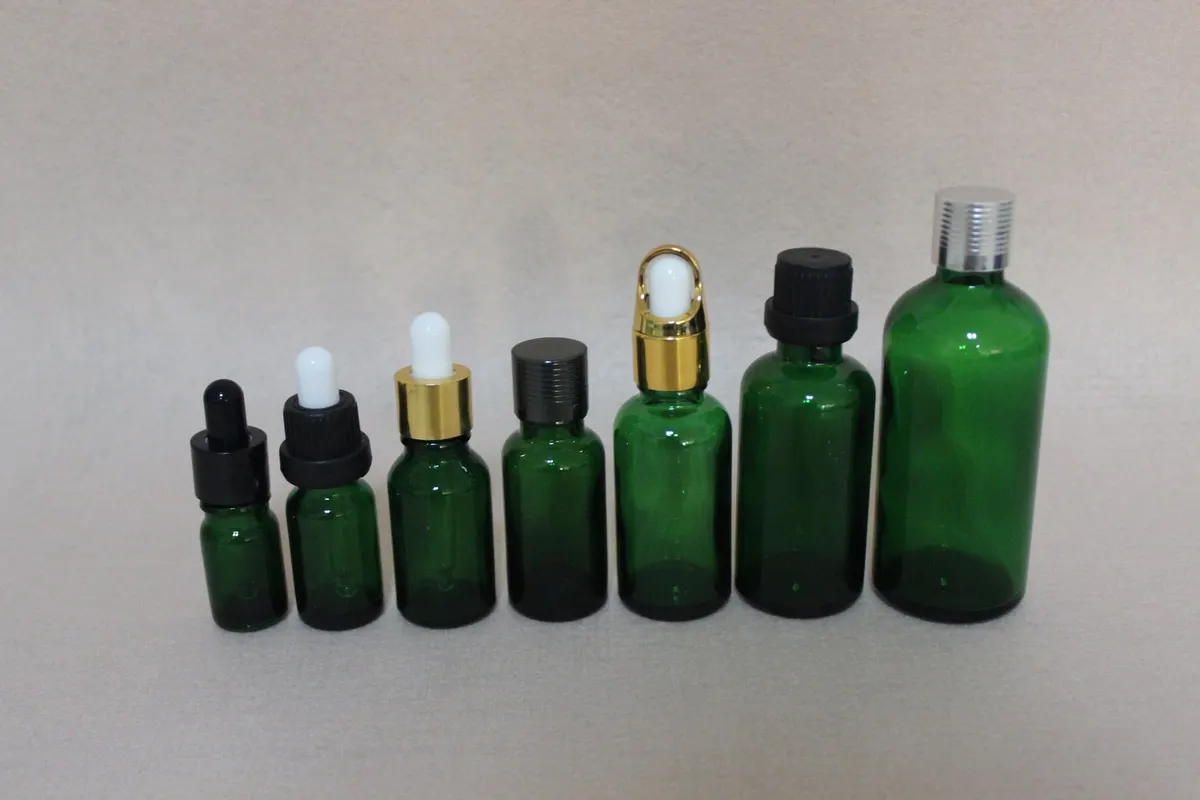
Why neck finish tolerance matters more with a child resistant closure
An ordinary screw cap tolerates variation in the glass because a compressible liner between cap and sealing land soaks up a spread of finish dimensions. A child resistant closure has no such cushion where it counts. Its parts must line up with a feature on the neck, and that alignment relies on dimensions an ordinary cap never uses.
Three characteristics of the finish hold most of the risk:
- Finish height and the vertical position of the locking feature. This sets the relative travel of the two parts. At the low end of the band the outer part can release too soon. At the high end it can be too stiff for the senior panel.
- Thread and lug geometry. The lead-in and the start point of the engagement feature determine whether the mechanism catches first time for someone who cannot see it.
- Squareness and concentricity. If the finish is not square to the base, or cap and bottle axes are off-centre, an alignment-dependent mechanism binds. Users experience that as a difficult pack, not a faulty one.
The specification consequence is to test across the dimensional band, not at its centre. Packs taken from one cavity, or from the first bottles of a run, represent a single point on a distribution. Since panels destroy samples and cost a great deal, the sensible sequence is to measure the finish across cavities and across the run, find the worst-case combination, include the extremes in the submission, and spend the panel on the configuration the measurements identify as hardest.
The liner needs the same attention. When the closure must also seal, the liner sits inside the mechanism and can change assembled height, and so the travel left for the locking feature. Swapping a liner to improve the seal can move the pack outside the tested band with the closure and glass untouched. Treat a liner change as grounds to review the evidence, on the same footing as a new cap tool or a revised finish. Liner options themselves are compared in the guide to choosing a cap liner material.
Opening and reclosing are judged separately
Both protocols observe opening and reclosing as distinct actions, and test plans frequently forget it. A pack that opens readily but cannot be shut correctly has failed, since a pack left unsecured after first use protects nobody for the rest of its life. Reclosing is a full part of the verdict.
Mechanically, closing works a different part of the device. Opening releases a lock, lug or squeeze feature that has been engaged since the capping line. Closing has to re-engage it in whatever state the first opening left behind: a liner with compression set, a component slightly deformed by the release, a tamper band gone, product residue on the grip. A mechanism that indexes every time on an assembly line may be less dependable for a person who cannot make out the alignment feature.
Two design details govern reclosing performance, and both belong at the drawing stage:
- A positive closed signal. An audible click, a tactile stop or a visible alignment mark. Users who cannot tell the pack is shut will leave it open.
- Tolerance of a clumsy attempt. A locking feature that engages only when both parts are perfectly aligned at the first try yields packs that open but do not reliably reclose. The opening figures look healthy while the reclosing figures give the problem away.
Tamper evidence follows the same logic. If a band or membrane is broken or removed at first opening, the reclosing step is performed on the pack in that state. The tamper feature must not leave a rough edge, a projecting fragment or a half-attached piece that obstructs the mechanism. That is a consumer safety point as much as a panel one.
Why the senior panel fails more packs than the child panel
The design brief pulls two ways. Whatever makes a pack harder for a child, be it more squeeze force, longer travel to align, a smaller grip area or finer alignment of two parts, also makes it harder for anyone with weaker grip, less dexterity or poorer eyesight. No feature works against children only. A design sitting mid-curve can clear both panels, whereas one pushed towards the child resistant end to buy margin with the children normally gives that margin up with the seniors.
Three things follow for a development programme.
First, watch the senior result throughout development. It moves before anything else when a design is tightened, so it is the early warning, not the final box to tick.
Second, who is on the panel matters as much as the pack. A senior panel is drawn on purpose from an older population, and a result from a younger group that happened to be available does not show the same thing. When a supplier offers an in-house trial ahead of the formal panel, ask for the age distribution of the participants before you look at the opening rate.
Third, adults open packs according to instructions. In a panel the procedure is controlled. At home it is not. A pack that depends on reading and following a short sequence will behave differently in the two settings. Testing against a defined procedure is right for compliance, but a pass does not promise easy use in the field. For users with limited dexterity, design and compliance are connected questions that each need their own answer.
Sample quantity and how to prepare the packs
The test destroys its samples. Packs are handled, opened, closed and, under some procedures, deliberately stressed, and none goes back into saleable stock. That is why the number to send is set by the protocol and has no relation to the size of your order. Three demands add up to it:
- The panel procedure, which consumes packs by design.
- Attrition: packs damaged in transit, packs with an assembly defect, and packs set aside as unrepresentative. Each needs replacing without disturbing the panel.
- The reserve, kept so that a marginal or contested result can later be investigated on identical packs.
Send only enough for the first of these and there is no reserve. Any question that comes up once the report is out can then be answered only by running the whole test again.
How the packs are put together matters equally. Cap them on production equipment at the production setting, using closures from the production tool. Hand-tightened samples describe a pack that will never exist. If the tested configuration is filled, use the intended product at the intended fill temperature, because contents and thermal history both shape the condition the panel meets.
Record the capping head, the head position, the torque setting and the assembly date at the time of submission. Reconstructing them later is unreliable, and those records are what later connect the report to a particular production configuration.
What the laboratory report must state
Read the report against a checklist before accepting the pass or fail on its front page. It should contain:
- the protocol and the revision applied;
- a description of the tested pack detailed enough to identify it;
- panel composition, with age bands and the number of subjects per group;
- the observation period used for each action;
- opening and reclosing results shown separately, alongside the overall decision;
- the identity of the packs actually tested, as distinct from those received.
A report missing any of these is hard to reuse, and reuse is frequently the commercial reason for testing at all. The commonest avoidable problem is a report that states neither protocol nor revision. It cannot be matched to a second destination, and an identical pack ends up being tested twice.
Three common failures and where to start correcting them
Failures cluster around three causes. The order in which to investigate them is rarely the order in which people raise them.
Seniors fail while children are comfortably held off
This is the most frequent case: the pack is too hard for older hands to open or reclose. Glass is seldom the place to start, as it is normally inside specification. Look at the mechanism instead: the force it asks for, the size and texture of the grip, how clear the alignment feature is, and whether there is a positive closed signal. If the design was tightened for margin on the child panel, hand the margin back. A senior failure is a failure however well the children were resisted.
The laboratory pack does not behave like the drawing
Usually the samples were not in production configuration, or came from a different tool, closure lot or liner batch. Trace them to their assembly record before redesigning anything. A variant is the pack that opens acceptably when new and becomes much harder to close afterwards. That points to the locking feature, liner compression set, or a tamper feature leaving material in the way.
Children open it more easily than predicted
This is the least suspected failure and the one with the heaviest design consequence. The cause is generally a release feature within reach: a squeeze point a small hand can get to, a gap wide enough for a fingernail, or a release that yields to the palm when a deliberate two-finger action was intended. Correct the geometry of the release, not the force, because adding force drives the pack directly into the senior failure above. A pack that fails with children and is also near the limit with seniors needs a different release principle, not an adjustment.
A marginal result is a separate case
A marginal outcome is not a design failure in itself. Check first that the report is complete and the tested packs are properly identified. A borderline result on a configuration nobody can reproduce proves nothing in either direction. Make the pack traceable, then retest the configuration that will really be produced. Retesting the same unclear configuration returns a second unclear answer and uses another full panel.
When a test report stops being valid
A report is evidence about one assembled pack. It is not a certificate for a product family, and reading it as one is the costliest error in this field. Every change to the submitted configuration should be weighed against one question: would the panel result still stand? If that cannot be answered with confidence, assume the new configuration is not covered.
| Part of the pack | Changes that call for a review | Why |
|---|---|---|
| Closure | A new cavity in the same tool, a new tool to the same drawing, a different resin grade, a different moulder, a different internal liner or sealing component | Any of these can alter opening and closing behaviour, and none shows in a photograph. Colour alone is usually harmless, but a new colour often comes with a new masterbatch or resin, which is not |
| Bottle | Neck finish dimensions, mould cavity set, glass supplier, the way the finish is formed or annealed | A new bottle supplier working to an unchanged nominal drawing still produces a different dimensional spread, and the panel result is a verdict on the spread |
| Assembled pack | Liner, contents, fill level, capping head, applied torque, assembly speed | Capping changes affect how the mechanism seats. New contents can change the friction of the surfaces a user grips |
Brands with several sites or several suppliers should define in advance which changes count as significant and put that rule in the supply agreement. Otherwise it gets argued out while a shipment sits waiting.
Using one report in several markets
Reuse across markets is a different matter from validity. A report is evidence against the protocol it names. Where a destination or customer wants the other protocol, it does not automatically qualify, even with a physically identical pack and a similar test principle. Map destinations to protocols early, see whether a single programme can cover the full set, and make the report state everything a reviewer in each destination will look for. Customer technical teams most often challenge the senior figures and the reclosing results, so have those reported explicitly, not summarised.
How fit, torque and closure-family questions relate to the panel test
These subjects tend to be raised in one meeting with one supplier and then blur together in the specification. Keeping them apart avoids paying for a panel to answer a bench question.
Fit testing asks whether the parts work as a system: seal, engagement, alignment, and how the tolerance bands of glass, liner and shell stack up. A pack should clear that before a panel is convened. The panel then asks something else, namely whether people can operate the assembly under a defined procedure.
Torque enters the panel test only as an assembly parameter to be held constant while samples are prepared. A torque change is cause to review the panel evidence and can never replace it.
Lug and twist-off closures work differently from screw closures, and consumers handle them differently. A child resistant mechanism is sometimes built on a lugged neck, so the subjects meet at that interface. The background on lug caps and twist-off lids answers the design question, while the panel answers the testing one.
Verification of printed content on an applied label is sometimes written into the same specification because it too relies on a written acceptance criterion and a defined sample. It is a machine reading labels on a moving line, a separate discipline from a bench panel with human subjects, and the two should stay in separate specifications.
What to send us to get a testing path
Three inputs, sent together, let us reply with a route instead of a general account of panel testing:
- Destination market or markets, including any customer or channel with its own requirement. This alone determines the protocol and whether one programme can serve them all.
- Contents and pack size, since the obligation attaches to the product and its pack size, not to the container.
- Closure type and mechanism, with the neck finish specification, the liner and the assembly conditions. The report will have to describe these, and every later change will be measured against them.
From that we can set out the relevant protocol or protocols, what to freeze before samples are made, how the submitted packs should be configured, which measurements to take first so the panel is not wasted on the wrong samples, what evidence will result, and which changes would reopen it. We also mark which parts of the pack belong to the brand owner and which to the container or closure supplier. A report that cannot be tied to a part number and a tool will have to be obtained again.
Questions buyers ask about child resistant packaging testing
Can a mechanical test stand in for the panel test?
No. No force gauge behaves like a young child or an older adult. Release force and turning torque are worth measuring during development because they are cheap and repeatable, but a protocol written around panels accepts only panel evidence. Whatever name a laboratory gives a mechanical substitute, it is a development service.
How many packs should be submitted?
Enough for the panel procedure, for replacement of damaged or unrepresentative samples, and for a reserve. The figure comes from the protocol, not from the order. Once protocol and pack configuration are fixed, the laboratory can state the recommended quantity for that procedure.
Are 16 CFR 1700.20 and ISO 8317 versions of the same test?
No, they are separate documents. Each uses a child group and an adult group and observes both opening and proper reclosing, but panel sizes, age bands, observation periods and acceptance figures differ. The regulation applies wherever the United States poison prevention packaging framework does. The standard applies where a jurisdiction or customer has adopted it.
Is a retest needed after changing only the closure colour or the glass supplier?
Colour by itself rarely matters. Colour arriving with a new masterbatch, resin or moulder means the closure is no longer the one tested. A new glass supplier is significant even on an unchanged finish drawing. Compare every change with the configuration described in the report, and review the evidence for anything that could influence opening or reclosing.
Does one report cover every market?
No. It covers the protocol it names. Decide which destinations need which protocol before testing, and insist that the report shows protocol and revision so a reviewer anywhere can see what was done.