A glass bottle is clean enough for the filler when it meets a written set of conditions agreed for your product: nothing visible, no oily or waxy film, loose particles below an agreed level, no detergent or rinse-water residue, and no odour carried in from packaging or an earlier fill. New bottles do not arrive in that state, so every programme needs a cleaning step, and the method follows the soil: water washing for films and residues, air rinsing or invert blowing for loose dust and glass fragments. The result counts only when it is verified by at least two methods on a proper sampling plan and recorded.
Defining clean for your contents
Most disputes between a buyer and a supplier over cleanliness start because "clean" was treated as a single condition. A bottle with no visible dust may still carry an oily film. One with no film may still shed particles when rinsed. An exterior that passes a camera check says nothing about loose material sitting in the base or under the shoulder.
Glass helps here, up to a point. It is hard and non-porous and does not take up the product, which makes it easier to clean than many plastics. Its surface can still hold a static charge, collect condensation and pick up whatever was in the air and packaging along the route.
The target is relative to what goes into the bottle and to the regulations that apply in the destination market. Still water in clear glass is judged on what the customer can see: particles and haze. A cosmetic oil is judged on residue that could alter how the product looks or feels. So the requirement should name the contents, the filling conditions and the market, set acceptance criteria against those, and be demonstrated by validation results. A supplier who quotes a fixed cleanliness grade before asking what you are filling has skipped the question. For the same reason we do not publish grades or figures here.
Parameters to write into the specification
A cleaning requirement becomes enforceable once it is split into things that can be measured. Four product-side parameters apply across food, beverage, cosmetic and essential oil projects, each with its own target.
| Parameter | What it covers | Where it matters most |
|---|---|---|
| Particulate | Loose visible and sub-visible material that is not bonded to the glass | Transparent contents in clear glass, where every speck is on show |
| Residue | Anything on the inner wall other than glass: oil, wax, detergent, rinse-water minerals, coating material, or the previous product in a returnable bottle | Any product affected by a film; invisible to the eye, found by wipe or rinse tests |
| Microbiological load | Organic load and leftover moisture that would support growth | A minority of programmes; usually controlled by the filler's own filling and preservation regime, with the bottle expected to arrive without a heavy load |
| Odour and carryover | Scent transferred by a closure liner, a leftover film or a contaminated rinse-water supply | Essential oils, aromatics and cosmetics; the glass itself does not absorb scent |
Two process parameters belong beside them and are often missed. One is water quality: water that is fine for general use is not automatically fit for a final rinse when the product will be judged on clarity or taste, so the last rinse needs its own quality requirement. The other is dryness. Moisture left in a bottle is a contamination risk, a place for growth and, for some contents, a defect in itself, which makes drying a line in the cleaning specification and not a housekeeping detail.
Why new bottles arrive needing a wash
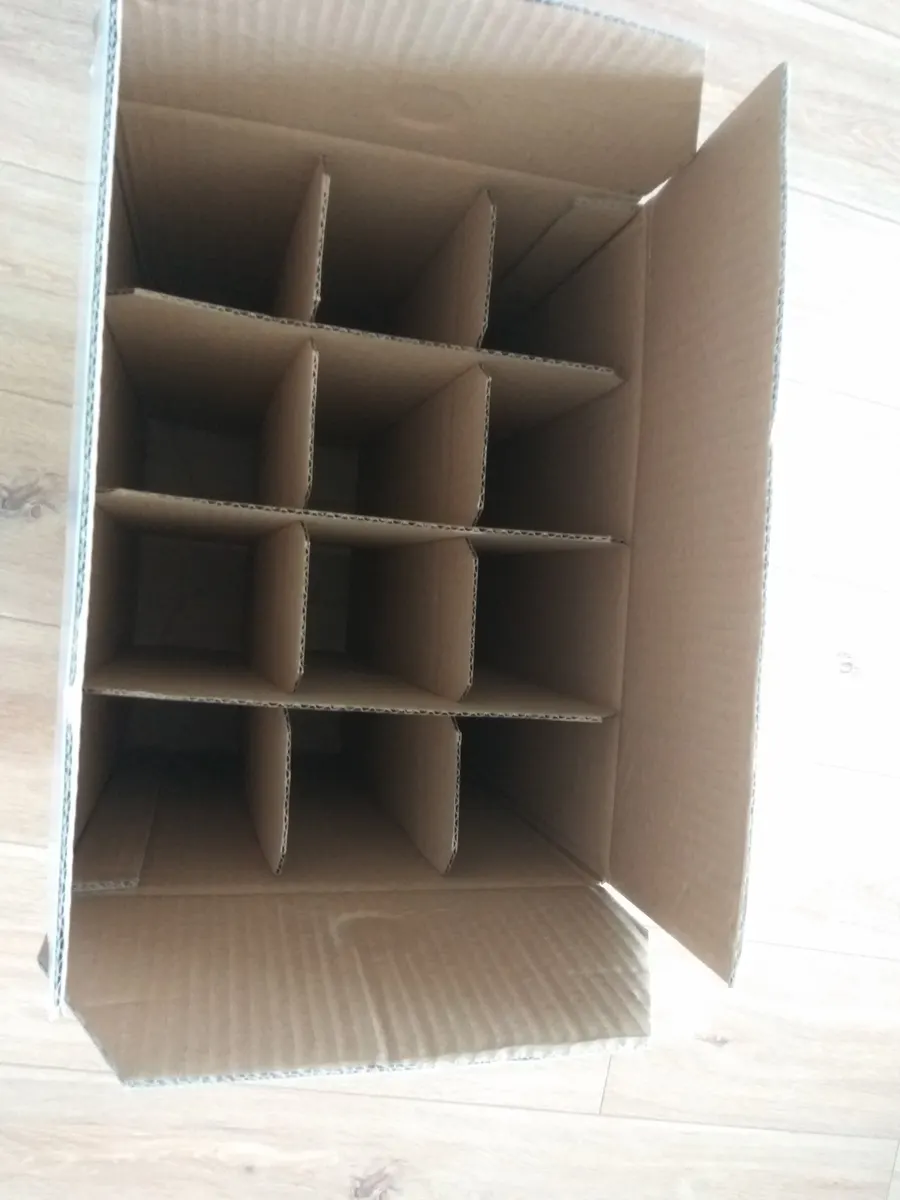
New glass is neither sterile nor packed clean, and that is a consequence of how it is made and moved, not of carelessness. After forming at high temperature a bottle goes through the annealing lehr, then the cold end, where a coating may be applied to cut surface friction and scratching. Inspection, packing, palletising, warehousing, trucking, port handling, sea freight, a second warehouse and final delivery follow. At every stage it touches equipment frames, dividers and corrugated board, and sits in dusty air.
Several sources of soil are built into that route:
- Glass fragments and fine dust created when bottles knock against each other. They fall inside as easily as outside and collect in the base and at the shoulder, where the shape slows airflow.
- Cardboard fibres and dust from dividers and shippers, with more released the further the load has travelled.
- Condensation inside a closed, cool load, which can dry to a film on the inner wall and hold particles in place.
- Hand contact during sampling, counting and inspection. Bare skin leaves the sort of residue an aroma-sensitive or chemically sensitive product will pick up.
Cleaning before filling is therefore an ordinary engineering step for the line, not evidence of a poor shipment. Buyers who assume new glass is ready to fill tend to find out at the first filling trial or the first complaint, and both are costly moments to learn it.
There is one exception: a supply format that is pre-rinsed and then capped or bagged. It has to be requested explicitly, and it still needs an acceptance criterion and a way of verifying it.
How bottle shape and closures limit the method
By the time cleaning is discussed, capacity and closure have normally fixed the bottle's geometry, and the geometry restricts the cleaning options. A narrow neck fills efficiently and caps at speed, but little can be inserted through it and air or water moves slowly through the body. A wide mouth takes a larger nozzle, rinses faster and is easier to check by eye, which is part of why wide-mouth formats suit products filled cold and inspected visually.
Look at the base as well. A deep punt or heavy moulding holds water and traps particles, whereas a flat base drains and dries more easily. A complex base calls for a better-designed drying step, not simply a longer one.
Closures bring in more contamination than most buyers expect. They ship in bulk, get handled, and their liners or wads can carry dust and odour. On a fast line a cap fed from an open hopper can drop material into the neck of a bottle that has just been cleaned, cancelling the work. For aroma-sensitive contents, settle the liner material alongside the closure family, before the cleaning trial and not after it. Droppers, pourers, corks and plugs deserve the same treatment: each is a foreign object in contact with the product and belongs in the cleaning and handling plan.
Cleaning methods compared
The comparison below covers what decides the choice: where a method fits, what it removes, what the line must provide, and where recontamination comes from afterwards. It gives no cleanliness figures because the result depends on the bottle, the soil, the equipment, the water and air quality, and validation on the actual line.
| Method | Best suited to | Removes / does not remove | Line requirements | Recontamination risk afterwards |
|---|---|---|---|---|
| Water washing (tunnel washer, immersion washer or rinse station) | Returnable bottles; any bottle that may carry an oily film, dried residue or a previous product; the usual route when contents are visible and clarity matters | Takes off loose particles, oily films and most dried residues when temperature, contact time, mechanical action and chemistry suit the soil. Leaves moisture behind | Water quality matched to the contents, controlled temperature and contact time, drainage, and drying before the filler. Geometry governs how quickly water gets in and out | Leftover moisture, hard-water spots, detergent carryover from an incomplete rinse, wet handling downstream of the washer |
| Air rinsing (filtered or ionised compressed air) | New bottles on fast lines, dry products, and cases where water is unwanted or reliable drying is not possible | Clears loose dust, glass fragments and cardboard fibres, notably from base and shoulder. Has no effect on oily films, dried residues or bonded material | Clean, dry, oil-free air at controlled pressure, a nozzle that reaches the base, and extraction to carry loosened particles out | Loosened particles that are not extracted settle again; oil or water in the air line; static holding dust on the wall until filling |
| Invert blowing (air blast with the bottle upside down) | New bottles on high-speed lines fed from an unpacked pallet or bulk depalletiser, where dust and fragments in the base are the main risk | Dependable on loose particles in the base and lower body, since gravity works with the air. Weak on wall films and residues | An inverter matched to bottle height and diameter, a timed blast, and a transfer that keeps the bottle inverted until the blast has finished | Dust from the conveyor and room during transfer and accumulation; a worn inverter righting the bottle too soon |
| Inline rinsing at the filler | Lines that need the shortest possible gap between cleaning and filling and have, or can take, a rinse station on the filler | Removes loose particles picked up on the way to the filler. Not a substitute for a full wash on a bottle with a film or residue | A rinse station on the filler, water or air of suitable quality, drainage that cannot contaminate the filler, and a cycle that keeps pace with line speed | Rinse water standing in the filler, contaminated nozzles, condensation when a cold rinse meets a warm filling room |
| Offline or manual washing | Samples, trial fills, short runs too small to justify setting up a tunnel washer, and bottles back for inspection or rework | Can reach a defined target if the procedure is written, water is controlled and drying is respected. Relies heavily on operator discipline | A written procedure, controlled water quality, a defined drying method, and segregation so washed and unwashed stock cannot mix | Highest of all: manual handling, drying that is often uncontrolled, and bottles drifting back into general stock unnoticed |
In practice programmes rarely rely on one method. A common combination is a wash, a drying step and then an inline rinse at the filler.
Positioning the cleaning step relative to the filler
Where cleaning takes place matters as much as how, and the decision should rest on the time the line allows, not on equipment cost alone. There are three arrangements.
Offline washing
Bottles are washed, dried and stored as a separate operation, and the filler draws from that stock. One washer can serve several lines and the work can be batched to suit the workload. The price is a storage period between cleaning and filling, plus an extra handling step during which a clean bottle is exposed to the general environment.
Online washing
Cleaning sits directly ahead of filling, so the gap is minutes instead of days and there is no storage in between. From a contamination point of view this is the cleanest layout, which explains why inline rinsing is standard on high-speed lines. It demands reliable equipment, because a washer stoppage stops the line, and the rinse or blow cycle must be designed into the line speed. Returnable loops follow the same reasoning: a washer sized to its line keeps the loop tight, while one shared across products adds changeover time and the chance of one product carrying over into the next run.
A declared clean point
Smaller operations often wash and dry in one place and then protect the bottles until they are filled. Here the protection is part of the specification. A clean, dry bottle left open in a filling room will not stay clean, and covering it with a dusty house cap or placing it in a cardboard box recontaminates it at the point of use. Give the transfer the same scrutiny as the wash, because nothing that happens between cleaning and filling appears in the cleaning records.
Holding time between washing and filling
Time is a contamination variable, and one of the few you can manage through scheduling. A bottle filled straight after washing and drying has met almost nothing. Leave it open overnight, or in a warehouse for a week, and it faces airborne dust, condensation cycles, insects, handling and any smell in the storage area.
No single holding time fits every programme. It depends on the storage environment, how the bottle is protected and how sensitive the contents are. The essential thing is that the procedure states a window and says what happens when it expires: re-inspect or re-rinse, never fill on the assumption that nothing has changed.
Two habits keep the window short:
- Keep cleaned and uncleaned stock physically apart and clearly marked, so no bottle reaches the filler without a record of when it was cleaned.
- Size each cleaning batch to the filler's consumption rate, so the interval is short by design and does not depend on discipline.
If clean bottles must be held for a long period, the holding conditions go into the specification: covered, dry, in a controlled environment, and formally re-verified before use. Warehouse temperature, humidity, stack height, light exposure and rotation are a separate topic, set out in our guide to storage conditions for empty glass bottles.
Verifying the result
The verification method determines what can be detected, so it decides whether a specification stands up in front of an auditor, a co-packer or a retail customer. The methods fall into three groups that answer different questions, and a sound specification normally uses at least two.
Visual inspection
This is the quickest check and the least sensitive. The inspector works under controlled lighting against both a dark and a light background, inverting and rotating the bottle to see the inner wall, shoulder and base. It picks up visible particles, haze, streaks, water spots and staining. It misses invisible oily films, detergent residue and sub-visible particles, and its reliability varies with lighting, time allowed and inspector fatigue. Treat it as a screen, not as proof.
Wipe and rinse extraction
A wipe test samples a defined area with a defined material and measures what comes off. A rinse or extraction test puts a defined volume of a defined liquid through the bottle and analyses the liquid. Either way a surface condition becomes a number that can be trended, which is what auditors ask to see. Recoverable parameters include total residue after evaporation, oily matter, detergent traces and, where relevant, microbial indicators.
Particulate counting
Used when a transparent or high-value product makes particle load critical. Particles released into a rinse liquid are counted, usually by size band, giving a distribution instead of a pass or fail. It is the most sensitive method and the hardest to run consistently, since the sampling environment adds particles of its own. Agree the test method, rinse procedure, size bands and acceptance basis in writing before the first test; a result with no agreed method behind it cannot be compared with anything.
Sampling plan and sample point
One bottle tested from a pallet tells you nothing about the pallet. A sampling scheme drawn from a recognised standard such as the ISO 2859-1 family gives the result a basis you can defend. Where the sample is taken also matters: with inline rinsing, samples should come from the filler and not the warehouse, because the sample point is part of the method.
Returnable bottles carry a soil load, not dust
A returned bottle has held product, passed through the hands of consumers and service staff, possibly sat somewhere warm and damp for an unknown time, and may still carry adhesive or liner material from a label, sleeve or cap. The gap between that and a new bottle is large. The specification has to be written for a soil load, and the wash validated against that particular soil instead of a general standard.
Three issues dominate:
- Previous-product residue. Strong-flavoured or aromatic contents can outlast a wash that leaves the bottle looking clean. The remedy is a validated mix of temperature, contact time, mechanical action and chemistry matched to the soil, confirmed with a rinse or extraction test aimed at the residue, not the appearance.
- Label and adhesive residue. This is an exterior problem and is easily left out of specifications that deal only with the inner surface.
- Glass condition. Chipped necks and scuffed bodies must be rejected ahead of the washer. A damaged neck will not seal reliably however clean it is, and a scuffed surface does not show the brand as new glass would.
The wash therefore sits between two inspections, one that removes damaged bottles beforehand and one that confirms cleanliness afterwards, each backed by a sampling plan.
Common cleaning failures and how to prevent them
Bottle-cleaning failures are predictable, and listing them is a quick way to draft a specification that survives a real line.
| Failure | How it shows up | Prevention |
|---|---|---|
| Recontamination after cleaning | The most frequent and least visible, because the records all show cleaning was done. Enters via wet handling, open storage, a dirty conveyor, a cap hopper or a contaminated rinse nozzle | Define the clean point and protect everything downstream of it instead of treating cleaning as a stand-alone station |
| Water quality | Hard water dries to mineral spots and a visible film; water with an odour, or that has stood in a tank, passes on taste or smell; unrinsed detergent leaves residue a wipe or extraction test finds on a bottle that looks perfect | Control the water at the final rinse, not the first, and verify the final rinse instead of the wash |
| Drying and environment | A damp bottle takes moisture into the fill, harming some products and supporting growth in others; a bottle dried in a dusty room, or cooled below the filling room's dew point, condenses moisture and traps airborne particles just as product arrives | Specify the drying method and manage the temperature difference between bottle and room |
| Procedure | Cleaned and uncleaned stock sharing an area, a run recorded but never verified, a sample taken at the wrong stage, a rework reject returned to general stock | Segregation, marking and records; none of these is a chemistry or equipment problem |
Cleaning records are one part of what an auditor or customer will request. Declarations, test reports and market-specific document packs for the finished bottle are a separate subject, handled in our guide to the food contact declaration for glass bottles.
Information to send for a cleaning recommendation
We can start from three facts. First, what the bottle will hold and how it behaves: still water, a flavoured or carbonated drink, a cosmetic formulation or an essential oil. Second, how it is filled. Third, whether it is single-trip or returnable, since a returnable loop needs validation against a soil load and inspection on both sides of the washer.
The following details sharpen the answer:
- Bottle capacity and neck type
- Closure family and its liner material
- Water and air quality available at the line, and whether the filler can carry an inline rinse
- Whether cleaning will run online at the filler or offline against cleaned stock
- The destination market's requirements, so acceptance criteria can be aligned with them
What you should get back is a cleaning method with its parameters, a drying step, a protection and storage arrangement, a stated window between cleaning and filling with an action for when it lapses, and a verification method with a sampling plan. A statement that the bottles are clean is not an answer. Settle the acceptance criteria before the first production run, because a result with no agreed method or sample size cannot be defended later.
Cleaning is one decision among several. Supply format and scale for a bulk order, including cartons and pallets, and the earlier choice of bottle family are covered across our glass bottle collections.
Frequently Asked Questions
Do new glass bottles need to be washed before filling?
In nearly every programme, yes. Between forming and delivery the bottle collects dust, cardboard fibres and fine glass fragments, mostly in the base and around the shoulder, and may pick up a condensation film or hand residue as well. Only a pre-rinsed, covered supply format agreed in advance changes that, and it still has to be verified against an acceptance criterion.
What is the difference between water washing, air rinsing and invert blowing?
Each deals with a different kind of soil. Of the three, only water washing tackles an oily film, a dried residue or the last product in a returnable bottle, and it leaves the bottle wet. Air rinsing lifts loose dust, fragments and fibres but nothing that is filmed on or bonded to the glass. Invert blowing adds gravity to the air blast, so it works very well on loose material in the base and much less well on wall films.
How do I verify that a bottle is actually clean?
Combine a visual check under controlled lighting with a wipe or rinse extraction test, since the first sees particles, haze and spots and the second measures films and residues the eye cannot see. Add particle counting on a rinse sample when a transparent or high-value product makes particle load critical. Back whichever tests you use with a sampling plan, because a single bottle cannot stand for a pallet.
How long can a washed bottle sit before it is filled?
No universal figure exists. The acceptable interval depends on the protection used, the storage environment and the sensitivity of the contents. Write a window into the procedure, re-inspect or re-rinse bottles that exceed it, and keep it short by separating and marking cleaned stock and matching wash batches to filler consumption.
How should returnable glass bottles be cleaned?
Inspect first and reject chipped or scuffed bottles, then wash with temperature, contact time, mechanical action and chemistry validated against the actual soil, then verify with a rinse or extraction test that targets previous-product residue. Remember label adhesive on the outside. Neither inspection is optional.
Does a cosmetic or essential oil bottle need a different cleaning standard?
The method can be similar; the target differs. A clear beverage is judged mainly on visible and particulate cleanliness, while a cosmetic or essential oil is judged on residue that changes feel, look or smell. An oily film cannot be seen the way dust can, and scent can transfer from a leftover film, a closure liner or contaminated rinse water even though glass absorbs none. Set acceptance criteria from the contents and filling conditions and confirm them by validation, not by borrowing a grade from a catalogue.
What should I send to get a cleaning and validation recommendation?
The contents, the filling method, and whether the bottle is single-trip or returnable are enough to begin. Capacity, neck type, closure and liner, available water and air quality, online or offline cleaning, and market requirements let us align the method and acceptance criteria with your line.