A closer look at one step of our custom glass bottle development service; the full route, from drawing to approved sample, is set out there.
Use a digital render while the design is still moving, and pay for a physical mock-up only when the decision needs an object: the pack is judged in the hand, the audience is outside your company, or regulated text has to be proven to fit a curved surface. Either kind settles appearance and layout only. Whether the closure seals, the thread engages or the pack holds pressure is answered by a real glass sample, never by a mock-up.
What a mock-up can settle and what it cannot
A mock-up is a stand-in for a pack that cannot yet be manufactured. It earns its cost through the decision it unlocks; if nobody decides anything after looking at it, it was decoration.
Two groups of questions respond well to a mock-up, digital or physical:
- Proportion and presence. How the silhouette sits beside the brand's other packs, whether the shoulder suits the label area, whether the cap reads as heavy or cheap against the glass, and whether the fill level looks generous or mean.
- Layout and hierarchy. Logo position, the share of the face taken by mandatory text, the width of the label panel against the legal block, the relationship between neck band and front label, and whether the main message still reads at the size the pack is really seen.
Layout is often signed off on a flat artwork file and then found to be wrong once it wraps a curve. A mock-up is the least expensive place to catch that.
Two other groups are out of reach. Mechanical fit is an engineering matter: sealing, thread engagement, compatibility between the finish and the chosen cap, and resistance to pressure or vacuum can only be tested with a real sample on real equipment. Part-level cost is equally invisible, because a mock-up says nothing about finished bottle weight, glass distribution, annealing behaviour or mould cost. Those come from the drawing and the tooling, and a prototype made by another process has different cost drivers altogether.
The usual way this stage produces false confidence is by blurring that line. A handsome render shows what the pack will look like. It is not evidence that the project is ready for a production order.
Three facts that choose the method
Before picking a method, pin down the category, the sales channel and the labelling rules of the destination market. Buyers who skip these tend to build a prototype that answers a question nobody was asking.
Contents and category
A fragrance or a high-end spirit carries much of its value in look and touch, so a mock-up that conveys weight, shoulder shape and cap mass is worth the most. Functional packs such as beverage or pharmaceutical bottles are judged on legibility, fill behaviour and regulatory space, which makes label layout and the visible fill level the things to verify. An identical budget therefore buys different evidence in each category.
Sales channel
The channel tells you how the mock-up must be inspected.
- Crowded retail shelf: view it at shelf distance with a rival pack alongside, not only as a studio image.
- Online: the shopper sees a thumbnail and a few pictures, so check that the design survives being shrunk to a product photo.
- Gift or travel retail: the pack is assessed in the hand, where weight, cap feel and surface finish dominate.
Labelling rules in the destination market
Mandatory text has a minimum size relative to the pack, allergen and content declarations take up a defined area, and some markets demand particular symbols or a defined panel. These are layout constraints, not design preferences. Prove on the mock-up that the required block fits the curve without squeezing out the brand; learning it after tooling has been ordered is the expensive version of the same lesson.
Fragrance and cosmetic packs
A sprayer or pump adds height above the shoulder, so the assembled pack is taller than the glass and its proportions shift. On a perfume bottle, shoulders, neck and actuator are read as one shape. Our overview of perfume bottle formats and their closures is the reference for those relationships, and the page on developing a custom perfume bottle lists the extra items a bespoke outline brings. Both become relevant when the mock-up starts to imply a shape that standard moulds do not cover.
Four mock-up methods compared
The choice is wider than digital against physical, because "physical" covers three quite different objects. Each one answers a different question and misleads in a different place.
| Method | Questions it answers | Best moment to use it | Where it misleads | Form the feedback should take |
|---|---|---|---|---|
| Digital render | Silhouette and proportion, colour and material impression, label layout, comparison with rival packs, shelf or thumbnail context | Concept work and internal alignment, or any time several fast-changing options must be judged together | Light, reflection and material are simulated. Clarity, wall thickness and true weight are missing, so the image can look heavier or more luxurious than the finished bottle | Drawing notes: capacity, shoulder radius, neck height, label panel dimensions, closure height, each stated as a dimension and not an adjective |
| White stock bottle with a printed or applied label | How a real label wraps a real curve, true text size, contrast and legibility, balance of front and back panels | Layout verification and outside presentations for packs with meaningful text, mandatory declarations or a regulated panel | The stock shape is seldom the final shape, so the label is tested on the wrong curve. Glass colour and weight differ too | Artwork and die-line edits: panel width, point size, logo scale, position of the legal block relative to the moulded transition lines |
| 3D printed model | Form in the hand, shoulder and neck geometry, how cap and shoulder relate, total assembled height | Reviews where shape is the open question and the surface need not be glass, especially when comparing several geometries | It is not glass. Transparency, weight, gloss and the passage of light through the wall are all wrong, and it never feels like the finished pack | Geometry changes on the model drawing: choice of neck finish, body and shoulder radii, base diameter, height budget for label and closure |
| Silkscreen or decorated sample | The actual decoration on real glass: print opacity, registration, how the print looks over a flint or amber body and against the moulded surface | Decoration is central to the pack and the brand must approve the effect before tooling or a bulk decoration order | Closest of the four to the real appearance, yet it carries a genuine sample cost and waiting time, so it rarely belongs at concept stage | A decoration specification: print colours and their order, print area on the curve, registration tolerance, and the reference piece production is held to |
Where a render is reliable and where it misleads
For a project still exploring direction, a render is nearly always the right first move. No physical method comes close on speed of iteration: relighting, recolouring and relabelling take a fraction of the effort, so more options get compared before anyone commits. Placing several concepts next to each other under identical lighting also makes differences in proportion far easier to see than reviewing them one at a time.
Its weaknesses are built in, and there are three of them.
- Material. The image approximates or omits glass clarity, wall thickness, the faint green of flint, the way amber absorbs light, and the fact that a real bottle is heavier and cooler to hold. The lighting in a render is chosen; the lighting on a shelf is not. Proportion decisions taken from a render usually hold up, while judgements about material and perceived quality are often let down by the real pack.
- Scale. On a large monitor the pack is examined at a size no customer will see, which exaggerates how legible small text is and how refined small details look. Judge hierarchy at true viewing size and distance, beside a competitor. For online sales the view that counts is the thumbnail.
- Assembled height. A model of the glass alone leaves out the closure, pump or actuator. Ask for the pack drawn assembled and to scale so that height and the glass-to-closure balance are assessed together.
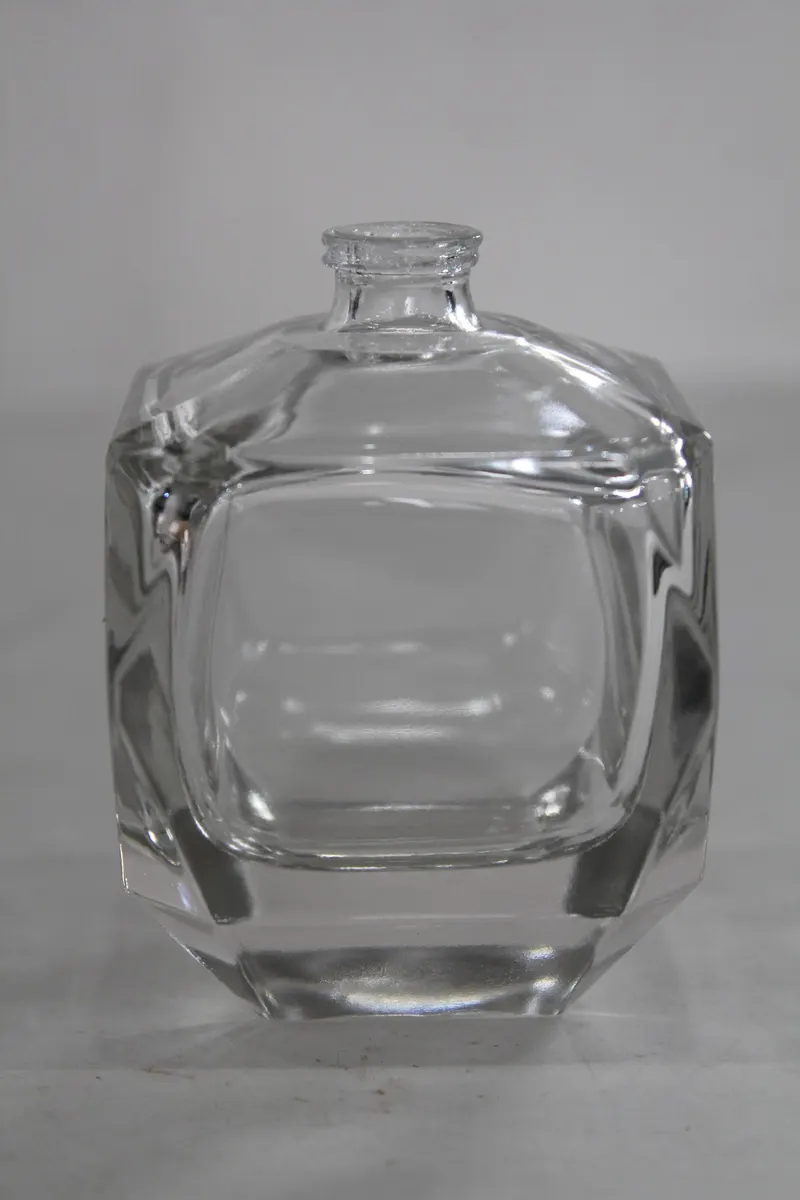
When a physical mock-up is justified
An object costs more and arrives later than an image, so it needs a decision to pay for it. Three situations do that reliably.
- The verdict is reached in the hand. When weight, grip, cap feel and surface finish are part of the offer, only an object is an honest test. Fragrances, high-end spirits and gift or travel retail packs are the typical examples.
- The audience is external. A retail partner, distributor or client cannot be briefed as thoroughly as your own team. An object answers the questions a render merely raises. If the meeting is meant to end in agreement instead of a comparison of options, the object often works out cheaper over the whole project despite its higher unit cost.
- The pack carries substantial or regulated text. Real artwork at real size on a real curve is the only dependable proof that mandatory block, brand and decoration can share the surface. A white bottle and a printed label cost little next to finding the clash after tooling.
In other cases a physical piece tends to repeat what the render already decided, adding expense and delay but no new decision. If you are unsure, make a single object for the direction that won the render comparison instead of one for every option that was on the table.
Which representation fits each project stage
Mock-up work is one link in a chain that runs from concept to first sample. Its value depends on what sits either side of it.
- Concept. A rough shape, a capacity target, a closure family and a loose label direction. Nothing is fixed and every change is cheap, so this is where a digital image is most efficient: it can be reissued quickly and shown to several people at once.
- Internal alignment. Brand, marketing and packaging owners must agree before money goes into tooling or a physical sample. A render is normally enough if it is shown at the correct scale and from the correct angles. The point is early agreement, not a beautiful object.
- External communication. Presenting to a retailer, distributor, licensing partner or end client changes the requirement, because touch is part of what is being sold. This is where a physical piece is often warranted.
- Layout verification. Final artwork, mandatory text and label geometry go onto the true curve at true size. Small errors surface here, and a physical piece is worthwhile whenever the pack has a lot of text or a regulated panel.
- Real sample. Made by the intended process, it is the first object able to answer mechanical and manufacturing questions. Everything earlier is representation.
Two neighbouring decisions are often confused with mock-up work and are handled separately. What a production trial is meant to prove, and how it is set up and inspected, is explained in our guide to placing and evaluating a glass bottle trial order. How a new mould is charged and what drives the tooling bill is covered under glass bottle mould cost. Tooling is normally committed once the direction is fixed, so a mock-up that is still altering the outline is a reason to hold the mould order, not to start it.
Why the real sample will differ from the mock-up
Every mock-up departs from the eventual sample. Knowing in advance where it will depart lets you use the stage honestly.
- Material. Glass is transparent, heavy and cold, with a surface formed in a mould instead of being printed or extruded. Even a geometrically exact model in another material changes perception, since light through the wall, the crispness of a mould seam and the weight in the hand all follow from material and process.
- Process. A 3D print has its own surface texture, seam convention and dimensional behaviour. A stock bottle used as a stand-in differs in wall thickness, shoulder radius and frequently in finish, which explains why a label that sits well on the stand-in may not on the final bottle.
- Geometry at the finish. A rendered or printed model may not include the true neck finish at all, so no closure can be tried on it. The finish and closure form the interface the whole pack relies on; here the mock-up runs out of use and a real sample is required.
- Weight and fill. A model shows neither filled weight, nor the fill line against the shoulder, nor how the full pack balances. Where the visible fill level shapes the impression, only a filled real sample closes this gap.
Handling the gap is about expectations more than engineering. Agree beforehand which questions the mock-up may answer, write down the ones it may not, and pass those open items to sampling. Presented and described as a preview, a mock-up does its job. Presented as a sample, it sets expectations the real pack will later have to break.
Show the mock-up filled and with its closure
A mock-up is not a production pack, but two filling and closing details decide whether it gives a truthful impression.
First, the fill level. An empty or over-filled mock-up misrepresents the pack. Fill it to the intended level, or at minimum mark the intended line, so reviewers react to the real proportion and not to an accident.
Second, the closure. Fit the intended one, because it adds height and shifts the balance of the assembled pack. For a sprayer, pump or dropper, include the actuator at its true height; leaving it off is among the more frequent reasons an image and a finished pack look unalike.
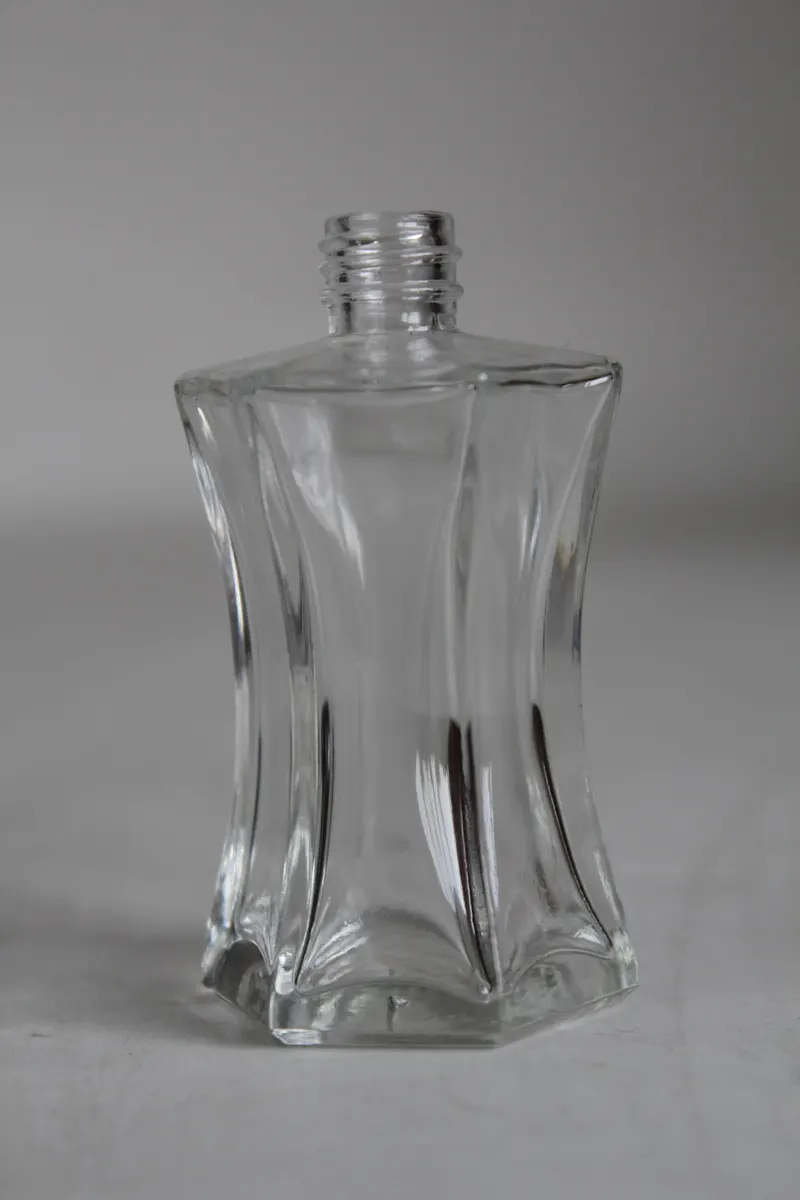
No sealing claim should be drawn from any of this. Sealing, acceptance of the closure by the finish, and vacuum or pressure retention belong to a real sample closed on the intended equipment.
Writing feedback as specification changes
This stage fails more often through the wrong output than the wrong method. Adjectives are not instructions. Feedback that does not translate into a dimension or an artwork edit means the round has to be run again.
| Type of comment | Example | What to record |
|---|---|---|
| Proportion | "Looks too squat" or "the neck is too tall for the body" | A change to the height-to-diameter ratio or the shoulder transition height on the drawing; a neck height change in millimetres against overall height |
| Layout | "The legal block crowds the logo" | A new panel width, text size or block position on the label die-line, plus the moulded feature the label edges align to |
| Decoration | "The print reads too thin" or "too sharp" | Print colour, order and coverage, the print area defined on the curve, and a reference piece named as the standard |
| Closure | "The cap looks too heavy" or "too small" | A closure height or diameter change, checked against the finish the bottle will really be made to wherever it touches the neck |
The alignment reference matters on a curved surface because it determines whether the layout stays consistent from piece to piece. The decoration note is what makes a later bulk decoration order predictable instead of a rerun of the same debate. And a closure change that alters the finish is not cosmetic: it belongs in the interface discussion, not the mock-up file.
Finish with a written list of everything the mock-up could not answer and put it into the sampling brief. We use that list as the bridge between the two stages; without it, sampling reopens points that the mock-up round had only closed by assumption.
Budgeting and sequencing the mock-up stage
Mock-ups are regularly under-budgeted because they are treated as a side effect of design. Give the stage a defined deliverable and both cost and schedule become easier to control.
The budget has two halves. One is the representation, which runs from close to nothing for a render revised in-house up to the higher cost of a decorated glass piece with bespoke print. The other, and the one most often overlooked, is reviewer time. One person looking at a mock-up briefly gives you a direction; a committee circulating the same object gives you a meeting. Budget the review along with the object.
The schedule follows the same order. A render is the quickest to produce and revise, a printed label on a stock bottle comes next, a 3D print needs finishing time on top of printing, and a decorated glass sample is the slowest because glass pieces and printing both have to be arranged. Actual cost and timing are quoted per project and depend on the method, the decoration and the supplier.
For most projects the efficient pattern is:
- Run concept and internal alignment on renders, so the cheap, fast format absorbs the early churn.
- Accept that renders leave material and weight questions open.
- Once the direction has stabilised, build one physical object for the surviving option.
- Use that object for the external conversation and the layout verification together, not as separate exercises.
The most common avoidable expense at this point is commissioning several physical objects for options the render comparison had already narrowed down.
What to send for a mock-up recommendation
Three items let us recommend a method instead of describing all of them: the stage your project has reached, what the mock-up is for, and the budget band you are working within. If the capacity target, closure family and destination market are already fixed, add them.
From that we can say which representation suits the decision in front of you, what it will and will not show, how its feedback should be worded to become a drawing or artwork change, and which open questions should go forward to a trial order. A direction that is still moving usually points to a render. Regulated text or an outside audience usually points to a physical object before sampling begins.
Questions buyers ask about bottle mock-up samples
Can a design be approved from a 3D bottle mockup alone?
The shape can. A 3D model is the standard first step for signing off proportion, silhouette and how glass and closure relate. Material feel, weight and clarity cannot be approved from it, since the model is not glass and its surface is formed differently. Treat the design as settled only after a real sample has confirmed those.
Why did our real sample not look like the mock-up?
The two were made from different materials by different processes. Moulded glass is transparent, heavy and cold, so the light through the wall, the mould seam and the weight in the hand all change. If a stock bottle stood in for the final shape, its wall thickness and shoulder radius were different as well, which also changes how a label behaves.
Will a mock-up tell us whether the cap fits?
Only when it carries the true neck finish, and printed or modelled mock-ups generally do not. Fit is a question about the interface between finish and closure, answered on real glass with the intended closure. Anything depending on the thread, the sealing band or the bore needs a real sample.
Does the choice of mock-up change with the type of product?
Yes. For fragrance and high-end spirits the evidence worth paying for is tactile: weight, shoulder shape and cap mass. For beverage and pharmaceutical bottles it is legibility, the visible fill level and room for regulatory text. Sales channel matters too, since a shelf pack, an online thumbnail and a gift pack held in the hand are each inspected differently.
How much does a mock-up cost and how long does it take?
Both are quoted per project. A render revised in-house sits at the low end and a decorated glass piece with bespoke print at the high end, with labelled stock bottles and 3D prints between them. The drivers are the method, the decoration involved, the number of options you build physically and how many people review each round.