One of our guides on glass drink bottles; start there for the overview.
A glass soda bottle bought in bulk has to be specified as a pressure vessel first and a pack second. For a 4.0-volume soda, ask for bottles tested to a minimum of 12 bar (about 175 psi) under ASTM C147, on a 26mm crown finish. Get the carbonation level wrong and the result is bottles bursting on the filler, leakers in storage and, at worst, a recall.
Carbonation level sets the pressure rating
Carbonation is measured in volumes of CO₂: how many liters of gas are dissolved in one liter of drink at standard conditions. The usual bands are:
- sparkling water, 3.0–3.5 volumes
- craft soda, 3.5–4.0 volumes
- highly carbonated mixers and kombucha, up to 4.5 volumes
That gas pushes on the glass for the whole shelf life, and harder as the drink warms. In a hot shipping container or a summer warehouse at 38°C, a 4.0-volume soda builds roughly 6.5–7.5 bar inside the bottle.
ASTM C147 is the test standard for internal pressure resistance of glass containers. Industry practice under it is that routine samples must hold no less than double the highest pressure the bottle will see in service, plus a margin for the thermal shock of hot filling or pasteurization. That is where the 12 bar figure for a 4.0-volume soda comes from.
Internal pressure concentrates stress in the heel and the shoulder. When we brief a plant on a carbonated body, we ask for heavier glass distribution in those two zones and for pressure-resistance sampling on every production shift.
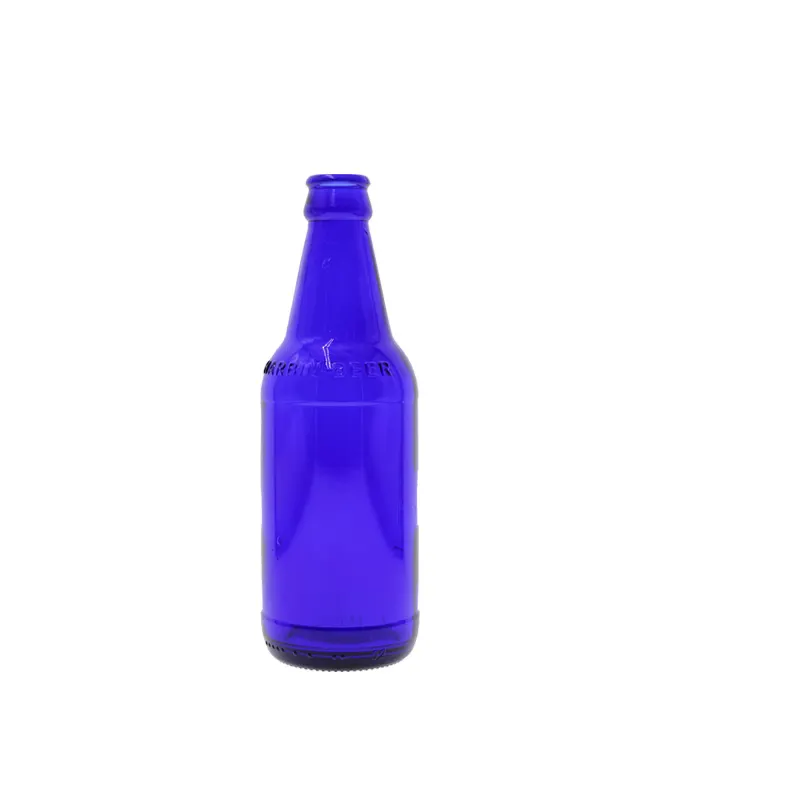
Typical bulk soda bottle specifications
| Capacity | System | Weight | Pressure test | Finish |
|---|---|---|---|---|
| 250 ml | One-way | ~210 g | ≥12 bar | 26 mm crown |
| 330 ml | One-way | ~225 g | ≥12 bar | 26 mm crown |
| 330 ml | Returnable | ~300 g | ≥14 bar | 26 mm crown |
| 500 ml | Returnable | ~420 g | ≥14 bar | 26 mm crown |
| 750 ml | One-way | ~430 g | ≥12 bar | 26 mm crown / swing |
One-way or returnable glass
A one-way bottle makes a single trip and nobody collects the empty, which is why it rules export and wide distribution. It is also the lighter option: a 330ml crown-finish soda bottle weighs 200–230g. The returnable version of that size runs 280–320g, because its thicker walls are built to last 20–40 wash-and-refill cycles.
Returnables only pay back inside a closed loop: a defined delivery radius, typically under 150 km, plus a deposit scheme and crate logistics. Those conditions exist in Latin America, in parts of Europe and Africa, and in local craft delivery. For export or national distribution, choose one-way.
A returnable program needs three things written into the specification on day one:
- the heavier glass weight
- scuff-resistant coatings, meaning a hot-end tin oxide treatment and a cold-end polyethylene treatment, so the bottle still looks good after repeated washing
- one standard bottle for every SKU, so the wash line never has to change over
We source both systems and can model the trip count at which a returnable loop breaks even for your radius.
Crown caps, ring-pulls and swing-tops
The 26mm crown finish is still the worldwide standard for carbonated soft drinks. A crown cork crimps onto the glass at 21 locking points, keeps pressure in through years of shelf life and runs on the fastest cappers available. Specified properly, the finish copes with up to about 4.5 volumes of CO₂; beyond that you are in Champagne-style territory, which calls for an entirely different bottle.
| Closure | How it opens | Where it fits |
|---|---|---|
| Pry-off crown | Needs a bottle opener | Craft brands that sell the nostalgia and the ritual of glass |
| Ring-pull (rip-cap) crown | Built-in pull ring, no tool | Convenience channels, festivals, export markets where an opener may not be to hand |
| Swing-top | Reusable wire bail | Limited editions with a European look |
Pry-off and ring-pull crowns share one finish, so a brand can move between them and keep the bottle. Ring-pulls are the dearer cap of the two. Swing-tops hold carbonation well, but they cost considerably more per closure and limit capping speed, so we suggest crowns for volume SKUs and swing-tops for special runs only.
Brands that also need flat formats for mixers can look at flask bottles supplied in bulk, and still drinks are covered under wholesale glass beverage bottles.
Five facts to settle before asking for a quote
- Carbonation level in CO₂ volumes. Your beverage developer has this number. Leaving it out is the most frequent and the most costly error in a first soda bottle order.
- Fill temperature. Cold fill and tunnel pasteurization lead to different thermal shock requirements.
- Cap type and cap supplier.
- Target line speed. It decides whether precision bore tolerance is needed.
- Monthly volume in bottles.
With these in hand, a plant can propose a pressure-rated body and confirm that the crown suits your capper. Add a bottle drawing if you have one and send the brief through the quote form.
Frequently asked questions
What pressure rating should I ask for?
Double your maximum service pressure at the least. A 3.5–4.0 volume soda that could sit in a 38°C warehouse is normally specified at 12 bar minimum, around 175 psi, sampled to ASTM C147.
What is the minimum order for bulk soda bottles?
It is quoted project by project. The figure depends on the mould and on the production line that mould runs on.
Will the bottle run on the capping line I already have?
Yes, as long as the capper is set up for standard 26mm crowns.