A glass bottle survives hot filling when it is specified from the process backwards: fill temperature, hold time, headspace target and cooling method first, then the thermal shock requirement, wall distribution, annealing statement and closure system that follow from them. What limits the glass is the temperature difference across its wall, not the fill temperature itself, so a bottle taken from room temperature to 90 °C liquid sees roughly 70 °C of differential, while the same bottle pre-warmed to 55 °C sees closer to 35 °C. And because glass cannot flex inward as the contents cool, the vacuum lands almost entirely on the closure, the liner and the neck finish.
The process data that defines the bottle
Hot filling is a preservation process, not a type of container. Product goes into the pack hot, the pack is closed at once, and the heat already inside sterilises the internal surfaces and keeps microbial growth down over the product's life. For acidic products the fill temperature is usually set somewhere between about 82 °C and 95 °C and held for a defined number of seconds or minutes before cooling. Those values are product-specific and belong to the food technologist who owns the process, never to whoever supplies the bottle.
Choosing a bottle first and hoping it tolerates the line is where most hot fill rejections start. The order that works is the reverse, and it puts three separate loads on the pack:
- A transient thermal load during filling and again during cooling, while the inner and outer faces of the glass sit at different temperatures.
- A mechanical load on warm glass, from guide rails, star wheels, capping heads and accumulation pressure, at the moment the surface is least well conditioned to take it.
- A vacuum load after cooling, once the liquid and the headspace vapour contract and internal pressure drops below atmospheric, drawing closure and glass together.
Buyers tend to report these as one fault, yet each has its own remedy and its own test. Cracking at the filler points to a thermal or mechanical cause. Weeping that shows up at month nine in a warehouse points to the closure and the vacuum. A break during unpacking, with nothing touching the bottle, points to residual stress or a critical flaw.
Thermal shock depends on the differential across the wall
Thermal shock resistance is a container's ability to take a rapid temperature change without cracking. Four things govern it: how the glass expands with heat, how thick the wall is, the geometry of the transition zones, and the state of the surface. Glass is a slow conductor, so hot liquid makes the inner face expand while the outer face has not yet warmed. The outer face is put into tension, and tension is the direction in which glass is weakest.
That is why a warming stage exists on a hot fill line. It is also why a bottler who puts a hotter product through an existing line without adding warming capacity can suddenly see cracks in a bottle that ran cleanly for years.
Design features that raise or lower the risk
- Thin, even walls equalise temperature quickly and generally tolerate more than heavy, uneven ones.
- Sharp internal corners, abrupt shoulder transitions and heavy bases concentrate stress and give a crack somewhere to begin.
- Chips, scratches and score marks on the neck or shoulder weaken a bottle much more than buyers usually assume, since tension gathers at any surface flaw.
The working rules follow directly: smooth design, a wall as uniform as the process permits, a clean and undamaged outer surface, and the smallest thermal gradient the process permits.
Asking for a bath test instead of an assurance
No drawing shows thermal shock tolerance, so it has to be tested. The conventional method moves bottles from a water bath at one temperature into a second bath at a defined lower temperature, widening the gap in steps until the batch starts to fail. The differential where failures begin, reduced by a safety margin judged against the worst case on the real line, is the figure to write into the specification.
When we review a plant's data for a hot fill project we look for four items: the test method, the bath differentials used, the sample size and the failure rate. A reply along the lines of “our glass is high quality” counts as no reply.
Wall distribution and annealing
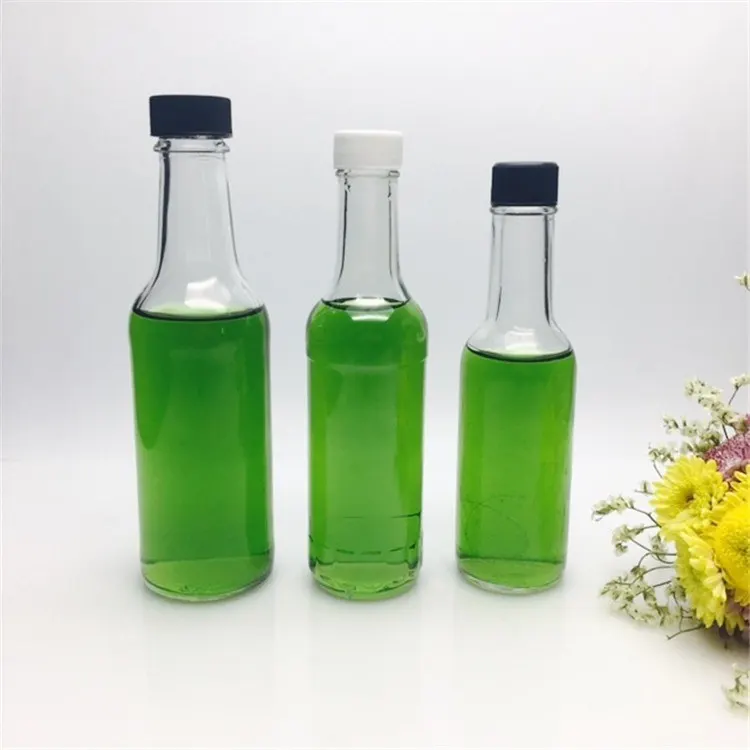
A glass container does not have one wall thickness. The figure changes with height, around the circumference and between body, shoulder and base, so two bottles of identical weight can be distributed very differently. For hot fill the distribution counts for more than the nominal value. A body that is thin on one side and thick on the other heats unevenly, and that is precisely the condition behind a shoulder crack or a body break after a few heat cycles.
Annealing is the other half. After forming, each container travels through an annealing lehr, an oven that cools it through the strain point slowly enough for internal stress to relax. A wrong lehr curve, bottles entering too cold, or bottles pulled through too quickly all leave residual stress locked in the wall. Nothing shows on the packing line: the bottle looks and measures normal, often passes a basic quality check, and then fails weeks later when a thermal load or a light knock is added to stress that was already present.
Inspection methods to name in the specification
These checks are routine in glass plants. Asking for them by name shows quickly whether a given plant really runs them.
| Method | What it shows | What to pin down |
|---|---|---|
| Wall thickness measurement | Distribution across body, shoulder and base, taken with a contact or ultrasonic gauge | The set of measuring points, the sample size and the acceptance limits; one reading at mid-body says next to nothing |
| Polarised light inspection | Residual stress, seen as coloured bands when the bottle sits between crossed polarisers | Use it as the fastest screen for a lehr problem; the reading is visual and semi-quantitative |
| Capability and tolerance data | The measured spread of capacity, height, diameter and perpendicularity | A nominal and a tolerance band for each, backed by measured values instead of a ticked pass box |
| Sampling rules | How a batch is accepted or rejected | Sample size, defect classification and allowable quality limit, agreed beforehand so a shipment dispute has a written basis |
Two tolerance points that cause disputes
Glass is hot-formed, so its tolerance band is a genuine band and not a rounding of the nominal. Specify fill height to the nearest tenth of a millimetre while ignoring the bottle's capacity tolerance, and net weight will wander from pallet to pallet.
Tolerances also stack. Fill height, cap height, label position and case outer dimensions each carry their own band, and the packaging line has to absorb the total.
Neck finish, liner and torque
Once a mould is cut, the neck finish is the single feature of a bottle that cannot be altered. It fixes the thread family, the neck diameter, the number of thread turns, and where the sealing land sits and how wide it is. Every closure is built to it, and hot filling stresses that interface more than cold filling does, for three reasons.
- The finish is hot and frequently wet. Condensation or a splash of product on the sealing land ends up trapped between liner and glass, forming a leak path that only reveals itself after the pack cools.
- The liner is softened by heat. It compresses differently, can reach target compression while hot and then take a permanent set on cooling. A liner that has set does not regain its thickness, so part of its sealing pressure is lost.
- The cooling vacuum draws the closure down, then lets it relax. Without enough elastic recovery in the liner, the pack ends up closed but not sealed.
The answer is to specify a closure system, not a part number. State the finish, the closure type, and the liner compound by family and grade; the words “food grade” are not a material name. Give an application torque band and a removal torque band, and require torque readings both on the hot pack and again at room temperature. The gap between those two readings is among the best single predictors of whether a hot fill pack will last a long shelf life, and taking it costs nothing.
Vacuum after cooling and headspace
Hot liquid takes up more volume than it will once cool, and the headspace air at filling is expanded and saturated with vapour. After closing and cooling, the liquid shrinks, the vapour condenses and headspace pressure drops below atmospheric. A plastic bottle absorbs some of this by paneling, meaning its walls deform inward. Glass will not, so the pack only reaches its final sealed state once the vacuum load has settled onto the closure, liner and finish.
Three variables decide the outcome:
- Headspace. More headspace holds more condensable vapour and pulls a deeper vacuum; too little lets expanding product push into the closure. Fill height and headspace are therefore a matched pair, specified together with tolerances and not left to the filler operator.
- Liner. A liner with a good compression range and elastic recovery follows the small movement of the closure onto the finish and keeps its sealing pressure. One that is too thin, too hard or already compressed past its useful range cannot, and the result is usually a slow leak or a deformed sealing surface, not an obvious defect.
- Cooling rate. Abrupt cooling builds the vacuum fast and makes the closure take up the load fast. A slow, controlled profile gives the liner time to follow.
Verification is simple to write down. Compare removal torque at room temperature with application torque. Measure internal headspace pressure, or at the very least log headspace vacuum on retained samples, and repeat through a shelf-life study instead of on day one alone. Then put the cooled pack through a transit simulation: a pack that keeps its vacuum on the bench yet loses torque after a container journey has a liner or headspace problem that no warehouse inspection of the bottle will find.
Requirements by fill temperature band
Use this table to plan the conversation with a plant. It does not replace the process validation the food technologist owns, and the bands are indicative: the right one for a product depends on its pH, water activity, particle content and claimed shelf life.
| Fill condition | Thermal shock demand | Wall and annealing | Vacuum risk once cool | Closure approach | Confirm with the plant |
|---|---|---|---|---|---|
| Warm fill, roughly 55 to 70 °C | Moderate if bottles are not pre-warmed; a short hold keeps the peak gradient brief | A standard distribution often suffices, though uneven shoulder walls still concentrate stress | Low to moderate, as the fill is not far above ambient | Standard screw closure, liner rated for the product, torque band read hot and cold | Is the lehr curve recorded per shift, and what differential was actually measured on the buyer's line |
| Standard hot fill, roughly 70 to 85 °C | Meaningful; pre-warming or a controlled warm rinse ahead of the filler is normally specified | An even body wall becomes important, and annealing quality must be demonstrated, not assumed | Moderate; headspace volume and fill height tolerance now act on the vacuum directly | Liner with elastic recovery at temperature, with a stated application torque band | Thermal shock differential, sample size and observed failure rate; polarised light stress check |
| High temperature hot fill, roughly 85 to 95 °C | High; without pre-warming, surface tension approaches the practical limit of standard soda-lime containers | Wall distribution and base design are critical, and heavy uneven bases are a known weak point | High; closure and liner are pulled hard for the entire cool-down | Hot fill rated closure system, liner chemistry chosen for the product, removal torque verified after cooling | Warming tunnel set point, hold time, cooling profile and the maximum differential the container is cleared for |
| Near boiling, above 95 °C | Very high; the container must be designed and tested for this process specifically | Annealing and wall uniformity are non-negotiable, and a standard stock design does not transfer | Very high; vacuum and thermal load hit the same interface together | Purpose-selected system, validated on the line and not on a bench, plus transit simulation after cooling | Is the container qualified for this band at all, and on what documented validation basis |
| Cold fill plus tunnel pasteurisation (for comparison) | Low at the filler; the thermal load comes later, in the tunnel, on a closed pack | Uniformity still matters for the tunnel stage, but the filler stops being the risk point | Low at fill, developing in the tunnel as the pack heats and cools | Must hold through an external heat cycle instead of a hot fill | Should the bottle be tested against the pasteuriser profile and not the filler |
Line conditions to state in the enquiry
The process includes the machinery. Speed, accumulation pressure and the geometry of handling parts alter the mechanical load on a bottle far more than most specifications admit, and here those loads arrive on warm glass.
- Line speed. Faster running shortens contact at each transfer but raises impact velocity between bottles and against rails. Ask what maximum speed the container was tested at, not what the line happens to run today.
- Accumulation pressure. A full table presses bottles together with a force that climbs towards the outlet, acting on every body and shoulder in the queue at the worst possible moment. Back pressure at the accumulation inlet is a frequent source of shoulder damage that then gets blamed on the glass.
- Guide rails and star wheels. Set contact points to the real diameter, including tolerance band and ovality, and re-set change parts every time. Rails set to nominal will pinch the largest bottles in a batch.
- Capper head and torque control. The capper must hold the application torque band on a hot, possibly wet finish, verified on the line and not just in a laboratory.
- Rinsing and warming. The temperature and dwell time of a warm rinse or warming tunnel belong in the specification, because they set the differential the bottle really experiences.
- Conveyor lubrication and transfer plates. Dead plates and worn transfer fingers deliver the small knocks that damage necks, and a damaged neck is where a hot fill crack begins.
Enquiries routinely leave out two of these. One is speed: qualifying a bottle at half production speed proves nothing about the speed it will actually run at. The other is the maximum differential as opposed to the nominal fill temperature. A filler starting a shift cold, or restarting after a stop with product sitting in the bowl, can produce a differential well above the steady-state figure the bottle was specified to.
Common failures and where to look first
Most complaints come down to a handful of mechanisms. Naming the mechanism early stops a buyer from replacing a bottle that was never at fault.
| What you see | Usual cause | First checks |
|---|---|---|
| Vertical crack running down from the neck or shoulder | Thermal shock, the classic signature | Actual differential at the filler, warming stage set point, and whether bottles waited in a cold accumulation area before filling |
| Chip or bruise on the sealing land with a slow leak | Mechanical handling, not heat | Rails, transfer points and capper head; see whether the leak rate follows one machine instead of one bottle batch |
| Closures backing off in storage | Liner and torque almost every time, sometimes made worse by an oversized headspace | Liner family against the product, torque band hot and cold, headspace on retained samples |
| Warehouse breakage with no visible cause | Residual stress or a critical surface flaw | Annealing record, plus polarised light inspection of retained samples and not of a fresh batch |
| Labels blistering or lifting | Condensation under the label, or an adhesive chosen for a cold surface | Not a glass defect; handle it apart from the bottle discussion |
| Discolouration or metallic taint in the product | An unsuitable metal in the wetted path, such as a decorative collar or an unqualified pourer | The wetted components; glass chemistry is not the issue |
The tests that tell these apart are standard as well: a defined thermal shock bath test, capping torque hot and cold, headspace vacuum tracked through a shelf-life study, and transit simulation on the finished pack. With a defined sampling plan for incoming glass on top, a batch problem is caught at goods-in and not at the filler, and a dispute has far fewer variables.
Hot fill against cold fill with pasteurisation and aseptic filling
There are three routes to a shelf-stable or long-life pack: hot fill, cold fill followed by in-pack pasteurisation, and aseptic filling. Each moves the stress to a different place, so compare them on five points and not on headline energy cost alone.
- Heat exposure of the product. Hot fill holds everything above a set temperature for a set time. That is simple and effective, but delicate fruit volatiles, some vitamins and every other heat-sensitive ingredient get the same treatment. Cold fill with later pasteurisation also heats the product, on a profile that can sometimes be shaped to spare particular compounds. Aseptic filling largely avoids heat and shifts the difficulty to sterility assurance along the whole line.
- Line modification. Converting a cold fill line usually means a product heating and holding system, a bottle warming stage, a filler and a capper that tolerate the temperature, a controlled cooling section and revised conveyor and accumulation settings. It is a substantial project, and the bottle specification changes with it.
- Closure. Hot fill works the closure system harder. A hot fill rated liner does cost more, though little next to a recall or a pallet of leaking packs.
- Rejects. Hot fill losses concentrate at the filler, where thermal cracks and capping faults show immediately. Cold fill plus pasteurisation can hide a weak closure until after the tunnel, when the product is already packed.
- Energy and water. Here the comparison flips. Hot fill heats the product and then removes that heat; a tunnel heats a whole pallet of product along with a large volume of water. Which is cheaper turns on the product, line speed, local energy cost and whether waste heat is recovered. No supplier can settle those figures, and a comparison without them is marketing, not engineering.
For acidic products with modest thermal sensitivity, hot fill is the simplest and most robust route. It is the least attractive one where flavour relies on compounds that break down at fill temperature. That choice is a product development question and comes before the bottle specification.
What to send us, and what belongs on other pages
Three items do most of the work in closing a specification: fill temperature with hold time; product pH with any note on particles or viscosity; and line speed with the accumulation and warming arrangements. Add the headspace target if it is fixed, the closure type you plan to use, and the destination market, so the food-contact rules there can be checked against the wetted materials.
With those we can assess bottle and closure together: the thermal shock requirement, wall and annealing expectations, the closure system with its liner family, and the tests to write in before a first order. If the fill temperature is still on trial, tell us and describe the intended product. The container requirement follows the process, and it is much cheaper to correct before a mould exists or a bulk order is released.
Shape, capacity, colour and commercial terms are separate conversations. For how the range is organised and how empty glass is bought in volume, including pallet and container loading, closures supplied alongside bottles and mixed orders, start from the glass bottle collections. Still and sparkling water formats, among them the heavier containers used for returnable water, are on the glass water bottles page. Small dairy formats, where fill temperature and closure follow the product, are on small glass milk bottles. The process discussion needs temperatures, pH and line data; the purchasing one needs volumes, packing format and destination.
Frequently asked questions about hot fill glass bottles
What fill temperature can a standard glass bottle take?
No single figure applies. The limit is set by the temperature difference across the wall and how long it lasts, so a pre-warmed, gently filled bottle tolerates a hotter fill than the same bottle filled from cold. State the fill temperature, hold time and cooling method, ask what differential the container is qualified for, and confirm it with a bath test above your line's worst case.
Will a stock bottle do, or is special glass needed?
Many stock containers cope comfortably with warm and standard hot fill, provided the wall is even and annealing is correct. They stop being suitable when the design has a heavy uneven base, a sharp shoulder transition or a thin patch on one side, and when the fill moves into the high band. A “hot fill bottle” label proves little; what counts is whether that mould, from that plant, has been tested against your differential.
Why do caps leak after cooling when the bottles passed a sealing test?
A bench sealing test runs at constant temperature, and a real pack does not. If the liner takes a set while hot, it no longer pushes back hard enough when cold. The usual combination is an unsuitable liner, torque outside the agreed band and too much headspace.
How much headspace should a hot filled glass bottle have?
Enough to take up the product's thermal expansion and leave a vapour space that can condense, yet not so much that the vacuum exceeds what the closure system can hold. The figure follows from fill temperature, product density, fill height tolerance and the closure. Check net weight or fill level across a run, not at one point.
Can a hot fill line be converted to cold fill with pasteurisation?
Yes, and the direction matters for the bottle. The demand at the filler usually eases, but a closed pack now goes through an external heat-and-cool cycle that closure and headspace must survive. The container specification changes; it does not disappear.
What should a hot fill bottle specification contain?
As a minimum: capacity and fill height, each with tolerance; headspace target; neck finish written in full; wall thickness distribution limits; an annealing or residual stress requirement with its inspection method; a thermal shock differential with sample size and acceptance rule; breakage limits classified by defect type; an incoming inspection sampling plan; and the closure specification with application and removal torque bands read hot and cold. If something cannot be measured, do not write it as a requirement.
Does hot filling change which liner material to choose?
It does. The liner must take the fill temperature without permanent deformation, recover during cooling, and resist the product for the full shelf life. These are specified separately: food-contact compliance of the material first, then thermal and mechanical performance under the hot fill condition, proven in the actual process.
Is a pack safe if the closure looks fine straight after filling?
A visual check at the filler catches gross capping faults and nothing more. Torque loss and slow seepage, the failures that matter most, appear weeks or months afterwards. Rely on removal torque after cooling, headspace vacuum on retained samples through a shelf-life study, and a transit simulation on the cooled pack before the first bulk shipment is released.