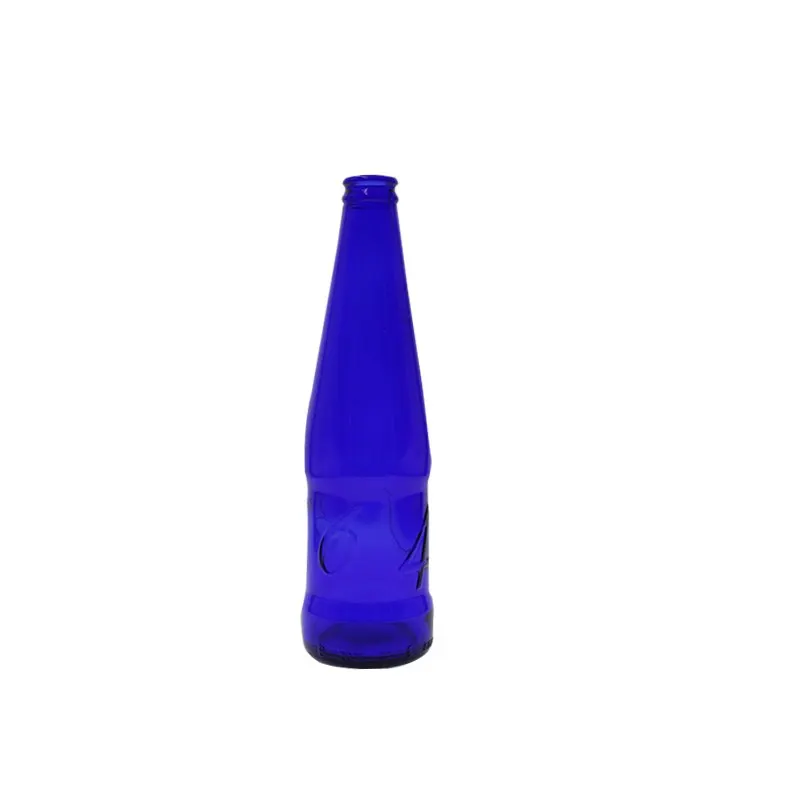
This page is written for the brand owner, product developer or co-packer who is putting a fermented milk drink into glass and has discovered that a bottle which works for a still drink does not automatically work for one that keeps producing gas after it is capped. It serves people specifying a kefir bottle, sourcing a kefir glass bottle on a wholesale programme, or qualifying any fermented drink bottle in which live cultures, residual sugar and cold storage all act on the container at the same time. The page defines the dimensions that matter once a pack has to carry pressure, explains how those dimensions are toleranced and inspected, sets out how the closure interface has to be matched to the pressure the pack will actually see, gives a fermentation-status matrix that maps the type of ferment to the bottle and closure requirement, lists the conditions the filling line has to satisfy before a live product runs, and describes the failure modes that appear when one of those conditions is missed. Two neighbouring pages cover the same refrigerated shelf and the boundary between them is deliberate. Unfermented dairy packs, meaning the pasteurised and UHT routes and the closure families that go with them, are handled by small milk bottles. Capacity tiers for dairy packs by channel are handled by milk bottle sizes. Neither of those pages covers gas production inside a sealed pack, and this page does not repeat their content. What is in scope here is the fermented case: packs that are still biologically active when they are filled, or that build gas inside the closed container, and the pressure, sealing and cold-chain consequences that follow from it.
What a Live Ferment Changes About Bottle Selection
A still drink places one demand on its container: it must hold liquid, survive handling and present the product honestly. A fermented drink adds two more. The liquid is chemically active, so the container has to be compatible with an acidic, biologically live product across a storage life that may run for several weeks in a refrigerator. More importantly, the sealed pack can generate its own internal pressure after filling. Carbon dioxide produced by residual fermentation has nowhere to escape once the closure is applied, and from that moment every component of the pack has to contain it.
The scale of the pressure involved is routine in brewing terms but unfamiliar to many dairy and drinks buyers. A lightly carbonated kefir or a second-fermented water kefir can sit in a range comparable to a wheat beer, which is one reason a bottle sold for kefir is often a bottle that was engineered for beer in the first place. A still, un-carbonated kefir that has been stabilised and held cold behaves much more like a milk pack, and can be treated as one. Between those two positions there is a wide middle, and where a given product sits in that middle is the single most useful input a buyer can give a factory, because it decides the glass weight, the base form, the finish and the closure together. It cannot be inferred from the product name, because two brands selling what both call kefir can be at opposite ends of the range.
Headspace is where the pressure behaviour and the package geometry meet. A fermenting product needs gas space above the fill level, because pressure is carried by the gas and because a bottle filled to the rim has no room for the small volume change that a temperature swing produces. A still, cold-filled product wants a small headspace, because oxygen is the enemy and because a large gas space simply reduces usable capacity. Two drinks with identical recipes and different fill heights therefore need different bottles, and the fill height belongs in the brief alongside the capacity. Buyers who are still comparing formats rather than specifying one will find the general range of containers described on the glass bottles page, which is the hub for this cluster.
A third change is that the container is often reused rather than discarded. Returnable and deposit systems are normal for fermented dairy drinks in several European markets, which means the bottle has to survive a commercial washing cycle, an alkali wash and a thermal cycle on every trip, not just once. That requirement adds a dimension to bottle selection that single-trip packs never see, and it is discussed further below alongside the cold chain.
The Dimensions That Decide Whether a Kefir Bottle Holds Pressure
For a still pack the controlled dimensions are mostly about fit and appearance. For a pack that carries internal pressure the same dimensions become structural, and a small number of them decide whether the container survives. A buyer who understands what each of them does can read a drawing rather than accept it.
Body diameter and wall thickness distribution. Pressure in a cylindrical vessel resolves into hoop stress in the wall, which rises with diameter and falls with wall thickness. A wider body therefore needs more glass for the same pressure, which raises weight and cost. Wall thickness itself is not uniform in a formed container: it is thickest at the lower body and thinnest at the shoulder and at the mould seam, and those thin regions are where pressure failures begin. The controlled quantity is therefore not a single thickness but a distribution, and the drawing should state which regions are controlled and what the minimum is.
Shoulder radius and overall profile. A sharp transition between body and shoulder concentrates stress. A generous radius spreads it. This is the reason pressure-rated bottles tend to look softer and more rounded than a trimmed cosmetic container, and it is a functional choice rather than a stylistic one. Where a brand wants a squared or unusually shouldered shape for shelf differentiation, the shape has to be agreed with the glass weight, because a hard edge in a thin wall is the classic site of a hairline crack.
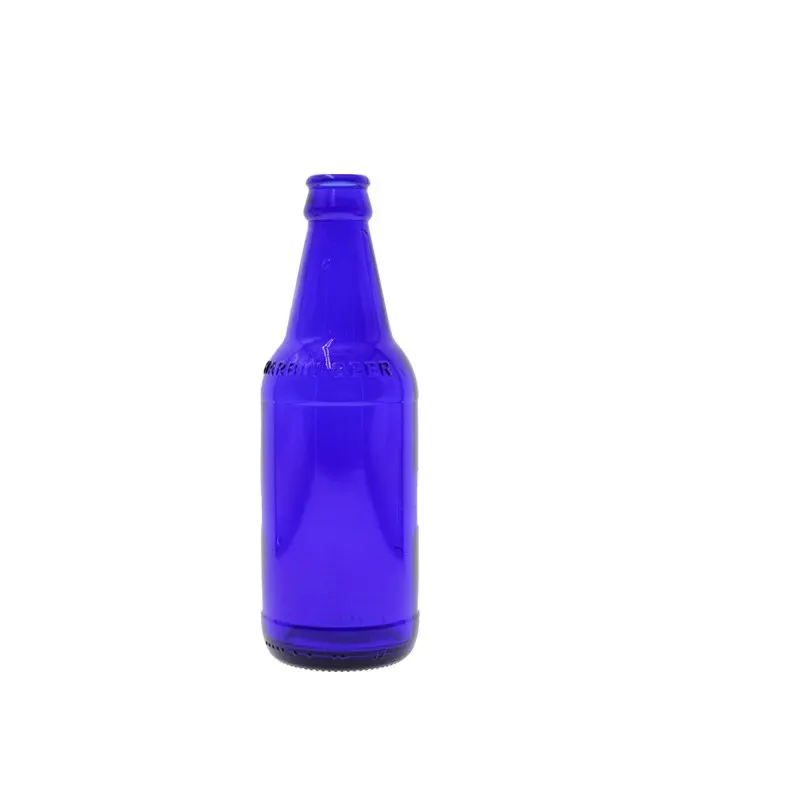
Base form. A pressurised container needs a base that resists deformation. Flat bases are adequate for still products and light pressure. Carbonated packs normally use a concave base, sometimes with a moulded punt, which resists the outward push on the bottom and gives the standing ring a defined contact area. The depth of that concavity, the diameter of the standing ring and the base thickness are all controlled dimensions, because a base that deforms under pressure rocks on the shelf and takes the label out of level.
Fill height and headspace. The fill height is the level the line targets, and headspace is what remains above it. Both should be written with a tolerance, because on a live product the gas space is part of the pressure design, not merely a filling convenience. A consistent fill height also keeps the declared net content defensible, since the interior volume above the fill point is small and predictable when the level is controlled and unpredictable when it is not.
Empty weight. Weight is the factory’s primary control variable, and on a pressure container it doubles as an indicator of wall distribution. It is normally stated as a nominal with a percentage band rather than as an absolute figure, and the band has to be inspected on a stated balance. A weight band that is too tight buys nothing and slows the line; one that is too wide allows bottles to be delivered that will pass at goods-in and fail in a chiller.
Finish bore and finish height. The finish is the interface with the closure, and on a pressurised pack it is also a structural feature, because the closure has to transmit the retaining load into the glass. Bore diameter, thread form, bead position and finish height all have tolerances, and they are covered in their own section below.
How These Dimensions Are Toleranced and Inspected
Glass forming produces a distribution of outcomes around a target, so the specification is the nominal and its tolerance band taken together. A dimension quoted without a band cannot be inspected, because the inspector has no basis for passing or rejecting, and a band quoted without a nominal has nothing to be measured against. Both halves of the pair have to travel together, and on a pressure container the band is narrower for the dimensions that carry load.
Inspection is by attribute and by variable, and a pressure pack uses both. Dimensional checks are made with go and no-go gauges on the finish, with callipers or a fixture on body diameter and height, and by weighing for the weight band. Pressure behaviour is checked by a pressure test on a sample of bottles, and the resistance of the glass to a sudden temperature change is checked by a thermal shock test, which matters directly for a product that is filled cold and then washed, chilled or moved through a temperature change. Residual stress left by forming is verified by a polarised light method against an agreed limit. The tests themselves are standard practice described in materials available from glass packaging bodies and in the receiving inspection clauses of a purchase agreement; what varies between programmes is the frequency, the sample size and the acceptance number.
The sampling framework is therefore part of the specification rather than an administrative detail. A batch that is judged unit by unit will always be rejected, because a distribution of outcomes guarantees that some units sit outside a band. What actually governs acceptance is how a lot is defined, how many units are drawn from it, and what number of non-conforming units is tolerated. Frameworks such as AQL are the common basis for writing that clause, and a buyer who writes it before production starts avoids arguing about the meaning of a single failed bottle after arrival.
Two further points belong in the same clause. The first is the inspection point: a dimension measured at the widest point of a panel is not the same quantity as one measured at the shoulder, so the drawing has to name where the measurement is taken. The second is the reference sample. Keeping a retained sample from the approved first delivery settles questions about appearance, colour and thread feel that no document can settle later, and on a returnable programme it also records what a washed bottle is expected to look like after several trips.
Matching a Pressure-Rated Closure to the Kefir Bottle Finish
The closure is where the pressure is actually held, and the most common mistake in fermented drink packaging is to keep the closure family from a still pack while raising the carbonation of the product. The finish and the closure have to be specified as one decision.
Crown finish and crown cap. The crown is the reference pressure closure. It is crimped onto a bead, so the retaining force is mechanical rather than frictional, and it is available with a liner selected for the product and the pressure. It is the natural choice for a highly carbonated kefir or a water kefir, and it carries the handling and distribution record of the beer market with it. Its disadvantage is removal: a crown needs an opener, which is acceptable for a take-home pack and inconvenient for a single-serve drink aimed at commuters.
Swing-top or bail closure. A swing-top uses a wire bail to compress a gasket against the finish, and it can be reopened and resealed repeatedly, which suits a bottle that will be drunk over two or three sittings. It tolerates pressure well when the gasket and the wire tension are right, and it is widely associated by consumers with a live, naturally fermented product, which is a marketing benefit as well as a technical one. The weakness is the gasket, which ages and can be displaced, and the finish, which needs a bead that the wire can locate against consistently. If the bottle is returnable, the gasket replacement cycle belongs in the specification.
Pressure-rated screw closure. A screw cap is the most convenient to open and the most familiar on a drinks pack, but only a pressure-rated body with a suitable liner should be used on a gas-bearing product. The seal depends on the liner being compressed between the closure top and the finish, so liner material, thickness and the applied torque all matter, and a liner chosen for water will not necessarily hold carbon dioxide. Application torque has to be set on the capping head and checked, because a cap applied too loosely leaks and one applied too tightly distorts the liner or cracks the finish.
One-way valve caps and ferment-stage closures. For a product that is fermented in the bottle before dispatch, an airlock or one-way valve cap can be used during fermentation and replaced by the retail closure afterwards. These caps are a production tool rather than a consumer-facing closure, and they change the filling line layout because the bottle has to be handled twice. Where a brand intends to ship a pack that continues to ferment at the customer’s site, the release valve becomes part of the retail design and its cracking pressure has to be specified and verified.
What the finish must state. Whichever family is chosen, the finish should be given by designation and by drawing together, never by designation alone. The designation names a family that closure makers already tool for, and the drawing pins down the thread form, the bead and the controlled diameters. The closure supplier should then be asked to confirm against both, because the interface has two sides and only one of them is glass.
Fermentation Status to Bottle and Closure Requirements
The matrix below is the working document for this page. Its first column is the fermentation status of the product as it leaves the filler, because that single fact determines the pressure the pack will see and therefore the bottle and the closure together. It contains no numeric pressure values, glass weights or torque figures by design. Those depend on the recipe, the residual sugar, the fill temperature, the storage temperature and the market, and a figure published without those inputs would be carried into a purchase order and produce exactly the failure the page is written to prevent. The values have to come from the confirmed product brief and the confirmed drawing.
| Fermentation status | Pressure behaviour in the sealed pack | What it demands of the glass | Closure family to consider | Cold chain and distribution implication | What to confirm before ordering |
|---|---|---|---|---|---|
| Live culture, still, fermentation stopped before filling | Little or no further gas produced; the pack behaves close to a still drink if the chain holds | Standard wall distribution is usually adequate, but the base and finish still need to be defined | Pressure-rated screw or a lined cap is sufficient; a crown is unnecessary | Cold chain required; temperature abuse can restart fermentation in the pack | Residual sugar at filling, target storage temperature, and the temperature excursion allowed in transit |
| Live culture, actively fermenting at filling | Gas continues to build for hours to days after capping; internal pressure rises in the warehouse as well as on the shelf | Thicker and more even wall, soft shoulder radius and a concave base; residual stress limit to be agreed | Crown cap or swing-top with a suitable gasket; screw closures only if pressure rated with the correct liner | Cold chain is part of the safety case, not a quality preference; fill-to-ship time has to be limited | Expected gas volume at release, maximum time and temperature between filling and dispatch, and the pressure the closure must hold |
| Second fermentation carried out in the bottle | The carbonation is generated deliberately inside the closed pack, so the pressure peak is a design target rather than a risk to be avoided | Pressure-rated container with a controlled base and a finish suited to a retaining closure | Crown cap, or swing-top where reuse by the consumer is wanted | Cold chain through distribution; the pack should be held cold from the end of the fermentation step onward | The gas volume being targeted, the temperature of the fermentation step, and the burst and hold test applied to the finished lot |
| Pasteurised or heat-treated after fermentation | The culture is inactive, so the pack is stable and gas behaviour is decided by the process rather than by the product | Thermal shock resistance becomes the governing requirement, because the bottle sees a temperature change on the line | Closure is chosen for the filling route; a lined screw cap is common on a shelf-stable pack | Ambient distribution is possible if the process supports it; cold chain becomes a choice rather than a requirement | The thermal profile the bottle must survive, and whether the closure sees that profile filled or empty |
| Water kefir or another sugar-based ferment | Typically the highest carbonation of the fermented drinks group and the fastest pressure build after capping | A container engineered for carbonated drinks rather than a dairy-style bottle; heavier glass and a pressure-rated base | Crown cap is the default; a swing-top is acceptable where the gasket specification is agreed | Cold chain and controlled handling; the pack should be treated as a carbonated beverage in logistics planning | The target gas volume, the pasteurisation or stabilisation step if any, and the packaging and transport standard to be applied |
| Kefir with added fruit, juice or purée | Added sugar can restart fermentation even where the base product was stable, so pressure behaviour is not the same as the plain version | Whichever container the base product needed, reviewed upward if the add-back raises the fermentable sugar | Determined by the recalculated pressure case rather than by the plain product’s closure | Cold chain, with attention to the time between blending and dispatch | Added sugar level, whether the addition is fermented again, and whether the fruit is stabilised before blending |
| Unfermented dairy drink, for comparison | No gas generation in the pack; the container carries liquid and handling load only | Standard dairy bottle requirements, with thermal shock resistance for the process route used | Foil-sealed or lined screw closures typical of the dairy shelf | Cold chain for pasteurised product; ambient possible for UHT | Handled on the dairy pages of this site rather than here |
What the Filling Line Needs Before a Live Kefir Bottle Runs
A bottle that carries pressure is only part of the answer. The line that fills and closes it decides whether the design is realised, and several of the settings on that line are different for a live fermented product than for a still one.
Fill temperature and product condition. A live product is normally filled cold, which keeps the culture active but also means the glass sees a cold fill rather than a hot one, and the closure is applied to a cold finish. A cold finish changes the behaviour of some liners, and the capping head setting has to be established at the temperature the line will actually run. Where a pasteurised route is used instead, the bottle sees the opposite condition and thermal shock resistance becomes the governing requirement.
Foam and fill-height control. A fermented dairy drink foams more readily than a clear liquid, and foam makes the fill height inconsistent. The fill height is part of the pressure design, so inconsistency here translates directly into inconsistent headspace and therefore inconsistent pressure behaviour across a lot. Filling under mild counter-pressure, or slowing the fill and allowing the foam to settle before the head is cut, are line decisions worth making before the bottle is chosen rather than after.
Capping head setting and verification. The applied torque or crimp dimension is the single most consequential setting for the pack. It has to be established against the actual bottle finish and the actual closure, checked at a defined frequency, and verified by a release test rather than by feel. Where the closure is a crown, the crimp diameter is the controlled quantity. Where it is a screw cap, it is the application torque and the resulting removal torque.
Cleanliness of the container before filling. A live fermented product offers no process step that would kill a contaminant introduced with the container, so a viable product depends on the container arriving clean and dry. Where a rinse is used, the rinse water quality and the drying step matter as much as the rinse itself, because residual water in a small volume dilutes the product and can carry organisms. A fermented product is also more sensitive than most to a bottle that has held a strongly flavoured drink previously, which is a specific concern on returnable and deposit systems.
Headspace gas. Where a still, live product is filled, the gas above the fill level matters because oxygen shortens shelf life and changes flavour. Where a carbonated product is filled, the gas space is part of the pressure balance. In both cases the headspace the line leaves has to match the headspace the bottle and closure were specified for, and that value belongs in the specification along with the fill height.
Packing and buffer at the end of the line. Because a live pack continues to change after filling, the time it spends between filling and dispatch is a process parameter. A line that has no defined hold time and no defined hold temperature for the finished pack has an uncontrolled variable in its process, and on a second-fermented product that variable can produce a lot that is fully compliant at goods-in and over-pressurised on a customer’s shelf. Bulk formats, pallet configurations, dividers and other packing questions for programmes that ship in volume are covered on the glass containers in bulk page.
How Pressure, Cold Chain and Handling Failures Actually Show
Failures on a fermented drink pack are fairly consistent, and each one points back to a specific part of the specification. Reading a failure correctly is faster than tightening every tolerance in response to it.
- Hairline cracks and burst bottles at the shoulder. Almost always a wall distribution or shoulder radius issue rather than a bad batch of glass, and it is more likely on a container that was chosen for appearance and then asked to hold pressure. It can also appear after a cold chain break, when the pack warms and the pressure rises above the design case.
- Closure lifted or leaking. Occurs when the closure family is not pressure rated, when the liner is wrong for the gas being held, or when the crimp or torque setting has drifted. It is a line and closure problem far more often than a glass problem, and one bottle in a case is enough to wet the whole carton.
- Rocking or unstable standing. A base that deforms under pressure loses its flat standing ring, and the pack then sits unevenly and the label sits out of level. The cause is base form or base thickness rather than anything downstream.
- Label lifting, wrinkling or edge curl. The characteristic failure of a refrigerated product. A bottle moved from a cold room to a warm filling or packing area condenses water on its surface, and an adhesive that performs perfectly on a dry bottle can slide or lift when applied over condensation. Direct decoration such as applied ceramic labelling can survive condensation and washing where a paper label struggles, which is one reason live fermented drinks are often decorated directly.
- Colour and flavour drift. A transparent bottle exposes the product to light, and fermented dairy drinks can change in appearance and flavour over a refrigerated shelf life when light reaches them. Amber or another coloured glass is the usual answer where this matters, and the decision belongs with the bottle selection rather than with the recipe.
- Glass chips and scuffing on returnable bottles. A washed and reused bottle accumulates scuffing, and impact damage at the finish or the base can produce chips that are a product safety problem rather than a cosmetic one. Where a deposit system is used, an inspection step and a rejection rule for worn bottles are part of the specification. The packing and logistics side of a returnable loop is a separate subject and is dealt with elsewhere on this site.
- Contamination that no process step will remove. Because a live product has no terminal kill step, a mould or unwanted yeast appearing after filling traces back to container cleanliness, rinse water or the hygiene of the filling environment. Catching it correctly means reviewing the cleaning and rinsing specification rather than adding a preservative.
Where This Page Stops and the Neighbouring Pages Begin
This page is about fermented drinks and the pressure and sealing consequences that follow from fermentation. It deliberately does not cover unfermented dairy packaging, because the dairy process route, the UHT and pasteurised choices and the closure families used on the milk shelf are answered on the small milk bottles page, which is where a buyer with a plain milk, a flavoured milk or a drinking yogurt that is not a live ferment should start. Nor does it cover the size question by channel, which belongs to the milk bottle sizes page and applies to the wider dairy range. Where a programme spans both a fermented line and a still dairy line, those two pages and this one are meant to be read together, because the shared elements are the cold chain and the plant, while the bottle itself diverges at exactly the point this page describes.
The container family itself, and the logic for choosing between formats and profiles, sits on the glass bottles hub page, which is the entry point for everything in this cluster. Sourcing and shipping questions for programmes that buy by the pallet or the container load are handled on the glass containers in bulk page. Used together, those pages answer four different questions rather than four versions of one: what container family to buy, what size and closure the dairy shelf expects, what a live ferment additionally demands, and how to buy it in volume.
Frequently Asked Questions About Kefir Bottles
Why does a kefir bottle need to be pressure rated when the drink looks still?
Because the pack is biologically active and a still appearance at the point of filling says nothing about what happens afterwards. Kefir contains live cultures and, in most recipes, some residual sugar, so fermentation can continue slowly inside the closed bottle. The gas it produces has nowhere to go, and the pressure inside rises with time and with temperature. The design case therefore has to be the warmest condition the pack may realistically see, not the condition on the filling line. A bottle specified against filling-day conditions alone can pass inspection, ship, and then fail on a customer’s shelf after a warm weekend. The practical answer is to state the fermentation status of the product at dispatch and the maximum storage temperature the chain will allow, and to let those two facts drive the glass weight, the base form and the closure together.
Should kefir be bottled with a crown cap or a screw cap?
It depends on the carbonation level and on how the drink is meant to be consumed. A crown cap is the reference pressure closure, because it is crimped onto a bead and holds by mechanical retention rather than by friction, and it is the natural choice where the pack carries meaningful carbonation. Its drawback is that it needs an opener, which is acceptable on a take-home bottle and awkward on a single-serve drink. A screw cap is easier to open and to reseal, and it is entirely usable on a still or lightly carbonated product provided the body is pressure rated and the liner is chosen for carbon dioxide rather than for water. A swing-top sits between the two: it reseals well and it is read by consumers as a live, naturally fermented product, but it depends on a gasket that ages and on a finish the wire can locate against consistently. Whichever family is used, the finish should be quoted by designation and drawing together so that the closure supplier can confirm against both.
What is the difference between a kefir bottle and a bottle for a pasteurised drinking yogurt?
The process route, and therefore the pressure case. A pasteurised drinking yogurt has been heat treated to inactivate the culture, so nothing is generating gas after filling and the pack is a still liquid container that may be shelf stable or chilled depending on the process. That puts it in the same class as the dairy packs covered on the small milk bottles page. A live kefir has not been inactivated, so it continues to change in the pack, which makes the container structural and makes the cold chain part of the product specification rather than a logistics preference. The visible consequence is that a kefir bottle is usually heavier, rounder at the shoulder and paired with a retaining closure, whereas a pasteurised drinking yogurt can use a lighter container and a lined screw cap.
How does a returnable kefir bottle change the specification?
It adds a second life cycle that the container has to survive. A returnable bottle passes through a commercial washing cycle, an alkali wash and a thermal change on every trip, so thermal shock resistance, resistance to the wash chemistry and the durability of any decoration become specification items rather than afterthoughts. The finish and the base take the most handling damage, and a chipped finish is a sealing risk while a chipped base is a stability and safety risk, so a returnable system needs an inspection step and a written rejection rule for worn bottles. The gasket on a swing-top closure adds a replacement cycle. The economics usually work because the bottle is used many times, but the specification work is greater, and the packing and logistics side of the loop has to be planned at the same time.
Why do labels fail on chilled kefir bottles?
Condensation. A bottle moved from a cold room into a warmer filling, packing or warehouse area collects water on its surface within minutes, and an adhesive and facestock that work perfectly on a dry bottle can slide, wrinkle or lift at the edge when applied over that film. The problem is aggravated by the wide temperature difference typical of a live product and by any handling that pushes or rubs the label after application. The common remedies are a moisture-resistant facestock and adhesive chosen for a wet surface, a decoration applied before the cold chain begins, or direct decoration such as applied ceramic labelling, which is part of the glass rather than stuck to it and therefore survives both condensation and a returnable wash. The decoration decision should be made at the same time as the bottle, because not every container shape takes every decoration method.
Does a fermented drink bottle need a special cleaning step before filling?
It needs a defined one, and the definition matters more than the equipment. A live product has no terminal kill step, so anything introduced with the container survives into the pack. That means the cleaning and rinsing specification, the quality of the rinse water and the drying step all have to be written and monitored rather than assumed, and it means that the container has to arrive dry as well as clean, because residual water dilutes the product and can carry organisms. On returnable systems the previous contents are a further consideration, since a bottle that has held a strongly flavoured drink can carry that character into the next filling. Hygiene frameworks such as HACCP are the usual basis for writing these controls, and the requirement belongs in the purchase specification rather than being left to the filling site to improvise.
What information should a buyer send to get a useful kefir bottle recommendation?
Three things, sent together. The first is the product type and its fermentation status at dispatch, meaning whether it is live or inactivated, and whether it is still or carbonated when it leaves the filler. The second is the filling and storage route, meaning the fill temperature, whether a pasteurisation step is used, the storage and distribution temperature, and whether the bottle is single trip or returnable. The third is the commercial frame: the volume tier, the market the pack will be sold in and any regulatory or packaging requirement that applies. Those inputs decide the pressure case, the glass weight, the base form, the finish and the closure in one pass, and they are the difference between a recommendation and a price list. A request sent as a capacity and a colour will normally come back as a quotation without a specification, which leaves the pressure question to be answered later at greater cost.
Send the Product Type and the Filling and Storage Route
The fastest route to a usable answer is to send the two facts that decide everything else. The product type, meaning whether the pack is live or inactivated when it leaves the filler and whether it is still or carbonated at that point, and the filling and storage route, meaning the fill temperature, whether a pasteurisation step is used, the temperature the pack will be held at in distribution, and whether the bottle is single trip or returnable. Add the volume tier and the market, and add any regulatory or packaging requirement that applies to the pack.
From those inputs a pressure case can be established and the bottle and closure can be specified together rather than in sequence. The reply should state the glass weight and wall requirement that follow from the pressure case, the base form and the finish that the closure needs, the closure families that are compatible with the filling route, and the cold chain conditions that the specification assumes. Where a value depends on a recipe or a test result that the buyer has not yet supplied, it should be given as a range and confirmed against the enquiry rather than stated as a commitment. Where a returnable programme is intended, the washing and inspection requirements and the decoration method should be agreed before tooling, because both are difficult to change once the container exists.
A request that arrives as a capacity and a colour tends to come back as a price and a lead time, with the pressure question still open and a specification to be assembled later from fragments. A request that arrives as a fermentation status and a route comes back as a container and a closure that were chosen for the same case, which is the outcome this page is written to produce.