This page is for the dairy, dairy-alternative and foodservice buyer who has settled on glass and now has to decide how much milk goes in the bottle. It is a page about capacity tiers and the channels they serve, not about how a dairy bottle is manufactured and not about general beverage formats. Its subject is the mapping between volume, where the pack is sold and delivered, how the product is treated and which closure family follows from that combination. Two neighbouring pages own the questions this page leaves out. The process side of a dairy bottle, meaning the fill, the seal, the wash cycle and the cold chain that make a small dairy format work, belongs to the page on small glass milk bottles. The generic beverage landscape of standard sizes and their line behaviour belongs to the page on beverage bottle sizes, which is written for water, juice, soft drinks and beer formats rather than for dairy. Nothing below quotes a minimum order quantity, a unit price, a production capacity or a lead time, because each of those follows from a finished specification and a named destination and is confirmed on enquiry rather than published.
What a Milk Bottle Size Actually Names
The first thing to establish about a milk bottle size is that the number in the catalogue is not the number of millilitres in the pack. Three different quantities are in play and buyers who treat them as one end up with a bottle that holds less than the label claims or a bottle that overflows in the filling line. The three quantities are the brimful capacity, the fill volume and the nominal size band the pack is sold under.
The brimful capacity is the volume the bottle holds when it is filled to the very top of the finish, with no headspace and no closure in place. It is a mould characteristic and it is the number a factory controls most directly. The fill volume is the volume the filling line actually puts in, which is smaller by an amount that the line, the product and the closure together dictate. The difference between them, the headspace, is not wasted space. It absorbs the expansion of the product if it warms, it gives the filler room to run at speed without foaming over the rim, and on a closure that is not hermetic it allows the fill level to sit below the sealing land so that the product never reaches the liner.
The nominal size band is the commercial name, and it is the number that travels into the label, the price list and the crate specification. A pack sold as a 250 ml milk bottle usually has a brimful capacity above 250 ml, so that a nominal 250 ml fill can be made with a defensible headspace and an acceptable fill accuracy. When a buyer compares offers from two factories, therefore, the comparison is only meaningful if both are quoting the same quantity. A factory quoting brimful capacity and a factory quoting fill volume can appear to disagree by several millilitres while actually describing the same bottle.
Two further conventions complicate the picture, and both are worth writing into the brief. The first is the traditional dairy trade naming, where packs are described in pints, half pints and thirds of a pint rather than in millilitres, so a one-third pint school bottle is a different commercial object from a nominal 189 ml bottle even though the volumes are close. The second is that the same nominal volume can be supplied in several body diameters, shoulder forms and heights, because the volume constrains only the internal space and not the silhouette. A 500 ml pack for a hotel tray and a 500 ml pack for a farm shop shelf can share a volume and share nothing else, which is the reason a size list should never be read as a product list.
Constraints That Arrive Before the Size Is Chosen
Dairy products place three constraints on the pack before the filling line does, and each of them narrows the capacity options in its own way. The first is the product itself. Milk, cream, cultured buttermilk, drinking yoghurt and dairy alternatives made from oat, soy, almond or rice differ in fat content, acidity, sugar, protein and, in cultured products, in living cultures. Those differences change what the pack has to protect, how the contents behave when poured, and what residue they leave on glass. A cultured product with live cultures has a different sensitivity from a UHT product with a long ambient life, and a plant-based alternative often has its own stability and sedimentation behaviour, which changes how much headspace the fill needs and how the pack reads when it stands on a shelf.
The second constraint is the channel, and it usually decides the volume before the product does. A foodservice or hotel pack is opened in a single service and handled in volume, so the pack has to fit a tray, a crate or a chiller shelf at a dimension that servers can lift and pour quickly. A retail pack competes for shelf space and has to carry legible information, which pushes the pack towards a size that balances shelf presence against the price point the shopper expects for milk. A farm shop or vending pack is often bought as a single serving and is judged on how it feels in the hand and how easily it opens and recloses. A doorstep or subscription pack is part of a returnable loop and is judged on how it survives a second, third and tenth life in a crate. A coffee shop pack is judged on pour control, on neck diameter and on how confidently a barista can pour without a jug.
The third constraint is regulation, and it arrives with the channel rather than with the product. Food contact for glass and for the closure is framed in the United States by FDA 21 CFR and in the European Union by EU 1935/2004 as the framework regulation, with EU 10/2011 governing the plastic materials of a screw cap, an overcap or a liner and LFGB applied in the German market. The commercial point is not the existence of the frameworks but where the documentation sits. Glass is generally treated as an inert and well-understood food contact material, while the closure, the liner, any heat-seal coating and any printed decoration are the components that carry the declarations and the migration data. Separately, the declared quantity on a prepacked food is a weights and measures matter in the destination market, and it is not the same question as the mould capacity. A buyer should confirm both, and should confirm them from the document rather than from a conversation.
The Decision Chain: Channel, Delivery, Treatment, Then Volume
Buyers who are new to dairy formats tend to open with the volume. The volume is the last decision on the chain, and reversing the order is what causes rework between the first sample and the first production run. The chain runs from the channel to the delivery mode to the treatment route to the closure and only then to the capacity tier.
Step one is the channel. Retail, foodservice, hotel and catering, coffee shop, farm direct, doorstep subscription and vending each imply a different pack. The channel decides who opens the pack, how much is consumed in one sitting, whether the pack is presented or concealed, and whether it is handled individually or in a crate. Writing the channel down first removes most of the wrong options immediately, because a single-serve coffee shop pack and a household retail pack are not two points on one scale; they are two different products that happen to contain milk.
Step two is the delivery mode. A chilled van route, an ambient pallet to a distribution centre, a crate-based doorstep round and a mail or subscription parcel place very different mechanical and thermal loads on the pack. A crate-based round implies a standard crate footprint, a defined bottle height and a bottle that tolerates repeated handling. An ambient pallet implies case compression and a transit test, and it usually rules out a glass pack unless the product is treated for ambient storage and the closure is specified for it. The delivery mode is also where the returnable decision is made, because a returnable loop is only economic when there is a collection route that already exists.
Step three is the treatment route. Pasteurised, ultra-high temperature, extended shelf life, hot fill and fermented are five different processes and they impose different thermal and pressure conditions on the pack. A small bottle has less glass and less thermal mass than a large one, so a small pack is more sensitive to the thermal shock of a hot fill and, in a thin-walled design, more likely to show the effect of a rapid temperature change. Treatment also decides whether the closure can be a simple closure or whether the pack has to hold pressure or guarantee a hermetic seal, which is the point at which the closure family usually becomes fixed.
Step four is the closure family. A foil or membrane lid with a press-on overcap, a crown, an aluminium or plastic screw cap, a paper or board press-on cap and a combination of a heat-sealed membrane under a screw overcap all behave differently in service. The closure determines the finish, and the finish is the hardest feature to change on an existing mould. Because of that, the closure should be chosen before the body, not after.
Step five is the capacity tier and the fill level. Only once the channel, the delivery mode, the treatment and the closure are fixed does it make sense to choose between a nominal 100, 200, 250, 500 or 1000 ml tier, to set the headspace and to confirm the fill accuracy the line can hold. The tier is also where the crate count and the pack pattern have to be checked, because a volume decision that cannot be packed economically on a standard crate is not a usable decision, however well it suits the product.
Step six is the reference sample and the inspection basis. A signed sample governs later runs, and where decoration or labelling is involved a second reference is needed for the finished pack. AQL is the usual plain-text reference for attribute sampling of cracks, chipped rims, inclusions and dimensional deviation, and where the load is a case or a pallet in a defined journey, transit testing to the ISTA series is the usual way to demonstrate a configuration rather than assert it.
Milk Bottle Size, Channel and Closure Map
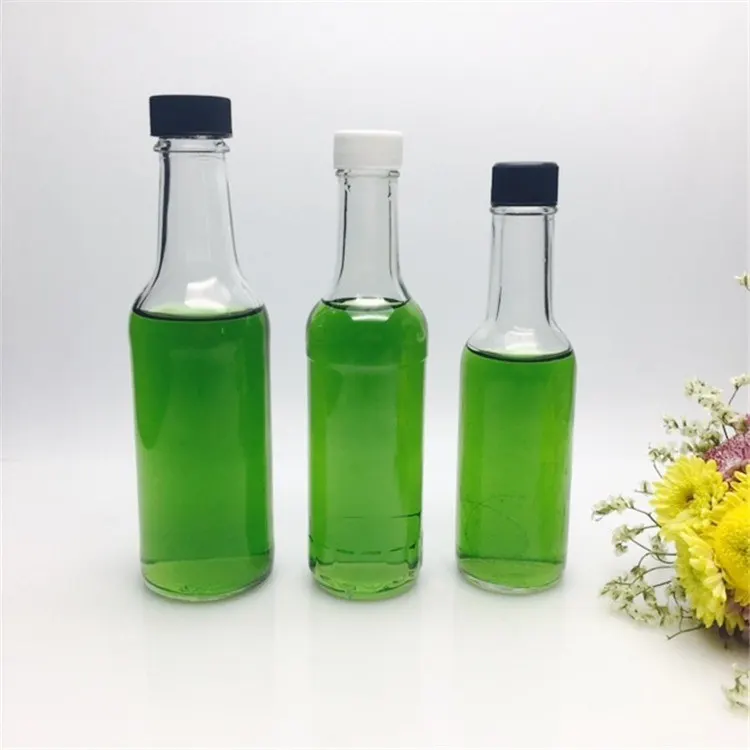
The table maps each capacity tier to the channels and delivery modes that use it, the treatment routes it suits, the closure family that commonly follows, whether the tier belongs in a returnable loop, and the point that has to be settled with the factory. It is a working starting point for a brief, not a substitute for a finished specification, and two of the columns that most often change a decision are the delivery mode and the returnable question, because those two decide the packing form before the volume is fixed.
| Capacity tier (nominal) | Main channels and delivery mode | Treatment fit | Suggested closure family | Refill loop suitability | What to confirm with the factory |
|---|---|---|---|---|---|
| 100 ml | Coffee shop and barista service, tasting and sample packs, airline and catering single serve, chilled van delivery | Pasteurised and UHT, ambient or chilled single serve; not suited to hot fill | Foil or membrane lid with a press-on overcap, or a small screw cap where reclosure matters | Possible in a closed loop but rarely economic, because collection cost dominates at this size | Whether the fill volume is quoted as brimful or as nominal, and whether the finish accepts a press-on overcap as well as a screw cap |
| 189 ml, one third pint | School and institutional milk service, catering trays, crate-based chilled rounds | Pasteurised chilled, sometimes UHT for ambient institutional supply | Crown, foil lid with overcap, or press-on board cap depending on the serving method | Designed for returnable crates in institutional service where a collection route already exists | The exact historical volume the buyer means, since the trade name and the millilitre figure are not the same quantity, and the crate count at that height |
| 200 ml | Hotel and airline service, coffee shop, chilled van delivery, multi-pack retail | Pasteurised, UHT and fermented drinking products; ambient in the UHT case | Foil lid with overcap, screw cap, or press-on cap for table service | Viable in a closed foodservice loop with a defined crate and washing cycle | Whether the closure has to be reopenable for a multi-serve use, and the neck finish that supports repeated capping |
| 250 ml | Retail single serve and multi-pack, doorstep and subscription rounds, farm direct, vending | Pasteurised chilled, UHT ambient, fermented drinks, hot fill for some flavoured dairy drinks | Screw cap, foil under a screw overcap, crown for a traditional presentation | Strong candidate for a deposit or return scheme, particularly where a regional crate round exists | The fill accuracy the line can hold at the headspace, and whether the pack must survive a second and third washing cycle |
| 500 ml | Retail half litre, foodservice bulk pour, farmer and farm shop direct, subscription delivery | Pasteurised chilled, UHT ambient; a common size for cream and for plant-based alternatives | Screw cap with a tamper-evident band, or crown where the pack is decanted | Common in returnable dairy loops, but the crate count and the bottle height have to be standardised to make collection work | Whether the bottle is intended for return under a deposit scheme, because that changes the glass weight and the finish specification |
| 750 ml | Retail large single, coffee shop and bakery supply, catering, ice cream and dessert manufacture | Pasteurised, UHT, and hot fill for some flavoured and dessert formats | Screw cap, aluminium cap with an induction seal, or a lever and swing closure for presentation formats | Less common in a loop than half litre and one litre tiers, because handling weight per unit rises | Whether the pack is poured by hand under load, which affects neck diameter, shoulder form and grip |
| 1000 ml, one litre | Retail household, catering and kitchen supply, subscription delivery, bulk foodservice pour | Pasteurised, UHT, hot fill and fermented; also used for extended shelf life formats | Screw cap with tamper band, combination closure with a heat-sealed membrane under a screw overcap | Well established in returnable dairy where a deposit or crate round exists, and the tier most often standardised for that reason | Whether the closure must pass a heat seal validation as well as a mechanical seal test, and the fill temperature the line runs at |
| 2000 ml and larger | Catering, bakery, bulk kitchen and food manufacturing supply rather than shelf retail | Pasteurised, UHT and hot fill; ambient formats depend on the closure and the treatment together | Screw cap, often with a separate pour spout or lever closure for control when pouring | Handled as a returnable container in some foodservice loops, with washing at the point of use rather than at a dairy | Whether the weight is manageable on the filling and capping line the buyer actually has, and the handling method in the kitchen |
The Tiers in Use: 100, 200, 250, 500 and 1000 Millilitres
Five tiers carry most of the world’s glass dairy trade, and each has a character that follows from the way it is consumed rather than from any property of glass. Understanding that character is what allows a buyer to move between tiers sensibly when a price point or a channel changes.
The 100 ml tier exists for service rather than for consumption at home. It is a coffee shop and barista format, a tasting and sample format, an airline and catering single serve, and sometimes a promotional pack. Its economics are driven by handling and by the fill line rather than by the glass, because the volume is small and the number of units is large. The pack has to open quickly, pour cleanly into a cup and, in a barista setting, be produced at high rate without the closure slowing the line. For this tier the closure is often a membrane lid under a press-on overcap rather than a screw cap, because the pack is not meant to be reclosed, and the finish therefore has to be chosen for a press-on rather than for a threaded application.
The 189 ml one-third pint tier is a traditional institutional volume, used in school and catering milk service and handled in crates. It is the clearest example of a tier whose volume is set by a service standard rather than by consumer preference, and it is also the clearest example of a naming trap: the trade name and the millilitre equivalent are close but not identical conventions, and a brief that says one third pint should be confirmed in millilitres before moulds are discussed.
The 200 ml tier is the foodservice and travel pack. It appears in hotel breakfast service, on airline and rail catering trays, in coffee shops and in multi-pack retail where a single serving is expected. It sits close enough to the 250 ml tier that the choice between them is usually a pricing and channel decision rather than a technical one, and the deciding factors are the crate count, the shelf facing at retail and the amount the consumer is expected to drink. Because the pack is frequently opened at a table and may be partially consumed, reclosure behaviour is worth testing even though the pack is nominally a single serve.
The 250 ml tier is the retail single serve and the doorstep classic. It has strong shelf presence in a multi-pack, it is light enough for a subscription delivery round, and it is small enough to feel like a single sitting. It is also the tier most often chosen for flavoured and fermented dairy drinks, in which case a hot fill may be involved and the closure has to hold a seal through a warm fill and a subsequent cooling. The same tier is used for vending, where the pack must be robust enough to survive a machine and legible enough to be selected from a small window.
The 500 ml tier is the workhorse half litre. It serves retail, foodservice pouring, farm direct sales and subscription delivery, and it is a common size for cream and for plant-based alternatives, whose packages are frequently larger than a dairy single serve because the product is used as an ingredient rather than drunk as a glass. The tier is also where the returnable question becomes concrete: a half litre is convenient to handle in a crate, and a regional loop can be built around it, but the bottle height and neck must be standardised across the whole loop rather than decided pack by pack.
The 1000 ml tier is the household and kitchen unit and the tier that is most often standardised deliberately, because a returnable dairy system depends on one bottle being washed, filled and recapped many times. It is also the tier where closure choice carries the most consequence, since a one litre pack is used over several days and may be reopened repeatedly, and where a combination closure, meaning a heat-sealed membrane under a screw overcap, is a frequent design. The 2000 ml and larger formats are not really retail packs at all: they are catering and food manufacturing supply, and their constraint is the weight a person can lift and pour rather than the volume a consumer will drink.
Closure Families and How They Track the Tier
The closure family is the second decision after the channel and before the volume, because the finish is the hardest part of the bottle to change later. Five families cover the dairy field, and each of them leans towards a particular tier and channel.
A foil or membrane lid, either heat sealed to the rim or supplied as a pre-cut disc under a press-on overcap, is the natural choice for a single-serve service pack that is opened once and discarded. It gives a clean tamper indication, a wide opening for pouring and no thread to cross at line speed. Its constraint is that it seals against the top land of the finish, so the flatness and cleanliness of that rim become the critical variables rather than torque, and a closure of this kind cannot be relied on to reclose a partly consumed pack. It is common at 100 ml, 189 ml and 200 ml in foodservice.
A crown cap is the traditional dairy closure and remains the cheapest way to close a bottle that is to be decanted or drunk directly, and it is strongly associated with the 189 ml and 250 ml institutional and retail tiers. Crowns need a finish designed for them and a capping head that crimps rather than turns, and they are effectively single use, which means the pack is not oriented towards reclosure at all. For a returnable loop the crown is still viable because the bottle is washed and recapped, but the finish has to tolerate many crimp cycles without rim damage.
A screw cap in plastic or aluminium is the flexible family and the one that fits the widest range of tiers, from 200 ml service packs up to the bulk catering sizes. It supports reclosure, tamper-evident bands and, with an induction seal or a separate membrane, a hermetic barrier. Its constraints are the ones that belong to fit: the thread must engage cleanly at line speed, the liner must be compatible with the product, and the closing torque must survive the journey and the repeated open and close of a household pack. This is the family where the relationship between the closure and the contents has to be tested rather than assumed, because the liner is in direct contact with the product.
A paper or board press-on cap belongs to the table-service and presentation end of the market, particularly at 200 ml and 250 ml, where the pack is served as a glass of milk with a lid rather than as a container to be stored. It is simple, low cost and easy to open, and it offers little barrier and no resistance to inversion, so it suits a pack that is consumed promptly in a controlled setting. A combination closure, meaning a heat-sealed membrane under a screw overcap, is the answer when a tier needs both a hermetic barrier and a recloseable top, and it appears most often at 500 ml and 1000 ml where the pack is used over several days. It adds a process step, because the seal has to be validated for temperature, dwell, pressure and rim condition, and it therefore changes the test regime as well as the finish.
Treatment Route and What It Does to the Size Choice
The treatment route does not only decide the closure; it also feeds back into the size decision, because the treatment sets the thermal and pressure conditions the pack experiences and those conditions scale with the pack.
Pasteurised chilled product is the classic dairy case and the one that suits glass best, because the pack is not asked to deliver a long ambient life and the cold chain carries part of the shelf life burden. Here the size decision is driven by the channel and the crate rather than by the process, and a small tier is entirely workable provided the pack is kept cold from the filler to the consumer. The cold chain assumption must be written down, because a pack designed for chilled distribution that sits on a pallet at ambient during a transfer will not behave as designed.
Ultra-high temperature treatment changes the trade-off. A UHT product may be distributed ambient, which means the pack has to survive pallet compression, a hot or cold corridor and a longer time in the wrong conditions, and it means the closure has to be specified for the storage life the product claims rather than for the journey alone. On glass, ambient distribution at large tier sizes raises the weight and the packing cost per litre, which is one reason UHT dairy has largely moved to other materials at retail even though glass remains viable at smaller tiers and in premium or returnable formats. A buyer considering UHT in glass at the one litre tier should treat the transit and storage test as mandatory rather than optional.
Fermented and cultured dairy products, including drinking yoghurt and cultured milks, sit closer to the chilled case but bring live cultures, higher acidity and, frequently, a thicker or more sedimenting product. Acidity changes the liner requirement because it attacks some facings, and viscosity changes the fill behaviour because the product does not flow at the same rate as milk. Both effects argue for a slightly larger headspace and a fill level that is carefully placed relative to the sealing land, and both are reasons to test the pack with the real product rather than with water. Hot fill appears with flavoured dairy drinks and dessert formats, and it is the case that most changes the size decision, because a hot fill into a small pack is a severe thermal event for a thin-walled bottle and the pack has to be designed for it rather than adapted to it.
Refillable Systems and the Case for Standardised Volumes
A returnable or refillable dairy system does not simply reuse the same bottle. It makes the bottle a piece of circulating equipment, and that transforms the size decision from a marketing choice into a logistics standard. Once a bottle is expected to come back, be washed, be refilled and be capped again, the loop needs a fixed volume and a fixed height, because the crate, the washer, the filler and the capper are all set up around them.
The consequence is that a refillable range tends to collapse towards a small number of standardised tiers rather than spreading across many. A dairy that runs a deposit scheme can support a half litre and a one litre and little else, because every additional volume adds a crate, a shelf position in the washer and a changeover on the line. Buyers who want a differentiated range and a returnable loop at the same time should recognise that these two preferences pull in opposite directions and decide which one governs.
Standardisation also changes the glass specification. A bottle in a loop has to tolerate a defined number of washing and thermal cycles, so the glass weight, the resistance to thermal shock and the finish durability all matter more than they do for a single-use pack. The finish has to accept repeated capping and uncapping without rim damage, and the decoration has to survive caustic washing and abrasion against neighbouring bottles in a crate. That in turn means the inspection standard has to allow controlled scuffing while still rejecting cracks and chips, because a loop that rejects every bottle with a visible mark cannot be economic however good the environmental case for it is.
Finally, a refillable decision cannot be made from the bottle alone. It needs a collection route, a deposit or return mechanism, a washing capability at the point of return and a consumer or trade behaviour that actually brings the bottle back. A buyer who specifies a returnable bottle without that infrastructure has specified a heavier single-use bottle, which is the most expensive way to solve the problem.
Household Packs Against Single Serve: Reading the Gradient
The capacity gradient from a single serve to a household pack is driven by two opposite pressures, and the crossing point between them sits around the half litre in most markets. Below it, the pack is sized for one person at one moment: the constraint is the amount consumed in one sitting, and the priorities are opening, pouring and light weight. Above it, the pack is sized for a household over several days: the constraint is how long the product stays fresh once opened, and the priorities are reclosure, storage footprint and easy handling when the pack is still half full.
That difference explains why closure requirements change with tier even when the materials are similar. A single-serve pack can be closed with a membrane and an overcap because it is opened once and finished. A household pack needs a recloseable top that keeps its seal after several openings, which usually means a screw cap with a compatible liner, or a combination closure where a hermetic barrier is also needed. It also explains why a household pack tends to be heavier and to have a wider base for its volume: a half-filled one litre bottle is less stable than a full one, and the pack has to be stable on a shelf or in a fridge door in both states.
Two further practical effects sit on this gradient. The first is the fill level after a few servings: on a one litre pack, the headspace grows as the product is used and the pack becomes progressively easier to tip, so neck diameter, shoulder form and closure height affect the experience more than they do on a single serve. The second is legibility on a curved surface: a small pack has very little label area and a large pack has more, which changes how much information can be carried and therefore how the pack can be positioned in a channel. Neither effect is about volume, and both are decided by the design that the volume implies.
Working Backwards from the Channel and the Delivery Mode to a Tier
The practical method for a buyer is to work backwards. Start with the channel, because the channel decides the occasion. Then add the delivery mode, because it decides the packing form and sometimes the material. Then add the treatment route, because it decides whether the closure has to hold pressure or a barrier and whether ambient storage is involved. Only then choose the tier, and do it by comparing the candidate tier against four tests: whether it fits the crate or the shelf, whether it survives the journey, whether the closure family it implies is available in the finish required, and whether the fill line can hold the accuracy the declared quantity requires.
A worked sequence makes the method concrete. A coffee shop that pours milk into drinks, with a chilled van delivery on its own route and a pasteurised product, is a 100 ml or 200 ml service case with a membrane lid and an overcap, and the returnable question is open because the loop would be internal to the route. A retail brand selling single serves in a multi-pack, chilled, through a distribution centre, is a 250 ml case with a screw cap and a tamper band, and the transit test is mandatory because the pack passes through a distribution centre rather than a direct route. A household pack for a mild pasteurised product sold through a regional crate round is a 500 ml or 1000 ml returnable case, where the crate count and the washer dimensions decide the bottle height before the volume is even discussed. A UHT product for ambient retail is the case that most needs the whole chain reconsidered, because the volume, the closure and the material all interact with the storage condition rather than only with the channel.
Where the answers to the four tests conflict, the conflict itself is the finding. A tier that suits the channel but cannot be packed economically, or a tier that suits the crate but needs a finish the available closures do not offer, is not a compromise to be averaged; it is a signal that one earlier step in the chain should be revisited. In practice, that earlier step is almost always the delivery mode.
Where This Page Stops and the Neighbouring Pages Begin
This page owns the mapping between capacity, channel, delivery mode, treatment and closure family. It does not cover how a dairy bottle is made and it does not cover the cold chain as a process. If the question is how a small dairy bottle is filled, sealed, washed and kept cold, including the practical limits a small format places on a filling line and a distribution route, that belongs to how a small dairy bottle is filled, sealed and kept cold, and it should be read together with this one rather than instead of it.
Nor does this page cover the general beverage landscape. Standard sizes for water, juice, soft drinks and beer, the fill methods and line speeds that go with them, the comparison between glass and PET at a given nominal size and the way a general beverage range is rationalised all belong to the standard beverage size landscape, which is written for a different buyer with a different product. Where a dairy range also includes a flavoured drink that behaves like a soft drink, the size question may sit in both places, and the split is by product behaviour rather than by the volume figure. Where the buyer is at the stage of buying the range rather than defining it, the wholesale and container questions belong to buying a dairy bottle range in volume, while the underlying formats across the range sit in the glass bottle range on this site.
Frequently Asked Questions About Milk Bottle Sizes
Is a 250 ml milk bottle exactly 250 ml of milk?
Usually not exactly. A bottle sold as a nominal 250 ml generally has a brimful capacity above 250 ml so that a nominal 250 ml fill can be made with a working headspace and an achievable fill accuracy on the line. The declared quantity on the label is a weights and measures matter and the brimful capacity is a mould characteristic, and the two are not the same number. Always confirm which quantity a quotation refers to, because a comparison between a brimful figure and a fill figure will look like a disagreement when it is only a difference of definition.
Which size is the most common glass milk bottle?
It depends on the channel rather than on the market as a whole. In retail and doorstep supply the half litre and one litre tiers dominate, and the one litre tier is the volume most often standardised where a returnable loop exists. In foodservice, hotel and coffee shop supply the 100 ml and 200 ml tiers carry most of the volume, and in institutional crate service the traditional one third pint volume remains in use. There is no single answer because the volume follows the occasion, and the occasion follows the channel.
Can I use one bottle size for every channel I sell into?
It is possible but it usually costs more than it saves. A single tier means a single mould, a single crate and a single closure, which is efficient, and it also means a single-serve coffee shop pack and a household retail pack are served by the same object. In practice the compromise falls on the channel whose needs are least well met, and the cost appears as a poorly sized portion, an awkward crate count or a shelf facing that does not compete. Most ranges settle on two or three tiers and rationalise everything else around them.
Does the closure have to change when the capacity changes?
Not automatically, because the same closure family can serve several tiers, and in practice the capacity and the closure are linked only through the channel and the treatment. A single serve that is opened once suits a membrane lid and an overcap, whichever tier it is. A household pack used over several days needs a recloseable top that holds its seal after repeated opening, which usually means a screw cap with a compatible liner. The closure changes with the use pattern rather than with the millilitres, and the finish, which is the part that cannot be changed later, follows the closure.
Which size works best for a returnable or deposit system?
Returnable systems tend to standardise on a small number of tiers, most often the half litre and the one litre, because every additional volume adds a crate, a washer position and a line changeover. More importantly, a returnable bottle is circulating equipment rather than packaging: it needs a defined number of wash and thermal cycles, a finish that tolerates repeated capping, decoration that survives caustic washing, and an inspection standard that accepts controlled scuffing while rejecting cracks. Without a collection route and a washing capability the returnable decision does not pay back, whatever the tier.
How do I know whether the pack must survive ambient storage?
That is decided by the treatment route, not by the bottle. A pasteurised product is normally chilled throughout its life, and a UHT or extended shelf life product may be distributed and stored ambient. The distinction matters because ambient storage brings pallet compression, a longer time in uncontrolled temperatures and a demand that the closure hold its barrier for the stated life rather than for the journey. If ambient storage is possible at any point in the chain, the transit and storage tests should be treated as mandatory and the closure specification should be written for the full storage period.
What should I send to get a capacity and closure recommendation?
Three inputs are enough to start. First, the channel, meaning where the pack is sold and who opens it. Second, the sterilisation or treatment method, whether pasteurised, ultra-high temperature, hot fill or fermented, together with the fill temperature the line runs at. Third, the delivery mode, including whether a returnable loop is involved and whether the product is chilled or ambient. Add the intended volume band and the destination market if they are already fixed. With those inputs the tier, the closure family, the finish implications, the crate and packing considerations and the test regime can all be set out for review before any mould or quantity commitment is discussed.
Send the Channel, the Sterilisation Method and the Delivery Mode
The most useful enquiry names the channel first, because it sets everything else. Say where the pack is sold or served, who opens it, whether it is consumed in one sitting or kept in a household over several days, and whether it is presented on a table or taken from a chiller shelf. Then add the treatment route, with the fill temperature the line runs at, because that single figure decides whether the closure is a simple closure or has to hold a barrier or a pressure. Then add the delivery mode: a direct chilled route, a distribution centre, a crate-based subscription round, a parcel service or an ambient pallet, together with whether a returnable loop is intended.
With those three inputs the reply can be specific rather than generic: a recommended capacity tier and the reason it fits the occasion, the closure family that suits the use pattern, the finish implications, the crate and packing considerations at that tier, and the tests that should be run before the first shipment, including transit simulation where the delivery mode calls for it. If the volume is already fixed and the question is whether it is the right one, send the fixed volume together with the same three inputs and the constraint behind it, whether that constraint is a crate, a shelf, a price point or an existing filling line, and the analysis can be run against the constraint rather than against a preference.