Once a glass container holds a litre or more, the delivered cost per unit is set mostly by how it is packed and loaded, not by the glass. Heavy formats such as 3 litre and 4 litre jars normally hit a shipping container's payload limit long before they use up its space, so the packing form, the pallet footprint and the build height decide how many units travel per shipment. A 20 ft general purpose box offers roughly 33 cubic metres and a 40 ft high cube roughly 76, but those volumes are only where an estimate starts.
We do not publish unit counts, freight or duty figures here. Each of them follows from a finished specification and a named destination, and we work them out per enquiry.
How a container behaves above one litre
A big jar is not a small jar enlarged. Five things shift together at around the litre mark, and each one lands in the packing plan or the freight bill.
- Fewer plants can make it. Forming method, mould equipment and cycle time all change as the piece grows, and tolerances behave differently. Far fewer plants run a given large format than run a 250 ml bottle, so there are fewer quotations to compare. Getting the specification right matters more than building a long supplier list.
- Weight outruns capacity. Wall area is larger and the wall is usually thicker, so a 3 litre piece weighs well over three times its 1 litre equivalent. That mass is paid for on each unit, pallet and shipment, and it caps both the units per pallet and the stack height.
- Stacking load shapes the design. In a pallet of small bottles the weight above is shared by many rims. With large pieces each rim, shoulder and body wall carries far more, and a jar that seems solid on a bench can deform or craze at the bottom of a tall pallet. Build height is therefore a statement about the glass as well as about the container floor.
- Handling changes. A filled 1 litre unit already raises labour and injury questions when lifted by hand. Machine handling needs consistent dimensions and a stable base; hand packing needs a shape and surface that can be gripped. A plan built for the wrong one tends to break glass at the plant, before transit begins.
- Mouth and closure grow too. Wide mouths, lug, press-twist and oversized screw finishes bring a bigger sealing surface, a bigger liner or gasket and more leverage on the cap during handling. Treat the mouth and the closure as a single specification item.
Lightweighting is possible only up to the point where the piece no longer survives its own stacked load. Where that point lies depends on the design, the filling process and the handling route.

What limits a 20GP or a 40HQ load
The unit count per container is derived from the unit footprint, the pallet footprint, the build height, the loading pattern and the loaded weight. Two plants making an identical jar can reach different plans. What can be said in general is which limit bites first.
Payload before volume
Glass is heavy for the space it takes, and large formats are the extreme case. When the payload limit is reached first, putting more units on each pallet adds nothing to the container total; it only raises the compressive load and the risk in the bottom layer. The opposite case is large glass in bulky retail cartons, where the box fills by volume while still under its weight limit, and carton dimensions become the lever.
Deciding which of the two cases applies comes first in a loading plan, because it tells you whether to work on weight or on space. The payload limit itself depends on road weight rules at origin and destination, so it is confirmed against a specific booking.
Usable space and door height
The nominal internal volumes come from the dimensions defined for the ISO series of freight containers. Usable space is less, and depends on how the pallet footprint tiles the floor and how much height is left above the build with the doors shut. A build taller than the door clear height cannot go in by lift truck at all. One that clears with no margin is often broken down and hand-loaded at the far end.
Handling at both ends
Loading may be by pallet truck, by forklift with a ramp, or by hand where equipment cannot reach. Unloading may be mechanised or manual depending on the receiving site. A load put in by lift truck and taken out by hand is an inconsistent plan, and an expensive one when every unit is heavy. State the method at each end in the enquiry, since a pallet meant for manual unloading is built differently.
Restraint inside the box
A load that covers the whole floor is held sideways by the container walls. A partial row, a partial layer or a gap at the end needs lashing to the securing points, dunnage, airbags or a mix of these to stop it moving lengthwise. With a heavy load this is agreed before packing, not improvised at the loading bay.
Packing and loading by capacity band
The table lists the bands a large-format programme is usually built from. The quantity columns name what the number depends on; the number itself is issued against a specific design, footprint and build height.
| Capacity band | Usual packing form | What sets units per pallet | Binding limit in a 20GP and a 40HQ | Main breakage points | Confirm with the plant |
|---|---|---|---|---|---|
| 1 litre to 1.5 litre, standard weight | Bare on layer pads, corrugated cells in a shipper, or a retail carton for shelf-sold packs | Layer pattern on the footprint and how many layers fit under the agreed height | Either volume or payload, depending on bare or cartoned packing | Shoulders touching within a layer; chipped rims under thin pads | Layer pattern drawing, pad material and thickness, film grade and wrap count, rated stacking load of any carton |
| 1.5 litre to 2 litre, wide mouth jars | Bare with moulded separators, or cartons with partitions and full-height dividers | Separator thickness, which fixes unit pitch and can cost a layer | Payload starts to cap the 40HQ ahead of its cube; pallet positions still rule the 20GP | Base rims meeting where pitch is too tight; lids damaged where they ride above the top layer | Pitch for the real body diameter, where closures are packed, the height limit, whether lids ship with the glass |
| 3 litre, wide or medium mouth | Cartons with cells or partitions nearly always; bare only with a rigid separator set | Carton footprint and carton height, board thickness included | Payload in both sizes; cube is seldom the issue once cartons are used | Partitions collapsing under the stack; cartons crushed in the bottom layer | Board grade and burst strength, cell size against the body, maximum stacking load, palletising pattern |
| 4 litre, one gallon format | Full-height shipper carton with a top pad; sleeves and layer pads alone rarely suffice | Carton footprint plus the top pad, which takes height but holds no product | Payload; the box is far from full by volume, so packing efficiency sets freight per unit | Base corners struck during manual loading or unloading; bottom cartons deforming | Drop-height basis for the transit test, corner protection, top pad thickness, handling method at each end |
| 5 litre and above, industrial or bulk food | Cartons with heavy partitions, or a fitted layer-board system where the shape permits | Single or double layers, and the load rating of the lowest one | Payload, and often pallet count instead of unit count; a 20GP may hold very few pallet positions | Lowest layer crushed; threads or lugs hit from the side; closures distorted by strap tension | Load rating of the layer pattern, footprint against the floor, strapping pattern and tension, whether the closure can sit in the load path |
| 10 litre to 20 litre, drums and carboys | Cartoned or crated almost without exception, with vertical dividers and a reinforced base pad | The small number of units per layer and the crate or carton height | Payload; little of the cube is used because the packing is bulky and rigid | Impact at the base; stress at the neck or handle when the unit is lifted by its closure | Whether the closure is a lifting point, crate and base pad design, agreed handling equipment, transit test programme |
Pallet build rules to write into the specification
Most of the difference between a robust large-format order and a cheap one comes down to five packing rules.
- Interrupt every glass-to-glass path. Damage starts where glass meets glass: base rim to base rim, shoulder to shoulder, body to body. Large pieces have more contact area and more mass behind each knock, so inner packing that suits a small jar is seldom enough. Layer pads, corrugated cells, partitions, moulded separators, sleeves and shrunk trays all do the job, and all of them take space and add weight.
- Fix the footprint first. International glass traffic mostly runs on 1200 by 1000 mm and 1200 by 800 mm pallets, both tied to the 1200 by 1000 module in ISO 3394. With large glass the number of pallet positions often limits the load more than the payload does. A footprint that strands a strip of floor wastes the same freight on every sailing, so run the calculation at specification stage.
- Allow no overhang. Glass that sticks out past the pallet edge takes handling knocks directly, with more mass behind them. If the piece will not tile the footprint, change the pallet or the layer pattern. Losing a few units per layer costs less than losing the pallet.
- Restrain the load and spread the weight. Stretch film, strapping, corner boards and a top cap exist to stop the load shifting under acceleration, braking and vessel motion. Loose film achieves nothing; over-tight straps crush separators and concentrate force on the top layer. Layer pads and top caps do not strengthen glass, they spread the vertical load on its way to the bottom layer. Put film grade, wrap count and strapping pattern in writing, because this is where plant habit and buyer requirement most often part ways.
- Count the lid carton in the height. Closures, gaskets and accessories often travel in a separate carton on the top layer or in leftover floor space. On top of a pallet it adds height without product, so it has to be in the build-height sum from day one.
Breakage patterns, cushioning and outgoing inspection
Large-format breakage is seldom random. It follows the packing form and gathers at a few points that can be designed against.
| Pattern | Where it shows | What it points to |
|---|---|---|
| Contact within a layer | Base rim or shoulder | Separator choice and pitch |
| Stack overload | Bottom layer of a tall pallet | Build height, layer pads, load rating |
| Handling impact | A corner or edge, during loading or unloading | Carton, corner boards, handling method |
Only handling impact is truly hard to predict, and a written agreement on equipment at both ends reduces it.
Separation and cushioning are different functions. Layer pads and dividers keep surfaces apart. Base pads, corner protection and a top cap absorb energy. A plan that only separates does well in a warehouse and badly at sea. Where a buyer wants independent proof that a configuration survives a defined journey, the usual reference is a transit test to the ISTA series of procedures, agreed for the specific unit as part of the specification.
Inspection terms also have to be settled before the run, because some evidence is produced during production and cannot be rebuilt later. AQL is the normal reference for attribute sampling of defects such as cracks, chipped rims, foreign inclusions and dimensional deviation. Two practical controls back it up: a signed reference sample held by both sides, so that an acceptable rim or colour is judged against an object, and a check of the loaded pallet before the doors close, the last moment a bad build is still cheap to correct.
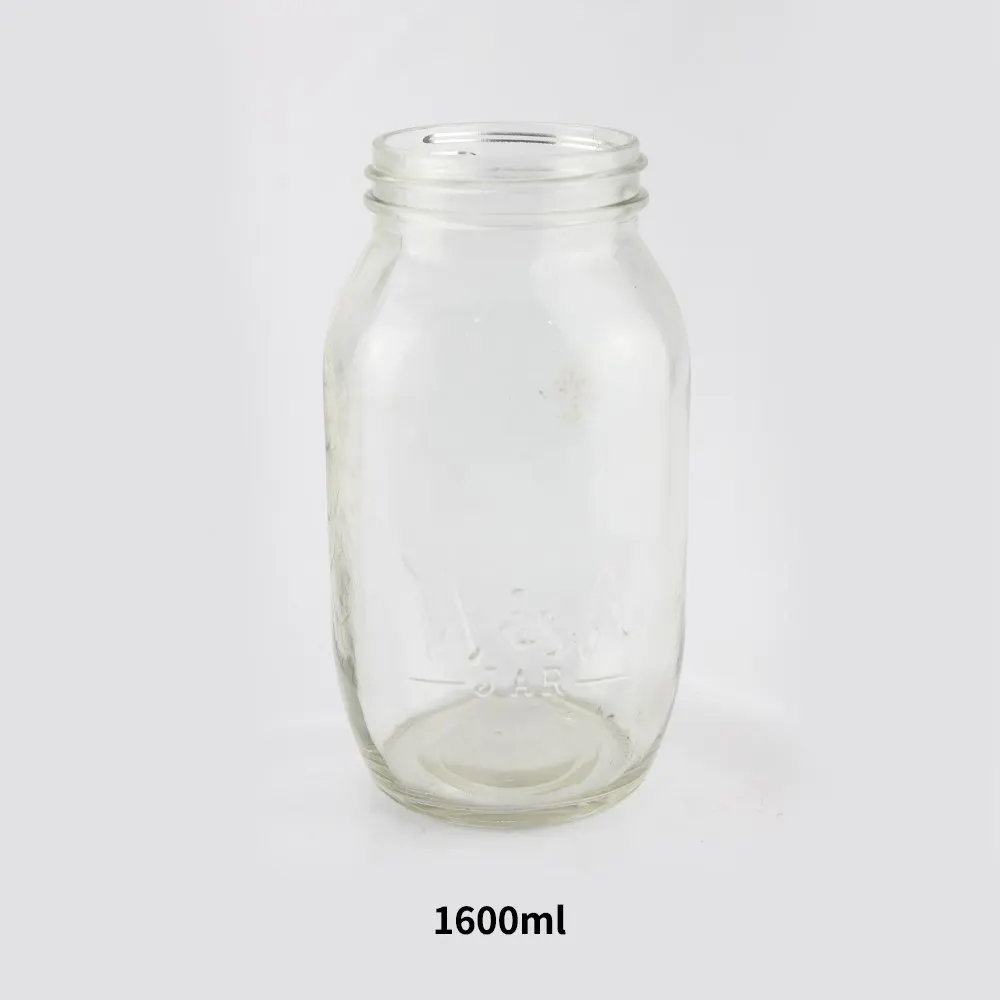
Trade terms and who carries the breakage risk
With heavy, brittle goods the trade term is more than paperwork: whoever holds the risk pays for the damaged pallet.
| Term | Where risk passes | What it means for packing |
|---|---|---|
| EXW | At the plant gate, once goods are made available | The buyer arranges collection, inland haulage and loading, and must specify the packing standard, since the plant's duty stops at its door. Most control, most work. |
| FOB | On loading aboard the vessel | Condition at the ship is documented, so packing disputes are most often resolved here. The packing standard must be written down and the loading plan agreed before stuffing. |
| CIF | Still on loading, with freight and insurance added | Insured value and cover become specification items. Check whether the policy pays a per-unit breakage allowance or full replacement value. |
| DDP | Late, after import clearance and delivery | Simplest to operate and gives one delivered number, but the cost structure stays hidden unless you ask for the components separately. |
Whatever the term, put two things in writing before shipment: the packing standard (inner form, pallet build, restraint method) and the inspection evidence that travels with the goods.
Components of delivered cost
Delivered cost per unit is a stack of items that move independently of one another:
- the glass, driven by design, weight and forming route;
- the closure and liner, quoted separately unless they share a supplier with the glass, and a noticeable share of the pack on a large mouth;
- inner packaging: separators, pads, cells, partitions and corner protection;
- pallet and restraint materials: footprint, top cap, corner boards, film and strapping;
- palletising and loading labour, often manual on large-format lines and so tied to the packing form;
- inland transport and terminal handling;
- ocean freight, charged by volume or by weight depending on trade and carrier, which is why a bulky carton and a heavy bare pallet can be billed differently;
- insurance, which follows the trade term and insured value;
- duty and destination charges, which depend on tariff position and local procedures.
For that reason two offers for one jar can rarely be compared on the glass line. Compare cost per filled unit at destination, calculated from each supplier's packing plan. The offer that uses the container better usually wins over the one with slightly cheaper glass, because a gain in units per container repeats on every shipment of the year.
What to send for a loading plan
Three inputs, plus a destination port, turn a loading question into a plan we can set out for review:
- Capacity band in litres, and whether it is fixed or still open.
- Contents: food or not, hot filled or not, and whether your site handles the pack by hand or by machine.
- Annual volume, not just the first order, since the yearly figure is what justifies designing the packing form and pallet build properly.
The port lets us set the trade term, freight basis and market requirements against a real route, and size the first quantity so it fills a container properly.
Some questions sit on either side of this topic. If you have not yet picked a format, start with the glass jar and container range, which lays out format families and lid systems before capacity is fixed. For hot fill, headspace and vacuum behaviour with viscous foods, and for consumer-facing capacity names and closure systems, see the mason and canning jar guide.

Frequently asked questions
What counts as a large glass container?
For buying purposes, anything of about a litre or more that is heavy enough to alter the packing and handling plan. No single figure marks the line. The change comes where a unit is no longer comfortable to lift by hand and begins to dictate its own pallet build and container limit.
Why does weight rise faster than capacity?
Wall area grows with the square of the dimensions and volume with the cube, and a bigger piece also needs a thicker wall to perform equally well. The extra mass is paid for three times: in glass, in the stacking load that restricts the pallet, and in freight, since a payload-limited box carries fewer units. Ask what a lighter design would survive, not only what it would save.
What separation does each size need?
Bare packing on thin pads is generally wrong above about two litres, and cartons with cells are the common choice from three litres up. In every case the separator is selected for the real body diameter so the pitch is correct, with a base pad and top cap to take handling energy. A thicker separator protects better but lowers the layer count, and with it the units per container.
Should closures be ordered with the glass?
For large formats there is a strong case for it, since the seal is a joint property of mouth and closure, and a single supplier then owns the fit and any sealing failure. If you buy closures elsewhere, keep the mouth finish, liner specification and torque requirement together with the container in one document, and have the fit proven on a sample instead of inferred from a catalogue number.
Which trade term suits a large-format order?
None is best in general. The choice depends on how much control you want to keep: EXW for the most control and work, FOB for documented condition at the vessel, CIF if you want freight and insurance arranged, DDP for a single delivered number with less visibility of what you are paying for.