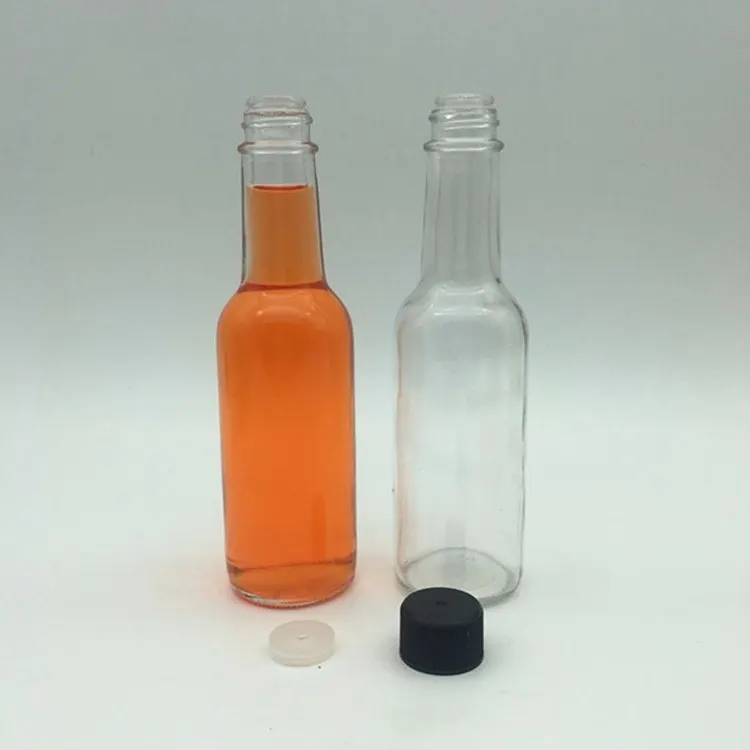
This page is for the brand owner, product developer or sourcing manager who is putting coffee into a glass bottle and has to settle the capacity before a mould, a label or a packing case can be specified. The decision it serves is narrow and specific: given the coffee format, the way the bottle is filled and the channel the product sells through, which capacity band is defensible, and which closure family has to be paired with it. It is not a general beverage sizing page and it does not cover procurement mechanics, pricing or order structure.
Three neighbouring pages bound this one, and the boundary is worth setting out before anything else. The general beverage sizing layer, where 280, 330, 500 and 750 ml are mapped to channel, fill method and refill circuits, sits on beverage bottle sizes by channel; a coffee bottle is a narrower case of that problem rather than a repetition of it. Tea drinks are sized on a separate page (tea-bottle-sizes) and wide-mouth preserve jars on another (jam-jar-sizes), because tea brings a light-stability and sedimentation problem and preserve jars bring a vacuum, spoonability and wide-mouth problem that coffee does not share. The packaging format itself, meaning cold brew bottle shapes, neck and closure choices for a cold brew line, is worked through on the cold brew bottle format page, and the commercial layer, meaning order structure, decoration and case packing for a coffee bottle programme, belongs to the coffee bottle sourcing page. This page covers only the coffee capacity and closure decision. Everything below assumes the container is already glass; where the material itself is still open, the family view sits on the glass bottle range, and the numbers that follow are planning magnitudes to be confirmed against a real fill, not approved specifications.
Why Does a Coffee Bottle Size Behave Differently From Any Other Beverage Bottle?
A coffee bottle is not a juice bottle with a different label on it, and treating the two as interchangeable is the most common cause of a specification that has to be rebuilt halfway through a project. Coffee brings a set of constraints to the container that most beverages do not combine in one product, and those constraints eliminate whole ranges of capacity before any shelf or branding consideration is applied.
The first constraint is the filling temperature. Coffee drinks are filled either cold, as cold brew and chilled ready-to-drink lines are, or hot, as ambient stable coffee drinks are when they are hot filled or filled after ultra-high-temperature treatment. Those two routes place opposite demands on the glass. A hot fill asks the bottle to survive a thermal shock and then to tolerate the partial vacuum that forms as the contents cool and contract, which is why a hot-filled coffee bottle normally needs a heavier wall, a defined headspace and a closure that will not be pulled inwards as the internal pressure drops. A cold fill has no vacuum problem at all but requires a cold chain that runs from the filler to the shelf, which changes how the capacity is chosen because a bottle that is refrigerated for its whole life carries a cost per unit that a bottle stored at ambient temperature does not.
The second constraint is that coffee is one of the few beverage categories where the same liquid is sold both still and pressurised. A still cold brew sits in the bottle at essentially atmospheric pressure. A nitrogen-dosed cold brew carries a small internal overpressure that keeps the texture and the head, and a carbonated coffee or an espresso soda carries a genuinely carbonated pressure. Those three packs cannot share one bottle specification, because pressure is a container property and not a filling property: the bottle that is perfectly adequate for still cold brew is not automatically the bottle that should be used for a sparkling coffee. This is a distinction that also separates the coffee page from the tea page, where the pressurised case is the exception rather than a normal part of the range.
The third constraint is the sensitivity of the product to light and oxygen. Coffee aromatics oxidise, and the oils and dissolved solids that give the drink its colour change visibly when a clear bottle is exposed to retail lighting for weeks at a time. That pushes many coffee packs towards amber glass, towards a sleeve that covers most of the body, or towards a shorter shelf life. Each of those responses interacts with the size decision. A sleeve that has to cover the body reduces the visible glass, which changes how the capacity reads on shelf, and an amber body changes the relationship between capacity and perceived value, because a dark bottle of a given volume is read by the customer as a smaller quantity than a clear bottle of the same volume.
The fourth constraint is regulatory rather than physical. A bottled coffee drink is a pre-packaged food, so its label has to carry a defined set of declarations, and the space available for those declarations depends on the surface area of the pack rather than on the volume of coffee inside it. A very small capacity compresses the label into a small surface and forces mandatory text to dominate it; a very large capacity provides room but adds glass weight and shipping cost. That trade-off is worked through later on this page because it is the constraint that most often pushes a brand off a capacity it had already chosen for commercial reasons.
In What Order Should a Coffee Bottle Capacity Be Fixed?
Capacity is rarely chosen well when it is chosen first. The reliable order runs from the product outwards, and each step removes options rather than adding them, so that by the time the capacity is named there is only a small band left to decide between.
Begin with the coffee format, because it is the one item on the list that the project cannot change. A concentrate is not a ready-to-drink product and does not serve the same occasion; a nitrogen-infused cold brew is not a still cold brew; a barista syrup is not a beverage at all. Each of these formats has a natural serving quantity and a natural dilution ratio, and both of those feed directly into the capacity band before the channel is even considered. A concentrate that is diluted one to three cannot use the same bottle as a ready-to-drink coffee, however similar the two bottles look in a photograph.
Then fix the fill method, because filling is where a capacity that looked correct on a shelf plan becomes expensive. A hot fill constrains the headspace that has to be left, and headspace is part of the capacity decision: the same nominal bottle holds less product when it has to be filled to a level that leaves room for the vacuum to form. A cold fill allows a higher fill level, which means a slightly smaller bottle can deliver the same net content. Nitrogen dosing adds a further requirement, in that the closure has to hold a light overpressure reliably over the shelf life, and carbonation adds a larger one. The fill method also determines the neck, because a filler nozzle, a dosing valve or a nitrogen jet has to fit through the opening, and the neck decision propagates into the closure decision and therefore back into the capacity decision.
Then check the channel, because the channel sets the occasion and the occasion sets the realistic single-serve quantity. A bottle bought in a specialty cafe is consumed in one visit and is often taken away to be drunk within the hour. A bottle bought from a chilled retail fixture may be drunk over two sittings and has to be reclosable and stable in a domestic refrigerator once opened. A bottle used in food service or hospitality is poured in portions at a counter or a table rather than drunk from the neck. Each of those use patterns produces a different ideal volume, and a capacity that suits one channel will read as either a sample or an inconvenience in another.
Finally, reconcile the capacity band against the line. Rotary fillers and cappers are built around a bottle diameter family, and a change of height is usually a straightforward adjustment while a change of diameter usually requires change parts. Where a brand intends to run more than one capacity of coffee, keeping one body diameter across the range and varying only the height is almost always cheaper to operate than building each capacity on its own diameter. That constraint is worth applying before the shape is finalised, because it is much less disruptive to adjust a shape than to retool a line.
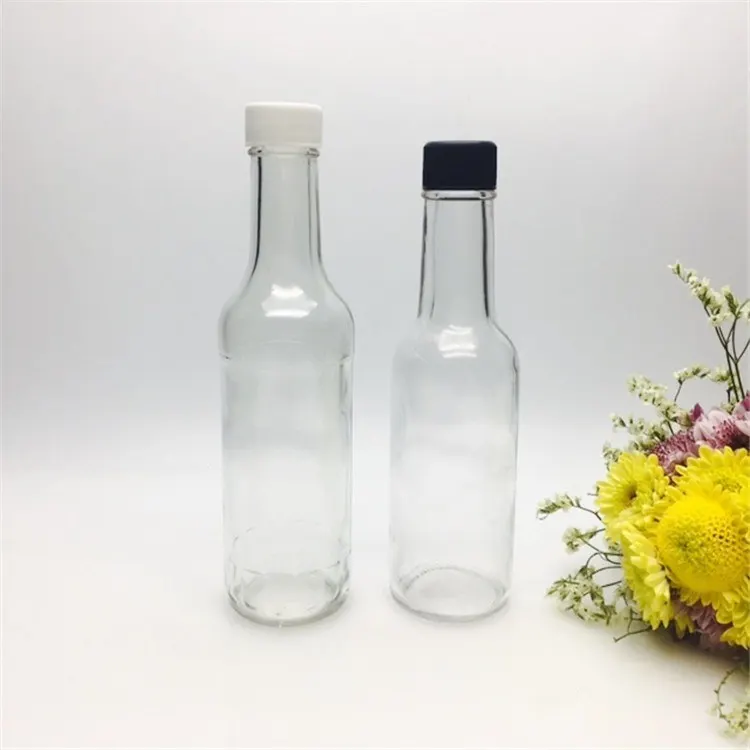
Which Capacity Band Does Each Coffee Format and Channel Actually Need?
The table below is the working core of this page. Each row takes a coffee format together with the channel it normally sells through and sets out the capacity band that format tends to occupy, the fill method and temperature it implies, whether the sealed pack is pressurised, the closure family that suits it, and the items that have to come back from a factory as numbers rather than as assurances. The capacity bands are planning magnitudes for narrowing a brief, not catalogue sizes, and the last column is deliberately not filled in here because fill heights, headspace rules, pressure ratings and capping compatibility all depend on the specific mould and on your own equipment.
Two patterns are worth reading before the rows themselves. The first is that capacity rises with the dilution ratio rather than with the price of the product: a concentrate sold at a high unit price occupies one of the smallest bands in the table because it is measured out rather than drunk, while an ambient ready-to-drink coffee in a mainstream chain occupies a mid band despite a lower unit price. The second is that pressure, not volume, is what disqualifies a bottle. Any of the larger rows in this table can be produced in a still version in a wide range of bottles, but the pressurised rows cannot borrow a bottle from the still rows without a pressure rating being established first.
| Coffee format and channel | Typical capacity band (planning magnitude) | Fill method and temperature | Pressure in the sealed pack | Closure family that suits it | What to confirm with the factory |
|---|---|---|---|---|---|
| Cold brew concentrate, retail bottle and direct-to-consumer | Roughly 200 to 250 ml; the small end of the coffee range, because the product is diluted before drinking | Cold fill at chilled temperature; no thermal shock and little headspace requirement beyond the closure | Still, atmospheric pressure in a normal shelf-stable or chilled pack | Small screw closure, often with an evident tamper band; a lug or swing closure where the brand is selling the ritual | The fill height at your product temperature, the dilution ratio the label will state, and the closure torque the neck was designed for |
| Ready-to-drink cold brew, chilled retail single serve | Roughly 250 to 300 ml as a single-serve; this is the default band for a chilled coffee fixture | Cold fill at chilled temperature, typically on a gravity or low-vacuum filler | Still; pressure is only the small headspace change caused by temperature variation in the cold chain | Screw closure sized to the neck, with a tamper band; a crown is possible where the format imitates beer service | Whether the bottle has to survive a chilled distribution chain including home refrigeration after opening, and the case configuration you intend to run |
| Nitro cold brew, chilled retail and on-tap replacement | Roughly 300 to 500 ml; larger than still cold brew because the drink is served as a portion rather than a shot | Cold fill with nitrogen dosing immediately before capping; the closure has to be applied while the overpressure is present | Light overpressure from nitrogen, enough to affect closure retention but far below carbonated levels | A pressure-retaining screw closure or a crown; a standard decorative closure is not the place to economise here | Whether the glass and closure combination has been validated for the dosing pressure you intend, and how the pack behaves after a temperature rise in transit |
| Ambient hot-filled or ultra-high-temperature coffee drink, retail chain and vending | Roughly 200 to 300 ml; the format is consumed in one go and the pack often has to fit a vending or shelf slot | Hot fill or filling after ultra-high-temperature treatment, followed by cooling; thermal shock and vacuum both apply | Still product under a partial vacuum as the contents cool and contract | Aluminium roll-on closure or a screw closure with a heat-resistant liner; the closure has to resist being drawn inwards | The thermal shock differential the glass has to survive, the headspace the vacuum requires, and the cooling profile after filling |
| Sparkling and carbonated coffee, premium retail | Roughly 250 to 330 ml; the band sits between a soft drink and a coffee serving | Cold pressure filling; the filler, the closure and the bottle all have to be rated for the carbonation level | Genuine internal carbonation pressure, the highest of any row in this table | Pressure-rated crown cap or a pressure-rated screw closure; a lightweight closure is a failure risk | The pressure rating of the specific mould, the closure retention test result at your carbonation level, and the pasteurisation route if the product requires one |
| Roastery and specialty cafe takeaway, including refill growlers | Roughly 500 ml to 1 litre; a multi-serving format built around a table or a home refrigerator | Cold fill at the counter; no thermal constraint, but the neck has to survive repeated capping if refilling is intended | Still; where the format is refilled, the constraint is wear rather than pressure | Wide-mouth screw closure or a swing closure with a gasket, chosen for repeated opening and comfortable pouring | Thread durability over repeated open and close cycles, pour quality at the neck, and whether the glass weight is appropriate for a format that is handled repeatedly |
| Barista syrup and coffee flavouring, food service | Roughly 250 to 750 ml; set by the dispensing pump or the pour spout rather than by the drink | Cold or ambient fill of a viscous liquid; the neck constrains the filling rate more than the capacity does | Still; the pack is handled and stored upright in a service environment | Screw closure, frequently paired with a dispensing pump or a pour spout insert | The internal neck diameter against the closure and insert you intend, and whether the label surface is large enough for the mandatory declarations |
What Do Hot Filling and Cold Filling Do to the Capacity You Can Use?
The fill temperature is the single most under-estimated input into a coffee bottle size, because it changes the amount of product a given bottle actually contains and it constrains the glass the brand is allowed to use.
In a hot fill route, the product goes into the bottle at a temperature high enough to contribute to commercial stability, and the bottle is then closed and cooled. Two things follow. The first is a thermal shock requirement: the glass has to accept a temperature difference between the hot product and the bottle, and between the filled bottle and its cooling environment, without cracking. A thicker wall is more tolerant of thermal shock up to a point, but a very thick wall also holds heat and cools more slowly, and an uneven temperature across the body is itself a stress. The practical consequence for sizing is that the smaller, squatter bottles in a range usually absorb a hot fill more comfortably than a tall narrow bottle of the same capacity, because the tall bottle has a longer wall over which temperature differences develop.
The second consequence is headspace. A hot-filled bottle is not filled to the brim, because the contents contract as they cool and the bottle would otherwise be put under vacuum severe enough to distort the closure or pull the product back. The amount of headspace is a decision that has to be made before the capacity is fixed, because the headspace is what converts a nominal bottle volume into a net content. A brand that chooses a 250 ml bottle for a hot-filled coffee and then discovers that the fill level has to sit noticeably lower than expected will end up declaring a net content that is smaller than the bottle suggests, which is a commercial problem as well as a technical one.
In a cold fill route, neither of those constraints applies. There is no thermal shock requirement to design around, and there is no vacuum, so the fill level can be taken higher and the net content is closer to the nominal volume. That freedom is real but it is not free: the product now depends on refrigeration for its whole life, and it has to be distributed, stored and displayed in a cold chain. A cold-filled coffee bottle is therefore usually allowed a lighter, less thermally tolerant glass, while the cost moves to logistics and to the shorter practical shelf life.
The choice between the two routes also narrows the closure. A hot fill paired with a plastic-lined screw closure has to allow for the liner to survive the temperature at the moment of capping and to seat correctly as the pack cools, which is why an aluminium roll-on closure is a common answer for hot-filled coffee drinks: the aluminium shell and the liner are seated by the capping head and the closure is mechanically formed onto the neck rather than relying on a thread engagement under a temperature change. A cold fill has no such constraint and can use the full range of cosmetic and functional closures, including formats chosen mainly for how they look in a photograph. That is one reason cold brew is such a design-led category and ambient hot-filled coffee drinks are not.
How Do Nitrogen and Carbonated Coffee Change the Bottle You Need?
The pressurised coffee formats deserve separate treatment because they are the point at which a capacity decision becomes a container-strength decision. A still cold brew and a nitrogen-dosed cold brew can look identical on a shelf and can be sold in bottles that appear to be the same shape, but they are not the same pack, and the difference does not show up until temperature rises or until a case is stacked in a warm warehouse.
Nitrogen dosing is the gentler case. A small amount of nitrogen is introduced so that the finished drink has the fine texture and the head that the format is associated with, and it leaves the sealed pack under a light overpressure rather than a carbonated one. The engineering implications are still real. The closure has to hold that pressure for the shelf life, which means the closure cannot be a loose decorative fit and the capping operation has to be controlled; the fill level has to leave enough headspace for the gas; and the bottle has to be specified for the dosing pressure rather than being inherited from a still version of the same shape. Where the format is intended to be served from the bottle, the glass also has to tolerate being handled at refrigerator temperatures, which is when glass is most brittle.
Carbonated coffee is the harder case. Here the internal pressure is at the level of a carbonated soft drink, and the whole pack, meaning the glass, the neck finish, the closure and the capping process, has to be rated for it. Three rules follow. First, a lightweight or heavily decorated bottle that was designed for a still product should not be repurposed for carbonation without the pressure rating being established, because decorative moulding can create stress concentrations that are harmless in a still pack and not harmless in a pressurised one. Second, the closure must be a pressure-retaining type, which in practice means a crown or a screw closure designed for the purpose rather than a closure selected for appearance. Third, the fill level and the headspace interact with carbonation: too little headspace and the filling operation becomes unstable, too much and the pack loses carbonation into the space above the liquid.
There is also a temperature rule that applies to both pressurised cases. Internal pressure rises with temperature, so a pack that is stable in a chilled fixture may not be stable in a warm delivery van or in a case that has been standing in the sun. A pressure rating is therefore always a rating at a stated temperature, and a supplier statement of pressure capability without a temperature attached to it is not usable. Where a coffee product contains carbonation and also requires pasteurisation, the pack is subjected to pressure from inside and heat from outside at the same time, and that combination has to be validated as a combination rather than as two separate properties. Public test frameworks such as the ISTA series for transport packaging and internal pressure testing practice are useful reference points for structuring that validation, though the test itself has to be run on the actual pack.
Which Closure Belongs on a Coffee Bottle of a Given Capacity?
The closure is chosen after the capacity in the sequence set out above, but in practice the two are decided together, because the closure determines the neck and the neck determines how the bottle fills, how it drinks and how much label surface the shoulder leaves free.
The crown cap is the cheapest high-volume answer and it is the natural fit for the small pressurised formats. A crown holds pressure well, applies in one motion on a high-speed line, and permits a small headspace because the cap takes up very little vertical space. Its disadvantages for coffee are that it is not reclosable and that opening it requires a tool or at least a firm hand, which suits a beer-style serve and not a bottle drunk over two sittings. A crown therefore tends to appear on sparkling coffee and on small formats sold for immediate consumption, and rarely on a chilled ready-to-drink cold brew that a customer expects to reseal.
The screw closure is the default for coffee in general, and the capacity band determines which thread and which diameter make sense. Small concentrate bottles take a narrow screw closure because the product is poured or measured out and the neck does not need to pass a large flow; single-serve ready-to-drink bottles take a mid-size screw closure with a tamper band because the pack is resealed after opening; and the large multi-serving growlers take a wider closure again, partly for pouring and partly because a wide opening is easier to clean. The practical sizing rule is that the closure diameter should follow the serving behaviour rather than the liquid volume: a 500 ml bottle that is drunk from the neck and a 500 ml bottle that is poured into cups do not want the same opening.
The aluminium roll-on closure is the premium answer and it is strongly associated with hot-filled coffee drinks and with products positioned on quality rather than on convenience. It is mechanically formed onto the neck by the capping head, which gives a consistent seal on a threaded or a non-threaded finish, and it presents a clean, unbroken metal surface that reads well on a shelf. The trade-offs are cost per unit, a capping machine capability that not every line has, and a somewhat less convenient reseal than a screw closure. Where the capacity sits in the ambient stable band and the brand is competing on perceived quality, the roll-on closure is often the deciding element rather than the glass.
Lug and swing closures appear in the large formats and in the ritual-led end of the specialty market. A swing closure with a wire bail and a gasket is genuinely effective at holding a light pressure, which is why it appears on sparkling and on some nitro-seeming formats, and it is highly re-sealable, which suits a refill or a growler programme. Its constraint is that the gasket is a replaceable component and the closure assembly adds height and cost, both of which have to be allowed for in the case and the shelf plan. Lug closures, in which the cap engages a series of interrupted threads and turns through a short arc, suit larger jars and heavy bottles where a full screw turn is awkward. Both families require the neck to be specified for them from the outset; a neck cut for a screw closure cannot simply be converted to a swing closure later without a new mould.
Why Do Specialty Roasters and Retail Chains Want Different Capacities?
The same drink sold through two channels will often need two different capacities, and the reason is not brand positioning but the mechanics of how the product reaches the customer.
A specialty roaster or a single cafe is usually selling freshness, provenance and a made-to-order experience. The volumes it needs are modest, the shelf life it can accept is short, and much of its value sits in the visit rather than in the pack. That pushes it towards small concentrate bottles that sit behind the counter, towards growler formats of half a litre and up for customers who want to take coffee home for the weekend, and towards closures and bottles that can be refilled or that read as craft objects. It also means the roaster can accept a narrow-mouth or a wide-mouth format on grounds of presentation, because the filling equipment in a small operation is manual or semi-manual and does not impose a diameter family on the choice.
A retail chain or a convenience format works from the opposite direction. Its constraint is the fixture. A bottle has to fit a chilled shelf or a vending slot, it has to stand on a shelf without a supporting case, it has to survive a pallet built by someone who is not thinking about that particular bottle, and it has to be restocked quickly. Those constraints favour a mid-size single-serve capacity with a consistent body diameter across the range, a closure that reseals, and a label area that carries the mandatory declarations without crowding them. A retail chain will also normally want the same bottle diameter across several flavours, because the range is merchandised as a block and a block of mismatched diameters does not read as a range.
The two channels also differ on how the capacity is communicated. A specialty roaster can state a dilution ratio and let the customer work out the drink, so a small concentrate bottle is self-explaining to its audience. A retail chain cannot rely on that, which is why ready-to-drink coffee in retail tends to be sized in round, comparison-friendly numbers that sit sensibly next to the other chilled drinks in the same fixture rather than next to other coffees. The sizing decision is therefore partly a merchandising decision, and the competitive set that matters is the set the bottle will physically sit beside.
Where a brand sells the same liquid through both channels, the sensible structure is usually two capacities on one body diameter rather than one compromise capacity. A single mid-size bottle that has to serve a cafe counter and a chilled retail shelf generally ends up too large for the counter and too small to read as value on the shelf, and it forfeits the diameter consistency that makes either channel cheaper to supply.
How Much Label Space Does a Small Coffee Bottle Leave for Declarations?
Bottled coffee is a pre-packaged food in essentially every destination market, which means the label has an obligatory content that does not depend on how much the brand wants to say. The space available for that obligatory content scales with the surface area of the pack, and surface area does not scale in the same proportion as capacity, so a small bottle is under more label pressure than a large one.
The obligations typically include the name of the food, the net quantity, the list of ingredients, the name and address of the food business operator, storage conditions where they matter, a durability date, and nutrition information where the product requires it. A milk-based coffee drink also brings allergen declaration obligations, which have to be legible and not merely present. The destination market decides the detail. In the United States, the labelling provisions in FDA 21 CFR Part 101 describe the required statements and the minimum type sizes; in the European Union, Regulation (EU) No 1169/2011 sets out the mandatory particulars and defines minimum x-height requirements for the mandatory text, with a smaller allowance for packs whose largest surface falls below a defined area. Both of those frameworks have been summarised here only to make the planning point that the label has to be designed against the pack, and neither is a substitute for advice on the specific market you are selling into.
The practical consequence for sizing runs as follows. As capacity falls, the mandatory text takes a larger share of the available surface, and the brand is left with proportionally less room for the name, the origin story and the visual identity that justify a premium price. There is a point in every range below which the label stops being a marketing surface and becomes a compliance surface. That point is not identical in every market, because the minimum type sizes and the exemptions differ, but it is a real ceiling on how small a premium bottled coffee can sensibly go, and it often sits just below the smallest capacity the brand had considered.
The counter-pressure comes from the other end. Increasing capacity to gain label room increases glass weight, which increases shipping mass per unit and changes the case and pallet configuration for the whole range. A brand that moves a 250 ml coffee to a 330 ml bottle to gain two square centimetres of label has also changed its freight cost per litre and its shelf footprint, and in a chilled fixture the footprint is frequently the binding constraint rather than the weight. The sizing decision is therefore a three-way balance between the serving occasion, the label obligation and the physical cost of the pack, and it is usually settled by looking at all three at once rather than by optimising any one of them.
One further point is worth stating plainly, because it is a common hidden cost. Where a label wraps around a body with a taper or a shoulder panel, the usable flat area for text is smaller than the total surface, and mandatory text must sit on a surface that does not distort it. A capacity chosen for its shape can therefore consume label area that a simpler straight-sided body would have made available. Where the label obligations are demanding, a straight-sided body at the same capacity is frequently the cheaper answer.
Where Does Coffee Capacity Stop and Which Neighbouring Page Takes Over?
This page covers only one layer of the coffee packaging decision: how the coffee format, the fill method and the channel together narrow the capacity band, how pressurised formats change the bottle rather than only the fill, how the closure follows from the capacity and the serving behaviour, and how the capacity interacts with the label surface that the mandatory declarations need. It deliberately does not cover the shape or the neck specification of a cold brew bottle in detail, and it does not cover how to buy coffee bottles in volume, because those are separate decisions with their own answer pages.
The pages that sit either side of this one are worth naming explicitly so that the boundary is unambiguous. If your open question is the container format itself, including cold brew bottle shapes, neck and closure combinations and how a cold brew line is packaged, that work is on the cold brew bottle format page. If your open question is how to source coffee bottles commercially, including order structure, decoration methods, case packing and how a coffee bottle programme is assembled for supply, that is on the coffee bottle sourcing page. If your question is a beverage size that is not coffee, the general channel mapping on beverage bottle size selection is the right starting point, and if the container material is still open, the family-level view is on the glass bottle range overview. Tea drinks, which bring their own light-stability and sedimentation behaviour, are sized on tea-bottle-sizes, and wide-mouth preserve jars, where the opening and the vacuum matter more than the volume, are sized on jam-jar-sizes. This page stops before all of those: it tells you which capacity band to brief, and those pages tell you what to build and how to buy it.
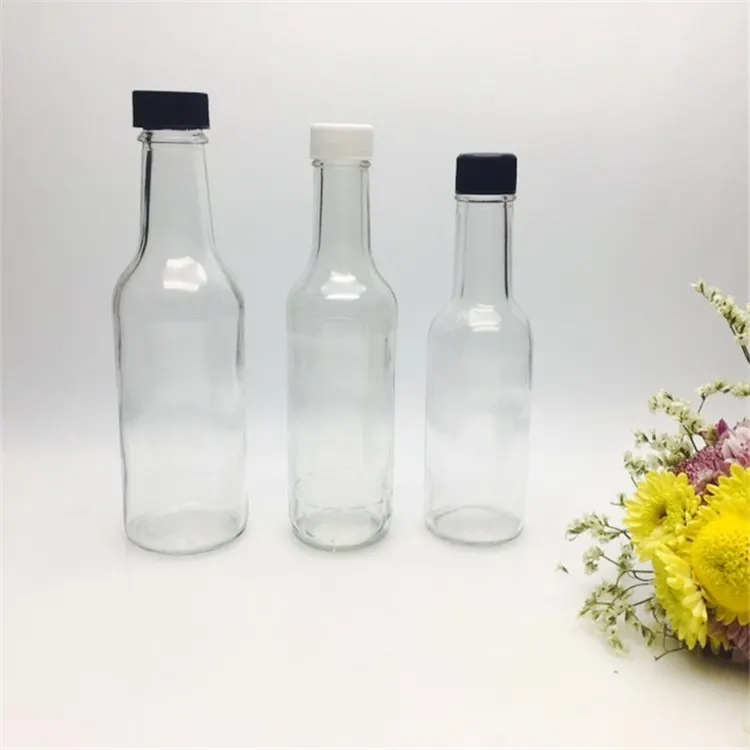
Coffee Bottle Sizing Questions Buyers Ask Before Tooling
What bottle size is normal for cold brew coffee?
It depends on whether the product is a concentrate or ready to drink. A cold brew concentrate is normally sold in a small bottle of roughly 200 to 250 ml, because it is diluted before drinking and the bottle is a measuring and storage unit rather than a serving. A ready-to-drink chilled cold brew is normally a single serve of roughly 250 to 300 ml. A nitrogen-infused format is commonly larger, in the 300 to 500 ml band, because it is poured and served as a portion. Treat all of these as planning bands and confirm the net content against your own fill method and headspace rule.
Is 250 ml or 300 ml the better single-serve coffee bottle?
Both are workable and the choice follows the channel rather than the drink. A 250 ml bottle reads as a considered portion in a specialty cafe or a premium chilled fixture, while a 300 ml bottle competes better against other single-serve drinks on a mainstream shelf where customers compare volumes. If you intend to sell across both, running the two capacities on one body diameter and varying only the height is usually cheaper to operate than building each capacity on its own diameter, because a diameter change normally needs line change parts.
Can carbonated or nitro coffee go into a standard glass bottle?
Nitrogen-dosed coffee can go into a bottle specified for the dosing pressure, which is a light overpressure, provided the closure is rated to hold it for the shelf life. Carbonated coffee is a different case and needs the glass, the neck finish, the closure and the capping process all rated for carbonation levels, because internal pressure rises with temperature and the pack has to remain stable in a warm van as well as in a chilled fixture. A bottle designed for a still product should not be repurposed for carbonation without the pressure rating being established on the actual pack.
Which closure should a coffee bottle use?
The closure follows the serving behaviour more than the volume. A crown cap is the cheapest high-volume answer and holds pressure well but is not reclosable, so it suits small formats sold for immediate consumption and sparkling coffee. A screw closure with a tamper band is the default for ready-to-drink coffee because the pack is resealed after opening. An aluminium roll-on closure is common on hot-filled ambient coffee drinks and on premium positioning, since it is formed onto the neck by the capping head. Swing and lug closures appear in large formats and refill programmes where resealing and pouring matter more than cost.
Does hot filling change the capacity I can use?
It changes how much product the bottle actually contains. A hot-filled pack has to leave headspace for the contents to contract as they cool, so the fill level sits lower than in a cold fill and the net content is further below the nominal bottle volume. Hot filling also imposes a thermal shock requirement on the glass and a vacuum load on the closure, which tends to favour a squatter body over a tall narrow one for the same capacity. Decide the headspace rule before the capacity is fixed, not after.
Why do specialty coffee shops use different bottle sizes from retail chains?
The channel mechanics differ. A specialty roaster is usually selling freshness and a visit, with modest volumes and a short acceptable shelf life, so it gravitates towards small concentrate bottles and towards multi-serving growler formats of around half a litre and up, and it can choose a format on presentation because its filling is manual or semi-manual. A retail chain is constrained by the fixture: the bottle has to fit a shelf or vending slot, stand without a supporting case, survive palletising and be restocked quickly, which favours a consistent mid-size single serve on one body diameter across the whole range.
How does bottle size affect the label and the mandatory declarations?
Small packs have less surface area, and surface area does not grow in proportion to capacity, so on a small bottle the mandatory text takes a larger share of the label and leaves less room for the brand. Most markets define the required statements and minimum type sizes, and some allow a smaller type size for packs below a defined largest surface area. The further practical point is that a tapered or shouldered body gives less usable flat area than a straight-sided body of the same capacity, so a demanding label obligation often argues for a simpler shape.
Do I need a custom mould for a coffee bottle size?
Not necessarily. Many coffee capacities can be briefed against existing glass families, which is usually faster and less expensive than a new mould, and the trade-off is that an existing body may not offer the exact proportions the brand wanted. A custom mould becomes worth considering when the shape itself carries the brand, when no existing body gives the required label area, or when a pressurised format needs a specific neck and wall combination. Whether a particular capacity exists as a standard body depends on the factory, so treat this as a question for the enquiry rather than an assumption.
What Should You Send With a Coffee Bottle Size Enquiry?
To get a capacity band and a closure recommendation rather than a general list of bottle options, send three things. The first is the coffee type and whether it is a concentrate, a ready-to-drink still product, a nitrogen-infused product or a carbonated one, because that single answer decides whether the pack is a still pack or a pressure pack and eliminates a large part of the range immediately. The second is the fill method and temperature, meaning whether the product is hot filled, filled after ultra-high-temperature treatment, or cold filled, because the fill route sets the headspace rule, the thermal requirement and often the closure family. The third is the channel, meaning specialty cafe, chilled retail, vending, food service or direct-to-consumer, because the channel fixes the serving occasion and therefore the realistic capacity band.
Useful additions, where they are already known, are the target net content and whether that figure is fixed by the brand or by a retail specification, the closure preference if one exists, the intended shelf life and whether it depends on a cold chain, the destination market and any labelling obligation that applies there, and whether the bottle is part of a multi-flavour range that should share one body diameter. With those in hand, a reply can set out a recommended capacity band, the fill and headspace considerations that come with it, the closure family that fits the capacity and the serving behaviour, the pressure question if the format is pressurised, and the label surface implications of the sizes under discussion. Where the format is still and cold filled, the answer usually converges quickly on a capacity band and a closure; where the format is pressurised or hot filled, the answer usually starts with the pressure and thermal validation, because those are the constraints that can remove a capacity that looked ideal on a shelf plan.