Choose a custom glass vial by route of administration first. Injectable and lyophilized products need tubular vials in USP Type I borosilicate with a crimp finish; oral liquids, essential oil samples and general lab samples are well served by molded Type III soda-lime with a screw finish. For 1 ml to 30 ml vials, the remaining decisions are how much of the vial is actually custom and whether it must arrive washed and depyrogenated.
Larger packer and syrup formats are covered in our pharmaceutical glass bottle overview.
How much of the vial needs to be custom
Customization at this size comes in three levels, and the level you pick affects cost and schedule more than anything else in the specification.
- Stock vial with custom print. A standard 1 ml, 2 ml or 5 ml vial carrying your decoration. To a consumer it looks no different from a bespoke one, which is why fragrance sampling programs nearly always stop here.
- Stock body with a modified finish. The body stays as it is and the neck is re-tooled, for instance a stock 5 ml body given an 18 mm DIN finish in place of 13 mm.
- Fully custom body. Height, diameter and wall profile are all yours, designed around an automated filling line or a kit box whose foam insert is cut to exact dimensions.
Diagnostic and lab kit buyers generally land in the second or third level, because the vial has to fit a rack, a lyophilization tray or a robotic gripper. Clinical pharma programs differ from case to case. Bear in mind that changing any dimension of a vial already named in a regulatory filing triggers a variation, so many clinical buyers keep a stock body on purpose and customize the print alone.
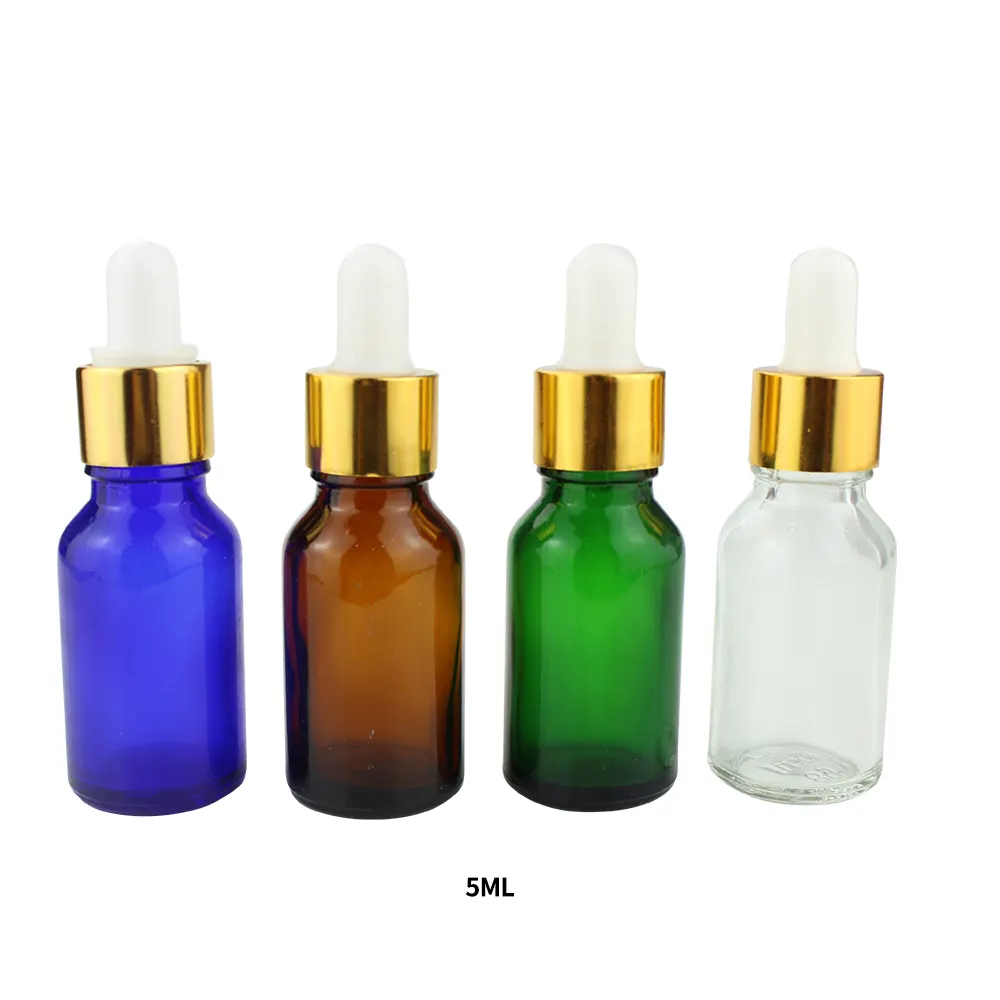
Tubular and molded vials compared
A tubular vial is converted from pharmaceutical glass tubing on a carousel machine. The tube is cut, its bottom sealed and tooled, and the neck formed, all out of a single continuous piece. A molded vial is blown or pressed from a gob of glass in the same way as a small bottle.
| Attribute | Tubular | Molded |
|---|---|---|
| Wall uniformity | Very even | More variable |
| Cosmetic quality | High | Rougher |
| Body diameter tolerance | Typically plus or minus 0.15 mm | Plus or minus 0.4 mm or worse |
| Mechanical strength | Lower | Tougher |
| Supply | Tied to the tubing supply chain | Independent of tubing |
| Typical use | Injectables, lyophilization, automated lines | Oral liquids, essential oil samples, non-parenteral lab work |
Even walls are what let a tubular vial come through the thermal stress of freeze-drying, and consistent dimensions keep an automated line from stopping. Getting the choice wrong hurts in both directions. Molded glass cracks far too often in a lyophilizer, while tubular glass in a giveaway sample program adds cost the recipient will never notice.
USP Type I, II and III glass
The USP types rank glass by chemical resistance, meaning how much alkali it releases into the contents.
- Type I is borosilicate, the most resistant. It is required for injectables and is the default for anything parenteral or strongly acidic or alkaline.
- Type II is soda-lime glass whose inner surface has been de-alkalized. It suits acidic and neutral aqueous parenterals.
- Type III is untreated soda-lime. It is adequate for oral liquids, oils and most lab samples, and must not be used for anything injected.
When a product reaches the bloodstream, Type I applies and the supplier should hand over extractables data and a drug master file reference. Essential oil and tincture samples do not need that level of resistance, so Type III is the economical choice there.
Amber needs separate attention. Amber borosilicate can be had, but it is costly and slow to obtain. Most amber vials sold are Type III soda-lime. They block UV below 450 nm very well, which protects light-sensitive oils, yet the colour adds nothing to chemical resistance and does not make them parenteral grade.
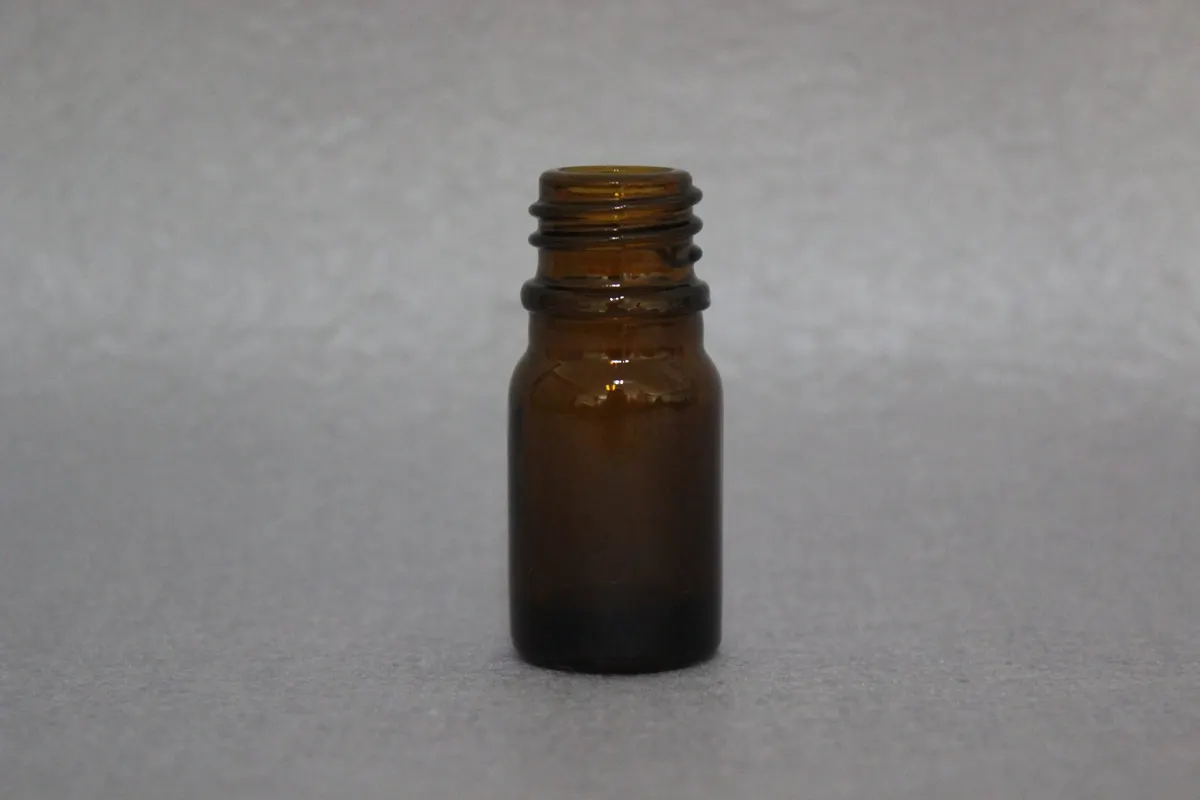
Crimp, screw and plug finishes
Crimp finishes are usually 13 mm or 20 mm DIN and take a rubber stopper under an aluminum seal. For sterile or lyophilized contents they are the only realistic option: the stopper can be sterilized in place, and a crimped seal shows tampering by its nature. DIN 13 and DIN 20 describe the outer diameter of the flange. A mismatch of as little as 0.3 mm between stopper, seal and vial causes seal failures that surface months afterwards as sterility excursions.
Screw finishes, commonly 8-425, 13-425 and 15-425, are closed with phenolic caps and PTFE-faced liners. They lead in lab sample and oil sampling vials because they open and reseal cleanly. Lab buyers should name the liner as well as the cap: PTFE-faced silicone for volatile organics, and foam polyethylene only where the sample is aqueous and non-volatile.
Plug-and-cap or roller fitments are the third family, found on fragrance samples, where an orifice reducer is pressed into a plain neck.
Write the finish tolerance into the purchase order whichever family you use. DIN crimp finishes should be held to plus or minus 0.15 mm and screw finishes to the GPI thread spec, with go/no-go gauges applied to every lot.
Sterile-ready supply and sterilization methods
Vials that have to be sterile or depyrogenated on arrival are better bought in that condition than processed on a washer that may not reach the specification. Washed and depyrogenated vials pass through a tunnel at 250 to 300 degrees Celsius, carry a validated minimum 3-log reduction in endotoxin, and are shipped sealed and double-bagged for direct use in an aseptic suite.
Other methods answer different needs:
- Autoclaving. Any Type I vial withstands steam at 121 degrees Celsius. Molded Type III vials may show surface bloom after repeated cycles, a concern for reusable lab vials.
- EtO. Suitable for vial-and-cap kits assembled in advance, where heat would ruin the closure.
One point is often overlooked. A depyrogenation tunnel anneals the glass while heating it, and a vial that was in tolerance at the forming machine can shift by a tenth of a millimeter on the way through. Ask for dimensional inspection to be carried out after washing and depyrogenation.
Documents to require with each lot
Every lot should come with a dimensional report against the agreed drawing, hydrolytic resistance results for the glass type claimed, and a certificate of analysis. Name all three in the purchase order so a lot without them can be refused.
Vial programs are frequently combined with other small formats, such as glass dropper bottles or sample sizes from the essential oil bottle range. For shapes beyond vials, see what is possible with custom glass bottle development.
FAQs about custom glass vials
What is the minimum order for custom glass vials?
It is quoted per project. The level of customization, the mould or tubing format, decoration and the line involved all bear on it.
How much more does a tubular Type I vial cost than a molded Type III one?
Pricing is quoted per project. Glass type, forming method, quantity, and whether the vials ship washed and depyrogenated are the main drivers, with borosilicate tubular vials at the upper end.
How long does a fully custom vial program take?
The schedule is quoted per project after the mould, decoration and line slot are confirmed. Amber borosilicate takes longer to source than clear.
Is Type I glass necessary for a non-injectable product?
Only when the formulation is strongly acidic or alkaline. Otherwise Type III handles oral liquids, essential oils and general lab samples without a chemical-resistance problem.