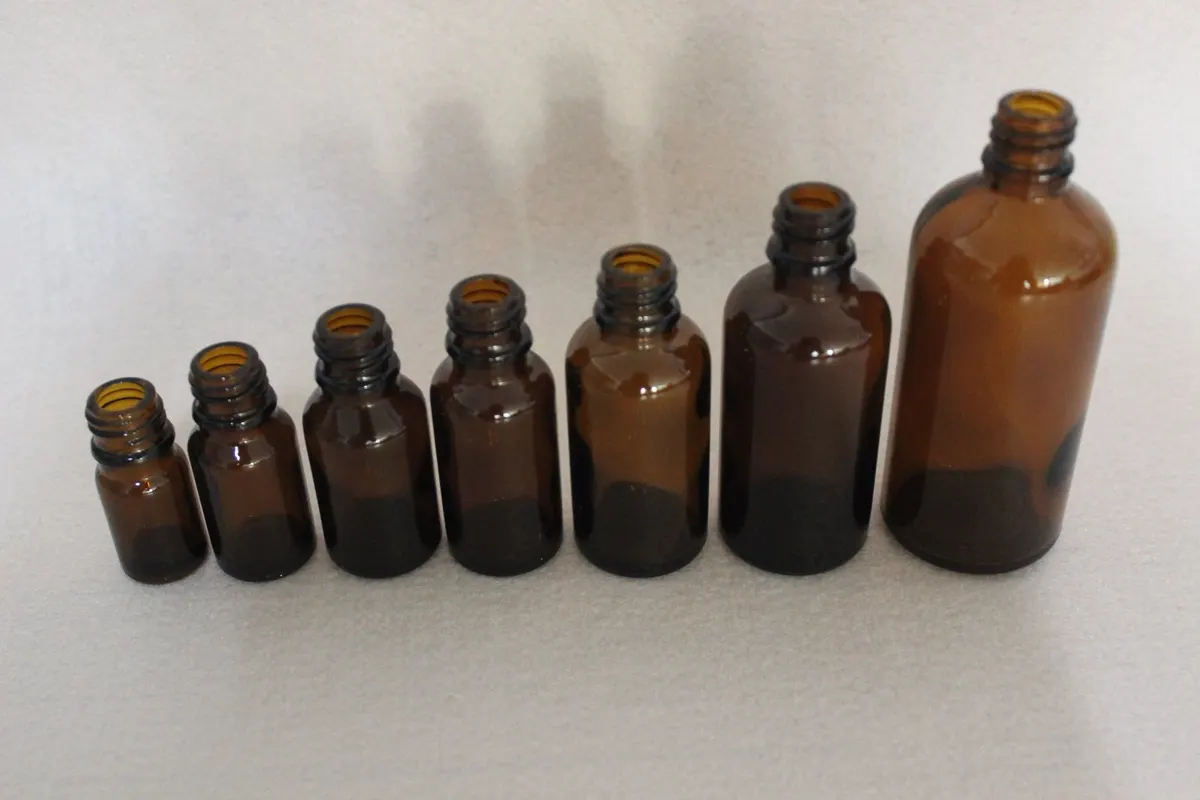
Filed under cosmetic glass bottles wholesale — start there for the stock moulds, then use the detail below to narrow the spec.
This page is for the buyer who is sourcing essential oil bottles and has to settle two decisions before any supplier conversation becomes useful: how much light protection the contents actually need, and which capacity convention the pack will be sold under. It is the overview node of this group, so it deliberately stays at the level of choosing rather than filling in the detail of one scenario. If your question is about a single pack type, the specialist pages further down carry it. If your question is about neck finish, pipette type or drop rate, that belongs to the dropper bottles page. If you are qualifying a factory rather than choosing a pack, that belongs to dropper bottle manufacturers. Nothing on this page quotes minimum order quantity, unit price or lead time, because those follow a finished specification and a confirmed quantity.
What Buyers Mean by Essential Oil Bottles
The phrase essential oil bottles is used by at least three different buyers who need three different answers. A brand owner filling a retail line is usually choosing between 5 ml and 15 ml, deciding whether the dropper is glass or plastic, and checking whether the glass colour reads correctly on a shelf next to a competitor. An importer building a mixed container is choosing a small number of glass colours and a small number of capacities that can carry a whole catalogue without multiplying inventory. A distributor filling an order for a spa, clinic or pharmacy customer is often choosing a larger capacity and a completely different closure. All three arrive on the same search term, and the pack they end up buying may share nothing except a narrow neck and a shoulder.
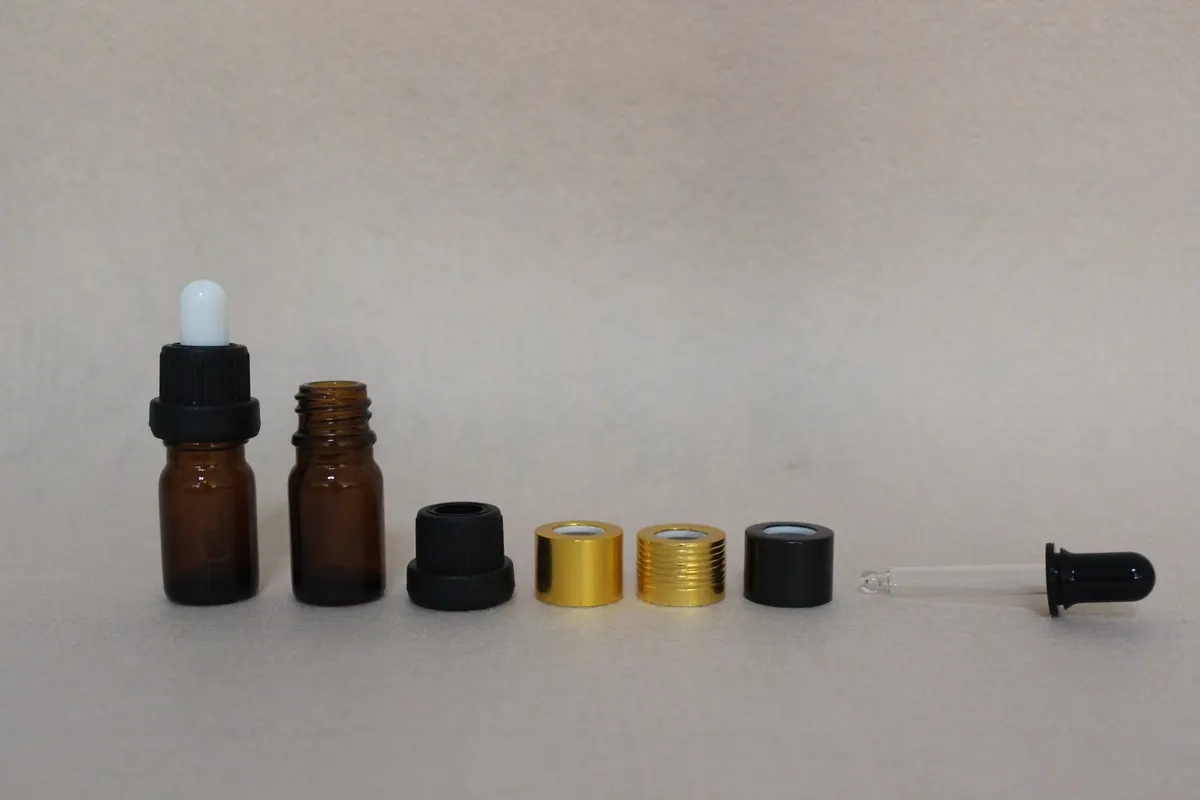
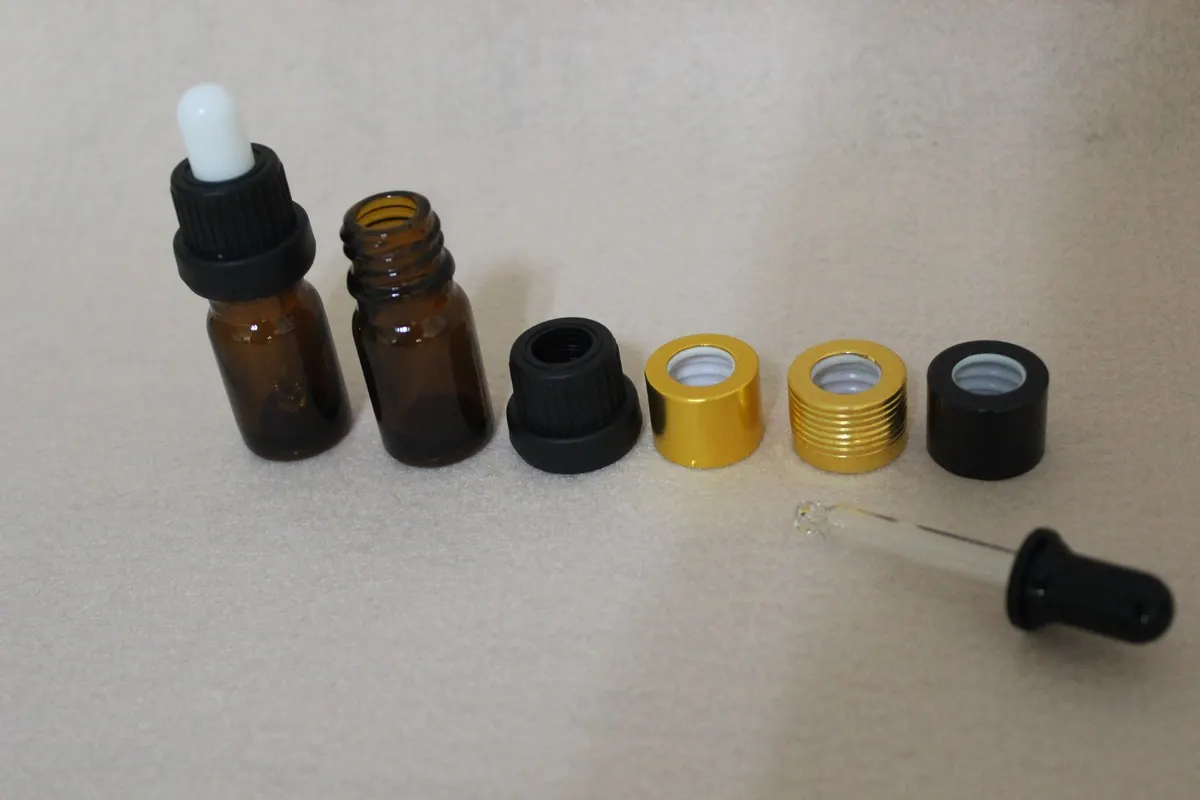
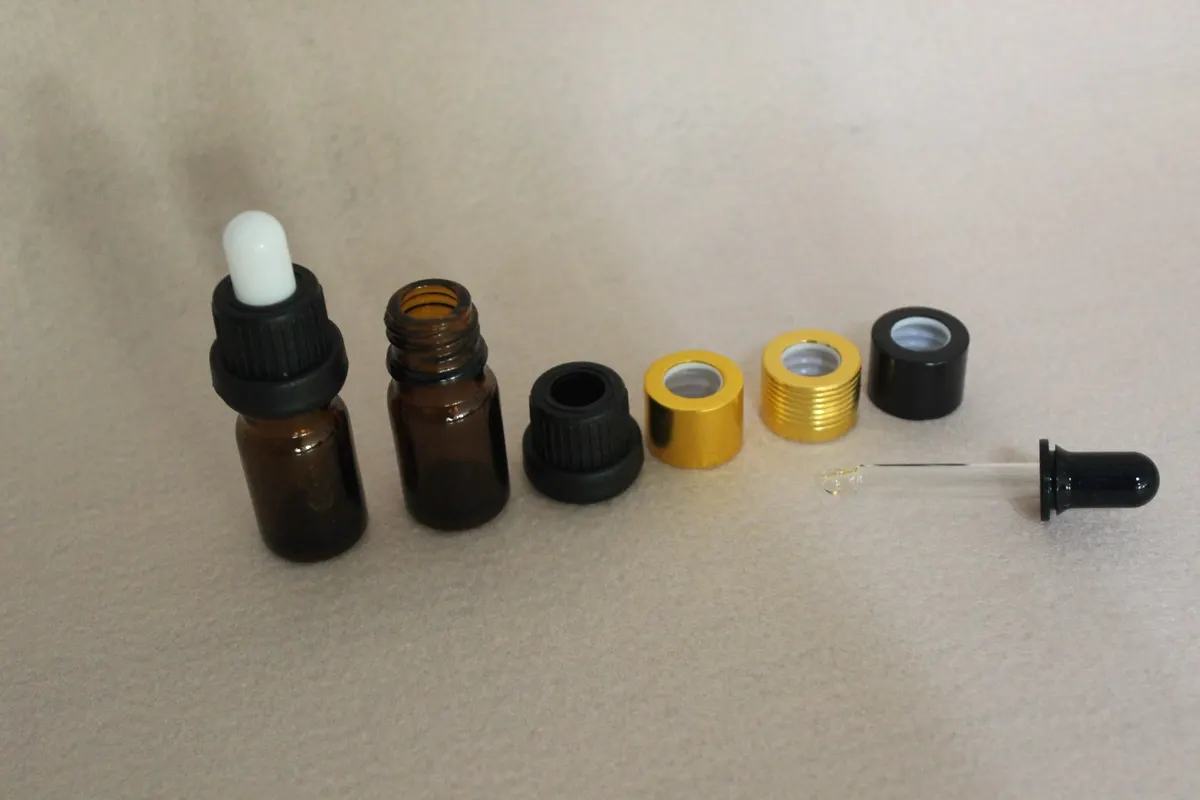
What the term does specify is a small glass container with a narrow neck, intended for a liquid dispensed in small doses. In this product family that almost always means a Boston round or a similar small-form moulding with a screw neck, closed by a glass or plastic dropper, a roller fitment, a pump or a simple screw cap. Everything else, capacity, colour, neck finish, decoration, tamper evidence, is a variable rather than part of the definition.
Because so much is variable, an overview has to be organised around decisions rather than products. Two decisions constrain everything downstream. The first is the light protection the contents require, which resolves into a glass colour. The second is the capacity convention the product will be sold under, which resolves into a bottle size and a fill line. Choose those two badly and the closure, the label artwork and the carton will all be redone. Choose them well and the rest of the specification largely writes itself.
The First Axis: Glass Colour as a Light-Filtering Specification
Glass colour is a filter specification that happens to look attractive. Visible light and ultraviolet radiation drive the oxidation reactions that turn a citrus oil sharp, fade a delicate floral absolute and shorten the useful life of a blend on a retail shelf. The colour of the glass determines how much of that energy reaches the liquid. Amber glass absorbs a large part of the short-wavelength visible range, which is why it has become the default for pharmacy and aromatherapy packaging. Cobalt blue absorbs strongly in the yellow and orange part of the spectrum and is chosen as much for brand reasons as for protection. Green sits between amber and clear. Clear transmits nearly the whole visible spectrum and provides almost no protection on its own.
Two distinctions matter more than any ranking. The first is between ultraviolet and visible light. A glass that suppresses one does not automatically suppress the other, and a supplier description that says only “UV protection” tells you nothing about the visible range that also drives oxidation. The second is between a glass property and a coating. Frosting, spray coating and printed sleeving change the appearance of a clear bottle without turning it into an amber one. If protection is the requirement, the colour has to be in the glass, not on it.
Colour is also the axis where specifications are most often left vague. “Amber” covers a range from a light olive-brown to a deep red-brown, and the same term can produce two batches that sit visibly apart on the same shelf. For a single SKU that is cosmetic. For a retail line sold across several sizes, or for a brand that reorders, it is a commercial problem. The workable practice is to fix a retained sample or a colour reference at the sampling stage, agree a tolerance in writing, and treat that reference as part of the specification alongside capacity and finish.
Availability follows colour. Amber is the highest-volume colour in small glass packaging, so moulds and stock are deepest. Cobalt blue and green are usually subject to a colourant addition, which can affect both the minimum quantity that makes a run sensible and the lead time. Clear is the most flexible of all and the least protective. None of these three points can be settled from a price list alone, which is why the colour decision belongs at the beginning of the project rather than at the artwork stage.
The Second Axis: Capacity and What the Bottle Really Holds
Capacity naming in this category is where purchase orders quietly go wrong. A bottle sold as “1 oz” is named by a nominal figure, not by the volume it will hold when filled to a sensible line. Three separate volumes exist for the same glass: the brimful capacity to the very top of the rim, the capacity to a defined fill line, and the usable fill volume once the closure occupies space inside the neck. A dropper assembly with a glass pipette displaces liquid, so a 30 ml dropper bottle filled to the neck will not leave a 30 ml headspace-free fill.
The units differ too. A US fluid ounce is about 29.6 ml and an imperial fluid ounce is about 28.4 ml. Across a catalogue of 1 oz, 2 oz and 4 oz listings, that gap compounds, and it is the reason experienced buyers state volume in millilitres and treat ounce labels as marketing shorthand rather than as a measurement. The conventional anchors in this family run from 5 ml and 10 ml for sample and single-note oils, through 15 ml and 30 ml for retail blends, to 60 ml, 120 ml and larger for carrier oils, massage blends and tinctures.
Fill-line discipline is the practical consequence. The bottle should be chosen so that the nominal volume lands at or just below the shoulder, leaving enough headspace for the closure, for thermal expansion in transit and for the slight rise that happens when a pipette is inserted. Buyers who need a guaranteed fill volume should ask for the fill-line definition in writing, and should say which of the three volumes above the figure refers to. That single question removes most of the dispute that otherwise surfaces at the filling line.
Purchase Variables That Sit Around the Two Axes
Once colour and capacity are fixed, the remaining variables form a short, closed list. They are interdependent, which is why they are usually settled in one round rather than several.
- Neck finish, the cut thread on the glass that everything else attaches to. It is the one variable that cannot be changed after a mould exists.
- Dropper type: glass or plastic pipette, bulb material, orifice size and the resulting drop rate. Drop rate is a dosing decision, not a packaging detail.
- Roller fitment: ball diameter, housing material and the seating pressure that determines whether the pack leaks in a parcel network.
- Pump or disc-top dispensing for higher-viscosity carrier blends, where a dropper is the wrong instrument.
- Child-resistant closures, which certain markets require for defined product classes and which change the cap height and the capping torque.
- Liner and plug compatibility with the actual contents, including the ethanol in a tincture and the terpenes in a citrus oil.
- Decoration route: frosting, spray coating, silk screen printing or hot stamping, and the artwork tolerances each of those carries.
- Tamper evidence, whether as a shrink band, a drop-ring cap or a sealed carton.
None of these can be quoted responsibly from a photograph. Each one is a line in a specification, and each one interacts with the two axes above. A roller fitment on a 5 ml bottle, for example, has a different leak risk than the same fitment on a 30 ml bottle, because the ratio of the fitment to the headspace changes. This overview exists to show where those interactions start, not to resolve them one by one.
The Two-Axis Selection Matrix
The matrix below is the working version of this page. Each row is a route rather than a recommendation: it names the route, and names the specialist page that carries the detail. The factory column lists the question that has to be asked before that route becomes a quotation, because in every case there is at least one variable the supplier cannot guess.
| Contents and light-sensitivity level | Suggested glass colour | Suggested capacity band | Closure and accessory | Page that carries the detail | Confirm with the factory |
|---|---|---|---|---|---|
| Single-note essential oils high in citrus or other photo-reactive constituents, retail shelf under ambient light | Amber | 5 to 15 ml | Glass dropper, tamper-evident collar, optional child-resistant cap | Amber Boston round route | Declared colour reference and tolerance, plus fill-line definition |
| Oxidation-prone absolutes and blends sold through professional or clinical channels | Amber or cobalt blue | 5 to 30 ml | Dropper with liner chosen for the oil, not for water | Blue essential oil route | Which constituents the liner must resist, and the cap torque the filling line can hold |
| Oil blends where a brand colour system depends on the glass itself | Green | 10 to 30 ml | Dropper or roller, matched across the range | Green Boston round route | Whether the green can be held consistent across two capacities produced in different runs |
| Low-sensitivity carrier blends, gift sets and packs where seeing the liquid is part of the offer | Clear or frosted | 1 to 4 oz | Screw cap or pump, with an uncoated glass option | Clear Boston round route | Frosting coverage and its effect on any later printing |
| Small trial and sample formats distributed in marketing kits | Amber or clear, one colour for the whole kit | 2 oz, chosen as the smallest common size | Dropper with a low-cost bulb, or a simple screw cap | 2 oz format route | Whether the kit capacity actually holds the intended fill volume after the closure is seated |
| Alcohol-based tinctures and herbal extracts, where the liner is under more strain than the glass | Amber as standard, clear only with a secondary light barrier | 1 to 4 oz | Child-resistant cap with a compatible liner, plus a dropper insert | Bulk tincture route | Ethanol concentration, closure liner material and any market-specific child-resistant requirement |
| Viscous serums, oils and pump-dispensed formulations that share a small glass format | Clear, frosted or amber depending on the actives | 1 to 2 oz | Pump, disc-top or glass dropper, depending on viscosity | Serum and pump route | Viscosity in centipoise and the required dose per actuation |
| Roll-on applications for direct skin use, where the ball does the dosing | Amber or clear, matched to the rest of the range | 5 to 15 ml | Roller fitment with a validated leak performance | Roller bottle route | Ball diameter, housing type and the leak test the shipment will need to pass |
| One base moulding reused across several capacities and several product families | Amber as the base, with colour variants kept to a minimum | 2 to 16 oz across the range | Interchangeable closures on a common finish family | Boston round wholesale route | Which finishes are shared across the sizes, so closures can be pooled |
| Specification already frozen and the task is supplier qualification rather than pack selection | Any, the colour is already fixed | Any | Any, the assembly is already fixed | Supplier qualification route | Production evidence, inspection records and the sampling plan for the first run |
Read the matrix downward rather than across. The colour column and the capacity column are the two axes; the closure column and the factory column exist to show what each combination drags behind it. A row that leaves the factory column vague is a row that will come back as a question during sampling.
Two patterns are worth noticing. First, amber dominates the top of the matrix because the highest-sensitivity contents also tend to be the ones sold in the smallest formats, where the glass-to-liquid ratio is least favourable and protection matters most. Second, the closure column changes more often than the colour column as you move down, which is the practical argument for freezing colour and capacity before spending time on closure options.
Adjacent Pack Types: Where This Overview Stops
This page covers the glass container and the two axes that define it. It does not cover the aromatherapy accessory market, and it does not cover jars. Three boundaries are worth stating explicitly so that the wrong page does not absorb your question.
The first boundary is between the bottle and its closure. The matrix above names closure families, but the engineering of a specific dropper, the pipette length relative to the bottle, the gasket, the drop rate and the fit between the collar and the neck, belongs to the dropper page. Buyers who arrive with a bottle size already chosen and a leak complaint usually need that page rather than this one.
The second boundary is between one pack type and a family. A Boston round is a shape family within which capacities, colours and finishes are combined. Choosing the family is a decision this page helps with. Choosing one size within the family, or moving from 15 ml to 2 oz, is a different question and is answered on the format pages.
The third boundary is between a pack decision and a supplier decision. This page assumes you are still selecting. Once the specification is fixed, the useful questions change completely, from which colour to which evidence, and the supplier pages in the list below take over.
Weight Distribution: The Nine Routes Out of This Page
Each of the following pages answers one question in depth. They are listed in the order a project usually reaches them, not in order of importance.
dropper bottles fixes the interface between the glass and the pipette: neck finish, pipette type, gasket selection and the drop rate the end user feels. Go here once colour and capacity are settled and the dosing performance has to be pinned down.
dropper bottle manufacturers is for the qualification stage rather than the selection stage. It describes what production evidence, inspection records and sampling plans a buyer should expect when choosing between suppliers for an agreed specification.
boston round bottles wholesale treats the shape as a sourcing strategy: one moulding family, shared finishes and pooled closures across several SKUs, which is the usual route for importers and distributors.
amber boston round bottles goes deep on the light-sensitive route, including how amber compares with the other glass colours and when a secondary light barrier is a defensible substitute.
green boston round bottles is for brands whose colour system is green rather than amber, and who need to know what that choice does to light protection and to colour consistency across a range.
clear boston round bottles covers the low-sensitivity end, where product visibility and decoration flexibility outweigh light protection, and explains what has to be added when the contents turn out to be more sensitive than assumed.
2 oz boston round bottles resolves the 60 ml format in detail: what that nominal capacity actually holds at the fill line, and which closures are practical at that diameter.
bulk tincture bottles moves the centre of gravity from light protection to chemical compatibility, because an alcohol-based extract attacks closures and liners that are perfectly adequate for an oil.
blue essential oil bottles treats cobalt blue as an alternative to amber, with its own spectral behaviour and its own consistency questions.
serum bottles wholesale handles the viscous formulations that share the same small glass formats but need a pump, a disc-top or a wide-orifice dropper instead of a standard pipette.
essential oil roller bottles wholesale covers the roller route, where the ball diameter and the housing seating determine both the dose and whether the pack survives transit.
How to Run a First Enquiry
A useful first enquiry is short. The supplier does not need a design, and does not need a story about the brand. It needs the two axes plus the quantity band, because those three items decide which moulds, which colour runs and which accessory families are even in scope.
- The oil or blend type, named specifically enough to indicate sensitivity, for example a cold-pressed citrus versus a resinous blend.
- The fill volume in millilitres, and whether that figure is the nominal label claim or the actual liquid volume delivered.
- The batch quantity band, for example a first production run versus an annual programme, which changes which colour and accessory routes are practical.
- The market of sale, because child-resistant requirements and labelling obligations differ by destination.
- Whether the same pack has to work across several products, which pushes towards shared finishes.
With those five items, a supplier can propose two or three routes with the trade-offs stated, and can say which questions remain open. Without them, the reply is necessarily generic, and generic replies are how buyers end up specifying a colour they cannot reorder consistently.
Expect the reply to come back with questions rather than figures. Questions about the fill-line definition, about the liner material in contact with the contents, and about whether the closure has to be child-resistant are all signs that the specification is being taken seriously. Figures that arrive before those questions should be treated as indicative only.
Frequently Asked Questions About Essential Oil Bottles
What capacity do most essential oil brands start with?
Retail single-note oils most commonly start in the 5 ml to 15 ml band, with 10 ml and 15 ml doing most of the work. Larger formats, from 30 ml upward, usually appear when the product is a carrier blend, a massage oil or a tincture rather than a pure essential oil. The right starting point is the dose per use multiplied by the number of uses you want the pack to deliver, not the size that looks best in a photograph.
Does amber glass block all light?
No. Amber glass absorbs a large share of the short-wavelength visible range and much of the ultraviolet range, which is why it slows oxidation, but it does not make the bottle opaque and it does not stop light entirely. If the contents are extremely sensitive, the glass colour is one layer of a system that also includes cartoning, storage conditions and shelf-life testing rather than a complete barrier on its own.
Can the same bottle be used for essential oils and for tinctures?
The glass usually can, provided the capacity suits both fill volumes. The closure often cannot. Alcohol-based tinctures are harder on liners, seals and some plastics than oils are, so a cap assembly that performs well on an oil may fail on a tincture. If one bottle is intended to carry both product families, state both contents at the enquiry stage so the liner and the gasket are chosen for the more aggressive of the two.
Which closure suits a 10 ml essential oil bottle?
For direct dosing, a glass pipette dropper with a screw collar is the conventional choice. For skin application, a roller fitment replaces it. Where a market requires child resistance, a child-resistant cap is used instead, usually with a dropper insert or a restricted orifice underneath. The decision depends on how the end user takes the product, so the closure question follows the use case rather than the bottle size.
Do essential oil bottles have to be child resistant?
That depends on the destination market and on how the product is classified, not on the pack type. Some markets require child-resistant packaging for defined product classes and set out test protocols; others rely on general product-safety duties. The safe approach is to state the destination and the intended use at the enquiry stage and let the requirement be confirmed for that combination, rather than assuming a standard cap is acceptable everywhere.
Can different glass colours be mixed within one order?
They can be quoted, but colour changes introduce a setup between runs and can affect the minimum quantity that makes each colour economic. Buyers with several SKUs often do better by choosing one colour for the whole range and differentiating through decoration, because a single colour keeps reorder quantities flexible and colour consistency easier to hold.
What information gets the fastest and most accurate answer?
The contents with their light sensitivity, the fill volume in millilitres, the batch quantity band and the market of sale. Those four items let a supplier narrow the colour, capacity, closure and accessory routes in one pass. Sending a photo of a competitor bottle instead is workable but slower, because the capacities and finishes have to be inferred rather than confirmed.
Send the Oil Type, the Fill Volume and the Batch Size
The fastest route from this overview to a usable specification is to send three things: the oil or blend and how sensitive it is to light, the fill volume in millilitres, and the batch size band you are working towards. With those, you will get a colour and capacity recommendation with the trade-offs stated, a short list of closures that fit the intended use, and a note of the questions still open before sampling.
If a route in the matrix fits your product but you are not sure which page to read next, say which axis is already decided. Buyers who have fixed the capacity usually want the closure and dosing detail, and buyers who have fixed the colour usually want the format or supplier detail. Naming the fixed axis shortens the exchange by one full round.