One of our guides on boston round glass bottles; start there for the overview.
Quick answer
What sizes and neck finishes do Boston round bottles come in?
Boston rounds run from about half an ounce to 32 ounces. The sizes met most often are 30, 60, 120, 240 and 480 ml, sold as 1, 2, 4, 8 and 16 oz. Capacity does not fix the neck: a 4 oz Boston round can carry a 20-400, 22-400 or 24-400 finish, and a cap bought for one will not seal the others, so ask for the finish drawing of the exact mould.
| Size | Finishes commonly used |
|---|---|
| 15 ml (0.5 oz) | 18-400, 18-415; 13-415 on slim profiles |
| 30 ml (1 oz) | 18-400, 18-415, 20-400, 20-410 |
| 60 ml (2 oz) | 18-400, 20-400, 20-410, 22-400 |
| 120 ml (4 oz) | 20-400, 22-400, 24-400 |
| 240 ml (8 oz) | 24-400, 24-410, 28-400, 28-410 |
| 480 ml (16 oz) | 28-400, 28-410, 33-400 |
A Boston round's capacity does not tell you which cap fits it. The neck finish does, and most tiers are moulded with several: a 30 ml bottle may be 18-400, 18-415, 20-400 or 20-410, and a 120 ml bottle 20-400, 22-400 or 24-400. Use the table below to narrow the options in either direction, from capacity to closure or from closure to capacity, then confirm the finish and the bore on the supplier's drawing and on a physical sample before ordering anything.
Capacity, finish and closure lookup by tier
Each row gives the finishes that commonly appear at one capacity, the closure families that normally go with them, the usual liner materials, the print area, and the error we see most at that size. Treat it as a market-typical starting range, not a mould list. Whoever owns the mould chose its finish as a tooling decision, so the closure has to be matched to the drawing for that specific bottle. The print areas are geometric estimates from typical body dimensions and shift with each mould's profile.
| Capacity tier | Common finishes | Closures that fit | Usual liners | Print area | Typical mismatch |
|---|---|---|---|---|---|
| 15 ml (0.5 oz) | 18-400, 18-415; 13-415 on slim profiles | Screw cap, glass or plastic dropper, fine mist atomiser, push-turn CR cap | Foam backed PE, PE, PTFE faced for oils, silicone | Circumference about 78 mm, band about 40 mm, roughly 2,500 square mm | A dropper that grips the finish but misses the bead, so its collar never seats |
| 30 ml (1 oz) | 18-400, 18-415, 20-400, 20-410 | Screw cap, dropper, lotion pump, mist sprayer, CR cap, reducer plug | Foam backed PE, PTFE faced, silicone, EPE | Circumference about 97 mm, band about 52 mm, roughly 4,000 square mm | A 20-410 closure on a 20-400 bottle, with the difference written off as cosmetic |
| 60 ml (2 oz) | 18-400, 20-400, 20-410, 22-400 | Screw cap, dropper, lotion pump, mist sprayer, CR cap, orifice reducer | Foam backed PE, PTFE faced, silicone, pulp and PE | Circumference about 113 mm, band about 66 mm, roughly 6,000 square mm | A short pipette carried over from the 30 ml pack, leaving product below its tip |
| 120 ml (4 oz) | 20-400, 22-400, 24-400 | Screw cap, long dropper, lotion pump, mist sprayer, trigger on some profiles, CR cap | Foam backed PE, PTFE faced, EPE, pulp and PE | Circumference about 138 mm, band about 78 mm, roughly 8,500 square mm | Assuming every 4 oz bottle is 24-400 because the first sample was |
| 240 ml (8 oz) | 24-400, 24-410, 28-400, 28-410 | Screw cap, lotion pump, mist sprayer, trigger sprayer, CR cap on some finishes | Foam backed PE, EPE, PTFE faced, pulp and PE | Circumference about 163 mm, band about 95 mm, roughly 12,000 square mm | Stock 28 mm caps ordered for a bottle tooled at 24-400 |
| 480 ml (16 oz) | 28-400, 28-410, 33-400 | Screw cap, lotion pump, mist sprayer, trigger sprayer, CR cap where tooled | Foam backed PE, EPE, PTFE faced, pulp and PE | Circumference about 204 mm, band about 118 mm, roughly 19,000 square mm | A pump picked on neck size when the contents call for a high output pump body |
| 1000 ml (32 oz) | 28-410, 33-400, 38-400 | Screw cap, heavy duty lotion pump, trigger sprayer, dispenser, CR cap where tooled | Foam backed PE, EPE, PTFE faced, pulp and PE | Circumference about 251 mm, band about 145 mm, roughly 29,000 square mm | A trigger sprayer supplied without a dip tube length, which must be cut for this bottle |
CR stands for child-resistant, PE for polyethylene, PTFE for polytetrafluoroethylene. A buyer starting from a closure reads the same table in reverse: find the finish the closure is moulded to, then see which tiers carry it.
What the capacity label does not tell you
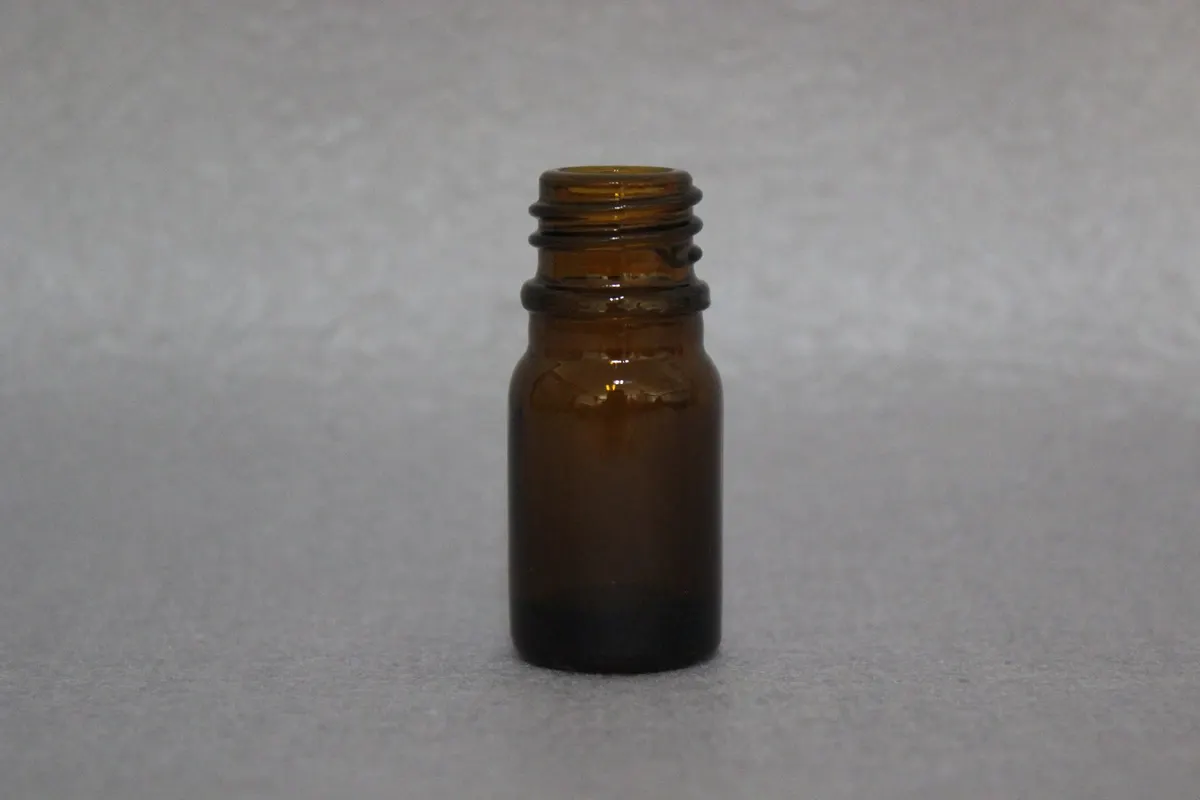
Boston round names a shape family, not a specification. The family shares a round body, a shoulder that curves in without a step, and a short neck, and it runs from about half an ounce up to thirty-two ounces. Essential oils, serums, tinctures, fragrance samples, carrier oils, supplements and household liquids all use it because the bottle stands firmly, carries a small label tidily and gives a dropper, pump or cap a clean seat on the shoulder.
The number on the catalogue line is only the internal volume the mould was designed around. It is silent on the neck finish and the bore, which decide whether a pack can be assembled at all. Two suppliers can each sell an honest 4 oz Boston round and tool them with different necks, so a closure that seals on one fails on the other. Capacity is equally silent on body height, shoulder angle and base recess, and those set how long a pipette or dip tube must be to reach the product.
Ounce and millilitre names for the same mould
Ounce names are approximate. Nominally a four ounce bottle holds one hundred and eighteen millilitres, yet most moulds sold under that name are tooled at 120 ml. The gap widens at eight ounces, where glass is made at both 240 ml and two hundred and fifty millilitres. Printing one of those figures on a bottle tooled to the other is a labelling compliance fault, not a rounding matter. At the small end, half an ounce is normally the 15 ml mould and one ounce the 30 ml mould.
On a specification sheet, write the capacity in millilitres and attach the mould code. Leave the ounce figure to the catalogue.
Reading a finish code and the dimensions behind it
A code such as 18-400, 20-400, 24-400 or 28-410 has two halves. The first is the outside diameter of the finish in millimetres: roughly 18 mm across the top of an 18-400 neck, roughly 28 mm on a 28-410. The last three digits identify the thread group and the finish height.
The 400 group is the short continuous thread found on most small and mid-size Boston round moulds. The 410 and 415 groups have a longer skirt, and a 415 neck usually adds a bead for a tamper-evident band. A cap made for 400 will often turn onto a 415 bottle without meeting the sealing surface properly, and a tamper-evident cap on a 400 neck has no bead to catch. Finishes that differ only in the final digit look alike on a bench and are still not interchangeable.
A mould drawing breaks the code into lettered dimensions. Buyers should be able to find these on it:
- Finish outer diameter and finish height, the two figures the code summarises.
- Thread diameter, measured across the outside of the thread.
- Bore, the internal diameter through the neck. On a dropper project it outranks the rest: it determines whether a collar goes in, whether a plug or reducer presses home, and how much a viscous liquid is throttled on its way out.
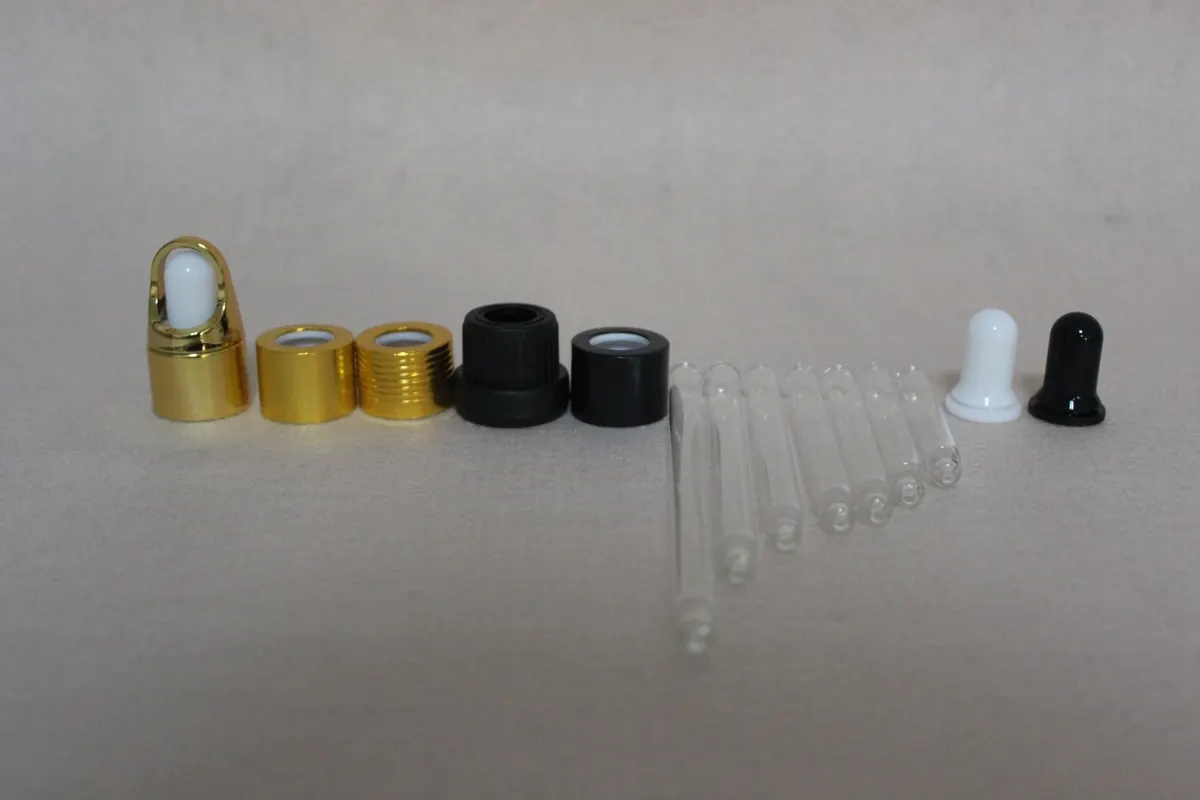
- Bead diameter, the raised ring that a snap-on cap, dropper collar or push-fit insert grips. A dropper chosen on finish size alone can miss the bead and either fail to clip or clip without sealing.
- Finish top to shoulder, the figure most often forgotten, which governs anything that reaches down into the bottle.
Pipette and dip tube length
Glass pipettes, plastic pipettes and pump dip tubes have a fixed length once moulded, and suppliers stock a handful of lengths instead of cutting to order. One that is too long stands on the base, so the collar cannot seat and the pack leaks or the pipette chips. One that is too short strands a visible pool of product and sucks air on the final strokes.
The working rule is a pipette ending a few millimetres above the inside of the base. Taller Boston rounds therefore need long pipettes, and these are stocked far less often than the twenty or thirty millimetre lengths used on the smallest bottles. Choosing a larger capacity is, at that point, also a decision about which accessories are actually available.
Closure families and the liner that seals them
Each closure type brings its own constraint to the neck.
- Continuous thread screw cap. The simplest closure. Its only job is to seal.
- Dropper. A cap, collar, pipette and bulb in one assembly, which means four interfaces must be right together.
- Lotion pump. Adds a dip tube length and an output per stroke. It suits fluids too thick to mist or to drop.
- Fine mist sprayer. Adds a spray pattern to the specification.
- Child-resistant closure. Usually a two-piece push-and-turn or squeeze-and-turn design. It has to sit on a finish it was designed for and generally needs a stated minimum torque applied on the filling line.
The liner does the sealing, and it is selected for the contents, not for the cap shell. Foam backed polyethylene is the general-purpose default. A polytetrafluoroethylene facing is the normal choice against essential oils, other aggressive oils and solvents. Plain pulp, or pulp with polyethylene, is common for dry and low-risk products. If a closure is offered with no liner material named, it has not been specified yet.
Starting from the closure or from the capacity
Either starting point is sound. Begin with whichever constraint is hardest to move.
Closure first
Take this route when the accessory is what the customer experiences: an oil sold by its dropper, a serum on a lotion pump, a supplement in a child-resistant pack. Once that accessory is selected, tooled or printed, its finish is fixed. Look up the finish, list the capacities that carry it, and choose among them on label area, retail price point and the fill volume the closure can deliver.
The benefit is an interface known to work from the outset. The limit is a narrower capacity range than catalogues imply, since a closure drawn for a small finish cannot go onto a large bottle.
Capacity first
Take this route when the pack size is a commercial given, fixed by a planogram slot, a carton, a shipping weight or a price point. The neck then becomes the variable. On a new project that is easy, because a mould can be chosen, and sometimes made, with the finish the closure needs.
An existing mould is stricter. Its finish cannot change without new tooling, so the accessory has to come from closures that exist for that finish and that bore. Some combinations are simply not stocked, a fine mist on a forty millilitre body with a narrow neck being one example. The shelf and carton are right from the first day, but the brand may have to accept a pump or dropper whose collar finish is not the one it wanted.
The order of the final checks
On both routes, finish and bore are confirmed on a drawing first. The closure and liner are then confirmed against that drawing and against the contents. Label, carton and cap appearance can all be adjusted later. Photographs are no substitute for the drawing, because a picture of a cap beside a picture of a bottle shows neither thread height nor bead.
Combinations that work and the ways they fail
Reliable packs have one thing in common: the closure was specified from the finish drawing. A 30 ml bottle moulded at 20-400 accepts a 20-400 dropper, lotion pump or screw cap from any supplier drawing to the same finish standard, so the buyer can change closure source without redesigning the pack. A 15 ml bottle at 18-400 with a PTFE faced liner holds a fragrance or carrier oil without the liner softening. Fit a foam backed polyethylene liner to that same bottle and it suits a water based serum.
Failures sort into four technical types.
- Finish family. A 410 or 415 closure on a 400 neck, or the reverse. It usually threads on and looks closed. Weeks later the seal weeps, or the tamper-evident band turns out to have nothing to hook under.
- Bore. A dropper or plug enters the neck but does not seal against it. The leak appears when the pack lies on its side in a carton.
- Length. The pipette or dip tube does not suit the body. Too long, and the collar stands proud of the shoulder. Too short, and the pack gives air before it is empty.
- Liner. The hardest to see and the costliest. A cap with the wrong liner can pass a static leak test at filling and then fail in the field after the oil has sat against the liner face for a month.
Bottle and closure from two suppliers
The fifth failure is commercial. Buy glass from one source and closures from another, and each supplier will confirm its own part to the standard while declining responsibility for the pair. The interface then belongs to the buyer, along with sealing surface condition, application torque and the transport test.
The defence is paperwork plus a test of the assembled pack. Ask in writing for:
- the finish drawing of the bottle;
- the finish the closure is moulded to;
- the liner material and thickness;
- the recommended application torque.
Then have the pack tested as one unit, not as two components. For goods travelling by parcel instead of on pallets, agree a distribution test beforehand; the ISTA series is the usual reference. For packs that touch food or food-adjacent products, buyers are normally asked to hold material evidence against the food contact provisions of FDA 21 CFR and, in the European Union, against framework regulation 1935/2004 and plastics measure 10/2011. That is a documentation matter, separate from the bottle mould, and whether a given supplier holds a particular certificate has to be asked of that supplier.
Label area at each tier
Print area follows from body diameter and from the height between the shoulder radius and the base radius. Work it out before fixing the capacity, since a regulatory panel that will not fit is a reason to change tier whatever the fill volume. The band figures in the table already exclude the shoulder curve and the base radius. A wrap label also runs shorter than the circumference to leave a handling gap and clear the seam; as a rough working figure, the smallest tier takes a wrap of about seventy-five millimetres and the sixteen ounce tier about one hundred and sixty.
Small bottles force editing. An essential oil in a 15 ml dropper bottle may need a brand name, botanical name, volume, batch code, best before date, safety phrase and a regulatory statement in two languages, all on roughly twenty-five square centimetres of continuous surface. That is why artwork at this size migrates to the base, a folded leaflet or the carton. Stepping up to 30 ml roughly doubles the area, and that, more than fill volume, is often why a brand upsizes.
At 8 oz and 16 oz the problem inverts. There is plenty of surface, but a flat label wrapped far round a curved body distorts towards its edges, so the practical band is narrower than the geometric one and artwork must be set with the curve in mind.
Two more limits apply at every size. Dropper and pump collars overlap the top of the print band, so usable height is measured from beneath the collar, not beneath the finish. And many moulds have a recessed base carrying a mould code and a volume mark, which competes with any artwork or embossing intended for the underside. When a regulatory panel is a tight fit, settle the label artwork and the closure together.
Reorders, substitutions and one closure family across a range
After launch, the lookup becomes a maintenance tool. Three events send buyers back to it:
- A reorder from a second glass supplier. Capacity will match; the finish may not. Compare the two finish drawings before placing the order instead of trusting that the closures already in the warehouse will fit.
- A discontinued closure. The replacement dropper or pump has to match the same finish, the same bore and the same pipette or dip tube length.
- A range extension. A larger size joins an existing line.
The extension rewards planning. A brand running 15 ml, 30 ml and 60 ml packs on three different finishes stocks three closure families, three liner specifications and three sets of artwork, and every substitution turns into three projects. Settling on one finish family across the sizes available that way leaves a single closure inventory and a single liner specification, so a new cap colour or liner applies to the whole line at once.
Where the necks across tiers accept one closure, accessory cost and risk both drop. It is one of the few cases in which the closure catalogue, not the bottle, settles a glass decision, and it is why the finish question should come before any tier-by-tier price comparison.
What to send for a matching check
We can fill in a row of the lookup for a specific pack. A useful brief contains:
- the capacity tier or the bottle's mould code;
- the closure family wanted and what it must do;
- the product type: oil, water based fluid, alcohol blend or dry solid;
- the market where it will be sold;
- any regulatory panel the label has to carry.
If the bottle already exists, its finish drawing, or failing that the finish code, is the most valuable item because it removes the largest assumption. If only the closure has been chosen, send its finish and its pipette or dip tube length, and we can list the tiers that accept it with the print area of each.
Simple matching questions can be settled from a drawing. Anything bound for production should be proven on a physical sample with the real liner and the real contents, tested as an assembled pack. Quantities, tooling, prices and timing are not published here; they are confirmed against the enquiry.
Related topics covered elsewhere
This article stops at what fits what. Thread, finish and liner design, and the way they seal together, are explained in the guide to cap and liner sealing on Boston round bottles. Pipette dose accuracy, graduation marks, drops per millilitre and bulb ageing are dispensing questions answered under dropper bottles. Tint, light transmission and colour approval sit with amber Boston round bottles, and colour is best settled there before the closure match. If the bottle shape is still open within a wider oil programme, the essential oil bottle overview compares formats and accessories.
Frequently asked questions
What neck finish do Boston round bottles use?
There is no single answer, because the finish belongs to the tier and the mould, not to the shape. The table gives the common options at each capacity, from 18-400 on the smallest bottles to 33-400 or 38-400 at 1000 ml. Since most tiers have several, ask for the drawing of the exact mould.
Do all 4 oz Boston round bottles take the same cap?
No. Moulds sold at that capacity come with 20-400, 22-400 and 24-400 necks. A 20 mm closure will not close a 24 mm finish at all, and a 410 or 415 closure on a 400 neck may thread on and still not seat.
What is the difference between an 18-400 and an 18-415 finish?
Both necks are about 18 mm across. They differ in thread group and finish height: 400 is the short continuous thread, while 415 has a longer skirt and normally a bead for a tamper-evident band. Caps are not safely swapped between them.
Can I fit a dropper into an 8 oz Boston round bottle?
The collar will go on if the finish matches. Pipette length is the obstacle. In a bottle this tall, a 30 mm or 45 mm pipette leaves product behind and draws air, and long pipettes come in fewer lengths and fewer finishes. A lotion pump, or a screw cap with an orifice reducer, is usually more practical.
Which Boston round size should take a child-resistant closure?
Several do, most commonly from 15 ml to 240 ml. Pick the closure family first, ask which finishes it is moulded to, then choose a capacity that carries one of them. Allow for the minimum application torque it will need on the filling line.
Should I choose the bottle size first or the closure first?
Start with whichever is already fixed. An accessory that is selected or tooled sets the finish, and the capacity follows. A size dictated by carton, planogram or price point sets the capacity, and the closure is chosen from what suits the existing mould's finish.
How much label area does a 2 oz Boston round bottle give me?
Typically a circumference near 113 mm and a printable band of about 66 mm, or roughly 6,000 square millimetres after the handling gap and seam. Measure usable height from under the dropper or pump collar.
Why will a cap from one supplier not seal on a bottle from another?
Most often the two parts follow different finishes while sharing a capacity name. Finish family, thread height, bore and bead can each differ. Collect the four written items listed in the two-supplier section above and test the assembled pack.