One of our guides on wholesale drink bottles; start there for the overview.
For a logo that has to survive daily washing, specify either etching or screen printing in fired ceramic ink on a stock glass body; decals are for photographic art and spray coating is for changing the colour of the whole bottle. Fired ceramic print holds up for 500+ dishwasher cycles, whereas low-temperature organic ink sold under the same "screen print" name can give out within 50. Sampling is a fixed sequence of artwork, mockup, physical sample and wash test, and cost and minimums are quoted per project.
Start from a stock body and spend on decoration
Most custom water bottle orders come from four kinds of buyer: fitness and wellness brands retailing logo bottles, hotels and resorts fitting out rooms and spas, companies ordering executive or event gifts, and promotional distributors serving all three. What they have in common is that the glass itself is rarely new. The body is a catalogue shape, and the custom work goes into the branding and the cap.
The usual stock bodies are clear flint cylinders in 350 ml, 500 ml, 550 ml, 750 ml and 1 liter. Shoulder, swing-top and voss-style profiles are the common alternatives. If the project does need a shape of its own, our custom glass bottle development page explains how a new profile is developed.
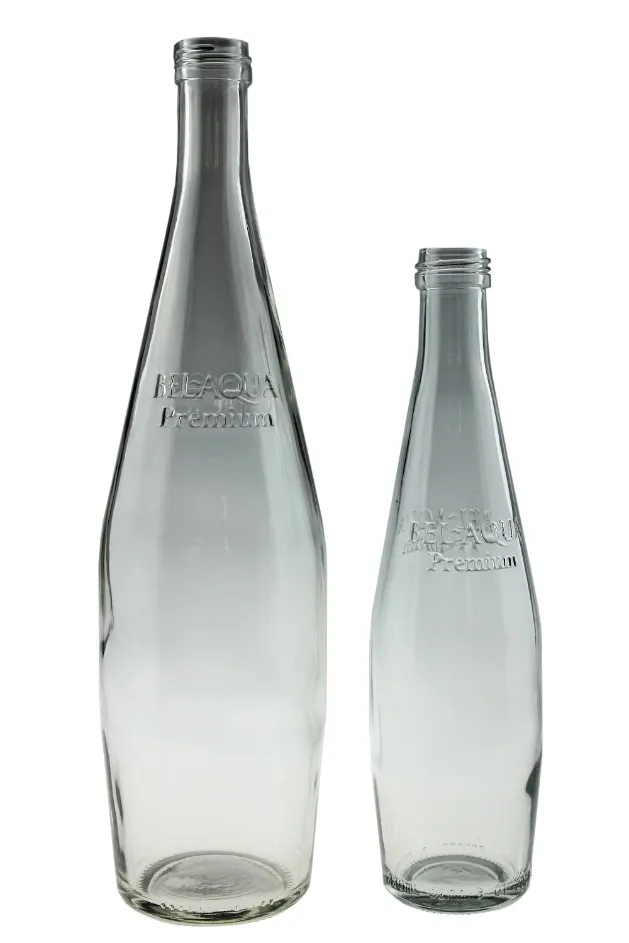
Four ways to put a brand on the bottle
Each process gives a different look and a different wash life, and the choice also feeds into unit cost and minimum quantity.
| Process | Appearance | Wash durability | Best suited to |
|---|---|---|---|
| Silk screen, 1–4 color | Sharp, opaque, Pantone-matched logo | Excellent; 500+ dishwasher cycles once fired | Logos of one to three colors; the default choice |
| Laser or sand etching | Frosted, tone-on-tone mark | Permanent; glass is removed, so nothing can wash away | Minimalist brands that want no ink at all |
| Waterslide or fired decal | Full-color artwork, gradients, photographs | Very good when kiln-fired | Art that screens cannot reproduce |
| Full-body spray or frost coating | Color-dipped or matte frosted body | Good, though matte sprays can scuff | Changing the bottle color, with a contrasting printed or etched logo on top |
The point first-time buyers miss is that "screen print" covers two different inks. Ceramic ink is cured at ~600°C and becomes, in effect, part of the surface. Organic ink cured at low temperature looks the same on delivery and then wears off in the dishwasher. Write "fired ceramic ink" into the specification for any drinkware.
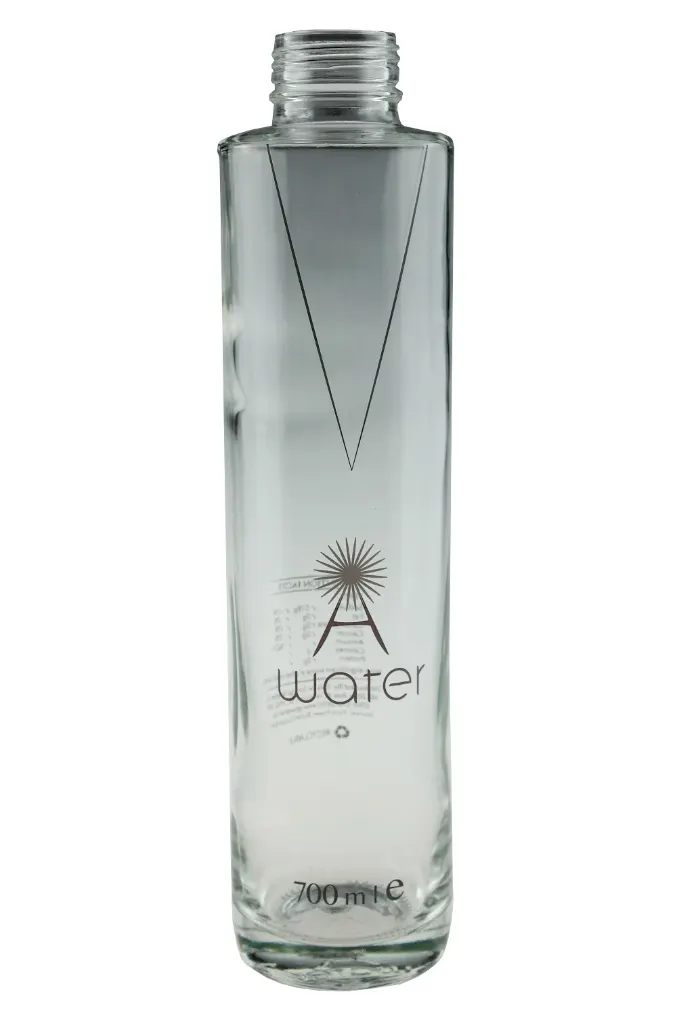
The same four processes apply to carafes and matching glassware in a set; our decoration services overview shows how they carry across shapes.
Sampling, from artwork to golden sample
Misprinted containers almost always trace back to a step skipped here. The sequence we run with buyers is:
- Artwork package. Send vector files (AI/EPS/PDF), Pantone references and a placement drawing giving the logo dimensions and its height above the base. A flat logo distorts when it wraps a cylinder, so request a wrap template drawn for the exact bottle.
- Digital mockup. Check position and proportion on screen. This stage catches about 80% of problems, but it cannot show color or texture.
- Physical samples. Have two decorated bottles sent: keep one untouched as your approval archive and use the other for testing.
- Wash and destructive tests. Put the test bottle through 20 dishwasher cycles, a tape-adhesion test and a rub with isopropyl alcohol. Fired ceramic print should come out with zero change. Any change at all points to a process fault that must be corrected before the production run.
- Golden sample sign-off. The approved bottle becomes the contractual reference. Record its photograph and your signature date in the purchase order.
Reorders move faster than a first order because the screens and masks are already on file. Plan backward from the launch or event date: for gift programs tied to the December holidays, aim to have the golden sample approved by early September.
Food-contact documents and thermal shock
A water bottle is food-contact drinkware and should be documented as such. Ask for an FDA food-contact compliance statement and a lead and cadmium test report. The report has to cover the decoration inks as well as the glass, because Proposition 65 exposure claims in drinkware usually go after the printed surface. Where the cap is bamboo or wood, ask for a declaration that the lacquer is food-safe.
Users pour ice into warm bottles and wash them hot, so thermal shock belongs in the specification too. A rating for a 42°C differential is the practical standard for a bottle in daily use.
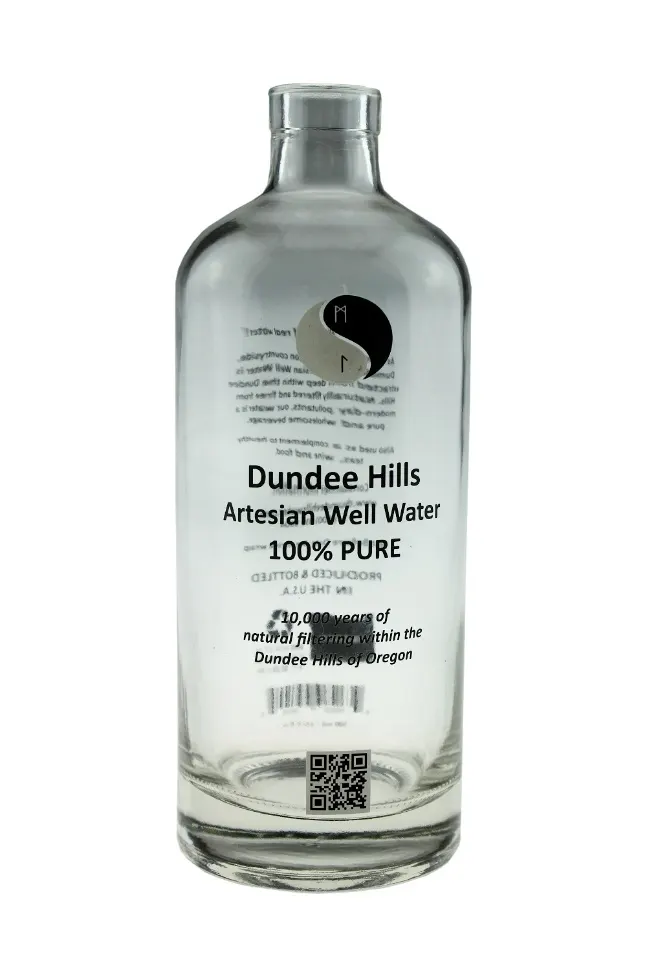
What drives cost and minimums
We quote each project individually. The figure depends on whether a mould is involved, which decoration process is chosen, the quantity and the freight terms. Our glass bottle price guide gives wider context across bottle categories.
A buyer whose first run is small has a bridging option: import undecorated stock bottles and have them screened domestically, then move decoration to the plant once volume supports it.
FAQ
What is the minimum order for logo glass water bottles?
It is set per project. The bottle body, the decoration process and the line the job runs on all affect it, so we confirm it with the quotation.
Which logo process lasts longest?
Etching, by laser or sand, because it takes glass away instead of laying ink on top. Among printed finishes, fired ceramic screen print is the durable one.
What does a custom glass water bottle cost landed in the US?
There is no single figure. Mould, decoration, quantity and freight terms each change the result, which is why it is quoted per project.
How long do sampling and production take?
The schedule is confirmed per project once the decoration and line slot are known. Repeat orders are quicker than first orders.
Can a bottle carry full-color or photographic artwork?
Yes. A waterslide decal is applied and then kiln-fired onto the glass.
Are these bottles food-safe and Prop 65 compliant?
They can be, and the paperwork is how you confirm it: the FDA statement and the lead and cadmium report described above, with the inks included in the testing.