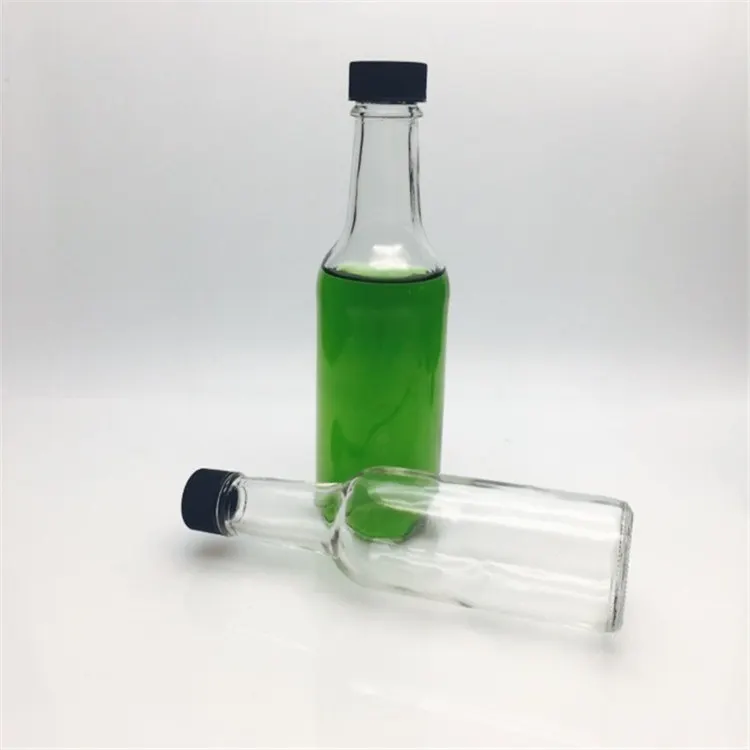
This page is for the buyer who has to fix the capacity of a glass water bottle and keeps getting a different answer from every department. Sales wants the size the hotel or the subscription customer asks for, the brand team wants a size that reads well on a label, the operations team wants something the filler and the delivery van already handle, and the sustainability lead wants a size that survives a return circuit. This page resolves one decision only: given the channel the water is sold through, the way it is delivered, and whether the bottle is single-trip or returnable, which capacity tier is defensible and which closure belongs on it. It is a capacity-and-channel page. It is not a load-planning page, because carton, pallet, layer and container arithmetic sits on bulk glass water bottles. It is not a general beverage specification page either, because carbonated soft drinks, juices, flavoured water and dairy follow different rules and are handled on beverage bottle sizes. Everything below assumes the pack is glass, the contents are water, and the open question is how many millilitres, with which closure, for which route to the customer.
What Constrains a Water Bottle That Does Not Constrain Other Drinks
Water looks like the simplest thing to put in a bottle, and in one sense it is: it is clear, it has no pulp, no sugar, no preservative and, in most programmes, no carbonation. That simplicity removes a whole set of constraints that dominate other categories. There is no pressure load to design around, which is why a crown cap is optional rather than compulsory at the small sizes. There is no viscosity, so a narrow neck will pass the product at full line speed and a wide mouth buys nothing on the filling side. There is no light sensitivity to protect against in the great majority of cases, so flint glass is the default rather than amber or green, and the expensive colour discussion simply does not start. What is left is a shorter list, and it is a different list from the one a juice or a carbonated brand works from.
The first remaining constraint is price per litre, and it is brutal in a way that is invisible in most other beverage categories. Water is the cheapest liquid a customer can be asked to pay for, so any cost carried in the pack is a larger share of the selling price than it would be for a juice, a spirit or a cosmetic oil. Weight is therefore a live decision rather than an engineering footnote, and capacity interacts with weight directly: every extra millilitre of internal volume needs a taller or wider body, more glass, a heavier case, and a larger share of a weight-limited container. A capacity that looks unremarkable on a label can move a programme into a different freight bracket, which is the single most common reason a water capacity decision is revisited after the costings come back.
The second constraint is that water is the category most likely to be poured into a returnable bottle. Hotels refill glass water bottles from larger containers or from a dispenser, offices run refill in the building, and subscription delivery services collect empty bottles and wash them. A returnable programme changes what capacity means. It is no longer just how much the customer drinks, it is how the bottle fits the crate cell that carries it, the washer pocket that holds it, the labeller that re-labels it, and the cap that has to seal and reseal reliably across many cycles. Capacity in a refill programme is a system dimension, not a serving dimension.
The third constraint is the destination market. Deposit return and container return schemes exist in a growing number of markets and they are written around capacities. A scheme can set a minimum or a maximum volume that qualifies, it can require a deposit mark, and it can require the bottle to carry specific text or a specific material mark. Packaging waste rules add a weight and material pressure that also lands on the capacity decision, because a heavier refillable bottle has to justify itself over enough trips. Food contact documentation such as a food contact declaration is a separate question from capacity and is answered elsewhere, but the market that asks for the declaration is often the market that also sets the deposit and labelling rules, so both arrive in the same brief. It is worth building what can be called a bottled water size chart for your own programme early, matching each capacity to the market, the channel and the scheme rules, rather than treating sizes as a free choice that is settled last.
The Four Water Channels and What Each One Asks of a Capacity
Almost every glass water bottle programme in the trade falls into one of four routes, and each route has a habit that shows up in the capacity it prefers. Buying for a channel that habit does not fit is the most expensive form of a capacity mistake, because the cost appears as breakage, returns, wasted shelf space or an unhappy account rather than as a line item on the quotation.
In hospitality, food service and catering, the bottle has two jobs at different sizes. In a hotel room, a small bottle is expected to be finished by one guest in one sitting, and anything the guest does not finish will be poured away by housekeeping, so a small capacity is the economical choice even though it costs more per litre. On a restaurant or banquet table, the bottle is poured into glasses and often shared, so a larger capacity reduces the number of bottles handled per cover and looks more deliberate on the table. The same property that makes a large bottle efficient at table, namely that it is opened once and poured quickly, is the reason small bottles dominate in rooms. This channel also generates the heaviest refill behaviour: in-room and back-of-house refilling from bulk is well established, and it is the main reason a hotel group will ask about a standardised capacity that fits its existing crate and washer.
In retail, grocery, convenience and forecourt, the capacity is set by the occasion and by the shelf. A chilled single-serve bottle has to be comfortable in one hand and has to fit a chiller door rail, and a larger bottle aimed at home consumption has to survive several servings over several days, which puts reclosability ahead of volume. Retail is also where the deposit scheme bites hardest, because the scheme mark has to be printed on the label or the glass and the capacity has to fall inside the qualifying range. Retail programmes are usually single-trip, which means the bottle is specified for one journey and the weight that a returnable programme would add is not carried.
Conferences, events, exhibitions and gift or hamper packs behave differently again. The capacity is chosen to fit a presentation format, a box insert, a printed programme or a branded sleeve, and the deadline is fixed by the event date rather than by a normal production calendar. Deliveries arrive as mixed pallets to a venue or a fulfilment centre rather than as regular route drops to a single customer, and refilling is rare because the bottle is a keepsake. Capacity here is often the smallest in the programme, because the bottle is a piece of communication rather than a means of hydration.
Subscription and home or office delivery is the fourth route and the one with the most demanding capacity logic. Bottles leave a depot on a repeating schedule, they come back empty, and the same bottle has to perform the same way on trip ten as on trip one. The delivery unit is a crate or a dedicated case rather than a corrugated shipper, the driver is also the collector, and reverse logistics have to be planned from the first order. In this route, capacity standardisation is worth more than any single-size advantage, because every non-standard capacity adds a crate configuration, a washer pocket setting and a stock line that the depot has to hold.
The Decision Chain: Delivery Format, Then Capacity, Then Closure
The order in which the questions are asked determines whether the specification holds. Most buyers start with capacity and then try to make everything else fit, which produces the familiar sequence of a bottle that is right on a shelf plan but wrong in a crate. The reliable order runs the other way, from the part of the system that cannot be changed to the part that can.
Start with the delivery format, because it is the constraint that is hardest to move. Ask what the bottle travels in, whether that is a corrugated shipper on a pallet, a returnable crate on a route truck, a mixed pallet to an event venue, or a parcel carrier network. The delivery format sets a maximum case weight, a maximum case count per layer and per pallet, and, in a crate programme, the exact cell dimensions the bottle has to sit in. These are hard numbers that come from your own operation or from the scheme you are joining. They eliminate whole capacity ranges before any brand preference is expressed.
Choose the capacity inside that envelope, and choose it against the occasion rather than against a competitor’s bottle. A capacity is defensible when it matches how the bottle is consumed and how it is counted: single serve in closed environments, pour-and-share at table, or a multi-serving format for home use. Where the programme has any freedom, keeping the range inside one body diameter family pays back at the filler, the capper, the labeller and in the crate, because a diameter change normally needs change parts while a height change is a routine adjustment.
Then choose the closure, because the closure is the item most likely to force a change back up the chain. A closure decision is really a decision about whether the bottle reseals, whether it holds a light carbonation, whether the customer can open it without a tool, and whether the neck survives repeated capping in a refill programme. A closure that requires a different neck finish than the one your mould was cut for is not a swap, it is a new mould, so the closure family has to be agreed at the same time as the capacity rather than after the first production run. Finally, check the label, because the label is where the market’s mandatory text lands and the smallest capacities are where that text runs out of room.
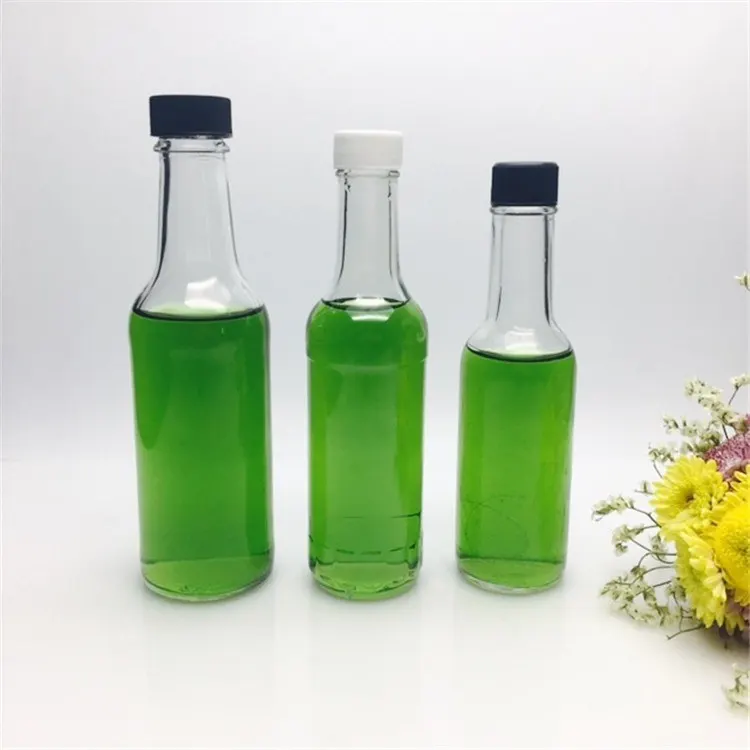
Glass Water Bottle Capacity Mapped to Channel, Delivery and Closure
The table below is the working core of this page. Each row is a capacity tier as it is normally bought, the channel and delivery format that tier serves, the closure family that suits it, whether the tier is a realistic candidate for a refill and return circuit, what the capacity does to label area and shelf presentation, and the items that have to come back from the factory as numbers rather than as assurances. Nothing in the last column is a figure this page can supply, because fill heights, tolerances, case weights and container counts all depend on the specific mould and on your own equipment and route.
| Capacity tier and how it usually ships | Channel and delivery format it serves | Closure normally used | Realistic for a refill or return circuit | Label area and shelf consequence | What to confirm with the factory |
|---|---|---|---|---|---|
| About 200 ml, shipped in a compact case on a pallet or in an amenity tray | Hotel rooms and amenity, airline and rail catering, tasting and sampling, event giveaway | Small screw closure or a crown cap where pressure is not involved; a flat or lined cap suits a very short neck | Rarely. The volume is too small for a wash-and-refill circuit to repay the handling, and the bottle is treated as consumable | A small circumference leaves the least wrap for mandatory text, deposit marks and ingredient or source statements, so the design has to be text-first | The finish code and closure diameter the mould accepts, the fill height at your product temperature, and whether the bottle is stable enough for your case divider |
| About 330 ml, shipped in a corrugated shipper or a 12-place crate | Retail single serve, cafe and bar service, hotel minibar, conference and meeting rooms | Screw closure for resealability; crown where the water is lightly carbonated or where cost per closure matters most | Possible, and common in hotel and office use, but only if the wall and the neck are specified for repeated capping from the start | Enough wrap for the full mandatory set plus a brand block, and it presents well at eye level on a shelf or chiller rail | Whether the finish is the same family as your existing capping head, the headspace the closure needs, and the body diameter against your crate cell |
| About 500 ml, shipped in a corrugated shipper, a crate or a subscription carrier | On-the-go retail and convenience, food service and takeaway, office and subscription delivery, hotel back-of-house refill points | Screw closure in the great majority of programmes; aluminium roll-on where the brand is sold on the object | Yes, and this is the most common refillable tier because the volume balances per-trip weight against the number of trips needed | Comfortable label area for mandatory text, a full brand block and a deposit mark without shrinking the type to an unreadable size | The refill grading of the glass and neck, the number of capping cycles the neck is expected to survive, and the washer pocket dimension the bottle has to clear |
| About 750 ml, shipped in a crate on a route truck or in a two-bottle carrier | Restaurant and banquet table service, hotel dining, subscription and home delivery, premium retail where the water is poured over a meal | Screw closure, or a swing and porcelain stopper where the bottle is intended for the table and for repeated use | Yes, provided the crate cell and the washer are built for the taller body and the corresponding weight | The largest comfortable label area in the common range, which suits a source story, a mineral analysis and a deposit mark together | Whether the taller body is stable enough for your crate and conveyor, the washer pocket clearance, and the closure’s resealing performance over many cycles |
| About 1000 ml, shipped in a crate or a heavy-duty case, often as the back-of-house format | Banquet and conference service, back-of-house and dispenser refill, family retail, larger subscription deliveries | Screw closure with a wide enough opening for pouring and for filling at speed | Yes for back-of-house and subscription use, but the per-trip weight has to be justified against the trips the bottle will actually make | Maximum wrap area, but the bottle usually sits on a lower shelf or off-shelf, so front-of-pack design matters less than the closure and the pour | Loaded case weight against your manual handling limit, the pour behaviour of the neck, and the fill height at the product temperature you actually use |
How Capacity and Closure Pair Up in Practice
Capacity and closure are chosen together because the neck is cut into the same mould as the body, and the neck geometry is the part of the bottle that the customer touches every time. A closure decision made late is a mould decision made twice.
A crown cap is the cheapest closure and the fastest to apply at high speed, and it earns its place where the water is lightly carbonated or where the cost per unit is the dominant consideration. It does not reseal, which rules it out wherever the customer is expected to carry a part-finished bottle, and it is therefore uncommon in subscription and on-the-go programmes. A screw closure is the default for still water because it reseals, it is familiar, and it can be applied and removed by the customer without a tool; where a light carbonation is present, the glass and the closure both have to be rated for the internal pressure rather than one of them. An aluminium roll-on closure is chosen for premium water sold on the strength of the object itself, and it takes the neck into a different finish family that has to be agreed before the mould is cut. A swing or porcelain stopper belongs to table and gifting formats, where the bottle is expected to be reclosed many times and to look deliberate on a table, and it carries the highest closure cost and the most handling care of the group.
In a refill programme the closure question changes character. The closure has to protect the product on trip one and still seal on trip ten, so the specification is about the durability of the neck thread or crown bead and about the seat rather than about the price of a single cap. The practical consequence for capacity is that refill programmes tend to narrow their range rather than widen it, because each additional capacity multiplies the crate configurations, the washer settings and the closure stock lines the depot has to hold. Where a single capacity can serve two selling occasions, a refill programme will normally accept the compromise rather than run two bottle sizes through one depot.
Label Area, Shelf Facings and the Capacity You Can Actually Sell
Label area is a capacity decision that is usually discovered too late. The wrap available on a bottle scales with circumference and with the height of the label panel, so a small capacity does not simply carry a smaller version of the same design; it carries less of everything. Mandatory content is fixed by the market rather than by the brand, and it does not shrink when the bottle does. Ingredient or source statements, warnings, a deposit mark, a material identification mark, a batch code and the market’s own requirements all compete for the same surface. On a small capacity the sensible approach is to design the mandatory text first, place the brand block in what remains, and accept that the smallest tier is the wrong place for a long source story.
Shelf presentation runs the other way. A larger capacity occupies more shelf and more warehouse cube per unit sold, and in a market that sells water by the litre the shelf is a cost as well as a stage. Larger formats also tend to move to lower shelves, where the front panel is seen at an angle or not at all and where the closure and the silhouette carry the recognition instead. Where a brand runs several capacities, the label usually works hardest at the small and middle tiers and the mould itself does the work at the large tiers. This is one of the few places where a capacity decision can be made on presentation grounds and still be defensible, provided the delivery format and the closure family are already fixed.
Delivery Unit Maths: Why Capacity and Case Count Move Together
A capacity does not travel on its own, it travels in a case or a crate, and the delivery unit is where the capacity decision turns into a handling decision. A larger bottle means fewer units per case at the same case weight and fewer cases per layer, so the number of times a case is picked, loaded, dropped and collected per litre sold falls as capacity rises. That is the real economy of a larger format, and it is why a subscription or banquet programme can be efficient at 750 ml or 1000 ml while the same capacity is inefficient in a hotel room where most of it is discarded.
In a refill programme the same arithmetic runs in reverse. Every returned bottle has to be collected, washed, refilled and re-delivered, so the handling count per litre is set by capacity in the same way, and the crate cells and the pallet pattern are fixed by the crate rather than by the case. A capacity that does not divide cleanly into the crate and the pallet pattern wastes cube on every trip for the life of the programme, which is a far larger number than the difference in glass cost between two similar capacities. The full carton, pallet, layer and container arithmetic is not the subject of this page and is worked through on a dedicated page for bulk water bottle loading; what matters here is that the capacity must be compatible with the delivery unit before it is chosen.
Where This Page Stops: Bulk Loading and General Beverage Sizes
The boundary of this page is deliberate and worth stating plainly. This page answers which water bottle capacity belongs to which channel and delivery format, and which closure family the capacity and the channel together require. It does not answer how many bottles fit in a container, how a pallet should be built, or what the delivered cost per bottle works out to be, because those are load-planning and cost-structure questions with their own arithmetic. If your question is container loading, pallet patterns, carton and layer rules or the trade terms for a water bottle shipment, the page that carries that work is bulk glass water bottles, and the wider container and loading treatment for glass packaging is on glass containers in bulk.
A second boundary matters because buyers often arrive here with a beverage programme rather than a water programme. If the liquid is carbonated, a juice, a flavoured drink or a dairy product, the constraints are different from still water: pressure, pulp, viscosity, hot filling and light sensitivity all enter the decision, and the capacity reasoning has to follow those constraints rather than the ones set out above. That specification work is on beverage bottle sizes. And if the decision is still one level higher, namely whether the pack belongs in a glass bottle family at all, the family-level overview sits on the glass bottles hub, which routes each remaining question to the page that answers it.
Frequently Asked Questions
What are the standard glass water bottle sizes?
The sizes that are actually traded fall into five familiar tiers: about 200 ml, about 330 ml, about 500 ml, about 750 ml and about 1000 ml. The tier you buy is normally named to the nearest common figure in your market rather than to an exact figure, and the nominal capacity on a label is not the same as the brimful volume of the mould: a bottle has to contain its declared volume at a defined fill height with a defined headspace, so the physical glass is always larger than the number printed on it. Treat the five tiers as a starting language for the conversation rather than as a catalogue of stock items, and settle the actual nominal capacity, the fill height and the tolerance with the factory against your own product and equipment.
How do I choose between 330 ml and 500 ml for a hotel or a cafe?
Choose by occasion, not by preference. In a hotel room, the bottle is usually finished in one sitting by one guest, and anything left is poured away by housekeeping, so the smaller capacity wastes less and costs less per room. In a cafe or on a restaurant table, the bottle is poured into glasses and often shared, so a larger capacity reduces the number of bottles handled per cover and pours more deliberately. Many hospitality groups run both tiers for the two different settings rather than choosing one, provided the two capacities share a body diameter so the line, the crate and the storage do not multiply.
Which capacity works best for a refillable return programme?
The middle tiers do most of the work in practice, with about 500 ml and about 750 ml carrying the majority of refill volume because they balance the weight carried per trip against the number of trips needed to justify the washing and collection cost. What matters more than the tier itself is standardisation: a return programme is efficient when the bottle fits one crate cell, one washer pocket and one labeller setting. Adding a second capacity to a refill programme adds a crate configuration, a washer setting and a stock line at the depot, so a range that is slightly wider than ideal but built from standard capacities is usually cheaper to run than a narrower range built from specials.
Does a larger capacity always cost more per bottle?
The glass itself normally costs more as capacity rises, because a larger internal volume means a larger body and more material. The cost per litre sold, however, often falls, because the same case, the same pallet movement, the same collection trip and the same closure handling are spread over more litres. The two figures move in opposite directions and the answer depends on which one your business is actually paying. A hotel buying for rooms should look at cost per serving, because waste dominates; a subscription service should look at cost per delivered litre, because handling and collection dominate. Both figures should be confirmed against a quotation rather than estimated from capacity alone.
Can the same capacity take a crown cap and a screw cap?
Not on the same mould. The neck finish, meaning the geometry at the top of the bottle that the closure grips or seats on, is cut into the mould, and a crown seat and a screw thread are different finishes. A bottle cannot be switched between a crown and a screw closure after the fact; it is a different mould and a different specification. This is why the closure family has to be agreed at the same time as the capacity. If your line already runs one closure family, or your market expects customers to reseal the bottle, that expectation should be stated in the first brief so the neck is cut once rather than twice.
How much label area do I lose at 200 ml?
You lose enough that the design has to be built the other way round. The wrap available scales with the circumference and the height of the label panel, so the smallest tier gives the least room, while the mandatory content set by the market, including warnings, source or ingredient information, a deposit mark, a material mark and a batch code, does not shrink with the bottle. The practical method is to lay out the mandatory text at a legible size first, then place the brand block in the space that remains, and to accept that a long source story or a decorative illustration belongs on a larger capacity rather than on the smallest one.
What should I send to get a capacity and closure recommendation?
Send three things: the channel the water is sold through, the delivery format it travels in, and whether the bottle is single-trip or returnable. Add the destination market so the deposit and labelling rules can be taken into account, the closure family your line already runs if that is fixed, the crate or case dimensions if you have them, and the annual volume with the order rhythm. Those items let a supplier answer on capacity, finish, closure options and case configuration together. What should come back is a capacity with a finish code, a closure family and the case configuration the format should ship in, not a millilitre figure on its own.
Send Your Channel, Delivery Format and Refill Position
Three lines are enough to start a useful conversation. State the channel the water is sold through, whether that is hotel rooms, a restaurant table, a retail chiller, a conference or a subscription route. State how the bottle is delivered and collected, including whether it travels in a corrugated shipper, a returnable crate or a parcel, and give the crate cell or case dimensions if you already have them. And state whether the bottle is single-trip or intended for a refill and return circuit, because that single answer changes the wall, the neck and the capacity range more than any other item in the brief.
What should come back is a capacity with a finish code, a closure family with its resealing and tamper-evidence status, the case and crate configuration the format should ship in, and a clear statement of which figures still have to be confirmed against your own line and route. If the reply is a millilitre figure with no finish and no delivery unit, the channel question has not been answered, and the specification will have to be rebuilt at the filling trial, which is the most expensive place to rebuild it.