Part of our matte glass bottles range; the stock moulds are pictured at the end of this guide.
What a frosted or coloured bottle costs depends on which process produces the effect, how many decoration passes the design needs, and whether the base bottle is a stock shape or a new mould. Acid etching and furnace colour are permanent because they are the glass; spray frost and spray colour are cheaper and more flexible but remain coatings; electroplating sits at the top of the cost range and is the most fragile. Exact figures are quoted per project against the drawing and artwork, so the useful work before asking for a quote is choosing the right process for how the bottle will be handled.
Choose the process by how the bottle will be handled
Durability, not appearance, should make the first cut. A bottle that lives on a back bar, goes in and out of ice buckets or is washed in restaurant service needs a finish that is part of the glass. A retail bottle with controlled handling can carry a coating, and the coating costs less.
| Process | Durability | Typical use |
|---|---|---|
| Acid-etch frosting | Permanent, integral to the glass | Back-bar spirits, restaurant water service |
| Spray frosting | A coating that needs protection in transit | Retail-shelf wine and beverage |
| Spray colour coating | A coating, so write abrasion tests into the order | Cosmetics and beverage differentiation |
| Furnace colour | Permanent, food-contact integral | Amber, green, cobalt and black glass |
| Electroplating or vacuum metallization | The most delicate, needs careful handling | Spirits, fragrance, gift channels |
| Screen printing, for reference | Fired inks: excellent, survives dishwashing | Branding on top of any of the above |
Frosting by acid etch or by spray
An acid etch roughens the glass itself with a controlled fluoride-based bath. The result is a fine, velvety frost that will not scratch off, peel or fade, however often the bottle is washed or chilled. It is the more expensive of the two frosts, because it is a wet chemical process with environmental compliance behind it, and the etch has to be tightly controlled or curved surfaces streak. One side effect is worth knowing before approving a sample: etching makes the glass look paler, so a frosted amber bottle appears several shades lighter than the same bottle left glossy.
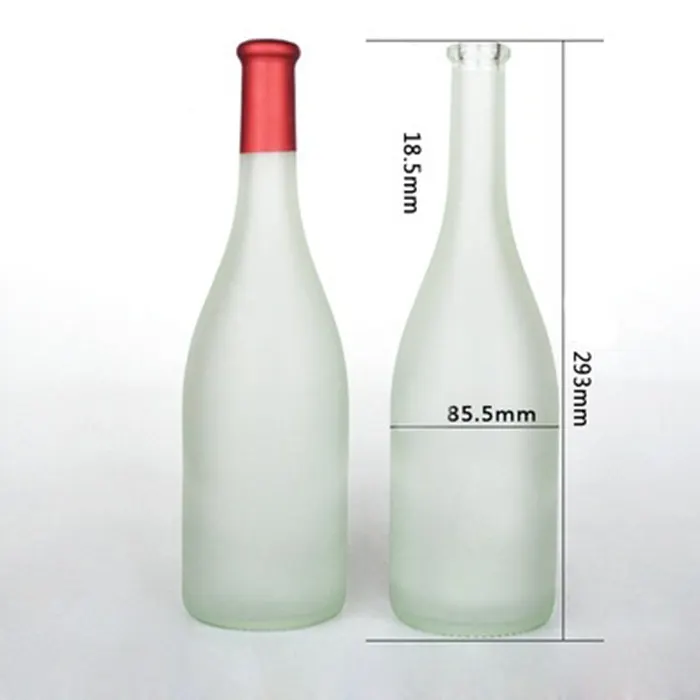
Spray frosting lays a frost-effect paint over the glass. Opacity can be set at any level, the frost can be tinted, and it can fade from clear at the shoulder to full frost at the base, which is a look many wine brands ask for. It is also the lower-cost route. What you give up is wear resistance: a sprayed frost can scuff in transit or rub thin where bottles touch, so we specify divider cartons and a board grade for each spray-frosted project. Current UV-cured frost coatings pass cross-hatch adhesion and 100-cycle abrasion tests comfortably, yet they are still a layer on top of the glass.
Three ways to colour a bottle
Furnace colour is the only route where the colour is the material. Amber, green, cobalt and black are melted with the colourant in the batch, so the colour runs through the wall, never wears and is food-contact-safe throughout. Our amber glass bottle range is the usual starting point.
Spray colour coating puts any Pantone reference on any stock bottle, as an opaque, translucent, metallic or gradient finish. Most cosmetic and beverage colour work is done this way. Each coating pass adds cost, and durability has to be designed in, so state the adhesion and abrasion test criteria in the purchase order instead of assuming them.
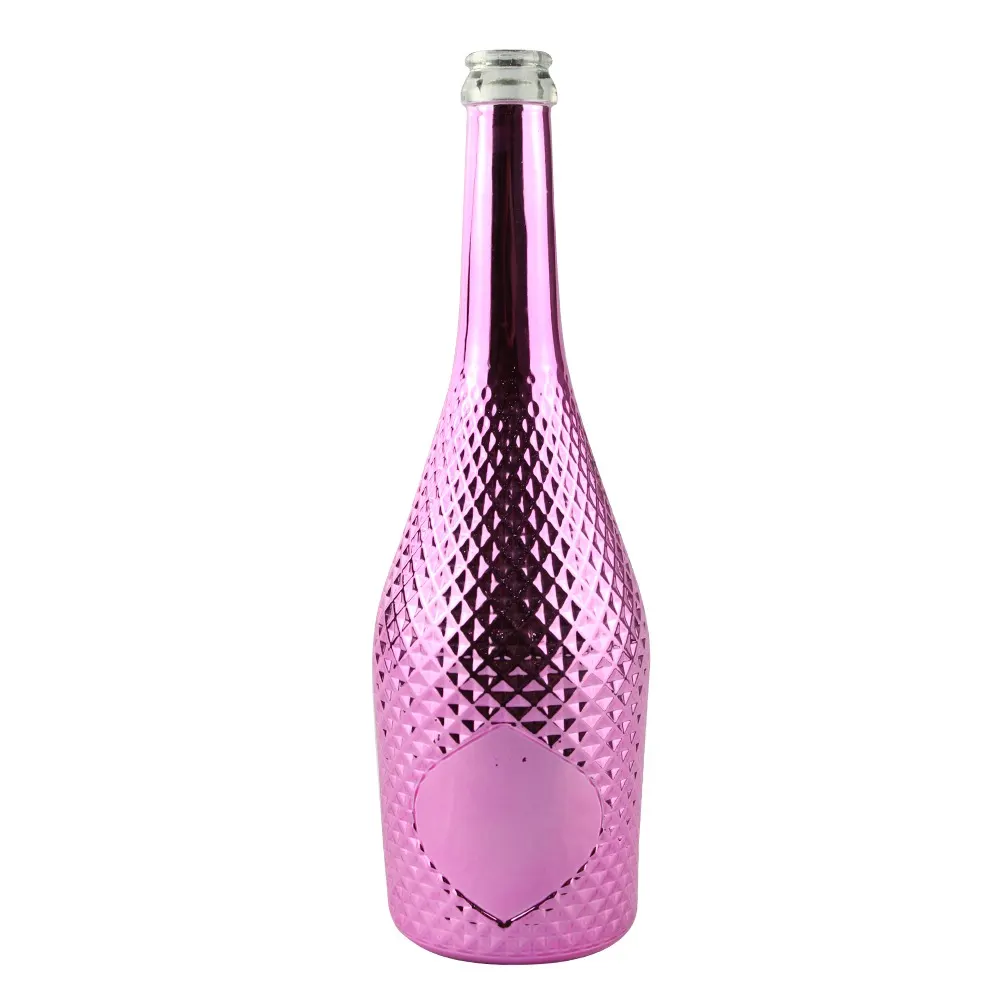
Electroplating and vacuum metallization deposit chrome, gold, rose gold or iridescent finishes. They cost the most per bottle and mark the most easily, which is why they are used mainly for spirits, fragrance and gift packs.
What drives the quote
Four things move the cost of a decorated bottle: the process, the number of passes, the base bottle and the order quantity. Passes are where quotes most often fail to line up. A frosted bottle and a bottle that is frosted, screen printed and hot stamped are different products, so confirm what each supplier has included before comparing numbers. Stacking frost, print and foil is routine work.
The base bottle is the other large variable, and it also sets how long sampling takes.
| Route | Base bottle | Best for | Main risk |
|---|---|---|---|
| Stock plus decoration | An existing stock mould | Fast launches that still need a distinctive look | Other brands can use the same shape |
| Modified stock plus decoration | A stock body with a custom finish or embossing | Programmes built around a brand mark | Limited scope for change |
| Custom mould plus decoration | A proprietary shape | Brands that want an icon bottle | Tooling is committed before the design is proven |
Sampling is quickest on the stock route and slowest with a new mould. A proprietary shape is handled as a custom glass bottle project, and the full list of finishes we can combine is on the glass bottle decoration services page.
Frequently asked questions
How much do frosting and colour add to cost and timing?
Both are quoted per project. The drivers are the process chosen, the number of passes, whether a mould is needed, the quantity and the decorating schedule at the plant.
Can a glass bottle be matched to any Pantone colour?
Yes, with a spray colour coating on a stock bottle. If the colour must be in the glass, the choice narrows to furnace colours such as amber, green and cobalt.
Is a coloured coating safe for food and drink?
Coatings go on the outside only. The inside, which touches the product, stays bare glass that complies with EU 1935/2004. Exterior coatings are specified to resist migration and abrasion.
Which finishes survive ice buckets and dishwashers?
Acid etch and furnace colour, because both are the glass, plus fired ceramic screen-print inks. Keep spray coatings and metallized finishes for bottles that will be handled gently.