A bulk lemonade bottle has to be specified on four points at once: bottle weight, glass quality, finish geometry and closure liner. Lemon juice sits at about pH 2.0-2.6, sparkling versions hold roughly 2.5-4 bar at ambient temperature, and still versions are often hot-filled at 85-90°C. The glass copes with the acid without trouble. The cap liner and the pressure or thermal rating are where a lemonade pack usually fails.
What acid, carbonation and heat each demand from the pack
Soda-lime glass resists citric acid well. At lemonade pH it neither corrodes nor leaches flavour, which is the main reason brands choose glass over PET for this drink. The acid risk sits in the closure. Crown corks and ROPP caps (roll-on pilfer-proof aluminium caps) seal through an inner liner. If that compound has no acid rating it breaks down, the drink picks up an off-taste, and the metal shell eventually rusts. The liner should be a plastisol or TPE compound with an acid rating that covers pH below 3.0, and it must also tolerate the oils in natural lemon flavouring if your recipe uses one.
A sparkling recipe normally carries 4-6 g/L CO2, and the pressure this creates climbs higher still in a hot container in summer. The bottle is therefore built as a pressure vessel. Its walls carry more glass, its shoulders are rounded so stress does not concentrate, and its finish has to stay sealed mechanically for as long as the load lasts.
Still lemonade removes the pressure requirement and usually replaces it with a thermal one. After a hot fill the bottle is inverted onto its cap or sent through a tunnel pasteurizer, and only well-annealed glass with a verified thermal-shock rating survives that reliably.
Standard bottle formats and their ratings
These formats are in regular use with lemonade and soft-drink brands. All come in flint (clear) glass as standard. Carbonated products take the pressure-rated version of a format, and hot-filled still products take the standard annealing grade.
| Capacity | Profile | Weight | Finish | Process rating |
|---|---|---|---|---|
| 250ml | Round beverage | 200-230g | 26mm crown | Carbonated 4 bar |
| 275ml | Long-neck soda | 210-240g | 26mm crown | Carbonated 4 bar |
| 330ml | Heritage soda | 250-290g | 26mm crown / 28mm ROPP | Carbonated 4.5 bar |
| 350ml | Straight-side juice | 260-300g | 38mm twist-off | Hot-fill 90°C |
| 500ml | Round beverage | 340-390g | 28mm ROPP / 38mm TO | Hot-fill or light CO2 |
| 750ml | Swing-top style | 480-540g | 28mm ROPP / swing | Carbonated 4 bar |
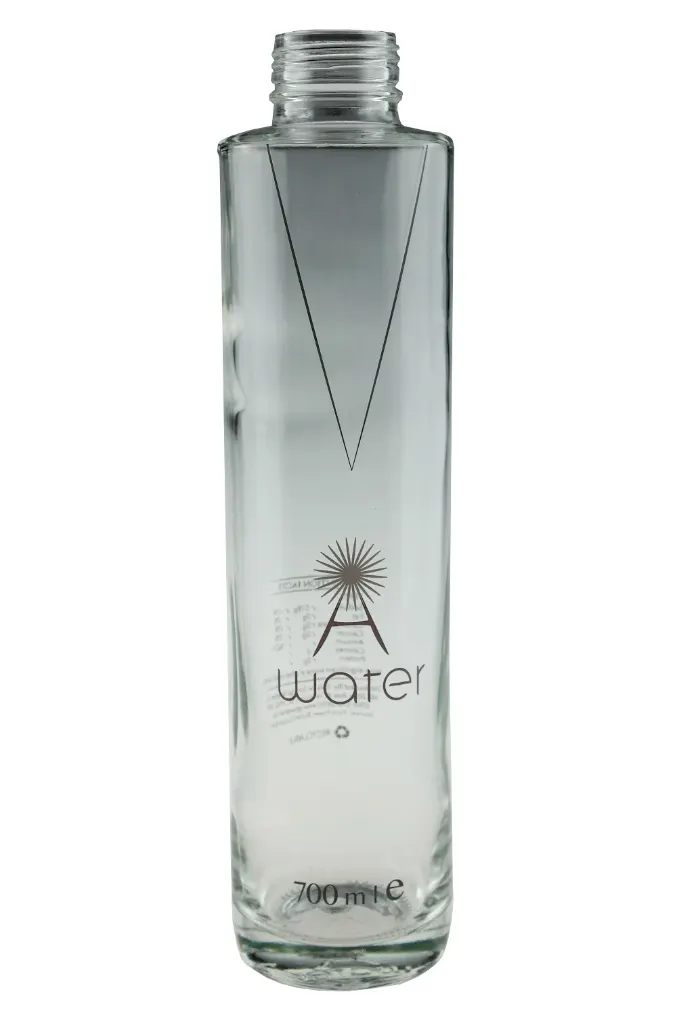
If still lemonade shares a line with other soft drinks, the wholesale glass beverage bottle range shows the wider set of formats. Buyers running a juice line can compare against our juice bottle specifications.
Choosing the closure and its liner
Three closure families cover almost all bulk lemonade packaging.
| Closure | Typical use | Liner to specify |
|---|---|---|
| 26mm crown cork | Carbonated 250-330ml formats; inexpensive and applied at high line speed | Acid-rated, available PVC-free |
| 28mm ROPP aluminum cap | Still or carbonated; strong tamper evidence | TPE or Saranex-style, formulated for citrus acidity |
| 38mm-63mm twist-off lid | Wide-mouth juice-style bottles for still, hot-filled lemonade | Plastisol rated for hot-fill vacuum sealing |
Put the product pH, carbonation level and fill temperature in the closure order whichever family you pick. Liner selection is a chemistry decision and should not be left as a line item for purchasing. Sourcing bottles and matched caps together lets one party check liner compatibility against the finish.
Checks against your filling line and the plant's test record
Compare four line parameters with the bottle drawing before committing to a format:
- Finish dimensions, for the capper chucks.
- Bottle height and diameter, for conveyor and labeler change parts.
- Pressure rating, which should exceed your carbonation specification by a margin of 1.5x or more.
- Thermal-shock rating, set against the temperatures of your filler and pasteurizer.
The plant should hold matching evidence: a burst test under internal pressure for carbonated grades, an ASTM C149 thermal-shock test for hot-fill grades, an annealing check to ASTM C148, and gauging of the finish. These records are what distinguish a beverage-grade bottle from a decorative one, and we ask for them when matching a lemonade project to a plant.
Packing, loading and order timing
Shipments go out on export pallets. Depending on bottle size a container takes roughly 20,000-40,000 pieces, and caps can ride with the bottles if you ask for them to be consolidated.
For a seasonal brand, the spring order belongs on the plant's schedule by January. Bottles themselves are rarely scarce; what runs short before the summer drinks peak is furnace capacity. Minimum quantities, prices and schedules are quoted per project and depend on the mould, the decoration, the quantity and the line the bottle runs on. A useful quote request for lemonade bottles names the format, capacity, decoration, closure and estimated quantity.
Frequently asked questions
Can a glass bottle hold the pressure of carbonated lemonade?
Yes, if it is specified as pressure-rated. Ask for the burst-test result and compare it with your own working pressure and the safety margin given above.
Does lemon juice damage the glass or the cap?
The glass is unaffected, which is also why it preserves taste better than plastic. Standard cap liners can degrade below pH 3.0, so the liner needs an acid-resistant specification, particularly when the recipe contains natural lemon oils.
Which closure suits bulk lemonade best?
It follows the product. Small carbonated formats normally take a crown, ROPP works for still and sparkling alike, and wide-mouth hot-filled lemonade takes a twist-off lid whose liner forms a vacuum seal as the bottle cools.
Can lemonade be hot-filled into glass?
Yes, and it is common for still lemonade. Give the exact fill temperature when you brief the project so the correct annealing grade is confirmed, and choose a twist-off or ROPP closure with a hot-fill-rated liner.
What are the MOQ and price for bulk lemonade bottles?
Both are quoted per project. The mould, the line it runs on, decoration and order quantity drive them.
How long does a bulk lemonade bottle order take?
Timing is confirmed per project once the mould, decoration and line schedule are known.