A T finish is a single-start thread that seats a closure in roughly one and a half to two and a half turns; a CT finish is a multi-start thread that seats it in a quarter to a half turn. Neither one seals the bottle. The seal is made where the liner inside the cap is pressed onto the flat land on top of the neck, so the liner has to suit the filling and the capping torque has to deliver a target liner compression, not just a cap that feels tight. A closure that spins on smoothly can still weep, back off or lose vacuum in transit if any of those three is wrong.
The five dimensions that define a finish
When a buyer tells us a finish is "wrong", the usual cause is a dimension that the bottle supplier and the closure supplier never exchanged. A finish is a small group of measurements cut into the neck mould, and the closure is designed around all of them.
- Thread diameter (T). The outside diameter across the thread crests. On a 28-410 it is nominally twenty-eight millimetres. It decides whether the closure starts onto the neck at all.
- Root or minor diameter (I). The diameter of the glass between the threads. If the closure's thread form is too deep it lands on the root before the liner reaches the top of the neck, and the cap feels tight while pressing on almost nothing.
- Thread height (H).
- Pitch and lead. Pitch is the axial distance between neighbouring crests. Lead is how far the closure moves down in one complete turn. On a single-start thread they are equal; on a multi-start thread they differ, and that difference causes most of the T versus CT confusion.
- Sealing land. The flat ring on the very top of the finish, between the bore and the outer wall. This is the dimension buyers forget, and it is where the seal is made.
The thread's only job is to create and hold the load that presses the liner onto the land. If the land is narrow, dished, chipped, scratched or out of square with the bottle axis, the pack leaks however accurate the thread is, and no closure specification makes up for it. Read every finish dimension on the supplier drawing with its tolerance, then compare the drawing with a physical sample. A catalogue photograph tells you nothing here.
Reading finish codes such as 18-400, 24-410 and 38-400
A finish code has two halves. The figure before the dash is the nominal thread outside diameter in millimetres: 18 mm, 20 mm, 24 mm, 28 mm or 38 mm for the common sizes. The digits after the dash name the finish family and the variant inside it.
Reading only the first half is the most frequent mistake we see. Two necks of equal diameter can have different finish heights, different thread positions and a different closure skirt in mind. A 24-400 and a 24-410 take closures of one nominal diameter, yet not necessarily of one height, and the capping head needs a different stroke for each. A capper set up for one variant can leave the cap short of its seat on the other, or crush the liner. If you are moving an existing pack from one supplier to another, the suffix belongs in the part number.
The pairings below reflect common industry practice. They are not rules: a product can sit on more than one finish, and the fitment the brand wants usually drives the choice more than the bottle does.
| Finish | Typical bottle | Usual closures and fitments |
|---|---|---|
| 18-400 | Small applicator and sample bottles dosing a few drops per use | Orifice reducer, small dropper, roll-on fitment |
| 20-400 | 15 ml to 30 ml dropper and tincture bottles | Glass or plastic pipette, dropper cap, small screw cap |
| 24-400 | 30 ml to 120 ml bottles for fragrance, serum and samples | Sprayer, lotion pump, fine-mist actuator |
| 28-410 | Roughly 100 ml to 500 ml in personal care, household liquids and oils | Disc-top cap, lotion pump, plain screw cap |
| 38-400 | Wider bottles and jars | Large closures, wide pumps, some twist-and-lock fitments |
Capacity is a separate question from the neck. For volumes and pipette lengths see our notes on dropper bottle sizes and pipette reach and the Boston round capacity and closure lookup. Cork, capsule and wine-mouth dimensions follow different conventions, covered under wine bottle neck finish and cork fit.
T and CT threads compared
A single-start thread is one unbroken helix around the neck. A multi-start thread interleaves two or three helices, offset by half or a third of a turn, and the closure picks up all of them at once. It therefore covers the same total lead in far less rotation. The trade normally means this multi-start geometry when it writes CT, but the letters on a drawing should always be read alongside the start count and the dimensions.
| Attribute | T, single start | CT, multi start |
|---|---|---|
| Rotation from first engagement to seat | About one and a half to two and a half turns | Typically a quarter to a half turn; a three-start thread needs only about a third of a turn |
| Where compression comes from | Torque, built up over a long engagement | Liner thickness and the downward travel of the capping head |
| Strengths | Tolerates slight misalignment; consumers close it without instruction | Fast opening; suits quarter-turn closures, tamper-evident bands that break on first opening and some child-resistant systems |
| How it fails when slightly out of specification | Slow leak at the land, because load is applied but unevenly | Cross-threading or release in transit, because a small angular error carries the cap past its seat |
A quarter-turn closure is convenient for the consumer and unforgiving on the filling line. If you are specifying one for the first time, send the closure sample to the glass supplier before the mould is cut, and judge the seal on the real capping head. Hand-tightening on a bench proves very little with so short a rotation.
Choosing the liner for the filling
With the thread settled, the liner decides whether the pack holds. It sits inside the closure and turns the thread's clamping force into a seal on the land, so it is selected for the product and not for the bottle.
- Dry goods and many water-based products: plain polyethylene or foam is adequate.
- Oils, essential oils, fragrance and alcohol-bearing fillings: a facing that resists the product, such as PTFE-faced, silicone or a multilayer foam with a barrier face. Plain liners can swell, soften or extract in contact with oils, solvents, alcohol or acidic fillings, and a swollen liner loses the rebound that keeps pressure on the land.
- Hot-filled or pasteurised products: the liner must survive the fill temperature and the cooling afterwards. One that takes a compression set while hot does not recover when cold.
- Tamper-evident or hermetic packs: an induction or foil seal is usually added.
An induction seal changes the mechanism altogether. The foil bonds to the land and becomes the primary seal, while the cap is reduced to a mechanical re-closure.
Two habits save time in production. Write the liner on the purchase order by grade and thickness; colour, or the single word "foam", is not a specification, since two liners that look the same can behave differently under load. And test closure, liner and product as one set. A cap that holds water perfectly may not hold a citrus oil, and a supplier who was never told what goes into the bottle cannot pick the liner for you.
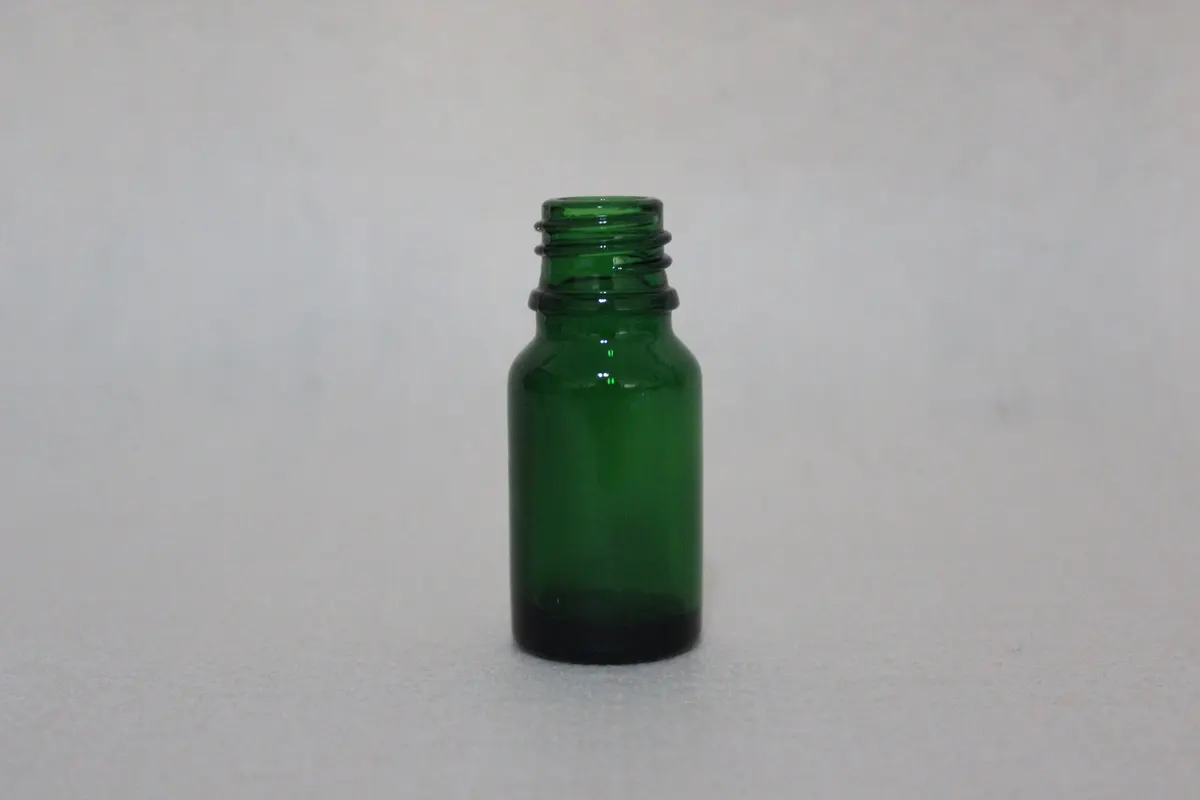
Finish, closure, liner and sealing reference
Use this table to open a project conversation; it does not replace a drawing. Rows are single-start unless stated, and torque behaviour has to be confirmed on a torque tester with the actual bottle, closure and liner.
| Finish | Thread type | Closures commonly fitted | Liner to consider | Torque and sealing notes | Typical mismatch and its result |
|---|---|---|---|---|---|
| 18-400 | T | Orifice reducer plus overcap, small screw cap, roll-on collar, small dropper cap | PE foam or EPE; faced foam for oily or alcoholic fillings | Low absolute torque. The shoulder of the fitment often seals in place of the cap | A full-size cap will not engage an 18 mm neck, and forcing it cracks the finish |
| 20-400 | T | Dropper cap and pipette, tamper-evident screw cap, small fine-mist sprayer | PE foam for water-based products; PTFE-faced or silicone for oils and tinctures | Compression is set by pipette collar height. The collar must seat on the land and not on the thread | A collar that is too tall leaves the liner uncompressed, and the pack weeps at the shoulder |
| 24-400 | T | Screw cap, disc-top cap, small lotion pump, crimp or screw sprayer | Faced foam, EVA, or a barrier-faced multilayer for fragrance and alcohol | Moderate torque. Sprayers usually bring a ferrule or body gasket that acts as a second seal | Leaving out the body gasket on an alcohol filling causes evaporation loss and odour in the carton |
| 24-410 | T, taller finish variant | Taller skirted caps, some pumps, tamper-evident closures made for the 410 height | Same options as 24-400, chosen by product | Diameter matches 24-400 but the height does not, so the capping head stroke needs resetting | Handling 400 and 410 as one part leaves the cap standing clear of the land |
| 28-410 | T; some fitments use CT | Disc-top and flip-top caps, lotion and soap pumps, plain screw caps, some trigger sprayers | PE foam in general use; barrier-faced or silicone with surfactant or oil | Most torque-tolerant in this group, but a large land can hide a weak seal, so confirm liner compression | A pump meant for a 400-height finish sits high on a 410 bottle and its dip tube misses the base |
| 38-400 | T; multi-start with a quarter-turn fitment | Wide screw caps, large pumps, twist-and-lock dispensers, wide-mouth closures | Foam, faced foam, or foil and induction seal for dry or pasteurised fillings | The large diameter magnifies a small torque error. Torque per unit length is low and the land is wide | A thin liner on a wide land seals at the outer edge only and pans in under vacuum |
| Multi-start, quarter turn | CT, two or three start | Quarter-turn closures, tamper-evident bands, some child-resistant systems | A thicker or pre-compressed liner, since rotation cannot build load | Downward head travel supplies most of the compression. Removal torque has to clear the child-resistant threshold | The wrong start count cross-threads the cap or lets it release in transit |
Torque, compression and fill temperature on the line
A capping head applies a downward force and a rotation. What matters is the compression the liner ends up with, normally stated as a percentage of its free thickness. Most closures are designed to run with the liner in a middle band. Crush it flat and it can no longer recover to absorb the small movements of transport and thermal cycling.
So the figure to agree with the closure supplier is a target compression band. The machine is then set to hit that band through a combination of application torque and head travel. There is no universal torque value, because torque is only the means of reaching that compression on one particular liner in one particular closure.
The three torque values
- Application torque is what the capper puts in.
- Removal torque is what the consumer needs to open the pack. It has to be high enough that the cap does not loosen on the shelf, and low enough to open without a tool.
- Break-loose torque on tamper-evident and child-resistant closures is a requirement of its own, often regulated in the destination market.
Measure all of them with a torque tester on bottles pulled from the running line, then again after a transport simulation. It is the cheapest test a buyer can insist on. Most leakage complaints come from the receiver, not from the filler.
Fill temperature
A hot fill raises internal pressure and softens some liners. As the pack cools it contracts, which can pull the closure tighter or draw the bottle panel inwards. A product filled cold and stored hot has the reverse problem. Tell both the glass and the closure supplier about either case before approval: a finish and cap that behave perfectly at 20 degrees Celsius can become unreliable after a summer container crossing.
Why a cap that screws on may not seal
This misunderstanding costs more than any other in packaging. The thread holds; the liner on the land seals. A cap can engage cleanly, run down smoothly and feel firm in the hand while the liner has too little load, uneven load, or a material that the product attacks. Three traps account for most cases.
- Bottoming out. The closure skirt or fitment collar meets the shoulder or the bead and stops. The thread is fully engaged and the seal is close to zero.
- A cocked closure. The cap seats with its axis tilted by a fraction of a degree. One side of the liner is squeezed and the other is loose, so the pack holds at the filler and weeps later in a warm warehouse.
- Liner incompatibility. The filler sees the closure tighten correctly and never finds out that the liner has swelled, softened or lost its rebound against the product.
Telling them apart means testing the pack, not its components. Fill representative bottles with the real product and cap them on the production head at the production setting. Then run three checks:
- a vacuum or pressure decay test, which finds a leak;
- a torque reading before and after a period of storage, which finds back-off;
- a look at the liner after removal, which shows whether compression was even, and whether the liner was crushed or barely marked.
Add accelerated ageing where the filling is sensitive to heat or light. A finish and closure combination is approved only once those checks are passed.
Symptoms of a mismatch and what each points to
Each symptom indicates a specific dimension or setting, so it is worth naming it precisely before blaming the bottle.
| Symptom | Likely cause |
|---|---|
| Wicking: product in the thread grooves under the cap | A failed seal at the land plus capillary action, not a thread fault |
| Back-off: cap looser on arrival than at dispatch | Too little compression, a low-friction liner, or a slightly undersized finish whose thread never develops holding force |
| Cross-threading or stripped threads | Excess torque, a finish diameter at the top of tolerance, or a capping head whose stroke and rotation are out of step |
| Panelling: the bottle body flattens inward | A vacuum effect, often from a hot fill behind an airtight seal that then cools; not a thread defect |
| Leaks that come and go | Chips or scratches on the land that cross the sealing path only on some caps |
| Liner falls out of the cap before capping | Closure drop-out, which gets blamed on the glass unless the closure supplier joins the discussion |
Imported packs add two more. The land can be roughened in the annealing lehr or by glass-to-glass contact in bulk bags; the filler cannot see it, yet it stops a seal forming. And wash or lubricant residue in the thread alters the friction the capper was set for, which alters the compression actually reached. Both are reasons to inspect the finish on arrival as well as the body.
Tolerances, gauging and the inspection agreement
Tolerances turn a description into a manufacturing document. Thread diameter is held within a stated range and checked with a go / no-go gauge: an undersized neck is rejected because it will not hold the closure, an oversized one because it will not enter it. Finish height and thread position are measured from the top face, since that face is the datum the filling line indexes on.
Height is the least glamorous tolerance and one of the most damaging. On a short finish the closure reaches the shoulder or bead before the liner is compressed as intended. Squareness of the land needs its own check too. A neck with parallel sides but a top cut at a slight angle touches the liner on one side only, passes a visual inspection and fails a vacuum test.
On the shop floor the usual instruments are a dial indicator on the land, a profile projector or optical comparator on the thread form, and a plug gauge in the bore. The matching closure checks are its thread depth, liner thickness, and the drop-out force that retains the liner during handling.
Agree sampling before production. ISO 2859-1 with a stated AQL is the standard language, and the plan should cover the dimensions that affect sealing, not only those that are easy to gauge. Put two things in writing: which dimension decides acceptance, and what happens to a lot that fails. Without them a tolerance table is decoration. Ask for each inspection record to carry a lot number, so a leaking pallet can be traced.
How to brief a supplier on the finish
A finish can only be matched if it is described in full. When we check a drawing before it goes to a glass plant, we look for:
- the finish code including its suffix;
- thread type and number of starts;
- nominal thread diameter with tolerance;
- finish height, bore and sealing land width;
- the intended function of the bottle.
If an existing closure is to be reused, say so on the drawing. Leaving the closure supplier out of the specification is the quickest way to end up with a neck that does not fit.
If no closure exists yet, begin with the product. State the filling and its viscosity; whether it contains oil, alcohol, essential oil, acid or a surfactant; the fill temperature; storage and shipping conditions; and whether the pack must be child-resistant or tamper-evident. Those answers fix the thread family, liner and seal type well before a diameter is picked. Packing, pallet configuration and inspection agreements are covered in our notes on buying glass containers in bulk.
If a pack is already leaking
Data resolves this faster than a complaint. Send the finish code if you know it, a photo or drawing of the mouth with the thread visible, and the closure sample or its drawing. Add the filling and its chemistry, since that one answer selects the liner family, along with fill temperature, storage and shipping conditions, and whether capping is by hand or on an automatic head.
From that we can review the combination against the land, the thread family, the liner and the expected compression, and point out mismatches before another pallet is made. An existing pack can often be corrected with a liner or closure change that leaves the mould untouched, and a bottle not yet specified can be matched to a standard finish. Commercial terms are quoted per project; if you want packing and inspection terms alongside the technical review, include your order quantity and destination port.
Frequently asked questions
Will one closure fit both a 24-400 and a 24-410 finish?
Not by default. Both are nominally 24 mm, but the suffix changes the finish height and the skirt the thread was drawn for. A cap built for one may bottom out on the other and leave the liner unloaded. Compare the two drawings and run a capping trial on the real head before committing a production lot.
Why does a bottle leak when the cap feels tight?
Tightness is felt in the thread, while sealing happens on the land. Look for a liner that never reached usable compression, a closure stopped by the shoulder or fitment collar, a land that is chipped, dished or out of square, or a liner the filling has swollen or softened. Opening one bottle after storage shows whether the liner was pressed evenly.
How much torque should the capping head apply?
Ask the closure supplier for a recommended compression band and a torque range for that specific closure and liner. Set the head to land inside the band and verify with a torque tester on line samples. Recheck removal torque after a storage or transport simulation.
Does an induction seal make the finish less critical?
No; it can make it stricter. The foil needs a land that is clean, flat, continuous, wide enough for the foil, and free of chips, wash residue or lubricant. Once bonded, the foil is the primary seal, which changes how the pack should be leak tested. The finish still determines whether the cap keeps the pack closed after the foil has been opened.
How should incoming bottles be inspected for finish problems?
Check the land for chips, scratches, roughness and out-of-square cutting. Gauge the thread diameter with go and no-go gauges, measure finish height against the drawing, and look in the thread for wash or lubricant residue. Do this under the sampling plan and acceptance dimension agreed before production, with records tied to lot numbers.