For comparison, most wine, spirits and oil programmes start from 750ml bottles.
Mini glass bottles cover 5ml to 50ml, and the capacity you pick should follow the job: 5-10ml for samples, 15-20ml for travel sizes, 30ml for deluxe samples that can also sell at retail, and 50ml for miniatures and favors. Choose the neck finish together with the size, because a single finish shared across several capacities lets one closure serve all of them. Anything larger than 50ml counts as a standard bottle.
Sizes, finishes and closures side by side
The combinations below are the usual starting points for a sampling or discovery-set brief.
| Capacity | Shape | Neck finish | Usual closure | Common use |
|---|---|---|---|---|
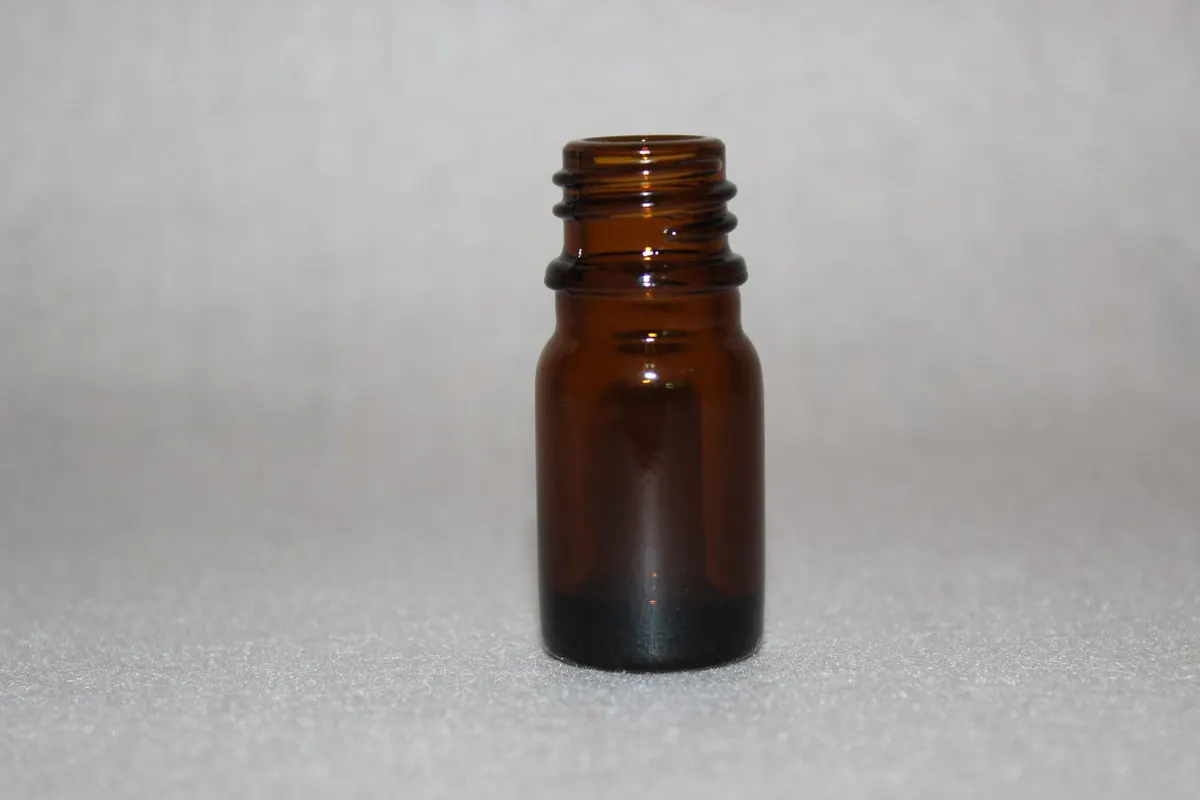
| 5ml | Cylinder vial | 13-425 | Screw cap with PE liner | Fragrance or oil sample |
| 10ml | Cylinder / Euro | 18-415 | Dropper or sprayer | Serum or tincture sample |
| 15ml | Cylinder | 18-415 | Dropper assembly | Travel serum |
| 20ml | Boston round | 18-400 | Cap or dropper | Deluxe sample |
| 30ml | Boston / cylinder | 18-415 / 20-400 | Dropper or sprayer | Tincture, retail mini |
| 50ml | Spirits mini / cylinder | 18mm ROPP / 20-400 | Aluminum ROPP or bar-top | Spirits, favors, food |
At 5-10ml the closure costs more than the glass, so the closure decision sets the budget for the smallest vials. The 15-20ml tier is TSA-friendly and holds about a week of product, which is why it works for both travel and gifting. Sharing a finish pays off across the range: with 18-415 on the 10ml, 20ml and 30ml bottles, one dropper fits all three.
Closure families and what each one suits
- Dropper assemblies on 18-400, 18-415 or DIN 18 finishes, for serums, tinctures and oils. Our page on glass bottles with droppers explains how the assembly is engineered.
- Screw caps on 13-425, 15-425 or 18-400 finishes, with PE or PTFE-faced liners, for general liquids and food samples.
- Corks (natural, agglomerated or synthetic, chosen by budget) for vials, craft minis and wedding-favor bottles.
- Sprayers and reducer plugs for fragrance. The standard perfume sample is a 1-2ml spray vial with a crimp or screw pump.
Aromatic formulas need glass or PTFE in contact with the product. A plain PE liner absorbs fragrance and starts to weep within months. Whatever the family, check the closure drawing against the bottle's finish code before ordering.
Specifying minis by application
Fragrance discovery sets
A typical set holds five to eight 2ml spray vials, or 5-10ml screw-cap minis, in a printed box, mostly on 13-425 and 18-415 finishes. Do not let the wall get too thin: customers overtighten caps, and thin vials crack.
Beauty and wellness samples
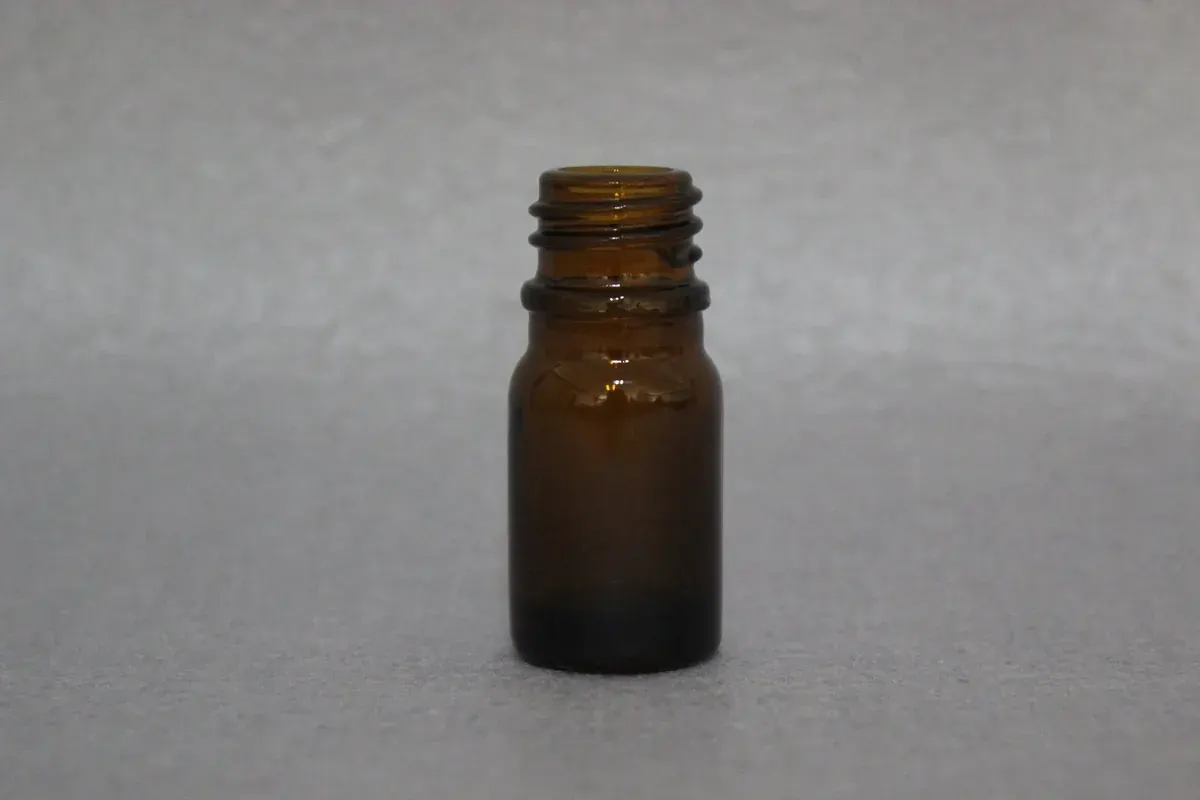
Droppers and cylinders of 10-30ml in amber glass protect light-sensitive actives; amber blocks UV below about 470nm. The pipette must be matched to the interior height of the bottle, and the combined tolerances are harder to absorb at 10ml than at 30ml.
Food and condiment samples
Hot sauce, oils, vinegars and syrups go into 30-50ml minis with PE-lined screw caps. Type III soda-lime glass is food-contact compliant. If the sample is hot-filled, ask for the same 42°C thermal-shock rating that full-size jars carry.
Craft, favors and events
Cork-mouth vials and 50ml favor bottles are chosen for their outline more than their engineering. This is the one part of the mini range where a decorative mould is worth more than a standard shape. Two neighbouring categories have their own guides: 50ml liquor bottles, which carry a regulatory layer, and miniature wine bottles.
Packing and freight for bulk minis
Standard packing is nested bulk at 500-2,000 pieces per carton, depending on size. Divider grids cost extra but are mandatory for decorated bottles and for orders shipped kitted with their closures.
A 20-foot container takes 400,000-800,000 pieces of 10-30ml bottles. Ocean freight per bottle is therefore very low, and minis are the rare glass category where flying a launch quantity can be a rational choice.
Order 2-3% more than you need on a first run. Filling-line rejects and requests for samples use up more minis than most buyers plan for.
What to send for a quote
Closures can be quoted separately from the bottles or kitted with them. To request a quote, send the target capacity, neck finish, closure type, quantity and destination port.
Frequently asked questions
What is the minimum order for mini glass bottles in bulk?
Minimums are quoted per project. They depend on the mould and on the line it runs on.
Which closures fit which mini finish?
Small screw caps and dropper assemblies go on 13mm and 15mm finishes. Droppers, sprayers and reducer plugs fit 18-400/18-415. Cork-mouth vials take natural or synthetic corks, and 50ml spirits minis use 18mm or 21.5mm ROPP aluminum caps or bar-top corks.
Are mini bottles suitable for food and drink samples?
Yes. Type III soda-lime glass complies with FDA 21 CFR 174-186 for food contact, and 30-50ml minis are routine for hot sauce, olive oil and spirits. For alcohol above 15% ABV, confirm the liner resists alcohol and check the destination market's rules on sample-size spirits packaging.
Why use glass instead of plastic for sample vials?
For fragrance, essential oils, terpenes and alcohol, glass is the better material. Plastic walls absorb aromatics, release plasticizers into oil-based formulas and let in oxygen that degrades the sample before anyone tries it. Glass keeps the sample chemically the same as the full-size product.