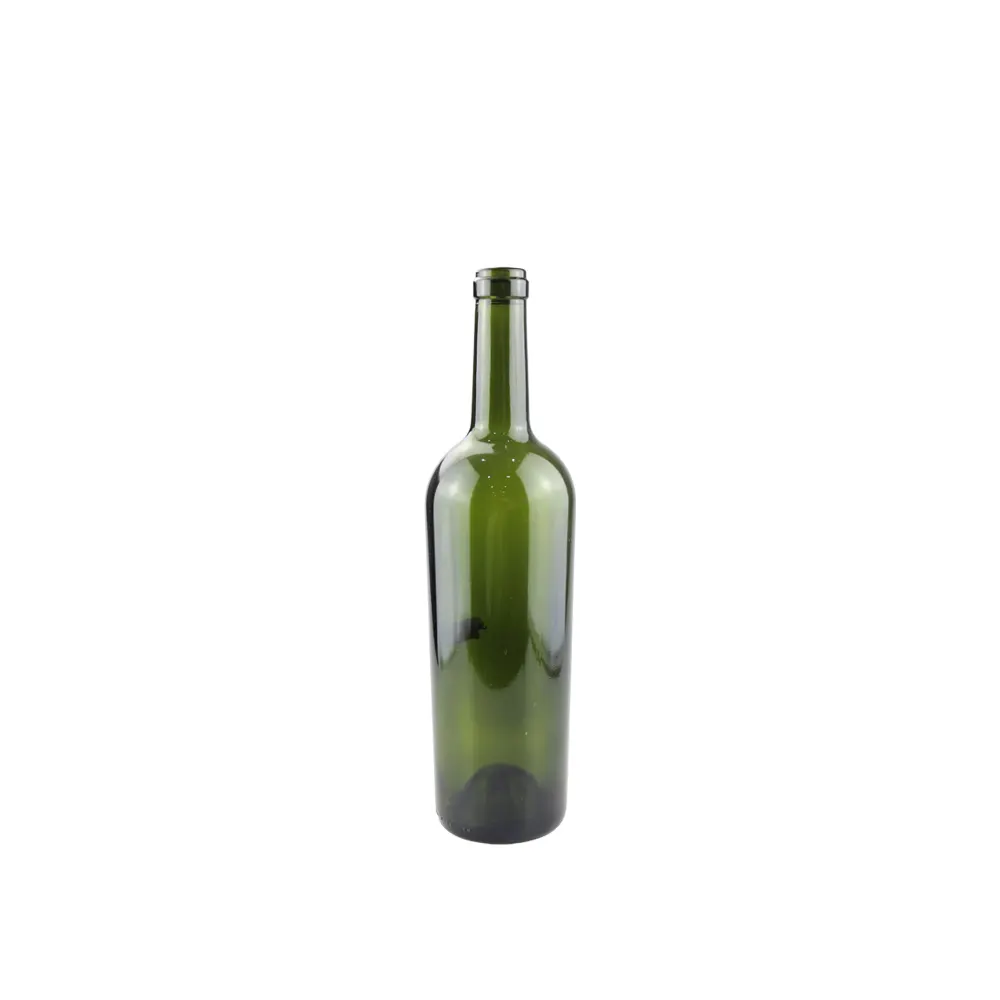
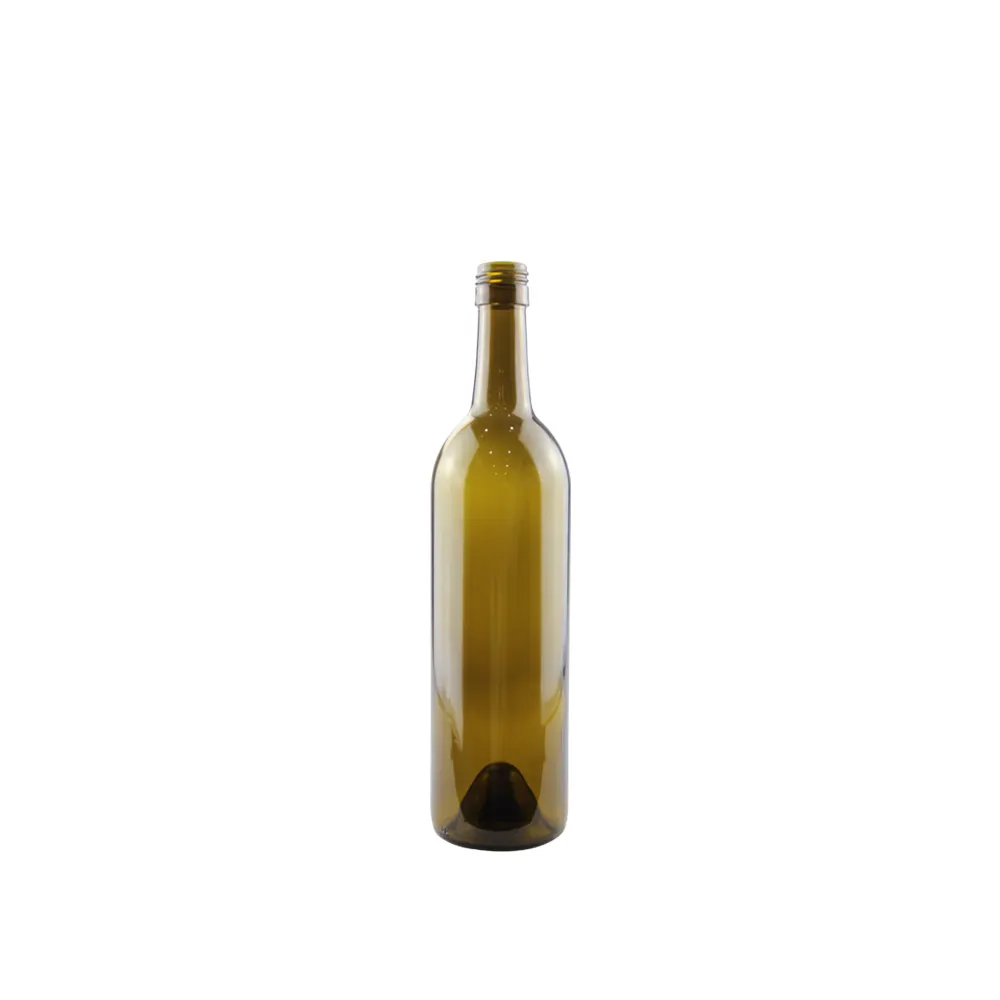
Part of our empty wine bottles range; the stock moulds are pictured at the end of this guide.
Mini wine bottles are bought by channel: 187ml is the standard single-serve for airlines, hotels and events, while 50-100ml sizes go into tasting flights and gift sets. Most minis take a screw cap and pack 24-48 per case, and a 40HQ container carries roughly 150,000–200,000 empty 187ml bottles, which explains the format's low freight per bottle. Pricing is quoted per project, and it responds far more to quantity than to the small size of the bottle.
The practical rule is to name the sales channel before anything else. Capacity, closure, glass colour, glass weight and case pack all follow from it, and a brief that only says "187ml mini" tends to come back as a generic flint screw-cap offer that suits one channel and misses the rest.
Which channel you sell through decides the bottle
Four groups buy most still-wine minis. Each one puts a different variable first, so each should open its specification with a different line.
| Channel | What it needs most | Specify first |
|---|---|---|
| Weddings and events | A personal favour with a custom label and a closure that looks like a gift | Closure look and a case pack that divides by guest count |
| Winery tasting kits and DTC clubs | Bottles that arrive intact through parcel carriers | Glass weight and divider cases |
| Hotels, airlines, minibars | Fast service, low weight, cases that fit carts and trays | Screw cap or crown, then case geometry |
| Retail samplers and gift sets | Every bottle in the set looking identical | One mould family and one production run |
Weddings and events
This is the biggest use for still-wine minis. A T-cork signals "gift" and a screw cap signals "convenience", so the closure is an aesthetic choice here, not a technical one. Couples often ask for antique green or flint glass to match a colour scheme; both are available, though anything other than plain flint moves the order away from the lowest-cost option.
Order 10–15% above the RSVP count. Some bottles break and headcounts change late, and a favour run is too small to top up economically. Choose a case count that divides cleanly into the guest list so you are not left with an awkward part case.
Winery tasting flights and club shipments
For parcel delivery, what counts is how many kits arrive whole, not the cost of each bottle. A standard mini weighs about 200g, which we treat as the minimum for shipped kits; 240g+ is the safer choice. Adding 40g per bottle raises freight but can reduce damage claims several times over, and where the two balance depends on your own damage record. Ask your bottler what breakage rate they see on mini shipments before settling the weight.
Ship in master cases with dividers. Minis packed loose in a shipper do not survive carrier handling.
Hotels, airlines and minibars
Hospitality buyers want screw-cap or crown closures because staff need no corkscrew and no training, and they usually run a private-label programme with red, white and rosé consolidated in one shipment. Case dimensions have to suit the carts and minibar trays already in use.
Airlines buy filled minis, not empty glass. Every gram is carried in the air, so weight comes first, followed by a tamper-evident closure that opens without a tool, then case geometry. Filled airline stock also moves under liquor-carriage and in-flight service rules that never apply to an empty-bottle order, so settle that framework with your co-packer early.
Retail sampler and gift sets
A multipack is judged as a set: same glass colour, same fill height, labels lined up. Bottles drawn from different mould families look mismatched on shelf and in product photos, and uneven fill levels make a gift look cheap. Buying the whole set from a single supplier in a single run costs more per design at low volume, but it is the reliable way to keep the set consistent.
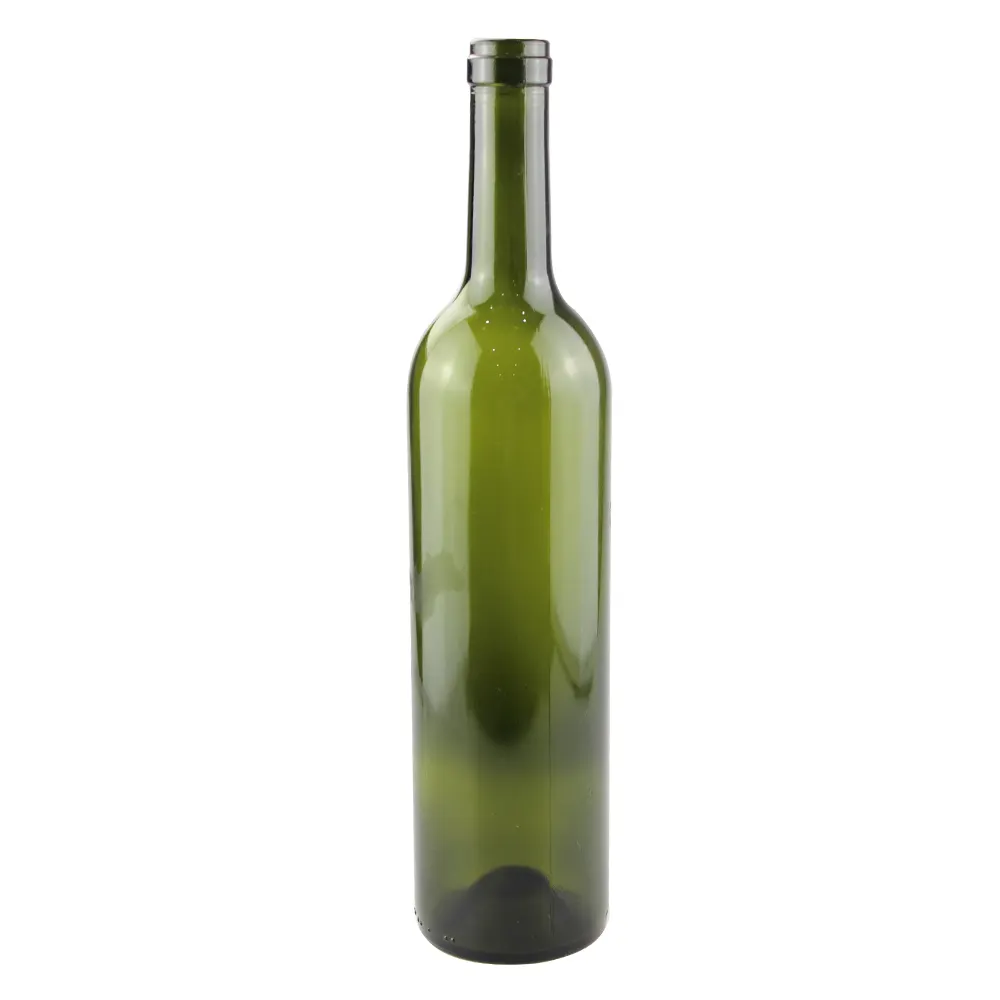
Bottle options at 187ml and smaller
The 187ml size runs on a small number of established moulds. The points below are the ones that differ between them and need to be written into the order.
| Feature | Choices | How to choose |
|---|---|---|
| Profile | Bordeaux (straight shoulder), Burgundy (sloped), flute/renana | Bordeaux is the usual pick for reds; a flute suits white and rosé at events |
| Glass colour | Flint (clear), antique green, dead-leaf green, amber | Flint shows off rosé and white; green follows red wine convention and adds UV protection |
| Weight | About 200g standard, 240g+ heavy | Heavy glass for parcel delivery, standard where bottles are handed over in person |
| Closure and finish | ROPP screw cap, crown cap, T-cork, natural cork on a limited set of moulds | Screw cap where service speed matters, T-cork where appearance matters |
| Case pack | 24, 40 or 48 per case, with dividers or bulk | Divider cases of 24 for filled product; bulk packs for reselling empty glass |
Typical configurations by channel
These combinations are starting points for a brief. Every line has to be confirmed for the individual project, including which shapes and finishes exist as stock moulds.
| Channel | Capacity | Shape | Finish | Colour | Per case | Comment |
|---|---|---|---|---|---|---|
| Airline / hotel | 187 ml | Bordeaux mini | BVS screw | Flint | 24 / 48 | Lightweight glass; tamper-evident cap preferred |
| Wedding favour | 187 ml | Burgundy mini | T-cork | Antique green | 12 / 24 | Small favour runs where guests pull a cork |
| Wedding favour | 100 ml | Burgundy mini | T-cork | Dead-leaf green | 12 / 24 | Mid-size favour in the traditional red wine colour |
| Tasting sample | 100 ml | Provence mini | BVS screw | Flint | 24 | Flight size; less label area than a 187ml |
| Tasting sample / wedding | 187 ml | Straight | Crown | Amber | 24 | For UV-sensitive wine; amber is uncommon in this size |
| Gift set | 50 ml | Straight | Crown | Flint | 24 / 48 | Closure and colour have to match the other bottles in the set |
| Gift set | 250 ml | Provence mini | BVS screw | Flint | 12 / 24 | Can sit beside a 187ml to make a tiered set |
| Hotel / retail | 250 ml | Bordeaux mini | BVS screw | Green | 12 / 24 | Bigger single serve with more shelf presence and more freight weight |
If the same event also needs 50ml spirits miniatures, those are covered in our guide to empty mini liquor bottles.
Three things that behave differently on a small bottle
Dimensional tolerance
A ±1mm height difference disappears on a 750ml bottle. On a mini it is a visible fraction of the total height: fill lines look uneven along a shelf and cases stack out of square. Glass bottle tolerance bands generally fall around ±0.5–1.5mm depending on mould and process, so ask for the technical drawing and read the band that applies to your bottle.
Diameter deserves the same attention. Small-bore labellers and divider cells are built around a nominal outside diameter, and a bottle that runs wide jams the labeller while one that runs narrow rattles in its cell. We check that the filler, labeller and case layout are all working from the same nominal figures.
The short neck
A 187ml bottle gives the capping or corking head less vertical room to seat than a full-size bottle does. A line set up for long-neck 750ml glass will scuff caps and mis-seat corks more often until it is adjusted, because closure alignment has less margin.
Headspace, the gap between the wine and the closure, is a very small volume on a mini. Leave too little and wine touches the closure, which risks staining the cap or weakening the seal over a long shelf life. Leave too much and the bottle looks under-filled. The filler therefore needs finer dose control than a standard line. Before glass is made, confirm that your bottler's changeover really covers the 187ml neck height and finish, and ask to see a first filled sample with the headspace visible; an empty sample bottle does not answer the question.
Stability in the case
Minis are tall for the width of their base, so a single bottle tips more easily than a standard one. Inside a divider cell that does not matter. In a bulk pack or under slack shrink-wrap, one fallen bottle leans on its neighbour and an entire layer can shift in transit.
The answer lies in packing, not in changing the bottle: divider cells, cases filled properly, and pallet stretch-wrap tensioned for a tall, narrow load. Ask the supplier for a case-drop or vibration test result on the mini pack instead of assuming an ordinary wine carton will do.
What drives the cost of a mini
First-time buyers expect a quarter-size bottle to cost a quarter as much. It does not, for two reasons.
- Forming time. An IS machine, the standard bottle-forming machine, makes one bottle per cavity per cycle whatever the size. A mini occupies nearly as much machine time as a 750ml bottle, and annealing, mould handling and inspection are largely independent of size too. Cost per gram of glass is therefore worse on a mini.
- Handling. For the same weight of glass there are many more pieces to pack, palletise and move, so labour per hundred bottles is higher.
The result is that a mini gets cheaper with volume, not with smallness. Very small runs are costed much like a mould changeover; a full container is the point where freight efficiency starts to work in your favour; large winery and hospitality programmes are worth negotiating as annual tiers.
Container loads and mixed pallets
Density is the mini's real advantage. The same ocean freight that moves a container of 750ml bottles moves roughly 150,000–200,000 empty 187ml bottles in a 40HQ, depending on packing format, so freight per bottle falls sharply once an order fills the box. Buyers beyond event scale should plan reorders around a container, not around a convenient number of cases.
Few programmes need a single item in that quantity. Different capacities or colours can share a pallet when the case dimensions stack stably, which lets a wedding or gift-set buyer combine red, white and rosé, or 187/100/50 ml, into one shipment instead of three small ones. Mixed pallets use the space a little less tightly and may need several divider types, so the freight benefit is slightly smaller than with a single item. Check case footprint and pallet height with the supplier first, because a mismatch of a few millimetres can cost a whole layer.
Compare whole packages
Plants quote the bare bottle unless asked otherwise. Add closure, label and capsule before comparing offers, and put these questions to each supplier:
- Does the quote cover the bottle alone or the full package?
- What is the FOB figure at my target annual volume?
- Can mixed items share a pallet and a container?
- How do fuel and peak-season surcharges behave on my shipping lane?
Labels and decoration on a 187ml bottle
A 187ml bottle offers about a quarter of the label area of a 750ml, and on a Bordeaux profile the usable panel is roughly 2.5–3 inches high. Artwork made for the full-size bottle does not survive being scaled down. It has to be redrawn for the mini.
Material and application
Paper labels suit a rustic wedding look. BOPP film holds up in ice buckets and under condensation, which makes it the better choice for outdoor summer events. Shrink sleeves follow any bottle profile and remove the panel limit, although the area a person can comfortably read remains small.
If you label in-house, check the minimum bottle diameter your labeller accepts; many tabletop machines stop at standard wine diameter and cannot grip a 187ml bottle. The alternative is to have labels applied before the bottles ship. Our page on custom mini wine bottle labels goes further into templates and label options.
Type size and barcodes
Not everything on a 750ml label will fit. As a planning figure, body text smaller than about 4–6 pt is no longer readable at arm's length for most people. A 1D retail barcode needs a set module width plus a quiet zone, the blank margin a scanner requires, and together they take a predictable strip out of the panel.
The exact minimum depends on the barcode symbology and on where it will be scanned, whether by a handheld retail scanner or in a warehouse. Get the required X-dimension from your label printer and from the destination retailer's specification before the layout is fixed.
Single-face or wrap-around
A single front label costs least and is the most forgiving on a tabletop labeller, but it leaves much of a mini bare, which can look unfinished on a gift. A wrap-around or front-and-back layout covers more of the cylinder and demands accurate registration: if the seam does not land in the same place on every bottle, the label looks twisted. Wrap labels applied at the plant are feasible, though they tie you to that supplier's application tolerance. Make this decision before artwork begins, since panel size, bleed and barcode position all depend on it.
Mandatory information
Origin, alcohol statement, lot or batch, net content and any health or responsible-service notice all have to go somewhere, and on a mini they compete directly with brand space. Fix the lot code and net content in one legible position, reserve the barcode quiet zone, and treat decorative copy as the first thing to cut. When a bottle is going to many markets, a neck tag or hang tag can carry compliance text that the label cannot.
We can tell you which fields an artwork template reserves. Whether those fields satisfy the law in a given country is for the buyer or their compliance counsel to confirm, as is the position under frameworks such as EU 10/2011 for materials or US FDA expectations for food-contact glass. We do not give legal conclusions.
Buying empty glass or filled product
Settle this early, because the two routes are different kinds of cargo. Empty bottles ship efficiently but leave the filling to you. Filled minis are heavy, regulated and normally handled by licensed distributors.
| Empty minis | Filled minis | |
|---|---|---|
| Freight is driven by | Cube, meaning how many cases fit the container | Weight as well as cube, so the density advantage narrows |
| Main risk | Breakage of raw glass | Loss of finished, labelled product, plus heat damage on long transits |
| Rules that apply | Ordinary glass cargo | Alcohol carriage: carrier approvals, licensing, destination restrictions that differ by state and country |
| Typical buyer | Wineries filling in-house; event buyers using a local winery | Buyers holding an alcohol licence or working through one |
Wedding buyers usually purchase empty bottles and closures, source wine from a local winery or custom-crush facility, and have it filled on a mobile bottling line. Wineries generally bring in the glass and fill it themselves, having first checked that the line changes over to the 187ml height and finish. Anyone without a licence to move alcohol should buy empty and fill domestically through a licensed co-packer; do not attempt to import filled minis until the compliance route is confirmed. Wine that sits in heat during a long journey can arrive oxidised.
When divider cartons are needed
Any mini travelling as a filled, labelled, finished unit should be in a divider case. The cells stop bottles tipping and keep labels from rubbing against each other. In a well-packed divider case, breakage of empty bottles is normally a low single-digit percentage or less; in bulk or loosely wrapped loads it can rise steeply.
Bulk or lightweight packing can be acceptable, and cheaper, for empty glass making one controlled trip to your own filling line, on the understanding that breakage found at filling is yours. Dividers cost little compared with a spoiled finished bottle, so event and gift buyers should default to them throughout. Ask whether divider cartons are standard or an extra on the quote, and whether cases holding mixed items can still be divided.
Questions to settle before choosing a route
- Is the purchase empty or filled, and who holds the alcohol licence?
- Which pack format is used, and what breakage rate does it assume?
- For filled wine, what temperature and transit-time limits apply on the lane?
- Can the supplier share a loaded-case drop test for high-value programmes?
- Who carries breakage risk on each leg of the journey?
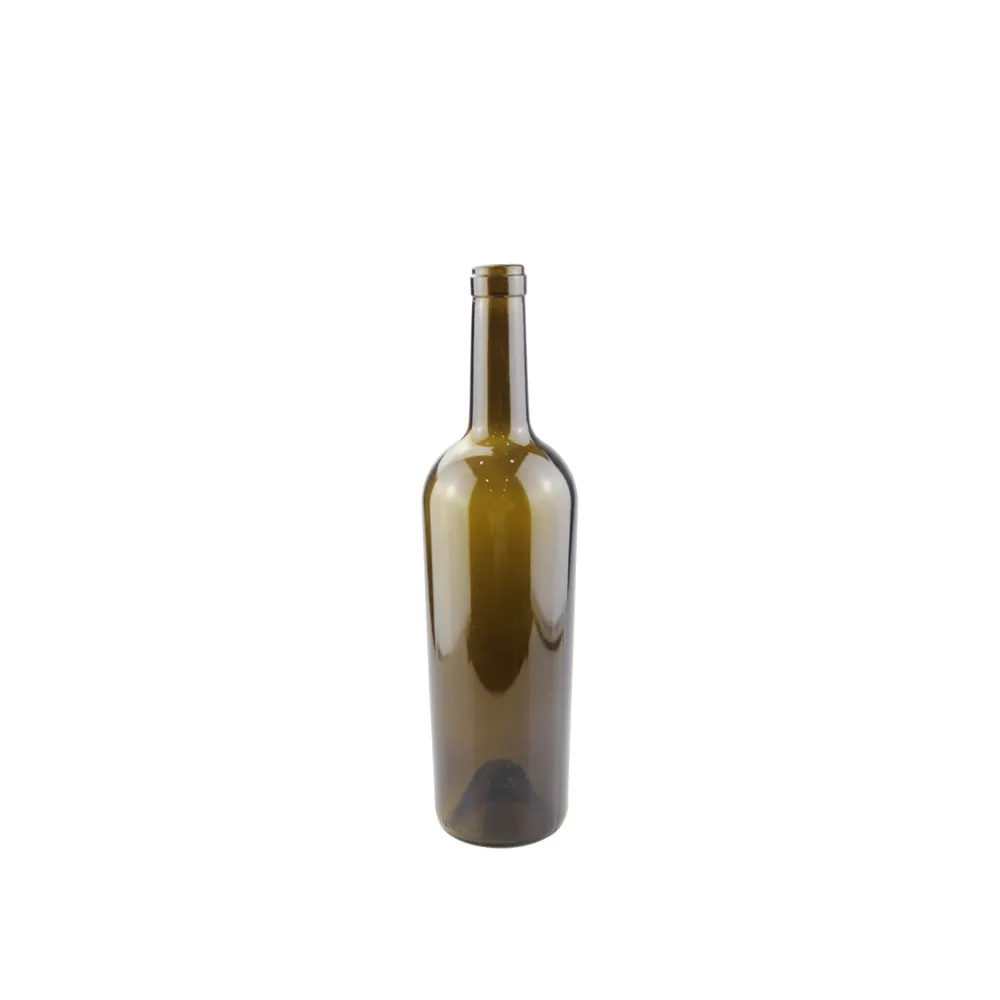
For how full-size bottle shape, cork and colour are chosen, see our guide to bottles for winemaking.
Frequently asked questions
How much do mini wine bottles cost wholesale?
Each project is quoted individually. The figure depends on the mould, the decoration, the quantity and the freight terms, and quantity has the largest effect.
Is there a minimum order for mini wine bottles?
It is quoted per project, because it depends on the mould and the line it runs on. The closure finish matters too, so name the finish you want when you ask.
Screw cap or cork on a mini?
Treat it as a channel question. Where nobody will have a corkscrew, as in hospitality and at outdoor events, use a ROPP screw cap or a crown. For ceremonies and gifts, a T-cork gives the traditional look. Natural cork needs particular mould finishes and is uncommon at 187ml, so confirm it is available before designing around it.
Can mini wine bottles carry custom labels?
Yes. Pressure-sensitive paper or BOPP film labels are the economical route at any quantity, and shrink sleeves avoid the panel limit altogether. Leave room for readable type and a scannable barcode, and agree those sizes with your printer and retailer before the artwork is locked.
What label size fits a 187ml bottle?
On most Bordeaux-profile minis a front label of about 2.5–3 inches wide by 2.5–3 inches tall fits. Mould families differ by a few millimetres, so take the panel dimensions from the bottle's technical drawing. The 100ml and 50ml sizes have smaller panels and need their own layout.
How many minis fit in a container?
A 40HQ takes roughly 150,000–200,000 empty 187ml bottles, depending on how they are packed. Divider cartons cost a little more and are strongly recommended when the bottles will later travel filled through parcel carriers.