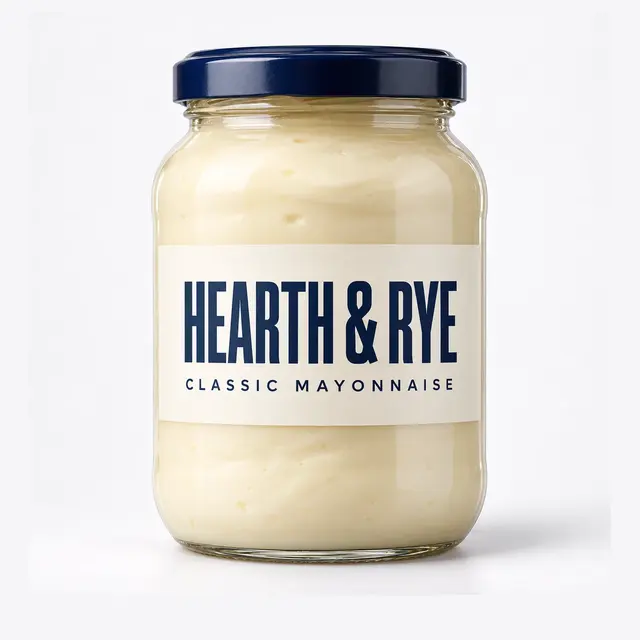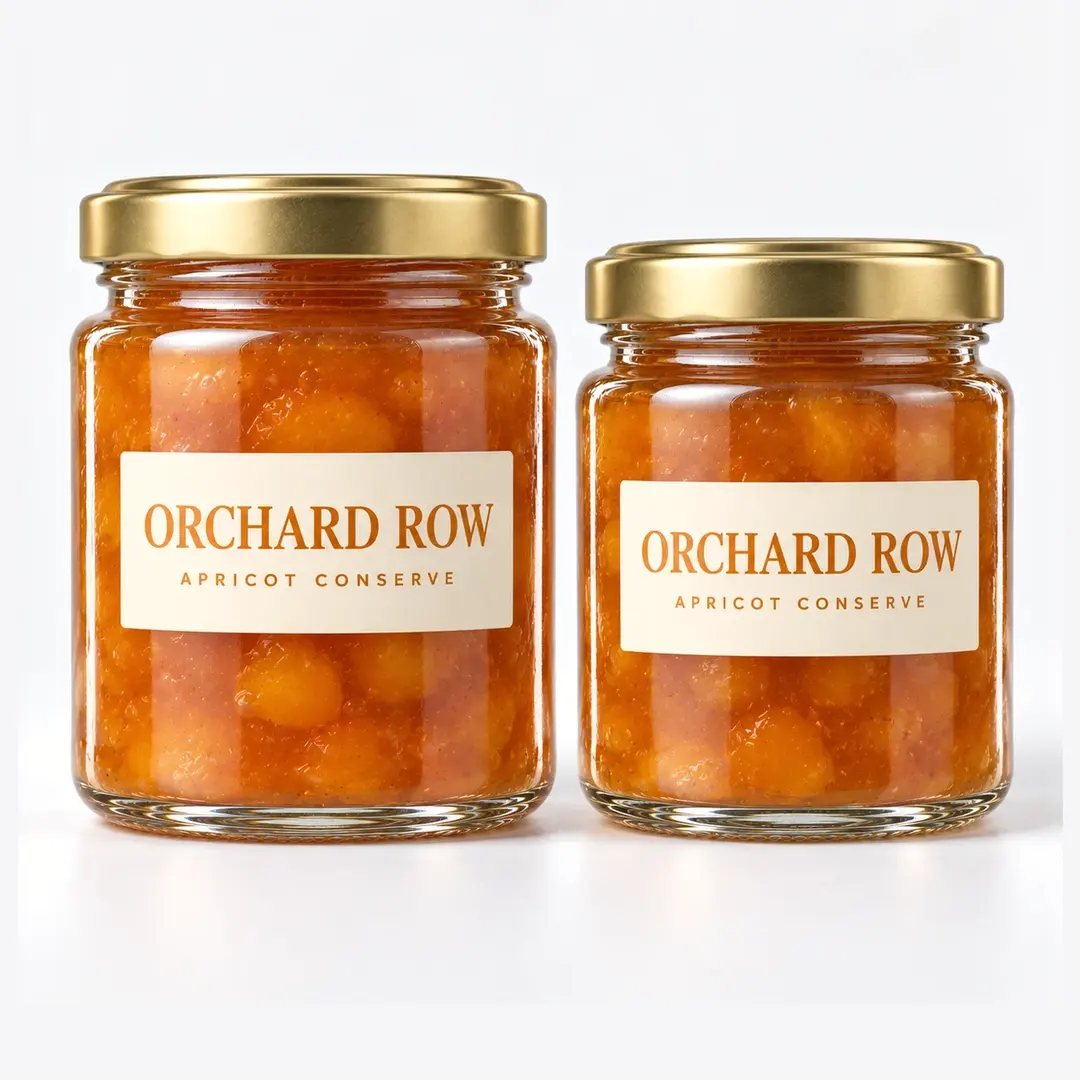
These 240ml and 270ml wide-mouth glass jars are offered as a twin-capacity pair for brands building a product line rather than a single SKU. Two adjacent sizes on one design language let you segment your range logically: a standard retail size and a value size, a core product and a club-store format, or a domestic SKU and an export SKU where market expectations differ by an ounce or two. Buying the pair from one supplier means one closure system, coordinated decoration and a single quality relationship, which is why private-label buyers and growing food brands increasingly specify adjacent capacities together. Exact dimensions, weights and neck finishes for both jars are confirmed on the technical drawings at quotation.
One Line, Two Price Points
Adjacent-capacity strategy is one of the simplest ways to widen a brand’s reach without widening its complexity. The 240ml jar anchors the standard retail shelf, while the 270ml serves as the trade-up option: more product for a modestly higher price, which raises basket value and gives retailers a natural good-better structure. Because the two jars share a visual identity, the range reads as a family on shelf rather than as two unrelated products competing for attention.
The pair also solves a common export puzzle. Different markets have settled on different standard sizes for the same category, and a brand selling into two regions often needs both. Running 240ml and 270ml from one supplier keeps the packaging story coherent across markets while letting each market get the size its shoppers expect.
Choosing Between 240ml and 270ml
The right split depends on your product and channel. For spreads, nut butters and dense products sold by weight, check which capacity lands on the net-weight declarations your target retailers prefer; label regulations in some markets make one fill weight noticeably easier to declare than the other. For chunky products like salsas or preserved vegetables, the larger jar gives pieces more room and presents better value, while the smaller suits premium lines where restraint reads as quality.
Many buyers ultimately run both: 240ml for the core range and foodservice trial accounts, 270ml for club channels, online bundles and gift-with-purchase promotions. Because the jars share neck finish logic, switching a product between sizes later is a label and fill-weight exercise rather than a packaging redesign. Confirm both drawings at sampling stage and the decision stays reversible.
Shared Finish, Shared Caps, Simpler Purchasing
The operational argument for the twin pair is consolidation. When both capacities run compatible closure systems, one cap inventory covers the whole range, capping heads need no changeover between sizes, and your closure supplier relationship stays simple. Carton and pallet planning also improves: mixed pallets carrying both sizes in agreed ratios are straightforward to specify, which helps distributors and co-packers receiving one shipment for a full range.
Decoration follows the same logic. One label system with a size-variant panel, one silk-screen design scaled across the two bodies, one lid color covering the family. Our team quotes both jars together with a coordinated decoration plan, so the range launches visually unified and stays that way through reorders. Warehousing benefits as well: two sizes from one supplier arrive on one bill of lading, clear customs as one shipment and slot into adjacent pallet positions, which keeps receiving and stock rotation simple for distributors handling the full range.
Line Extension Strategy for Retail and Private Label
For private-label buyers, the twin pair maps neatly onto retailer tier structures: the 270ml under a standard own-label tier and the 240ml under a premium or organic tier with upgraded decoration, or the reverse where the smaller jar carries the artisan positioning. Because both jars come from one quality system, audit and compliance work covers the whole range at once, which shortens retailer onboarding considerably.
Brands planning future extensions benefit too. Once a two-size family is established, adding seasonal flavors or limited editions is a fast artwork cycle rather than a packaging project, and sales data from the two sizes tells you clearly where consumer demand sits before you commit to a third capacity. Retail buyers also respond well to a coherent two-size block on shelf, because it fills a bay cleanly and signals that the brand plans to stay in the category rather than test it briefly and leave.
Quality Control and Compliance Testing
Both jars in the pair run the same inspection discipline. Annealing quality is verified with reference to ASTM C148 to confirm freedom from residual stress, thermal shock resistance is evaluated against ISO 7459 for hot-fill and pasteurized processes, and internal pressure performance is checked with reference to ISO 7458 where the application requires it. Neck finishes on both sizes are gauged so cap application and vacuum formation stay consistent whichever size is on the line.
The soda-lime flint glass is suitable for direct contact with preserves, spreads, sauces and dry goods, and food-contact documentation is available for both drawings to support import compliance and retailer technical files. Third-party inspection before shipment can be arranged for either or both sizes on request.
Ordering the Pair and Export Packing
Jars ship in divided export cartons on shrink-wrapped pallets, and twin-size orders can be loaded as mixed pallets or split pallets to match your warehouse flow. Our MOQ guide explains how minimums work when two sizes run together, including the common arrangement where each size meets a lower combined threshold. For freight planning and customs documentation, see our guide on importing glass bottles from China.
To price the 240ml and 270ml pair, send your product types, process, target markets and estimated volume per size. We will return quotations and technical drawings for both, with samples available before production commitment. Questions about mixed loading, coordinated decoration or tier-based private-label structures are welcome through our contact page.
Frequently Asked Questions
Why would I buy 240ml and 270ml jars together instead of one size?
Adjacent sizes let you serve two price points or two markets with one packaging family. Buyers commonly run the 240ml as the standard retail SKU and the 270ml as a value or club size, sharing closures, decoration and a single supplier relationship across both.
Do the two sizes use the same caps?
The pair is designed around compatible closure systems so one cap inventory can cover both jars. Final cap size and neck finish for each jar are confirmed on the technical drawings at quotation, and we validate cap fit on both sizes during sampling.
Can the two sizes share one label design?
Yes. Most buyers run one label system with a size-variant panel, or a silk-screen design scaled across the two bodies. We quote coordinated decoration for both jars together so the range launches with a unified shelf presence.
What is the MOQ when ordering both sizes in one shipment?
When two sizes run together, minimums are commonly structured against a combined threshold, which makes the pair more accessible than two separate single-size orders. The exact structure for your volumes is confirmed at quotation.
Are both jars suitable for hot-filled products like jams and sauces?
Yes. Both sizes are suited to hot-fill and pasteurized processes. Thermal shock resistance is evaluated with reference to ISO 7459, annealing to ASTM C148 and pressure performance to ISO 7458. We recommend validating fill process and cap vacuum during sampling.
Can pallets be mixed with both sizes in agreed ratios?
Yes. Mixed pallets carrying both sizes in the ratio your warehouse prefers are straightforward to specify at order stage. Split pallets per size are also possible. Carton and pallet layouts are confirmed before production so receiving runs smoothly.