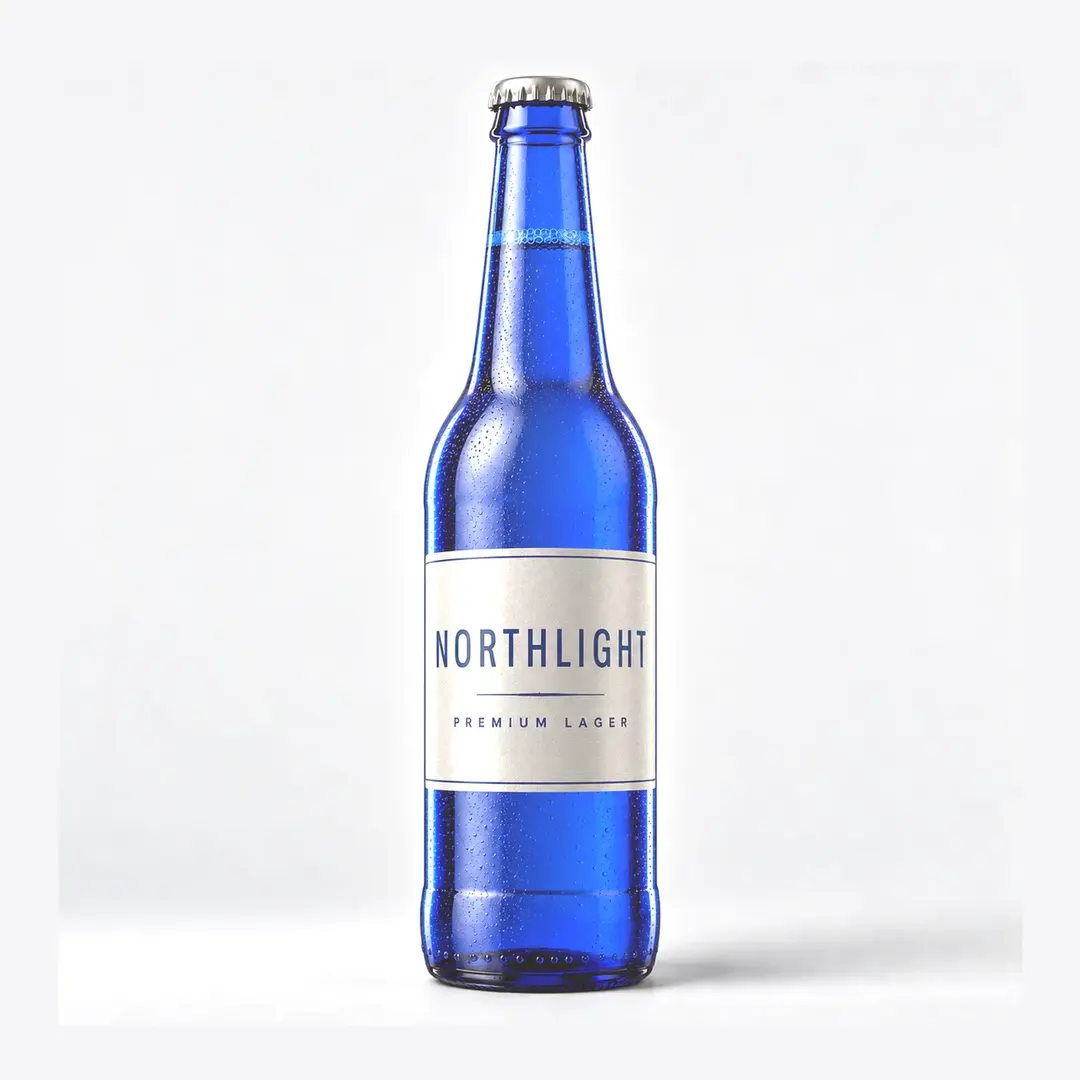
The Series 8050 is a cobalt blue longneck beer bottle with a crown-cap finish, made for brands that want the shelf to do the selling. The photo shows the deep blue glass that stops shoppers mid-aisle, formed in the familiar longneck silhouette that filling lines already handle with standard change parts. Specialty malt beverage producers, flavored beer brands, cider makers and craft breweries launching limited releases are the natural buyers for this series: anyone whose marketing plan depends on being visibly different from the amber and green rows around them.
Cobalt Blue as a Shelf Strategy
Color is the cheapest advertising a package can buy, and cobalt blue is the loudest color in the beer aisle precisely because so few brands use it. Against a wall of amber longnecks and green pilsner bottles, a blue bottle reads instantly as something different: a seasonal release, a flavored variant, a premium import or a lifestyle brand. That instant differentiation matters most in the first three seconds of a purchase decision, before a shopper ever reads a label. Specialty beverage categories beyond beer, including hard seltzer, hard cider, kombucha and craft sodas, have used cobalt glass for years to signal a product outside the mainstream. If your launch plan includes social media photography and influencer seeding, a blue bottle photographs memorably under almost any lighting, which compounds the effect.
Flavor Protection and the Light Question
Buyers considering colored glass outside amber should think honestly about light management. Cobalt blue glass filters a portion of the visible and UV spectrum, but it does not match amber’s protection against the wavelengths that cause light-strike in hopped beer. That makes the Series 8050 best suited to products where light exposure is controlled: closed cartons and cases, fast-turning retail, refrigerated distribution, and styles with low hop bitterness where the skunking reaction is weak. Many flavored malt beverages and fruit-forward specialties fit that profile perfectly. For aggressively hopped styles sold in open display, we will recommend amber instead, and our team will give you that advice straight even when blue would be the easier sale.
Standard Longneck Geometry Under the Color
Underneath the striking color, this is a thoroughly conventional bottle, and that is a feature. The longneck body, tapered shoulder and crown-cap finish match the geometry your filler, capper and labeler already run, so switching to blue is a marketing decision rather than an engineering project. The 26 mm crown finish accepts standard crowns and capping heads without modification, and the bottle behaves on conveyors and in case packers exactly like its amber and green siblings. Capacity, weight, height, body diameter and finish tolerances are confirmed on the technical drawing at quotation, and we recommend running physical samples on your line before the production order ships, a service we arrange as standard.
Decoration and Branding on Blue Glass
Cobalt glass changes how decoration reads, and used well that is an advantage. White and metallic inks pop dramatically against the blue, while dark inks can disappear, so label and print design should be proofed on actual bottles rather than screen mockups. Screen printing and applied ceramic labeling both work on this series, and embossed detailing can be incorporated into proprietary moulds for buyers at volume. Because the glass itself carries so much visual weight, many successful blue-bottle brands keep the decoration minimal: a clean white screen print, a simple crown, and nothing else. Our design support team can review your artwork against the glass color before you commit to plates or screens.
Quality Control Standards Behind Every Pallet
Colored glass production is monitored under the same documented QC plan as our standard colors, referencing ASTM C148 for annealing quality of glass containers, ISO 7459 for thermal shock endurance and ISO 7458 for internal pressure resistance. Color consistency receives extra attention on cobalt runs, with furnace samples checked against the approved color standard so bottle-to-bottle tone stays uniform across the order. Cold-end inspection screens for seeds, stones, blisters and finish defects, and statistical samples from each shift pass pressure and thermal shock testing before pallets are released. Buyers with specific colorimetric requirements can state them in the purchase specification for inclusion in the inspection routine.
Planning a Blue Bottle Launch
Successful colored-glass launches share a pattern: the packaging decision comes first, and the liquid, label and channel plan follow it. Start by confirming your distribution reality, since controlled light exposure is what makes blue viable, then lock the artwork against physical bottle samples rather than digital mockups. From there, build your production calendar backward from the furnace color-run schedule, because specialty colors run on planned slots rather than continuously. Buyers who treat the bottle as the anchor of the launch, rather than a late procurement task, consistently land better pricing, smoother line trials and stronger retail presentation. We support that planning with samples, drawings and scheduling visibility from the first conversation.
MOQ Realities for Specialty Colors
Specialty furnace colors carry different minimum order logic than amber and green, because the furnace must be scheduled for a dedicated color run. Our article on glass bottle MOQ explained covers the general mechanics, and the practical summary for cobalt is this: minimums are higher than stock colors, but co-loading and program scheduling can make the numbers work for mid-size brands. Planning two or three releases per year against one annual glass purchase often unlocks the best unit pricing.
Packing and Export Logistics
Bottles ship on export pallets, shrink-wrapped and corner-protected as shown below, with container loading plans prepared per order. Fumigation-free packaging is available where required, and importers new to the process will find the full walkthrough in our guide to importing glass bottles from China.
To discuss whether cobalt blue fits your next release and to receive a quotation with the technical drawing, send your target volume and destination port through our contact page.
Frequently Asked Questions
What products suit the cobalt blue Series 8050 bottle?
The Series 8050 suits brands that win on shelf differentiation: specialty malt beverages, flavored beers, hard seltzers, ciders, kombucha and limited craft releases. The standard longneck geometry and 26 mm crown finish mean it runs on conventional filling lines, so adopting blue is a marketing decision rather than an engineering project.
Does blue glass protect beer from light as well as amber?
No. Cobalt blue filters part of the light spectrum but does not match amber’s protection against the wavelengths that cause light-strike in hopped beer. It suits products distributed in closed cartons, refrigerated channels or fast-turning retail, and styles with low hop bitterness. For aggressively hopped beers in open display, we recommend amber.
What is the MOQ for cobalt blue glass?
Specialty furnace colors require dedicated color runs, so minimums are higher than for stock amber or green. Co-loading and annual program scheduling can make volumes workable for mid-size brands, and planning multiple releases against one annual glass purchase usually unlocks the best unit pricing. Contact us with your annual volume for exact figures.
Will the blue color be consistent across my whole order?
Yes. Color consistency receives dedicated checks on cobalt runs, with furnace samples compared against the approved color standard during production so bottle-to-bottle tone stays uniform. Buyers with specific colorimetric requirements can state them in the purchase specification for inclusion in the inspection routine.
How should I design labels for blue glass?
White and metallic inks read dramatically well against cobalt, while dark inks can disappear. Proof your label or screen-print design on physical bottles rather than screen mockups. Many successful blue-bottle brands keep decoration minimal: a clean white screen print and a simple crown. Our design support team reviews artwork against the glass color before production.
What quality testing is performed before shipment?
Production follows a documented QC plan referencing ASTM C148 for annealing quality, ISO 7459 for thermal shock endurance and ISO 7458 for internal pressure resistance, plus cold-end inspection for seeds, stones, blisters and finish defects. Shift samples pass pressure and thermal shock testing before pallets are released for packing.