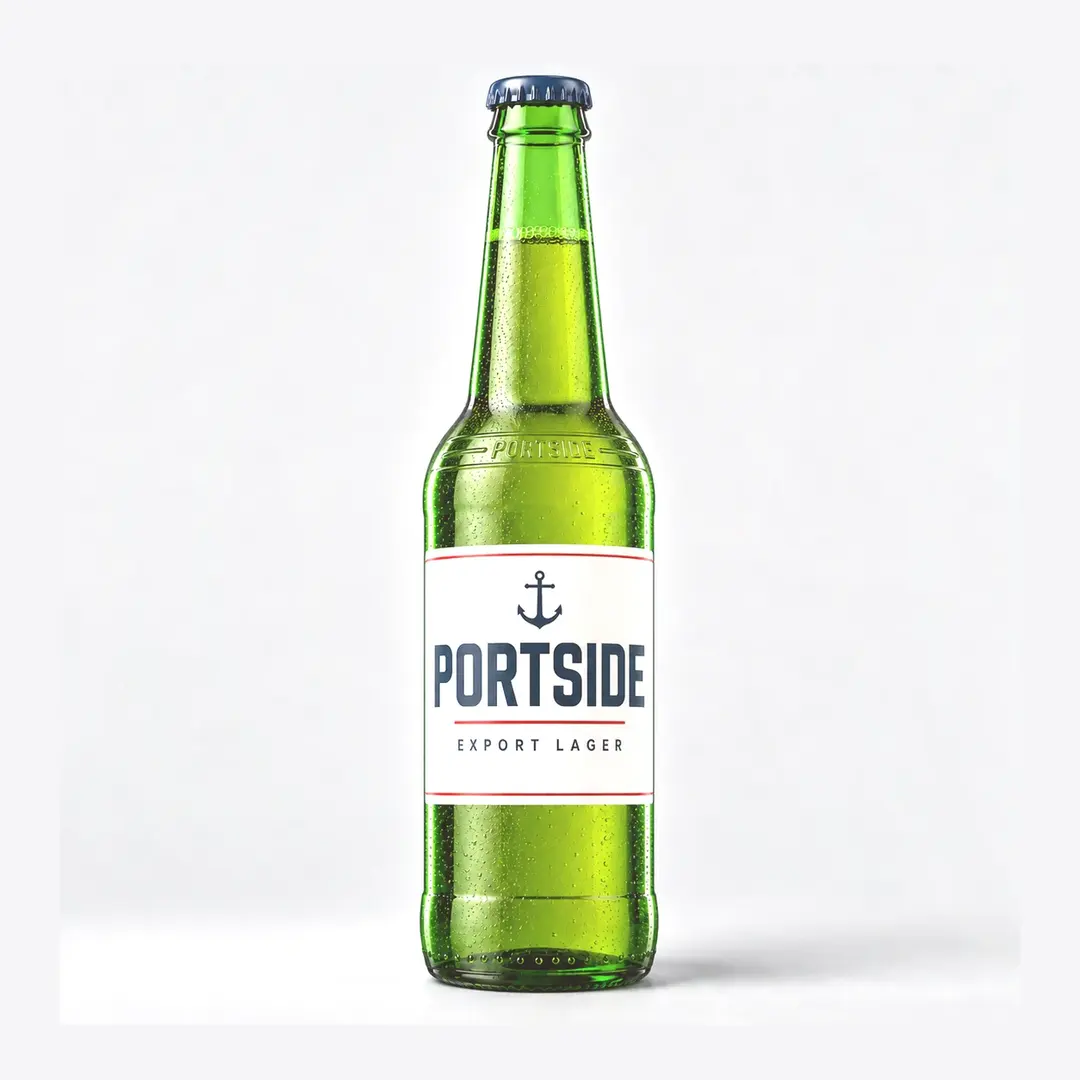
The Series 8131 is a green longneck beer bottle with a crown-cap finish, produced for breweries and importers who buy glass by the container load and care as much about how bottles travel as how they look. The photo shows the classic export-lager silhouette: slim cylindrical body, long tapered neck and a clean shoulder with subtle mould detailing. This page is written for procurement teams planning sea-freight programs, so alongside the design notes you will find practical detail on packing density, line compatibility and the paperwork that keeps glass moving across borders.
Designed for High-Volume Export Programs
Export buyers live and die by landed cost per filled bottle, and glass is usually the heaviest line item in that calculation. The longneck format used for the Series 8131 is the global reference shape, which means case dimensions, pallet patterns and container loading plans are well understood across the industry and easy to model before you commit. Because the bottle follows standard geometry rather than a proprietary shape, secondary packaging suppliers can quote cartons, dividers and six-pack carriers from existing tooling, removing set-up cost and lead time from your program. Capacity, weight, height and body diameter are confirmed on the technical drawing at quotation, and those figures feed directly into the freight model our team prepares with every offer.
Container Loading and Freight Economics
Every wholesale quotation from our side includes a container loading plan: bottles per pallet, pallets per container, gross weight and the resulting freight cost per thousand bottles to your destination port. Pallets are built for sea freight with shrink wrap, corner boards and strapping, and the photo below shows the packing line that prepares them. For markets with phytosanitary rules, fumigation-free packaging is available so pallets clear inspection without treatment delays. Buyers consolidating multiple series into one shipment can mix SKUs within a container, which helps smaller brands reach economical freight rates without overcommitting to a single design. If you are new to this process, our step-by-step guide to importing glass bottles from China covers Incoterms, documentation and insurance in plain language.
Filling Line Compatibility Across Markets
Because the longneck is the industry standard, most fillers in most markets already hold change parts for it, which is a genuine advantage for contract brewers and importers who fill in more than one facility. The points to verify during onboarding are the neck handling profile under gripper stars, body diameter at the guide rails and overall height against your filling valve stroke, all of which appear on the technical drawing. The crown finish suits the standard 26 mm crown closure used worldwide, so caps and capping heads need no modification. For buyers filling at a new co-packer, we can supply sample bottles ahead of the production order so the line trial happens before the containers arrive, not after.
Green Glass in the Export Lager Segment
Green glass carries a specific meaning in the lager trade: it signals the European and Asian export-lager tradition that many consumers actively seek out. It filters part of the light spectrum, though less UV than amber, so it suits beers distributed in closed cartons and cases where light exposure is controlled. Brands selling into sunny climates or open-display retail should weigh that trade-off honestly, and our team will walk through it with you. The green here is furnace-colored glass, consistent through the wall thickness, so the presentation survives pasteurization, crate washing and long warehousing without change.
Quality Control Standards Behind Every Pallet
Production is monitored under a documented QC plan referencing ASTM C148 for annealing quality, ISO 7459 for thermal shock endurance and ISO 7458 for internal pressure resistance. Cold-end inspection screens every bottle for seeds, stones, blisters and finish defects, and statistical samples from each shift pass pressure and thermal shock testing before pallets are released. Dimensional checks confirm the bottles will run on automated lines without jamming starwheels or guides. For importers, the practical result is a container that arrives with a test record you can file against your own incoming QC, and any additional AQL level or third-party inspection can be arranged when stated in the purchase specification.
Sampling and Pre-Production Approval
Export glass programs fail most often at the handover points: the drawing that was never checked against the capper, the sample that never ran on the line, the pallet pattern that nobody signed off. Our process puts formal approval gates in front of each of those risks. Before mass production, buyers receive the technical drawing for dimensional confirmation and physical samples for line trials and label application tests. Only after written approval does the factory schedule the furnace run. During production, inspection records accumulate against your purchase order, and a pre-shipment review confirms quantities, packing and documentation before the container is sealed. Buyers working under letters of credit can align these gates with their document requirements, and third-party inspection agencies are welcome at the factory at your cost. This gate structure costs little and routinely saves importers from the most expensive sentence in the trade: the container is already on the water.
Ordering Process and Lead Time Planning
Wholesale pricing scales with volume, and minimum order quantities follow the logic explained in our article on glass bottle MOQ explained. Production lead time, ocean transit and customs clearance together set your total replenishment cycle, so we recommend planning first orders against a buffer and then moving to a rolling forecast once demand stabilizes. Repeat orders on a stock design are faster than first runs because moulds and line settings are proven.
To receive a quotation with the technical drawing, loading plan and current lead time for the Series 8131, send your annual volume and destination port through our contact page and a packaging specialist will build the full offer.
Frequently Asked Questions
How many Series 8131 bottles fit in a shipping container?
The exact count depends on the bottle’s confirmed dimensions and your destination’s pallet standards. Every quotation includes a container loading plan showing bottles per pallet, pallets per container and freight cost per thousand bottles to your port, so you can model landed cost before committing. Capacities and dimensions are confirmed on the technical drawing at quotation.
What closure does this green longneck bottle use?
The Series 8131 is formed with a standard 26 mm crown-cap finish, compatible with crown corks and capping heads used worldwide. Finish dimensions and tolerances appear on the technical drawing so you can verify compatibility with your existing closures before ordering.
Can I mix this series with other bottle designs in one container?
Yes. Buyers building a varied portfolio can consolidate multiple series into a single container, which helps smaller brands reach economical freight rates. Mixed loading is planned case by case, so mention the SKUs you want to combine when you inquire.
Will this bottle run on my existing filling line?
The longneck format is the industry reference shape, and most fillers already hold change parts for it. The key checks are neck handling profile, body diameter at guide rails and bottle height against your valve stroke, all stated on the technical drawing. Sample bottles can be supplied ahead of the production order for a line trial.
What packaging do you use for sea freight?
Bottles are stacked on export pallets with shrink wrap, corner boards and strapping, built for ocean transit. Fumigation-free packaging is available for markets with phytosanitary requirements so pallets clear inspection without treatment delays.
What quality testing backs each shipment?
Production follows a documented QC plan referencing ASTM C148 for annealing quality, ISO 7459 for thermal shock endurance and ISO 7458 for internal pressure resistance, with cold-end inspection of every bottle and shift-sample testing before pallet release. Third-party inspection or a specific AQL level can be arranged when stated in your purchase specification.