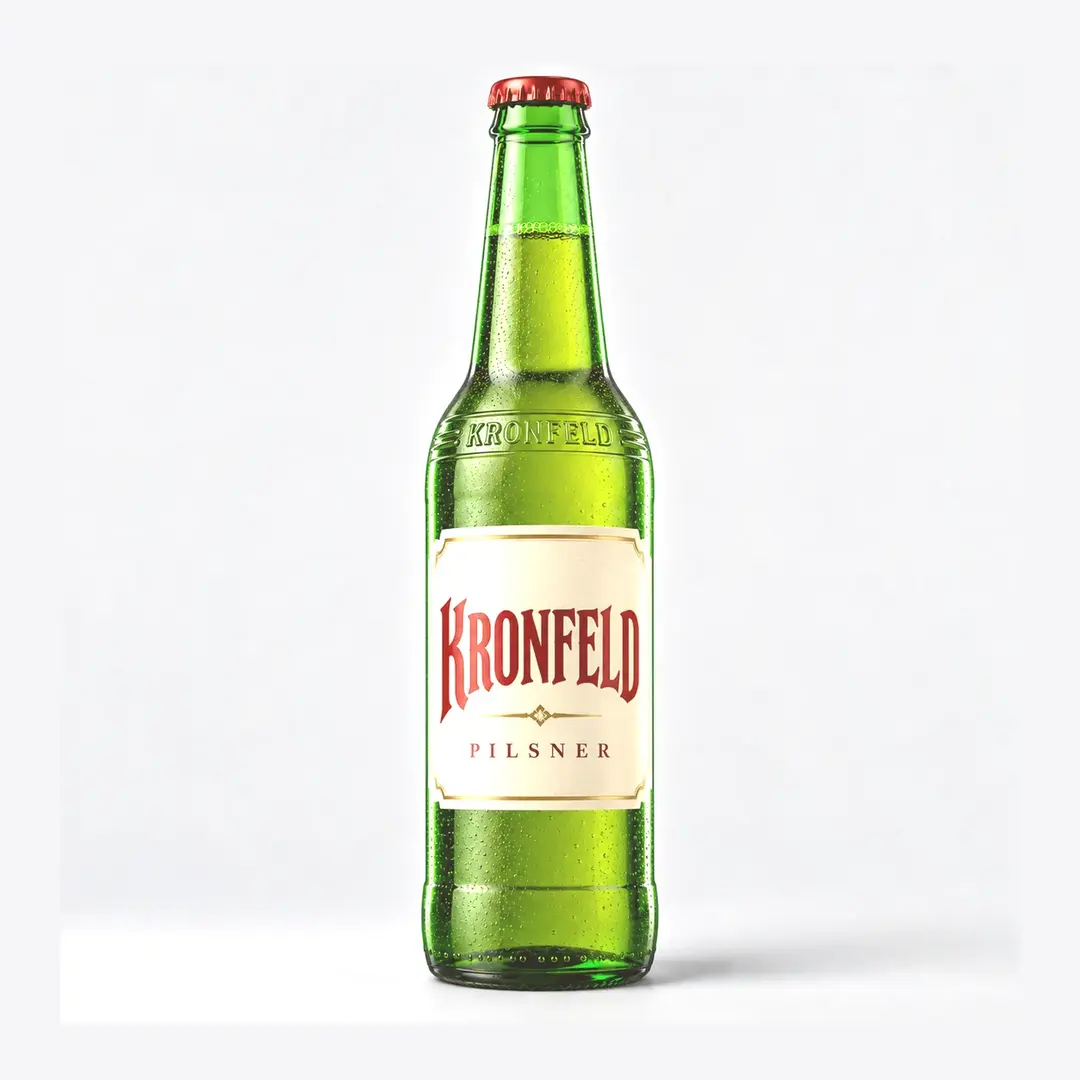
The Series 8391 is a green longneck beer bottle with a crown-cap finish, produced for breweries, beverage co-packers and importers who need a classic pilsner-style silhouette at wholesale volumes. The tall tapered neck, smooth cylindrical body and embossed shoulder detail visible in the photo give it the familiar profile used across European and Asian lager programs. If your brand runs a standard 26 mm crown capping line and wants a green glass presentation without paying for a proprietary mould, this series is designed for that buying scenario.
Design Overview of the Series 8391 Longneck
The bottle follows the longneck geometry that dominates mainstream lager packaging: a slim body that runs straight from the heel to the shoulder, a gentle shoulder transition, and a long tapered neck ending in a crown-cap lip. The shoulder carries an embossed decorative pattern, visible as a raised band of detailing in the photo, which adds grip texture and a premium cue without requiring custom mould work from the buyer. The green glass is consistent from heel to finish, indicating furnace-colored glass rather than a surface coating, so the color will not scratch or flake during pasteurization, crate washing or export handling. Exact capacity, brimful volume, height, body diameter and neck finish tolerances are confirmed on the technical drawing at quotation, and we recommend matching that drawing against your existing filler and capper change parts before placing a production order.
Crown-Cap Carbonation Retention
Carbonated beer lives or dies by the seal at the finish. The Series 8391 is formed for the standard 26 mm crown closure, the most widely tooled closure in the beer industry, which means your crowns, capping heads and chucks are already compatible without new capital spending. A well-formed crown lip gives the liner a uniform landing surface, and that uniformity is what keeps dissolved CO2 inside the bottle through warm warehouse storage and long sea freight. When we quote this series, the finish dimensions, lip height and sealing surface tolerances are stated on the drawing, and finished bottles are checked against those tolerances before packing. For buyers running high-foam beers or high-carbonation styles such as wheat beer or sparkling lager, tell us your target carbonation level at inquiry so the pressure performance of the bottle can be confirmed with the factory against your specification.
Green Glass Positioning for Heritage and Export Lagers
Green beer glass occupies a specific commercial niche. It filters part of the visible spectrum but less UV than amber, so it suits beers that move quickly through the supply chain, are sold in cases or secondary packaging, or carry a brand identity tied to green glass. Many heritage European-style lagers, premium pilsners and Asian export lagers use green precisely because consumers read the color as a quality signal. If your recipe is highly hopped and light-sensitive, we would steer you toward amber; if your beer is a crisp pilsner shipped in closed cartons and consumed fresh, green delivers the shelf look buyers expect. Our team can walk through that trade-off with your marketing and brewing staff, and our guide on importing glass bottles from China covers how color choice interacts with labelling and shelf-life planning.
Embossing and Decoration Options
The raised shoulder pattern on this series shows what mould embossing can do at no per-unit cost: once the design is cut into the mould, every bottle carries it automatically. Buyers with sufficient volume can commission a proprietary emboss such as a brand crest, founding year or signature pattern, and smaller buyers can stay with the stock design and add differentiation through labels, neck foils or crown printing. Post-forming decoration is also available, including applied ceramic labelling, screen printing and frosting, with artwork set-up quoted per project. Share your artwork early, because decoration method affects the label panel geometry we confirm on the drawing.
Filling Line Compatibility and Changeover
Because the longneck format is the industry reference shape, most rotary and inline fillers already carry change parts for it, which keeps commissioning time short when you switch suppliers. The points that matter during a changeover are the neck handling profile under the gripper star, the body diameter at the guide rails, and the bottle height relative to your filling valve stroke. All three are fixed once the mould is cut, and we publish them on the technical drawing so your engineering team can compare them with your current bottle before the first delivery arrives. Buyers moving from a heavier returnable bottle to this export-weight format should also review conveyor pressure and accumulation settings, since lighter glass behaves differently on long single-file runs. If you share your line speed and machine brand at inquiry, we can flag any compatibility concerns early rather than after the containers land.
Quality Control Standards Behind Every Pallet
Production runs are monitored under a documented QC plan that references ASTM C148 for the annealing quality of glass containers, plus ISO 7459 and ISO 7458 for thermal shock endurance and internal pressure resistance respectively. Line inspectors check seed, blisters, stones and finish defects at the cold end, and statistical samples from each shift go through pressure and thermal shock testing before pallets are released. Vertical load and dimensional checks confirm the bottles will run on automated filling lines without jams. If your market requires a specific test protocol or an AQL level on top of these baselines, state it in your purchase specification and the factory will fold it into the inspection routine.
Ordering, MOQ and Export Packing
Wholesale pricing on the Series 8391 scales with volume, and minimum order quantities depend on whether you take the stock design or request custom embossing or decoration. Our article on glass bottle MOQ explained breaks down how mould amortization and furnace scheduling drive those numbers. Bottles ship packed on export pallets, shrink-wrapped and corner-protected as shown below, with fumigation-free packaging available for markets that require it. Container loading plans are prepared per order so you can see landed cost per bottle before committing.
To get a current quotation, lead time and the technical drawing for the Series 8391, send your target annual volume and destination port through our contact page and a packaging specialist will respond with a complete offer.
Frequently Asked Questions
What closure does the Series 8391 beer bottle take?
The Series 8391 is formed with a standard 26 mm crown-cap finish, compatible with industry-standard crown corks and capping heads. Exact finish dimensions and tolerances are stated on the technical drawing issued with your quotation, so you can verify compatibility with your existing crowns before ordering.
What is the minimum order quantity for this green longneck bottle?
MOQ depends on whether you order the stock design or request custom embossing or decoration. Stock-design wholesale orders start at standard production-run quantities, while proprietary embossing requires mould investment amortized over a larger commitment. Contact us with your annual volume and we will quote the exact MOQ and unit pricing tiers.
Is the green color a coating or colored throughout the glass?
The green is furnace-colored glass, meaning the colorant is melted into the glass itself and runs through the full wall thickness. It will not scratch, flake or wash off during pasteurization, crate washing or normal export handling.
Can this bottle handle high-carbonation beers like wheat beer?
The bottle is produced for carbonated beer service and pressure resistance is verified per ISO 7458 internal pressure testing. For highly carbonated styles, share your target CO2 volumes and pasteurization process at inquiry so the factory can confirm the bottle specification against your exact pressure profile.
What quality tests are performed before shipment?
Production follows a documented QC plan referencing ASTM C148 for annealing quality, ISO 7459 for thermal shock endurance and ISO 7458 for internal pressure resistance, plus cold-end visual inspection for seeds, blisters and finish defects. Statistical samples from each shift are tested before pallets are released for packing.
How are the bottles packed for sea freight?
Bottles are stacked on export pallets, shrink-wrapped with corner protection, and loaded per a container plan prepared for your order. Fumigation-free packaging is available for markets with phytosanitary restrictions. The packing layout and pallet count per container are confirmed in your quotation so you can calculate landed cost accurately.